
農業
農業の未来:ハイテクとエコロジーの間

 Securities.io を Google の優先ソースに追加

新しい農業革命の必要性
Farming is the central technology that has allowed human civilizations to thrive. In the modern era, it has become more mechanized and industrialized and is a distant concern for most of the population. Only 2% of the US population works in farms and ranches today. On average, one U.S. farm feeds 169 people annually in the U.S. and abroad.
農業は人類文明の繁栄を支えてきた中心的な技術です。現代では、より機械化され かつ産業化され、ほとんどの人々にとっては遠い関心事となっています。 現在、米国人口のわずか2%が農場や牧場で働いています。平均すると、米国の農場1つで米国内外で年間169人を養うことができます。
Industrial farming freed up labor for industries and services and to feed an ever-growing global population. But it also comes with a wide array of issues:
産業農業は産業やサービスの労働力を解放し、増え続ける世界人口を養うことができました。しかし、以下のような多くの問題も伴います:
- Decline in food nutritional value.
- Food valueの栄養価低下。
- Pollution of water resources and food chain by pesticides, herbicides, and fertilizers.
- 農薬、除草剤、肥料による水資源と食物連鎖の汚染。
- Damage to the ecosystem, from insect population to global biodiversity.
- 昆虫個体数から全球の生物多様性に至るまで、生態系への損害。
- Erosion of soil, threatening arable lands and farmlands’ fertility.
- 土壌侵食により耕作地と農地の肥沃度が脅かされる。
- Greenhouse emissions, with 22% global emissions from agriculture, forestry, and other land use.
- 温室効果ガス排出、農業・林業・その他の土地利用が全体の22%を占める。
It is becoming increasingly clear that the Green Revolution, while alleviating the 1970s fear of global famines, needs an upgrade to tackle these problems. Luckily, the trend of bigger tractors, bigger farms, and more chemicals is being reversed by progress in biotech, robotics, software, and even space technology.
グリーン革命は1970年代の世界的飢饉への恐怖を和らげましたが、これらの問題に対処するためにはアップグレードが必要であることがますます明らかになっています。幸いにも、より大きなトラクター、より大規模な農場、より多くの化学物質という傾向は、バイオテクノロジー、ロボティクス、ソフトウェア、さらには宇宙技術の進歩によって逆転しつつあります。
ロボットとドローン
Maybe the upcoming largest change in farming practice is the emergence of farming robots and drones. This sudden arrival of new machinery on the farm is due to a few technological leap in recent years:
農業実践における次の大きな変化は、農業ロボットとドローンの登場かもしれません。この新しい機械の急速な導入は、近年のいくつかの技術的飛躍によるものです:
- Cheaper sensors and mechanical parts, reducing costs.
- 安価なセンサーと機械部品によりコストが削減。
- Machine vision, allowing the robots to actually see the crops.
- 機械ビジョンによりロボットが作物を実際に見ることが可能に。
- Batteries, increasing the stamina of the systems.
- バッテリーによりシステムの持続力が向上。
- AI, making them semi-autonomous and probably soon fully autonomous.
- AIにより半自律、そして近い将来完全自律になる可能性。
This can help replace a lot of labor that cannot be mechanized with bigger, heavier tractors, like fruit picking, weeding, removal of insects, etc.
これにより、果実の収穫、除草、害虫除去など、より大きく重いトラクターでは機械化できない多くの労働を代替できるようになります。

Source: Corteva
The smaller size of farming robots and their AI-powered autonomy can create new farming methods as well.
農業ロボットの小型化とAI駆動の自律性は、新たな農業手法を生み出すことも可能です。
For example, the laser can be used to “zap” weeds instead of removing them mechanically. Or herbicide can be sprayed on individual plants identified with machine vision, instead of the whole field.
例えば、レーザーで雑草を機械的に除去する代わりに「電撃」し、機械ビジョンで識別された個々の植物にのみ除草剤を散布することが可能です。
Large flying drones can also be used for farm operations, from carrying heavy charges like fertilizer bags and harvest (especially in mountainous terrains) to even artificially pollinating corn fields.
大型の飛行ドローンは、肥料袋や収穫物などの重い荷物を運ぶだけでなく(特に山岳地帯で)、トウモロコシ畑への人工受粉さえも行うことができます。
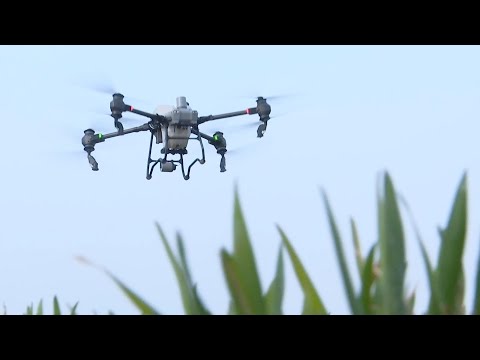
You can read more details about this technology, its applications and leading companies in this field in “Investors Should Take Note: Robotics Is Taking Over Farming”.
この技術、その応用例、そしてこの分野の主要企業については「投資家は注目すべき:ロボティクスが農業を席巻している」で詳しく読むことができます。
データ
Farming is becoming increasingly a data-driven business. Instead of relying on the experience and instinct of individual farmers, data can now drive the decision-making on irrigation, chemical uses, etc.
農業はますますデータ駆動型のビジネスになっています。個々の農家の経験や勘に頼る代わりに、灌漑や化学薬品使用などの意思決定をデータが導くようになりました。
A key element here is multi-spectral imaging or the synthetic image of crops in multiple light wavelengths. It helps identify what segment of a field needs water, is attacked by a disease, and can anticipate future crop yields.
ここでの重要な要素はマルチスペクトル画像、すなわち複数の光波長で撮影された作物の合成画像です。これにより、どの区画が水を必要としているか、病害に侵されているかを特定し、将来の収量を予測できます。

Source: Nebraska CornBoard
These images are most of the time generated from above, either through a long-range drone or satellite. They can be complemented by in-field sensors measuring nutrients in the soil or its moisture content.
これらの画像は主に上空から、長距離ドローンまたは衛星を通じて生成されます。土壌中の栄養素や水分含有量を測定するフィールド内センサーと組み合わせることも可能です。
ソフトウェア / AI
Farms are also increasingly using software to manage their day-to-day operations. This includes data like multi-spectral images but also day-to-day operations handled by ERP software, like payroll, schedule, machine maintenance, billing, etc.
農場は日々の運営管理にソフトウェアをますます活用しています。これにはマルチスペクトル画像などのデータだけでなく、給与計算、スケジュール、機械メンテナンス、請求などを扱うERPソフトウェアも含まれます。

Source: AgriERP
The more data on the farm are available and centralized, the more AI analysis can help. For example, the combination of weather forecasts, crop data, and machinery available can help optimize the schedule for harvest season.
農場で利用可能かつ集中管理されたデータが増えるほど、AI分析の支援効果が高まります。例えば、天気予報、作物データ、利用可能な機械を組み合わせることで、収穫シーズンのスケジュール最適化が可能です。
It could do many other things, for example, detecting leaks in irrigation systems, optimizing fertilizer and pesticide use, monitoring livestock location and health, automating the sorting of the harvest, etc.
さらに、灌漑システムの漏水検知、肥料・農薬使用の最適化、家畜の位置と健康のモニタリング、収穫物の自動選別など、さまざまなことが可能です。
遺伝子工学
While farming practices have stayed unchanged for a long time, humans have always worked hard at developing new crop varieties that were superior in one way or another: more productive, more resistant, more nutritious, etc.
農業慣行は長らく変わらずにいましたが、人類は常に、より高収量、耐性、栄養価の向上など、何らかの点で優れた新しい作物品種の開発に取り組んできました:
Traditionally, this could only be done at a very slow pace, and using only naturally occurring mutations. Even most of the recent methods to develop new varieties relied mostly on selected random (induced) mutations.
従来は、自然に起こる変異のみを利用し、非常に遅いペースでしか行えませんでした。最近の品種開発手法の多くも、主に選択されたランダム(誘発)変異に依存していました。
Modern biotechnology has changed our approach. While controversial, GMO crops are likely to be a central tool of future medicine, especially as we move away from the first generation designed around the usage of chemical pesticides and herbicides.
現代バイオテクノロジーはアプローチを変えました。議論はあるものの、GMO作物は将来の医療における中心的なツールになる可能性が高く、特に化学農薬・除草剤使用を前提とした第一世代から脱却するにつれて重要性が増します。
Instead, newer generations of GMO crops will be able to:
代わりに、次世代のGMO作物は以下が可能になるでしょう:
- Resist the effect of climate instability by using less water, resisting intense heat, drought, etc.
- 気候不安定性に対抗し、少ない水で耐熱・耐乾燥などに対応。
- Handle higher levels of salinity, allowing cultivation in slightly saline water, a particular concern for rice cultivation and heavily irrigated fields.
- 塩分耐性を高め、やや塩分のある水でも栽培可能に。これは稲作や大量灌漑地で特に重要です。
- Resist pests and diseases with modified genes instead of just producing toxins like 1stgeneration GMOs.
- 第一世代GMOが毒素を生成するのとは異なり、遺伝子改変により害虫・病害に抵抗。
Lastly, in “Engineered Plant Microbiomes – Protecting Crops with Bacteria”, we also discussed how GMOs could be engineered to nurture a better and richer bacteria ecosystem in the soil, which in turn would help make the crops more resistant and more productive.
最後に「エンジニアリングされた植物微生物叢 – バクテリアで作物を保護」で、GMOが土壌中のバクテリア生態系をより豊かに育成し、作物の耐性と生産性を向上させる方法についても議論しました。
De Novo Domestication
Most of the plants we consume were initially wild plants that got domesticated. This was done in just a handful of locations, which strongly indicates that probably quite a few other plants could be domesticated.
私たちが消費する多くの植物は、もともと野生植物であり、限られた地域で家畜化されました。これは、他にも多くの植物が家畜化可能であることを強く示唆しています。

So a new option is emerging, called “de novo domestication.” The idea is that instead of taking high-yield modern crops and trying to make them as resistant as wild weeds, why not take already resistant wild weeds and make them as productive as modern crops?
そこで新たに「De Novo Domestication(新規家畜化)」という選択肢が浮上しています。高収量の現代作物を野生雑草ほど耐性にするのではなく、すでに耐性を持つ野生雑草を現代作物と同等の生産性に高めるという考えです。

We discussed in detail this idea in “Advancing Agriculture with AI and Genetic Engineering – The Future of Cultivation“, including how it could be combined with multi-spectral imaging so that farming robots could zap all the weeds without the modified “tag”.
このアイデアは「AIと遺伝子工学で農業を前進させる – 栽培の未来」で詳細に議論しました。マルチスペクトル画像と組み合わせることで、農業ロボットが改変された「タグ」なしで全ての雑草を電撃除去できる可能性があります。
新しい食料タイプ
Another option to improve farming is to create new types of food products. For example, we covered in “Using CRISPR-Cas9 to Gene Hack Edible Mycelium Into Meat Substitutes” how fungi can be genetically modified to look and taste like meat while being even healthier.
農業を改善する別の選択肢は、新しい食料製品を創出することです。例えば「CRISPR-Cas9で食用菌糸体を肉代替品に遺伝子ハックする方法」では、菌類を遺伝子改変して肉のような見た目と味にし、さらに健康的にする方法を取り上げました。
Over time, adding more nutrients, like in the Golden Rice project, or improving taste could be a great way to boost farming productivity.
時間が経つにつれ、ゴールデンライスプロジェクトのように栄養素を追加したり、味を改善したりすることが、農業生産性を高める有効な手段となります。
新しい農業手法
While technology-focused approaches, like robotic, data/AI-driven, or GMOs are going to be part of the future of farming, this is not all. The more we understand the complexity of our ecosystems, and the interactions between all its components, the more we realize how to make better farms as well.
ロボティクス、データ/AI駆動、GMOなどの技術中心のアプローチは農業の未来に不可欠ですが、それだけではありません。生態系の複雑さとすべての要素間の相互作用を理解すればするほど、より優れた農場を作る方法が見えてきます。
This is at the center of a silent revolution in agriculture, covered by many labels like permaculture, regenerative agriculture, biodynamic farming, etc.
これは、パーマカルチャー、再生型農業、バイオダイナミック農法など、さまざまなラベルで語られる農業の静かな革命の中心です。
パーマカルチャー&再生型農業
Initially, more of a counter-movement rejecting modern farming methods, permaculture has evolved into a respected scientific field and demonstrated its ability to create more ecologically friendly farms that are also profitable and productive.
当初は現代農業手法に反対するカウンタームーブメントとして始まったパーマカルチャーは、尊敬される科学分野へと進化し、エコロジーに配慮しただけでなく、収益性と生産性も兼ね備えた農場を創出できることを示しています。
The idea is to integrate together the effect of healthy soils on plant survival, the synergies between different plant species, predators of crop pests, the carbon content of soils, etc.
この考え方は、健康な土壌が植物の生存に与える影響、異なる植物種間の相乗効果、作物害虫の天敵、土壌の炭素含有量などを統合することです。

Source: Good Earth Design
Many labels similar to the better-known “organic farming” labels are now popping up for regenerative agriculture.
「有機農業」のように広く知られたラベルに似た、再生型農業向けのラベルが現在次々と登場しています。
This method makes for a more complex farm design, integrating into one system trees, bushes, hedges, and ponds on top of rows of crops. The method is very productive, but in most cases, it can be tricky to integrate with the giant tractors of modern industrial agriculture.
この手法は、作物列の上に樹木、低木、生垣、池を統合したより複雑な農場設計を実現します。生産性は高いものの、現代産業農業の巨大トラクターと統合するのは多くの場合困難です。
Fortunately, it is a lot easier to deploy by leveraging the trends of electrification, robotics, and drones. And as it is more complex, a data-driven approach tends to perform well with regenerative agriculture as well.
幸いにも、電化、ロボティクス、ドローンのトレンドを活用すれば導入は格段に容易です。また、複雑さが増すほど、データ駆動型アプローチが再生型農業でも有効に機能します。
アグロフォレストリー、カーボンファーミングとバイオチャー
The carbon emissions of agriculture are often a concern. And the more we understand the cycle of carbon, the more it is clear that soils are a key part, and that keeping carbon locked in soils rich in organic matter can be one of the most efficient methods for carbon capture.
農業の炭素排出はしばしば懸念事項です。炭素サイクルを理解すればするほど、土壌が重要な役割を果たし、有機物が豊富な土壌に炭素を固定することが最も効率的な炭素捕捉手段の一つであることが明らかになります。
Modern agriculture, with deep plowing and naked soils, tends to deplete the soils of their carbon content. This not only releases CO2 but also reduces the soil’s ability to retain water and nutrients, leading to an increased need for costly irrigation and fertilizers.
現代農業は深耕と裸土が主流で、土壌の炭素含有量を減少させます。これによりCO2が放出されるだけでなく、土壌の保水・保栄養能力が低下し、高価な灌漑や肥料の必要性が増大します。
So “carbon farming” is a new trend, where farmers are working the land in a way that leads to carbon being captured instead of released.
したがって「カーボンファーミング」は新たなトレンドで、農家が土地を耕作し、炭素が放出されるのではなく捕捉されるようにします。
The first method is agroforestry, where crops or farm animals are grown in tandem with a row of trees. This way, the tree provides shadow, moisture, fallen leaves, and carbon capture while the crops are still cultivated. After several decades, the trees can provide an additional income in the form of timber.
最初の手法はアグロフォレストリーで、作物や家畜と樹列を同時に育てます。樹木は日陰や湿度、落葉、炭素捕捉を提供し、作物は引き続き栽培されます。数十年後には木材として追加収入が得られます。

Second comes carbon farming. In general, every farming practice that adds organic matter to the soil contributes to carbon capture. Many countries and economic blocs, including the EU, are now providing incentives for carbon farming ” to enhance carbon sequestration and storage in forests and soils, as well as reduce greenhouse gas emissions from soils.”
次にカーボンファーミングです。一般に、土壌に有機物を加えるすべての農業慣行は炭素捕捉に寄与します。多くの国や経済圏、EUを含むが、森林と土壌における炭素隔離と貯蔵を強化し、土壌からの温室効果ガス排出を削減するためにカーボンファーミングへのインセンティブを提供しています。

Source: Stop Waste
Lastly, a new technology is now being explored by scientists, amateurs, and farmers: biochar. This is when organic matter like crop residues or wood a burned through pyrolysis. Instead of burning fully to ash, this leaves a very porous charcoal residue.
最後に、科学者、アマチュア、農家が現在探求している新技術があります: バイオチャーです。作物残渣や木材などの有機物を熱分解(熱分解)することで生成されます。完全に灰になるのではなく、非常に多孔質の炭素残渣が残ります。
This form of solid carbon is very stable and can stay unchanged for thousands of years. It also provide harbor for beneficial bacteria and fungi. Biochar is starting to be used at large scale, for example by golf courses to reduce irrigation needs by 30%.
この固体炭素は非常に安定しており、何千年も変化せずに存在できます。また、有益なバクテリアや菌類の生息場所を提供します。バイオチャーは大規模に利用され始めており、例えばゴルフコースで灌漑水量を30%削減するために使用されています。

Source: Driving The Green
再生可能エネルギー
Farms are progressively adopting renewable energy, especially solar and wind. In 2022, a total of 153,101 US farms and ranches used renewable energy-producing systems, compared to 57,299 in 2012, a 167% increase over 10 years.
農場は再生可能エネルギー、特に太陽光と風力の導入を進めています。2022年には153,101件の米国農場・牧場が再生可能エネルギーシステムを使用し、2012年の57,299件から10年間で167%増加しました。
These solar installations can also be integrated with crops instead of covering prime farmland, a technique called agrivoltaics, which we explained in “Agrivoltaics To Merge “Real” Farms With Solar Farms.”
これらの太陽光設置は、主要農地を覆うのではなく作物と統合でき、アグリボルタイクスと呼ばれる技術です。詳細は「アグリボルタイクス:実際の農場と太陽光農場の統合」で説明しています。
Farmers are also starting to incorporate methane digesters to recycle farming waste into biogas, especially in ranches producing massive amounts of animal waste.
農家は、特に大量の動物廃棄物を出す牧場で、メタン消化装置を導入し、農業廃棄物をバイオガスにリサイクルし始めています。
Another new energy source is geothermy, which we covered in more detail in “Geothermal And Passive Greenhouses – Reducing Farming Carbon Emissions“.
新たなエネルギー源として地熱があり、詳細は「地熱と受動的温室 – 農業の炭素排出削減」で取り上げました。
ゼロカーボン肥料
Among the main fertilizers, phosphorus and potassium (the P and K in NPK fertilizers) are natural elements that are mined. So ultimately, for these fertilizers to be carbon neutral, it will require that the mining operations are themselves electrified and use green energy to produce the required power.
主要肥料のうち、リンとカリウム(NPK肥料のPとK)は採掘される自然元素です。したがって、これら肥料をカーボンニュートラルにするには、採掘作業自体が電化され、必要な電力をグリーンエネルギーで供給する必要があります。
Nitrogen fertilizer is another story, as it is currently produced mostly from natural gas or other fossil fuels. Or to be exact, fossil fuels are powering the chemical reactions that turn atmospheric N2 into ammonia.
窒素肥料は別問題で、現在は主に天然ガスやその他の化石燃料から製造されています。正確には、化石燃料が大気中のN2をアンモニアに変える化学反応を駆動しています。
Luckily, a whole supply chain to produce green ammonia is developing. This could include decentralizing ammonia production from modular systems, like the offering of FuelPositive Corporation and AmmPower Corp. we presented in “The Other Hydrogen Fuel – Top 5 Green Ammonia Stocks”.
幸いにも、グリーンアンモニアを生産するサプライチェーンが整いつつあります。これは、FuelPositive CorporationやAmmPower Corp.が提供するモジュラーシステムによる分散型アンモニア生産を含む可能性があります。詳細は「別の水素燃料 – トップ5グリーンアンモニア株式」で紹介しました。
It might even one day be an important part of the equation to replace fossil fuels as a fuel source as well, as we investigated in “Decarbonizing Global Shipping Lanes Through Green Ammonia“
将来的には、化石燃料を代替する燃料源として重要な役割を果たす可能性があります。この点は「グリーンアンモニアで世界航路の脱炭素化」で検討しました。
and maybe power farming equipment as well.
さらに、農業機械への動力供給にも利用できるかもしれません。
Alternatively, nitrogen could be added to soil directly by specially engineered microbes.
あるいは、特別に設計された微生物によって窒素を直接土壌に添加できる可能性もあります。
土壌レス農業
Farming is quickly evolving, and not only by caring better for soils or incorporating new technology. Some methods are now looking to remove entirely the need for fields and soil to produce food.
農業は急速に進化しており、土壌の管理や新技術の導入だけでなく、食料生産にフィールドや土壌を完全に不要にする手法も登場しています。
This can be done in urban farms, a new trend looking to bring food production closer to consumption centers, which we explored in “Scaling Urban Agriculture to Bring Many Benefits”.
これは、食料生産を消費拠点に近づける新たなトレンドである都市農業で実現可能です。詳細は「都市農業のスケールアップで多くの利益をもたらす」で検討しました。
垂直農法
One way to do farming in cities is vertical farming, where artificial light and indoor greenhouses look to replace traditional farming entirely.
都市で農業を行う方法の一つが垂直農法で、人工光と屋内温室が従来の農業を完全に置き換えることを目指します。
This is a promising idea, which, however, might need to be optimized to be competitive with traditional farming.
有望なアイデアですが、従来農業と競争力を持つためには最適化が必要です。
You can learn more about it in “A Deep Dive into Vertical Farming and its Global Impact”, as well as “5 Best Vertical Farming Companies” & “Top 10 Indoor Agriculture Companies”.
詳細は「垂直農法とその世界的影響の深掘り」や「ベスト5垂直農業企業」および「トップ10屋内農業企業」をご覧ください。
Most indoor and vertical farming methods rely on hydroponics, where the nutrients needed by the plants are not provided by soil but by flowing water. We explained how it works in “Hydroponics – Everything You Need to Know”.
ほとんどの屋内・垂直農法はハイドロポニクスに依存しており、植物に必要な栄養素は土壌ではなく流れる水で供給されます。仕組みは「ハイドロポニクス – 必要なすべての知識」で解説しています。
Even more advanced methods remove even the water, limiting the cultivation to a mist of aerosol, a method called aeroponics.
さらに高度な手法では水さえも除去し、エアロポニクスと呼ばれるエアロゾルミストで栽培を行います。
Another step further is to combine the raising of fish with the cultivation of crops, using the fish dropping as fertilizer and the plants as water purification systems, a concept called aquaponics.
さらに一歩進めて、魚の養殖と作物栽培を組み合わせ、魚の排泄物を肥料、植物を水浄化システムとして利用するアクアポニクスという概念があります。
Finally, some novel forms of food can be cultivated, such as microalgae, which are rich in proteins and antioxidants and can then be used to make food supplements or incorporated into drinks.
最後に、タンパク質と抗酸化物質に富む微細藻類などの新しい食料形態も栽培でき、これらは食品サプリメントや飲料に利用できます。
再生可能素材とエネルギーのための農業
バイオ燃料
Farming could also become not just about food but about replacing many non-renewable materials with naturally grown alternatives.
農業は食料だけでなく、多くの非再生可能素材を自然に育てた代替品で置き換えることも可能です。
For now, this has been done through the first generations of biofuels. In the future, farming algae for biofuel might be a new farming business model.
現在は第一世代のバイオ燃料で実現されていますが、将来的には藻類を栽培してバイオ燃料を生産することが新たな農業ビジネスモデルになる可能性があります。
バイオマテリアル
Many materials are today either made from non-renewable sources or are toxic in one way or another. New biotechnology might make possible more natural and healthier alternatives.
現在、多くの素材は非再生可能資源から作られるか、何らかの形で有害です。新しいバイオテクノロジーにより、より自然で健康的な代替品が可能になるかもしれません。
This is even more true for bioplastic, with many companies leading the charge in making our addiction to plastic a much smaller issue.
バイオプラスチックに関しては、多くの企業がプラスチック依存を大幅に減らす取り組みをリードしています。
Another material with large promises is wood. While Timber and forestry is already a massive industry worth $1.16T in 2024, improved genetics could boost wood production and carbon capture.
もう一つ期待が大きい素材は木材です。木材・林業は2024年に1.16兆ドル規模の巨大産業ですが、遺伝子改良により木材生産と炭素捕捉が向上する可能性があります。

Source: Modern Agriculture
Wood might be a much more potent material than expected. Researchers are discovering alkaline conditions, high temperatures, and biopolymers can turn wood into “augmented wood which can have the strength of steel and a rigidity 23 times greater than concrete”.
木材は予想以上に有力な素材になる可能性があります。研究者はアルカリ条件や高温、バイオポリマーを用いて木材を「鋼の強度とコンクリートの23倍の剛性を持つ拡張木材」に変える方法を発見しています。
農業への投資
There are many possible ways to invest in food and biomaterial production. And this is a major sector, with $9.09T in revenues globally.
食料とバイオマテリアル生産への投資方法は多数あります。これは世界で9.09兆ドルの売上を誇る大規模セクターです(出典)。
This is also a very fragmented sector, with most of the farming activity done by relatively small companies, family businesses, etc. Overall, farming is rarely vertically integrated, with different companies supplying the input at different stages of the value chain: equipment, seeds, chemicals, labor, processing, reselling & marketing, etc.
このセクターは非常に分散化されており、農業活動の多くは比較的小規模企業や家族経営が担っています。全体として、農業は垂直統合がほとんどなく、機械、種子、化学薬品、労働、加工、再販・マーケティングなど、バリューチェーンの各段階で異なる企業が供給しています。
You can invest in food-related companies through many brokers, and you can find here, on securities.io, our recommendations for the best brokers in the USA, Canada, Australia, the UK, as well as many other countries.
多くのブローカーを通じて食料関連企業に投資できます。securities.ioでは、米国、カナダ、オーストラリア、英国、その他多数の国々における最適なブローカーの推奨リストを掲載しています。
If you are not interested in investing in one particular company, you can also look into biotech ETFs like the Global X AgTech & Food Innovation ETF (KROP), the iShares MSCI Agriculture Producers ETF (VEGI), or the VanEck Agribusiness ETF (MOO), which will provide more diversified exposure to capitalize on the vital food production industry.
特定企業への投資に興味がない場合は、Global X AgTech & Food Innovation ETF (KROP)、iShares MSCI Agriculture Producers ETF (VEGI)、またはVanEck Agribusiness ETF (MOO)などのバイオテックETFを検討すると、食料生産産業へのより分散されたエクスポージャーが得られます。
食料生産・農業イノベーション企業
CTVA 価格チャート
Corteva is a global leader in farming technology, especially chemicals and seeds. It is also very active in new farming technology like robotics.
Cortevaは農業技術、特に化学薬品と種子分野で世界的リーダーです。また、ロボティクスなどの新しい農業技術にも積極的に取り組んでいます。
With $17.2B in net sales in 2023, 22,500+ employees, and 10,000,000+ customers, the company is among the largest in its sector, together with out of the US competitors Bayer and Syngenta.
2023年の純売上は172億ドル、従業員22,500人以上、顧客1,000万以上で、米国の競合であるBayerとSyngentaに次ぐ同セクター最大手の一つです。
Overall, and maybe reflective of a deeper trend of reduced consumption and increased competition, the sales for chemicals (pesticides, herbicides, etc.) have been down in 2024, while seed sales grew.
全体として、消費減少と競争激化という深層トレンドを反映している可能性がありますが、2024年は化学薬品(農薬、除草剤等)の売上が減少し、種子の売上が増加しました。

Source: Corteva
In a deeper look, the core business of Corteva in seed is in corn and soybean, making up the bulk of the company revenue in this segment. Most notably, Corteva’s “Enlist E3” soybean, with resistance to 3 herbicides (2,4-D choline, glyphosate, and glufosinate), has grown from below 5% in 2019 to make up >65% of the US market.
詳細を見ると、Cortevaの種子事業はトウモロコシと大豆に集中しており、このセグメントの売上の大部分を占めています。特に注目すべきは、Cortevaの「Enlist E3」大豆で、3種の除草剤(2,4-Dコリン、グリホサート、グルホシン酸)に耐性があり、2019年の5%未満から米国市場の65%超に成長しました。

Source: Corteva
In crop protection/chemical, more than half of the sales were for herbicides, with the rest mostly composed of insecticides and fungicides.
作物保護・化学部門では、売上の半分以上が除草剤で、残りは主に殺虫剤と殺菌剤です。

Source: Corteva
Corteva has built its current business around traditional industrial farming, which is still a very profitable activity that sustains the current R&D budget.
Cortevaは従来の産業農業を基盤に事業を構築しており、これは現在のR&D予算を支える非常に収益性の高い活動です。
However, we are also looking forward to the future of farming, which we discussed in this article. Notably, Corteva has been working on:
しかし、我々は本記事で議論したように、農業の未来にも注目しています。特にCortevaは以下に取り組んでいます:
- Gene editing of existing crops, including using CRISPR technology.
- 既存作物の遺伝子編集、CRISPR技術の活用を含む。
- An innovation hub for ag-tech startups, Corteva Catalyst. “A machine learning platform is assisting in efforts to landscape the sector and identify technologies relevant to Corteva’s research priorities.”
- 農業テックスタートアップ向けのイノベーションハブ、Corteva Catalyst。「機械学習プラットフォームが業界の全体像把握とCortevaの研究優先事項に関連する技術の特定を支援しています」。
- Biostimulants, biocontrol, and other natural-origin products like insects’ pheromones with proven and predictable performance.
- バイオスティムラント、バイオコントロール、昆虫フェロモンなどの天然由来製品で、実績と予測可能な性能を提供。
- Nitrogen-fixing bacteria (BlueN™ or Utrisha™ N) to create extra chemical‑free fertilizer.
- 窒素固定バクテリア(BlueN™またはUtrisha™ N)で、化学肥料不要の追加肥料を創出。
- Grain bio-fortified with vitamin A for improving nutrition in poor countries.
- ビタミンAで強化された穀物で、貧困国の栄養改善を支援。
- Walking robots for row crops.
- 歩行ロボットで畝作物の管理。
- Experiments with the implementation of AI in farms, from fruit picking to identifying the best plants for trait selection for seed production.
- 農場におけるAI実装の実験、果実収穫から種子生産の形質選択に最適な植物の特定まで。
- Full suite of software solutions, from land imagery data to farm management software and carbon credit monitoring and selling.
- 包括的なソフトウェアソリューション、土地画像データから農場管理ソフト、炭素クレジットのモニタリング・販売まで。
Corteva is also actively looking into the future growing demand for green biofuels and specialty proteins, each with a $10B-$30B addressable market by 2035.
Cortevaは、2035年までに100億〜300億ドル規模の市場が見込まれるグリーンバイオ燃料と特殊タンパク質の将来需要にも積極的に取り組んでいます。

Source: Corteva
So overall, while Corteva is a giant of the “old” industrial farming methods, it is also clearly aware of the changes in the sector and positioning itself to become an equally large and successful company adapted to quickly changing agricultural practices.
総じて、Cortevaは「旧」産業農業の巨人であると同時に、業界の変化を明確に認識し、急速に変わる農業慣行に適応した同等規模で成功する企業になるべく位置付けています。



