
宇宙
X-65内部、DARPAのアクティブフローコントロール機

 Securities.io を Google の優先ソースに追加

アクティブフローコントロールが航空機設計を再定義する可能性
Since the dawn of aviation, almost every component of an aircraft has evolved. Rotating blades were replaced by turbines, the sound barrier was broken, and piloting shifted to electronic controls.
それでも、ほぼ1世紀にわたって変わっていない要素があります。それは飛行制御機構です。すべての航空機はフラップや方向舵などの要素に依存して、機体の方向と姿勢(ピッチ、ロール、ヨー)を制御しています。

Source: BoffinPanda
従来の飛行制御は、航空機の空力形状を変えて、機体の特定部位の抵抗を増減させることで機能します。理論上、全く異なる方法としてアクティブフローコントロール(AFC)があります。この手法は、空気抵抗を受動的に増減させるのではなく、エネルギーを使って空気の流れを能動的に制御することに焦点を当てています。これまでのところ、AFCは有望ながら主に実験室でテストされた概念にとどまっていました。
この状況はすぐに変わります。最近発表されたX-65の開発決定により、AFC技術のデモンストレーターとして独特な外観を持つ航空機プロトタイプが前進します。

Source: Aurora Flight Sciences
Built by Aurora Flight Sciences, a division of Boeing (BA ), the X-65 airplane might soon be ready and give back to engineers the real-life experience in building an AFC-controlled aircraft.
要点: X-65は、フラップなどの可動面ではなくエアジェットで機体を操縦するシステム、アクティブフローコントロール(AFC)をテストするために設計された初のフルスケール航空機です。Aurora Flight Sciences と DARPA は、AFC が抗力を削減し揚力を増大させ、ステルス性を向上させ、最終的に航空機設計を単純化できるかどうかを実証しようとしています。初期テストでは従来のフラップと比較し、後に完全に能動制御へ移行します。X-65自体は運用に入ることはありませんが、この技術は次世代軍用機や将来の商業航空機に影響を与える可能性があります。
アクティブフローコントロールの解説
アクティブ制御
The usual flight control systems use fixed shapes or surfaces to control air flow around an aircraft. In contrast, active flow control directly modifies the behavior of flow fields with tools like sensors, actuators, and control algorithms.
For example, puffs or streams of air are extracted from a jet engine through 1-4mm wide holes in the relevant parts of an aircraft’s skin. In theory, this allows AFC to be a lot more reactive and flexible, reacting in real time to changing conditions like turbulence. The method should also make the aircraft more efficient.
アクティブフローコントロールシステムの課題
One issue with AFC is that the system is a lot more complex. In particular, it requires an almost perfect coordination between sensors, actuators, and control algorithms. And any error, lag, or improper reaction can quickly become deadly with a real aircraft.
もう一つの課題は、システムが能動的であるため、電力や機械的な故障が機体の挙動を急激に変化させる可能性があることです。そのため、冗長性と高い信頼性が求められ、従来の飛行制御システム以上の要求が課されます。
Lastly, most AFC designs are more energy-demanding than traditional flight controls, which can be an issue in aircraft constrained by power supply and weight.
X-65 概要
The X-65 is a joint project between DARPA (Defense Advanced Research Projects Agency) and Aurora Flight Sciences, with an agreement to jointly develop the plane signed in 2025年8月. The program is part of CRANE (Control of Revolutionary Aircraft with Novel Effectors), a research program to develop “a novel X-plane that incorporates Active Flow Control (AFC) as a primary design consideration.”
「X-65 プラットフォームは永続的な飛行試験資産となり、将来の航空機設計や研究ミッションが基礎技術と飛行試験データを活用できると確信しています。」
Larry Wirsing – VP of aircraft development at Aurora Flight Sciences.
So the X-65 is first and foremost a technology demonstrator, designed with AFC as a focus to learn more about how to deploy this technology in actual commercial aircraft.
The plane will have a 30-ft wingspan (9 meters) and 7000 lb gross weight (3,175 kg). It will be entirely unmanned and is expected to reach Mach 0.7.
AFC 設計
The aircraft will initially be equipped with both traditional flaps and rudders, as well as AFC effectors.
This way, the scientists will be able to compare AFC to traditional flight controls as a baseline for performance comparison.
Later tests will progressively rely more on AFC effectors, minimizing the use of moving surfaces.
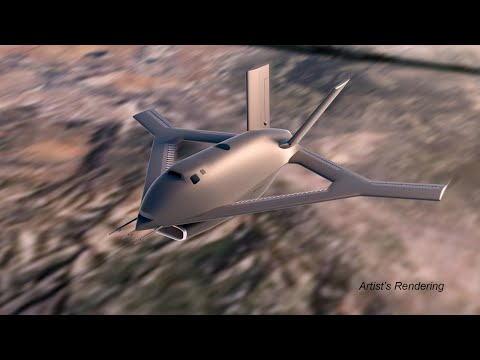
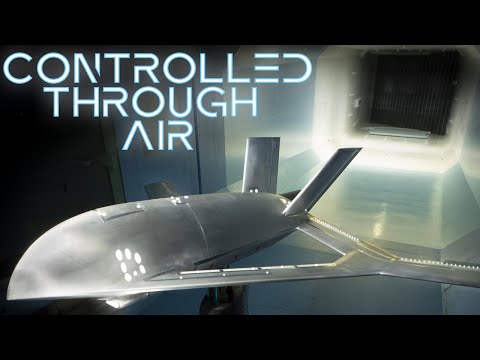
The plane will contain inner pipes and a power unit to control the air flow in the plane. The 14 different AFC effectors are built to be modular and possible to swap with other designs during the testing phase.
「AFC エフェクタの性能が従来の制御機構とどのように比較されるかを監視するセンサーを設置し、これらのデータを活用して、AFC が将来の軍用機および商用機にどのように革命をもたらすかをより深く理解できるようにします。」
Richard Wlezien – DARPA’s program manager for CRANE
Swipe to scroll →
| 機能 | 従来の制御 | アクティブフローコントロール(AFC) |
|---|---|---|
| 主要メカニズム | 機械的表面(フラップ、方向舵) | エアジェット、センサー、制御アルゴリズム |
| エネルギー使用 | 受動的、低 | 能動的、やや高い |
| 応答性 | 遅い、機械的遅延 | リアルタイムの動的制御 |
| 故障モード | 予測可能、徐々に進行 | 冗長性が必要;故障は急激 |
| 潜在的な利点 | 実績あり、シンプル | 揚力増大、抗力低減、ステルス性向上 |
X-65 タイムライン
Aurora started to work on the CRANE program in 2020, with wind tunnel tests performed in 2022.
The program got its official designation in 2023年5月, after which further testing started.
Construction is now ongoing, with completion of the fuselage expected in 2026年1月, at Aurora’s Bridgeport, West Virginia, manufacturing facility. The propulsion and AFC system components are also already built and waiting to be integrated into the plane.

Source: Aurora Flight Sciences
What the X-65 Program Aims to Prove
Besides experimenting with AFC, the clear goal is to create a platform on which to build later designs of military and then civilian aircraft.
One key advantage of AFC is that it can handle turbulence a lot better and might ultimately allow for simpler designs, removing the need for large, complex mechanical control surfaces.
It should also reduce drag and increase lift, leading to fuel savings and increased flight range.
From a military perspective, by controlling wakes and aerodynamic signatures, AFC can help to improve stealth characteristics, an important factor as advanced semiconductors like GaN (Gallium Nitride) are used to create ever more efficient radars.
Lastly, AFC can help stabilize and boost the takeoff of a plane, which is very useful for fighter jets or drones taking off from an aircraft carrier.
What the X-65 Means for Future Aircraft
The X-65 and its active flow control systems will not directly be a usable fighter jet or drone, but a technology platform from which future functional aircraft will be built.
It is yet to be seen how efficient and practical these systems will be, which is what the X-65 tests will clarify.
Most likely, the very first application will be for advanced military aircraft, as the requirements of a drone or manned aircraft taking off from an aircraft carrier or requiring stealth are a lot more demanding, and would benefit from AFC.
Later on, once the technology is proven and well established, it is likely that it can be deployed to civilian aircraft. At first, this might come as a complement to traditional flight control, and progressively replace them with newer airliner designs.
投資家への要点: Boeing の Aurora 部門は X-65 プログラムを通じて次世代飛行制御研究の中心に位置付けられています。AFC は実験段階ですが、早期の成功は Boeing の長期的な防衛・航空宇宙ロードマップを強化し、将来のステルス機や空母発射プラットフォームが進化する中で競合他社との差別化につながります。
投資家にとって、AFC は Boeing の R&D 努力に組み込まれた数年規模の技術オプションであり、将来的にマージンを改善し、防衛契約を拡大し、商業化すれば次世代旅客機設計に影響を与える可能性があります。
Investing In Active Flow Control
Aurora Flight Sciences / Boeing
BA 価格チャート
Aurora Flight Sciences is not just developing the X-65, but also many other aircraft:
- Small flying drones (Unmanned Aircraft Systems – UAS) like the Skyron-X reconnaissance drone.
- The Centaur Optionally Piloted Aircraft is a flown-from-a-ground-station small airplane with an on-board safety pilot, enabling cost-effective flight testing in the National Airspace System (NAS).
- Many experimental aircraft, be it manned or unmanned, electric or traditional, thanks to rapid prototyping and advanced manufacturing methods, including 3D printing, CNC 5-axis machining, automated in-situ metrology, and automated fiber placement.
- For example, the “Liberty Lifter” seaplane, the SPRINT, a vertical lift X-plane using fan-in-wing technology, NASA’s Electrified Powertrain Flight Demonstration (EPFD), or NASA’s X-66 Sustainable Flight Demonstrator (SFD)
This overall makes Aurora the experimental / R&D branch of Boeing.
Boeing, the larger group, has experienced a rough period lately, notably with a series of crashes of its aircraft and the highly-publicized failure of its Starliner space capsule.
It is still, nevertheless, a giant in aircraft manufacturing, with the delivery volume of the 777X program ramping up, leading to revenues up to $23.5B in Q3 2025 compared to Q3 2024 ($17.8B) and a return to positive free cash flow.
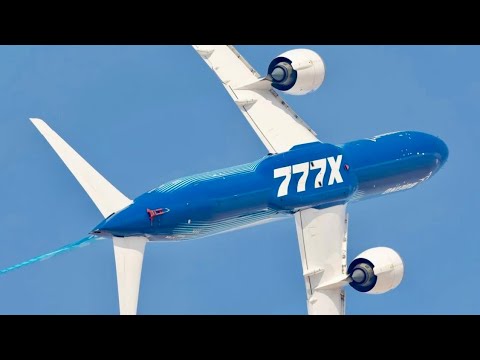
The especially powerful engines of the 777X have notably impressed both experts and the public at the Dubai 2025 Air Show for the plane’s very quick take-off and strong maneuverability.
While the commercial airplane is the most visible part of the company ($11.1B of revenues in Q3 2025), the defense, space, and security segment was also a major contributor ($6.9B of revenues in Q3 2025), with services, mostly parts and maintenance of existing aircraft, bringing $5.4B.
So the company is likely still not fully out of the woods from its past troubles, having to reform some more of its manufacturing process and overhaul its supply chain. It notably re-acquired Spirit Aerospace for $4.7B in 2024.
But the company is getting back on track, and the solid line-up of military orders, for example, a steady stream of orders for air tankers and Apache helicopters by the Pentagon and Israel for $7B, should keep the company going while its civilian aircraft department’s reputation is repaired.
Latest Boeing (BA) Stock News and Developments



