
エネルギー
蒸発に関する新たな理解が、光子による『光分子効果』を通じて淡水化プロセスの改善につながる可能性

 Securities.io を Google の優先ソースに追加

Until recently, there were a few agreed-upon variables that could result in/affect the evaporation of water – the process by which water transitions from a liquid to a gas. However, new research coming out of the Massachusetts Institute of Technology (MIT) is set to upend this, pointing to a new understanding of how simple photons (light) can play an outsized role in the process. With that in mind, researchers have found that photons can evaporate water both alongside and in the absence of heat.
既存の変数
Before diving into why this discovery matters, take a moment to refresh on the previous list of variables that play a role in evaporation.
- 熱: 蒸発の主な原因は熱です。水分子は常に動いており、熱エネルギーを得るとその動きが増加します。エネルギーが液体中の分子を結びつける分子間力を克服できるほどになると、蒸気として空気中に逃げ出すことができます。
- 表面積: 蒸発速度は水の表面積にも依存します。表面積が大きいほど、より多くの分子が空気にさらされ、蒸発しやすくなります。
- 湿度: 空気中にすでに存在する水蒸気の量が蒸発に影響します。空気がすでに水蒸気で飽和している場合、蒸発は遅くなります。これは、湿度が高いほど、空気がさらに水分子を受け入れる能力が低下し、蒸発速度が低下するためです。
- 空気の流れ: 風や空気の流れは、蒸発時に形成された水蒸気を運び去り、水面直上の湿度を下げ、より多くの水が蒸発できるようにします。
- 圧力: 大気圧も蒸発に影響します。大気圧が低いと、水は低い温度で沸騰し、蒸発が速くなります。高い大気圧は蒸発を抑制することがあります。
- 水の温度: 外部の熱源とは別に、水自体の温度も要因です。温かい水は分子が平均的により多くのエネルギーを持つため、蒸発が速くなります。
本質的に、分子が液体相から抜け出して水蒸気になるのに十分なエネルギーを持つときに水は蒸発します。このプロセスは温度、湿度、圧力、風、そして水体そのものの物理的特性によって影響を受けます。今、光子への曝露を変数リストに加えることができます。
混同しないでください
気化: 蒸発を含む一般的な用語で、沸点で液体全体が蒸気になる沸騰も含みます。
凝縮: ガスを冷却して液体相に変化させる、蒸発の逆プロセスです。
蒸発は、むしろ沸点以下の液体表面で起こる気化の一種です。
どのように実現されたか?
So how did MIT Researchers discover that photons can be added to the list of variables associated with evaporations? The team’s findings were achieved through a series of experiments and simulations focused on the evaporation behavior of water when contained within a hydrogel. This work was first undertaken as the team looked to understand and reaffirm past experiments that yielded results in which water evaporation rates surpassed the expected thermal limit – the maximum amount of evaporation possible when a given amount of heat is applied.
To recreate these results, the researchers utilized a ‘solar simulator’. Here, saturated hydrogels were subjected to various wavelengths of light in the absence of heat. Interestingly, results showed that despite no influence by heat, a measurable loss in mass occurred over time, with the most pronounced differences being found when green light was used. With the response being independent of thermal effects, it affirmed that light, not heat, was the cause of evaporation.
In the end, the researchers discovered that, against conventional expectations, a combination of water and hydrogel enabled the energy from photons to be harnessed to drive evaporation beyond known thermal limits. The process is now being called the ‘photomolecular effect’.
なぜ重要なのか?
This discovery of the photomolecular effect could revolutionize several industries and environmental sciences. They may extend to include renewable energy storage and recovery systems, where controlled evaporation rates are critical. For instance, this could lead to the development of new materials or surfaces designed to maximize water evaporation for energy storage in dry climates.
In agriculture, this principle might be used to develop more efficient irrigation systems that minimize water loss by restricting exposure to certain wavelengths, thereby conserving water while sustaining plant growth.
In the field of meteorology, understanding the photomolecular effect could improve weather prediction models by providing a more accurate representation of water cycle dynamics.
Additionally, the pharmaceutical and food industries, which often rely on precise drying processes, could see improvements in the efficiency and control of moisture removal from products.
Lastly, in urban planning and the development of sustainable architecture, this discovery might inspire innovative cooling systems that use solar energy more efficiently, reducing reliance on traditional air conditioning and contributing to energy-saving building designs.
光子から最初に恩恵を受ける者
While there is a large variety of industries that may see process efficiencies improved through this new understanding of evaporation, the researchers behind its discovery believe that the most obvious example would be those involved with the solar desalination of salt water.
Desalination is simply the process by which salt and minerals are removed from water, making it suitable for both consumption and irrigation. With the rise of renewables, this process is increasingly powered through solar energy. The following are each companies involved with solar desalination, which could soon benefit from the findings discussed above.
Consolidated Water (CWCO ) (NASDAQ: CWCO): Based out of the Cayman Islands, Consolisated Water has grown since its founding in 1973 to become a multinational company specializing in seawater desalination plants.

At time of writing, Consolidated Water boasted the following metrics.
時価総額:$465,675,764
先行P/E 1年: 20.06
1株当たり利益 (EPS): N/A
Solar Water Plc: This UK-based company has developed a solar dome technology intended to desalinate seawater, particularly targeting regions with high solar irradiance and scarce freshwater resources.
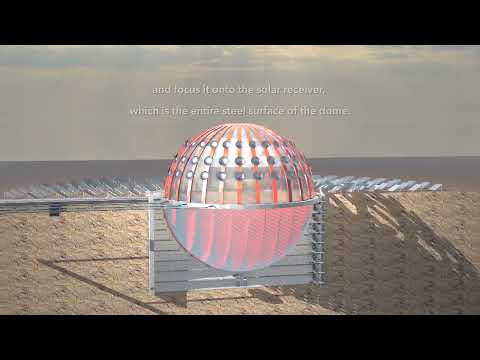
Abengoa: A Spanish multinational corporation that has been involved in the development of large-scale solar-powered desalination plants, particularly in areas like the Middle East and North Africa.
Despite the scope of its operations, Abengoa has been on the verge of bankruptcy for multiple years. New processes that have the potential to raise operational efficiencies greatly may be key to surviving.
These companies are active in various parts of the world, addressing the freshwater needs of arid regions and areas with limited access to clean water – a need that will only continue to grow in time.
最終的な考え
While such a discovery may seem mundane at first glance, it is anything but. Not only does it show how limited our understanding is of concepts and processes that have long been thought to be mastered, but it also holds the potential for widespread applications.
Innovative and forward-thinking companies are reliant on scientific advancements such as this to build out and offer solutions leveraging new capabilities and efficiencies. Now, companies like Consolidated Water, Veolia, and Solar Water PLC need to adapt and run with it.



