Espace
IA basée sur l’espace: la prochaine frontière pour l’échelle du cloud

 Ajouter Securities.io à vos sources préférées sur Google

Pourquoi l’infrastructure IA se déplace vers l’orbite
Avec l’essor de l’IA, plusieurs contraintes d’approvisionnement sont apparues. La première concernait les GPU : autrefois réservés à un marché de niche dans le jeu vidéo, ces composants spécialisés sont désormais massivement adoptés par les centres de données d’IA. Nvidia (NVDA ), leader du secteur, est ainsi devenue la première entreprise mondiale par capitalisation.
Une autre limite devient toutefois le principal problème : l’approvisionnement en énergie.
This is because AI data centers are now measured not so much by their computational power, but by their power consumption. This is why les entreprises d’IA se précipitent pour redémarrer les centrales nucléaires, sécuriser les premiers prototypes de SMR, ou les régulateurs d’État accélèrent l’approbation de nouvelles centrales à gaz.
Alors que la course à l’énergie pour les centres de données s’intensifie, les regards se tournent vers une autre possibilité : l’IA spatiale, qui donne un sens physique inédit au « cloud computing ».
Nous avons déjà analysé en détail la possibilité d’un approvisionnement énergétique illimité grâce à des satellites orbitaux dans « Solutions énergétiques spatiales pour une énergie propre inépuisable ».
Ce concept reste néanmoins limité par la nécessité de convertir l’énergie solaire en électricité, de transformer cette électricité en micro-ondes pour la transmettre vers la Terre, puis de la reconvertir en électricité.
Ces conversions accroissent la complexité des satellites énergétiques, exigent davantage d’infrastructures au sol et réduisent fortement le rendement global, chaque changement de forme d’énergie entraînant des pertes. Le modèle ne serait probablement viable qu’avec des lancements orbitaux très bon marché.
À l’inverse, utiliser directement l’énergie en orbite serait beaucoup plus efficace et pourrait devenir rentable plus rapidement, surtout si le « produit » final peut être facilement renvoyé sur Terre.
En théorie, les centres de données spatiaux pourraient constituer une solution idéale : ils ont besoin de beaucoup d’énergie, mais transmettre les résultats des calculs vers la Terre est simple, ne nécessite aucune nouvelle infrastructure et n’entraîne pas de pertes énergétiques.
L’idée n’est pas seulement théorique. Alphabet (GOOG ) /Google vient par exemple d’annoncer le « projet Suncatcher », prototype de système de calcul d’IA en orbite que nous avons présenté dans « Le projet Suncatcher de Google et l’essor de l’IA orbitale ».
Cette approche peut-elle fonctionner, et pourquoi pourrait-elle constituer la prochaine étape du développement des infrastructures d’IA ?
La collision de deux tendances
Résoudre la contrainte énergétique terrestre
La civilisation humaine a besoin de plus d’énergie que jamais, et la commercialisation des grands modèles de langage n’a fait qu’accroître la nécessité de nouvelles capacités de production. Jusqu’à présent, la majorité des nouvelles installations repose sur l’énergie solaire.

Source: ARK Invest
Cela pose toutefois un problème aux réseaux terrestres : le solaire ne produit que lorsque le soleil brille, avec une production moindre par temps couvert, en hiver ou le soir. À l’inverse, les installations très énergivores comme les centres de données d’IA exigent une alimentation continue, alors que les pointes de consommation surviennent souvent le soir et en hiver.
En théorie, un stockage énergétique bon marché, par exemple de grands parcs de batteries, peut résoudre ce problème. En pratique, il annule une grande partie des avantages du solaire en tant que source d’énergie propre et peu coûteuse.

Source: ARK Invest
ARK Invest estime que les dépenses d’investissement dans la production d’électricité devront environ doubler pour atteindre près de 10 000 milliards de dollars d’ici 2030 afin de satisfaire la demande mondiale. Les déploiements de stockage stationnaire devront, quant à eux, être multipliés par 19.

Source: ARK Invest
Cela exigera également des investissements massifs dans le réseau électrique, ce qui alourdira encore les coûts. Toute solution évitant les dépenses liées aux batteries et au réseau pourrait être compétitive malgré ses propres coûts d’infrastructure, comme le lancement orbital de centres de données d’IA.
Le cycle déflationniste du Starship
SpaceX (SPCX ) est incontestablement l’entreprise spatiale la plus prospère jamais créée. En mettant au point des lanceurs réutilisables fiables, elle a considérablement réduit le coût d’acheminement des charges utiles en orbite terrestre. En 17 ans depuis 2008, ce coût a baissé d’environ 95 %, passant d’environ 15 600 dollars à moins de 1 000 dollars par kilogramme.
Le nouveau lanceur super-lourd Starship devrait prolonger cette tendance et ramener à terme le coût des lancements aux environs de 100 dollars par kilogramme.

Source: ARK Invest
On ne mesure pas encore pleinement que cette évolution ne se contente pas de réduire le coût des satellites ou des missions : elle transforme radicalement ce qu’il est possible de faire dans l’espace.
Lorsque la mise en orbite d’un kilogramme de matériel ne coûte plus que 100 dollars, il devient économiquement viable d’y envoyer tout équipement utile et suffisamment léger. C’est notamment le cas des cellules solaires à couche mince, qui peuvent être très légères lorsqu’elles n’ont pas besoin d’être protégées des intempéries terrestres par du verre ou des cadres métalliques rigides.
Il en va de même pour les équipements à très forte valeur par kilogramme, comme les puces informatiques.
Par exemple, une baie GB300 NVL72 complète de NVIDIA peut coûter jusqu’à 4 millions de dollars tout en ne pesant qu’environ 1,8 tonne. À 100 dollars par kilogramme, sa mise en orbite ne coûterait que 180 000 dollars, soit presque une erreur d’arrondi par rapport au prix du matériel.
Le coût total serait naturellement plus élevé en tenant compte des équipements auxiliaires, notamment le blindage, le refroidissement et la production d’énergie. Cela signifie néanmoins que la mise en orbite d’un système de calcul d’IA pourrait bientôt ne plus gonfler fortement son coût. Le seuil de bascule se situera probablement autour de 500 dollars par kilogramme lancé.

Source: ARK Invest
Autre avantage : l’essor de l’IA orbitale pourrait encore améliorer l’économie des fusées réutilisables en créant un immense marché à desservir. Achever la constellation Starlink pourrait nécessiter onze fois la masse totale mise en orbite par SpaceX jusqu’en 2025, tandis que 100 GW de capacité de calcul d’IA multiplieraient encore par 60 la demande de transport orbital. Ce volume ferait à son tour baisser davantage les coûts de lancement.

Source: ARK Invest
Pourquoi l’IA orbitale possède des avantages structurels
Glissez pour faire défiler →
| Facteur | Centres de données IA terrestres | Centres de données IA orbitaux | Pourquoi c’est important |
|---|---|---|---|
| Disponibilité énergétique | Contraint par la capacité du réseau, l’approvisionnement en carburant et les délais d’obtention des permis | Potentiel solaire quasi continu dans la bonne orbite ; aucune interconnexion au réseau | Le calcul orbital contourne la partie la plus lente de l’échelle de l’IA : énergie + permis |
| Facteur de capacité | Le solaire est intermittent ; la stabilisation nécessite du stockage ou une génération dispatchable | Haute disponibilité solaire avec une intermittence réduite par rapport au solaire terrestre | Réduit ou élimine les dépenses d’investissement en stockage pour la stabilisation de l’énergie |
| Charge de refroidissement | Charges élevées de CVC/rejet de chaleur ; contraintes d’eau dans de nombreuses régions | Refroidissement radiatif via de grands radiateurs thermiques ; aucune exigence d’eau | Plus de calcul par watt lorsque l’énergie de refroidissement est moindre (mais la masse du radiateur compte) |
| Latence & bande passante | Excellente pour les charges de travail interactives ; les dorsales de fibre sont denses | Mieux adaptée aux traitements batch/HPC, à l’entraînement ou à l’inférence asynchrone ; repose sur les liaisons satcom | L’IA orbitale commencera probablement par des charges de travail non sensibles à la latence |
| Vitesse de déploiement | Terrains, permis, mises à niveau du réseau et construction prennent des années | Le rythme de lancement devient le facteur limitant si des plateformes standardisées existent | Un modèle « fabrication + lancement » peut compresser le délai d’accès à la capacité |
| Risques durs | Permis, congestion du réseau, limites locales d’eau/thermiques | Radiation, débris/collision, maintenance et élimination en fin de vie | L’économie orbitale dépend de l’atténuation des modes de défaillance spécifiques à l’espace |
| Pivot économique | Énergie + interconnexion + dépenses d’investissement en refroidissement dominent l’échelle | Lancement + masse de la plateforme + disponibilité en orbite dominent l’échelle | Le point de bascule arrive lorsque le $/kg et les plateformes standardisées réduisent le calcul livré tout compris |
Parfait pour le solaire
L’énergie solaire est abondante dans l’espace : à capacité nominale égale, la production peut être jusqu’à quatre fois supérieure grâce à un ensoleillement direct sans pertes atmosphériques. Sur une orbite adaptée, elle est aussi beaucoup plus fiable, avec un éclairage presque continu.
Cela supprime les limites du solaire terrestre. En théorie, ce pourrait être la forme ultime de production d’énergie solaire. Toutefois, la difficulté de ramener cette énergie sur Terre impose des coûts de lancement extrêmement faibles ou une fabrication en orbite pour atteindre la rentabilité.
Une autre solution consisterait à utiliser de simples miroirs orbitaux pour éclairer des fermes solaires terrestres, comme le propose Reflect Orbital, ce qui éviterait les pertes liées à la conversion de la lumière en micro-ondes.
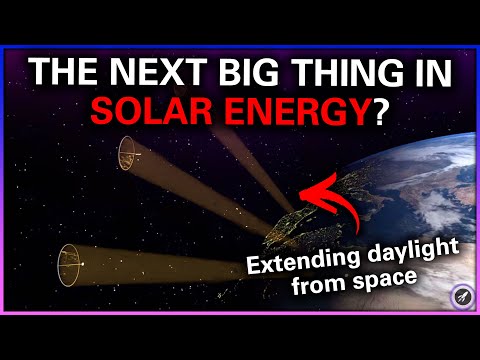
À l’inverse, si l’énergie est consommée directement en orbite, aucune de ces étapes n’est nécessaire. Une fois les calculs terminés, les données obtenues peuvent être transmises vers la Terre par les moyens de télécommunication habituels, alors que la bande passante satellitaire progresse rapidement.
Refroidissement naturel
Le refroidissement constitue un autre avantage propre aux centres de données d’IA spatiaux. À l’abri du rayonnement solaire, l’environnement spatial est extrêmement froid : un engin placé dans l’ombre de la Terre ou de ses propres panneaux peut atteindre -100 °C.
Une part importante de la consommation énergétique des centres de données terrestres sert au refroidissement. Leur implantation dans l’Arctique ou même dans la stratosphère a déjà été proposée ; l’espace offre donc un avantage naturel. D’immenses systèmes de refroidissement passif seront probablement nécessaires pour évacuer la chaleur par rayonnement, mais la solution est techniquement réalisable.
Intelligence satellite omniprésente
SpaceX et son réseau satellitaire à haut débit ont complètement transformé le paysage orbital : les satellites Starlink représentent environ la moitié de tous les satellites actuellement en orbite.

Source: ARK Invest
Cette évolution a entraîné une baisse exponentielle du coût de la bande passante satellitaire, divisé par près de 100 entre 2020 et 2024. Les vols de Starship devraient permettre de nouvelles réductions.

Source: ARK Invest
Les télécommunications spatiales deviennent si répandues et peu coûteuses que les centres de données orbitaux pourront utiliser les réseaux existants pour communiquer avec la Terre sans construire de capacité dédiée. Un réseau satellitaire dense pourrait aussi favoriser des services de maintenance supplémentaires, comme le ravitaillement ou le « remorquage », afin de prolonger la durée de vie de ces actifs.
Séparer les infrastructures spatiales et terrestres
Les centres de données d’IA orbitaux n’étant pas raccordés au réseau électrique classique, ils n’influenceront pas les prix de l’électricité sur Terre. La demande supplémentaire en technologies solaires pourrait même contribuer à réduire le coût du solaire dans le monde.
Ces centres n’auront pas non plus à attendre la modernisation des réseaux terrestres, qui peut prendre des années. Ils évitent en outre de mobiliser des terrains et de précieuses ressources en eau, ce qui améliore leur rentabilité globale.
Investir dans l’IA orbitale
Broadcom
AVGO Graphique du prix
Outre les fabricants de GPU et les développeurs de modèles, les entreprises qui fournissent la connectivité et les équipements informatiques spécialisés des centres de données comptent parmi les grandes bénéficiaires de l’essor de l’IA. Broadcom (AVGO ), géant technologique dont les origines remontent à l’époque de la bulle Internet, figure parmi les principaux acteurs de cette catégorie.
Depuis la fusion de Broadcom et d’Avago en 2016, les activités du groupe se répartissent entre les logiciels d’infrastructure et le matériel de connectivité, notamment les réseaux sans fil, les serveurs et les réseaux d’IA.

Source: Broadcom
La conception et la fabrication de XPU constituent une autre activité liée à l’IA en pleine croissance. Ces composants réunissent le CPU, le GPU et la mémoire dans un même dispositif électronique. Broadcom s’appuie sur son expérience des ASIC, des circuits intégrés propres à une application, pour créer des puces spécialement conçues pour les calculs d’IA.

Source: Broadcom
Ces unités de calcul compactes et économes en énergie conviennent parfaitement à l’IA orbitale, qui exige un équilibre optimal entre performances et masse. Le meilleur rendement énergétique des ASIC constitue également un atout : une consommation moindre réduit la masse des panneaux solaires nécessaires en orbite.
Points clés pour les investisseurs:
- Thèse principale: La contrainte limitante de l’IA passe du calcul à la disponibilité énergétique et aux délais d’obtention des permis ; le calcul orbital constitue une solution structurelle potentielle.
- Déclencheur économique: Des coûts de lancement approchant ~500 $/kg élargissent matériellement le mix de charges utiles réalisables (solaire, radiateurs, blindage) pour des déploiements de calcul orbital rentables.
- Premiers gagnants: Les facilitateurs « picks‑and‑shovels »—concepteurs d’ASIC/XPU, photonique/optique co‑emballée, et gestion thermique—bénéficient avant l’existence publique de tout « cloud orbital pur ».
- Risques clés: Le durcissement contre les radiations, la logistique de maintenance en orbite et le risque de débris/collision peuvent éroder l’économie même si les prix de lancement baissent.
- Horizon temporel: Considérez l’IA orbitale comme un thème d’infrastructure à long terme ; concentrez‑vous sur les entreprises monétisant l’expansion de l’IA terrestre aujourd’hui tout en créant des options pour les charges de travail spatiales.
Dernières actualités et développements boursiers de Broadcom (AVGO)