
Espacio
Cohetes de Gran Capacidad de Próxima Generación que Habilitan una Economía Multiplanetaria

 Añade Securities.io a tus fuentes preferidas en Google

Cohetes de Gran Capacidad, Reutilizables y Más Grandes
Desde las primeras misiones orbitales del Sputnik y Yuri Gagarin, la exploración espacial ha estado limitada por la capacidad de los cohetes para poner cargas útiles en órbita.
Los primeros cohetes tenían capacidades muy limitadas, con el primer satélite Sputnik siendo apenas una esfera de aluminio pulido de 58 cm (23 pulgadas) de diámetro. El cohete Vostok‑1, responsable del primer vuelo tripulado, solo podía llevar 4,7 toneladas a LEO.
En comparación, el Saturn‑5 que llevaría astronautas a la Luna podía transportar hasta 140 toneladas (310 000 lb) a LEO, una hazaña que aún hoy sigue sin igual.

Fuente: NASA
Sin embargo, todos estos cohetes eran dispositivos “consumibles” de un solo lanzamiento. Era suficiente para llegar a la Luna en una carrera espacial impulsada por el prestigio y financiada por el Estado entre EE. UU. y la URSS.
Pero eso equivale a desechar un Boeing 777 entero después de cada vuelo. Si hiciéramos eso, los viajes en avión serían horriblemente caros y nunca tendrían sentido desde el punto de vista económico.
Por eso la invención de SpaceX (SPCX ) de cohetes reutilizables lo cambió todo. Aunque al principio de menor capacidad, la reutilización de Falcon‑1, y luego de Falcon‑9 y Falcon Heavy, hizo que el costo de alcanzar la órbita terrestre se desplomara.
Hoy, una nueva generación de cohetes de gran capacidad está en desarrollo, y los competidores de SpaceX le siguen los pasos. Con la reutilización ahora como requisito, como ilustra el probable abandono del programa SLS después de 2028, estos cohetes permitirán la construcción de más infraestructura en el espacio que nunca antes.
En el largo plazo, la historia probablemente verá esto como el punto de inflexión en el que nuestra especie se volvió multiplanetaria, ya que estos lanzadores permitirán construir infraestructuras espaciales, bases lunares, colonias marcianas y un suministro ilimitado de energía mediante paneles solares orbitales, conformando en conjunto una economía espacial completamente nueva (siga los enlaces para consultar artículos detallados sobre cada tema).
Por Qué el Tamaño Importa
El primer efecto, y el más evidente, de los cohetes reutilizables —especialmente de los más grandes— es la reducción del costo de llegar a las órbitas terrestres y al espacio profundo.

Fuente: ARK Research
Con una capacidad esperada de más de 100 toneladas, el Starship de SpaceX está cambiando por completo lo que es posible llevar a la órbita. Para referencia, la ISS completa pesa 420 toneladas (925 000 libras) y requirió más de 40 lanzamientos orbitales para su ensamblaje. Starship podría hacer algo similar con solo 3‑4 lanzamientos, y probablemente con 1/100 th del costo total.
Deslice para desplazarse →
| Cohete | Empresa / País | Aproxim. Carga Útil LEO (t) | Reutilizabilidad | Estado (2025) | Notas |
|---|---|---|---|---|---|
| Starship | SpaceX / EE. UU. | 100–150 (diseño) | Propulsor y nave totalmente reutilizables | Prototipo probado en vuelo | Reabastecimiento en órbita y misiones de espacio profundo en desarrollo. |
| New Glenn | Blue Origin / EE. UU. | ≈45 | Primera etapa reutilizable | Primeros vuelos en 2025 | Diseñado para tripulación, carga y misiones planetarias. |
| Falcon Heavy | SpaceX / USA | 63,8 | Propulsores laterales reutilizables | Operativo | Actualmente el cohete de gran capacidad operativa más potente. |
| Neutron | Rocket Lab / EE. UU.–Nueva Zelanda | ≈13 | Primera etapa reutilizable | En desarrollo | Apunta a LEO, constelaciones y potencial carga punto a punto. |
| Terran R | Relativity Space / EE. UU. | 23,5–33,5 (diseño) | Primera etapa reutilizable (planificada) | Objetivo de primer lanzamiento 2026 | Cohete reutilizable de 2 etapas dimensionado para servir al mercado de constelaciones en órbita terrestre baja (LEO) |
| Long March 10 | CALT / China | ≈70 | Variante parcialmente reutilizable (10A) | En desarrollo | Misiones lunares tripuladas previstas antes de 2030. |
Además de las economías de escala y la reducción de costos, los cohetes de mayor tamaño cambian radicalmente lo que puede hacerse en el espacio. Por ejemplo, al abaratarse los lanzamientos, el reabastecimiento en órbita pasa a ser viable.
Esto significa que llevar cientos de toneladas de materiales al espacio profundo, como la Luna o incluso Marte, ahora es posible con solo el vuelo inicial, más algunos vuelos de reabastecimiento. Además, un cohete reabastecido no necesitará llevar combustible para el aterrizaje, por lo que podrá transportar cargas aún más pesadas a LEO.
Esto también cambia el tipo de equipamiento que puede enviarse al espacio. Hasta ahora, cada satélite, elemento de estación espacial, telescopio espacial y sonda interplanetaria tuvo que diseñarse con el peso como la primera restricción de ingeniería, sacrificando durabilidad, costos, facilidad de mantenimiento y robustez en aras del bajo costo de lanzamiento.
Otra restricción eliminada es el espacio. Vehículos de lanzamiento como Starship tendrán un volumen masivo para su carga útil, limitando la necesidad de diseños complejos que se desplieguen una vez liberados.

Fuente: Universidad de Chicago
Lo más probable es que los vehículos de lanzamiento más pesados signifiquen un rediseño radical desde los primeros principios del equipamiento espacial, con costos de construcción en caída y mayor durabilidad, reparabilidad y posibilidad de actualización como nuevo enfoque.
Otro escenario posible es que los cohetes reutilizables al final de su ciclo de vida puedan lanzarse una última vez y quedar en órbita, con el tanque ahora hueco convertido en estaciones espaciales masivas y espaciosas.
El Líder de Cohetes Pesados: SpaceX
Gracias a su notable trayectoria y a la ventaja que lleva en esta nueva carrera espacial, SpaceX es la empresa que concentra mayores expectativas para esta nueva generación de lanzadores pesados.
El siguiente paso es Starship, un cohete superpesado cuyo objetivo original era alcanzar una capacidad de 200 toneladas a LEO.

Fuente: SpaceX
La estimación más reciente sitúa la capacidad más cerca de las 100 toneladas debido a un cambio de diseño, en particular para hacer más resistentes a fallos las numerosas toberas de los motores.
El cohete destaca por varios elementos de diseño que se apartan de los cohetes anteriores, tanto de SpaceX como del sector espacial en general:
- Una estructura hecha de acero en lugar de una aleación de alto rendimiento más comúnmente usada en otros cohetes.
- Motores Raptor alimentados con metano, un tipo de combustible raramente usado hasta ahora.
- Piezas impresas en 3D.
Las primeras pruebas de Starship fueron, como mínimo, difíciles: muchos prototipos explotaron durante el lanzamiento o no lograron aterrizar de forma segura.

Las pruebas posteriores fueron mucho mejores; en particular, la prueba 11, realizada en octubre de 2025, fue un éxito total. Esto significa que SpaceX ya dispone de un modelo fiable de Starship que puede seguir perfeccionando.

Por ejemplo, la carga útil a LEO del Falcon 9 aumentó de 10,1 toneladas en la versión 1.0 a 22,8 toneladas en su versión más reciente, «FT». El motor también se ha simplificado progresivamente pese a entregar un empuje mucho mayor.
Starship V3, que será 1,5 metros (5 pies) más alto que su predecesor, comenzará sus primeras pruebas a principios de 2026. También utilizará Raptor 3, una versión más potente del motor que impulsaba las versiones anteriores de Starship.

Fuente: Elon Musk
«Entre muchas otras cosas, estamos instalando una nueva plataforma orbital de lanzamiento, un nuevo sistema de foso de llamas y modernizando los brazos de captura para futuras recuperaciones».
Jake Berkowitz, ingeniero principal de propulsión de SpaceX
Esta etapa también será la encargada de probar el reabastecimiento en órbita. Así se demostrará la capacidad de Starship para atender no solo LEO, sino también órbitas más lejanas y misiones a la Luna y Marte.
Más adelante se espera para 2027 o 2028 una versión V4 todavía mayor y más potente.

Fuente: Elon Musk
Es probable que algún día un futuro cohete sustituya a Starship, aunque todavía no se ha presentado oficialmente ninguno. Lo más probable es que primero se desarrolle una versión específica para los viajes a Marte.

SpaceX no cotiza en bolsa, pero en este artículo puede consultar cómo podría llegar a comprar acciones de la empresa (siga el enlace).
Cohete de Gran Capacidad New Glenn de Blue Origin
Blue Origin, otra empresa financiada por un multimillonario —en este caso Jeff Bezos—, ha desarrollado un gran cohete más lentamente que SpaceX, al preferir un enfoque pausado y constante frente al método más rápido, pero más propenso a errores, de SpaceX.
Buena parte del futuro de la empresa dependerá de su nuevo vehículo de lanzamiento pesado, el cohete parcialmente reutilizable New Glenn.

Fuente: Ars Technica
En el lanzamiento del 13 de noviembre de 2025 de ESCAPADE («Exploradores de Escape, Aceleración del Plasma y Dinámica»), una misión de la NASA dedicada al estudio de Marte, la empresa recuperó con éxito la primera etapa del cohete.
Actualmente, New Glenn puede transportar 45 toneladas a LEO, una capacidad comparable a la del Falcon Heavy, aunque no es totalmente reutilizable.
Blue Origin publicó un comunicado en el que detalló los próximos pasos para su vehículo pesado, entre ellos mejoras estructurales y actualizaciones de la propulsión, la aviónica, la reutilización y la recuperación.
La empresa también planea desarrollar una versión «superpesada» del vehículo, probablemente destinada a convertir a New Glenn en un rival adecuado para Starship de SpaceX.
El siguiente paso de Blue Origin será probar su módulo lunar Blue Moon MK1, precursor del módulo tripulado MK2 de la empresa.
La misión MK1 demostrará y validará el hardware y los sistemas del módulo y transportará una carga de la NASA denominada SCALPSS (cámaras estereoscópicas para estudiar la superficie y las columnas de polvo lunares), que recopilará imágenes durante el alunizaje.

Fuente: Jeff Bezos
La reutilización total es el objetivo de Blue Origin, lo que le permitiría alcanzar a SpaceX y mantenerse por delante de otros competidores. El rumoreado «Proyecto Jarvis», del que se habla desde hace años, es la vía con la que la empresa pretende lograrlo.
Aun así, Jeff Bezos no parece convencido de que la reutilización total sea imprescindible y, al parecer, ha organizado una competencia entre los equipos que trabajan en una segunda etapa reutilizable y una desechable.
«Cuando se compara eso sobre el papel, la respuesta no es evidente. El objetivo de la etapa desechable es que resulte tan barata de fabricar que la reutilización deje de tener sentido.
El objetivo de la etapa reutilizable es que sea tan operativa que desecharla nunca tenga sentido».
Fuente: PayloadSpace
Neutron de Rocket Lab: Desafío de Mediana Gran Capacidad
RKLB Gráfico de precios
Uno de los aspirantes más serios al liderazgo de SpaceX en lanzamientos reutilizables es Rocket Lab.
El cohete más reciente que desarrolla Rocket Lab es Neutron.
Con una carga útil de 13 toneladas a la órbita terrestre baja (LEO), Neutron transportará 43 veces más masa que Electron, el cohete actual de la empresa. Incluso podría enviar hasta 1,5 toneladas a Marte o Venus, lo que lo convierte en una opción creíble para misiones de la NASA con vehículos exploradores y equipos experimentales hacia los planetas más cercanos. Esto incluye la potencialmente muy lucrativa misión de Retorno de Muestras de Marte.
Neutron también podría ser utilizado por la Fuerza Aérea de EE. UU. en una misión Rocket Cargo para transportar carga de un punto a otro.
«Esta oportunidad para la Fuerza Aérea de EE. UU. no solo ayuda a impulsar la logística espacial, sino que también demuestra el alto grado de confianza del Departamento de Defensa en las capacidades de Neutron. Hay una gran expectación por el vuelo inaugural de Neutron este año, y nos entusiasma mostrarlo como plataforma de I+D para la logística punto a punto del Departamento de Defensa».
Sir Peter Beck – fundador y director ejecutivo de Rocket Lab
Neutron utilizará propelente de oxígeno líquido y metano, siguiendo el ejemplo de Starship. Su estructura estará hecha de un compuesto ligero de carbono.
(También puede obtener más información sobre Rocket Lab en nuestro informe de inversión dedicado a la empresa).
Relativity Space y el Terran R Impreso en 3D
Aunque SpaceX inventó el cohete reutilizable, en gran medida lo produjo mediante métodos de fabricación tradicionales ya probados por la industria espacial, pero aplicados con mayor eficiencia.
Relativity Space es aún más ambiciosa: desde su fundación emplea tecnología de impresión 3D para su Terran 1 (con una carga de 1,25 toneladas a LEO) y para el motor Aeon R que impulsará el futuro Terran R reutilizable.
Se espera que Terran R transporte 23,5 toneladas a la órbita terrestre baja (LEO), o hasta 33,5 toneladas en su versión de mayor tamaño.

Fuente: Relativity Space
Aunque será mucho más pequeño que Starship, resulta comparable al cohete actualmente operativo de SpaceX, Falcon Heavy, y sus 50 toneladas de carga a LEO.
El primer lanzamiento de Terran R está previsto para finales de 2026 desde el Complejo de Lanzamiento 16 (LC-16) de la Estación de la Fuerza Espacial de Cabo Cañaveral.
La empresa aplica en Terran R métodos de fabricación inteligente, integrados verticalmente y ya probados, para optimizar costos, escalabilidad y velocidad y permitir una alta frecuencia de lanzamientos. Este enfoque permitió a Relativity Space iterar con rapidez los componentes que se benefician de pruebas rigurosas de hardware y avanzar considerablemente en la fabricación de las estructuras y los sistemas principales de vuelo de Terran R.
Relativity utiliza especialmente Glenn Research Copper, o GRCop, desarrollado por la NASA y compuesto de cobre, cromo y niobio.
GRCop está optimizado para ofrecer alta resistencia mecánica, gran conductividad térmica, elevada resistencia a la fluencia —que permite soportar mayores tensiones y deformaciones a altas temperaturas— y buen comportamiento ante ciclos de baja frecuencia —para evitar fallos del material— por encima de 900 °F.
Aunque la impresión 3D es importante para Relativity, las piezas de mayor tamaño, como los paneles del cuerpo del cohete, todavía se fabrican mediante métodos tradicionales.
Este enfoque híbrido optimiza la rapidez de desarrollo y la escalabilidad, lo que nos permite llevar Terran R al mercado con rapidez para nuestros clientes.
Por ahora, Relativity Space sigue siendo una empresa privada respaldada por firmas de capital de riesgo.
Al ser una de las empresas de cohetes de mayor perfil, se espera que salga a bolsa dentro de algunos años, probablemente después de varios lanzamientos exitosos de Terran R que confirmen el acierto de su enfoque técnico.
Cohetes Chinos
Long March 10
Hasta ahora, las empresas estadounidenses han dominado el panorama de los lanzadores reutilizables. Sin embargo, los programas chinos, tanto públicos como privados, están cerrando rápidamente la brecha.
El más destacable es Long March 10, un cohete parcialmente reutilizable desarrollado por el Gobierno chino y el modelo más reciente de la serie Long March.
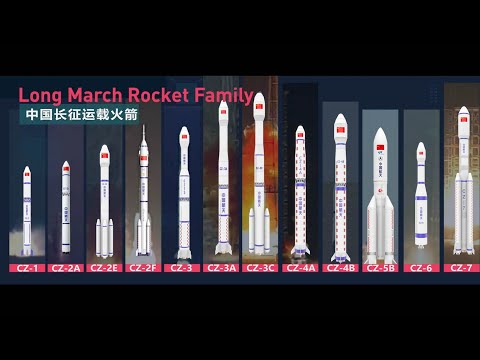
El Long March 10 completo utilizará tres primeras etapas unidas. Su objetivo es llevar 70 toneladas a LEO y asumirá buena parte de la construcción y el abastecimiento de la estación espacial Tiangong.
Su primer lanzamiento debería producirse en 2026 como preparación para una misión lunar en 2030.
A medida que se retrasa el programa Artemis de la NASA y Starship aún no está listo para alunizar, esto podría dar a China una ventaja decisiva en el regreso a la Luna durante la nueva carrera espacial.
Se espera una reutilización total para Long March 12A, desarrollado en paralelo, cuya segunda etapa superó una prueba de encendido estático en 2025.
Empresas Chinas Privadas de Cohetes Reutilizables
Muchas empresas privadas chinas trabajan en cohetes reutilizables e intentan reproducir con talento nacional la estrategia de SpaceX: construir primero cohetes reutilizables pequeños y después aumentar su escala. Entre ellas se encuentran:
- Space Epoch (Yuanxingzhe-1 )
- LandSpace (Zhuque−3)
- iSpace (Hyperbola−3)
- Orienspace (Gravity−2)
- Space Pioneer (Tianlong−3)
- Galactic Energy (Pallas−1)
- CAS Space (Lijian-2 rocket)
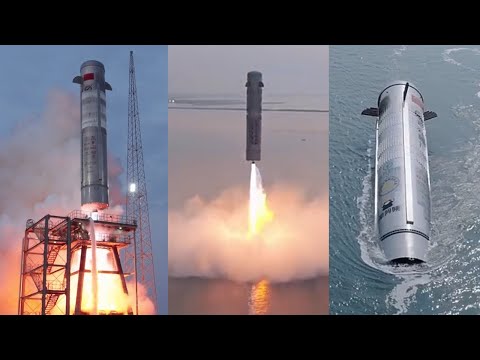
De todas ellas, el éxito más reciente fue el primer despegue y aterrizaje vertical marítimo exitoso conocido de una empresa china de cohetes, logrado por Space Epoch en mayo de 2025.
Resumen de la Competencia China
En conjunto, la competencia por los cohetes reutilizables parece intensificarse, con una oleada de nuevas empresas chinas siguiendo de cerca a los cohetes estadounidenses.
Por ahora, la mayoría puede considerarse dos pasos por detrás: apenas empieza a alcanzar a Rocket Lab y Relativity Space, y sigue rezagada frente a SpaceX y Blue Origin.
Sin embargo, si los últimos 20 años han enseñado algo a los inversores, es que la entrada de China en un nuevo campo tecnológico casi siempre anuncia una competencia feroz.
Así ocurrió con las baterías y los paneles solares, y ahora también sucede con los semiconductores y los cohetes espaciales. Por ejemplo, la cadencia acumulada de lanzamientos de China en 2025 fue algo inferior a la mitad de la de SpaceX.
Esto también incluirá Guowang, una constelación propuesta de 13.000 satélites en órbita terrestre baja destinada a competir con Starlink.
Por tanto, los inversores en empresas espaciales occidentales deberían vigilar a estos competidores.
Otros Programas Emergentes de Cohetes Reutilizables
Planes Reutilizables de los Cohetes Korona y Amur‑SPG de Rusia
Rusia, rival en la primera carrera espacial, se ha quedado atrás en las últimas décadas en materia de tecnología espacial, especialmente en cohetes de lanzamiento orbital. Aun así, intenta finalmente recuperar terreno.
Se espera que el desarrollo del cohete reutilizable Korona comience en 2026.
«El vehículo de lanzamiento tendrá un costo extremadamente bajo para poner una carga útil en órbita y el cohete podrá utilizarse hasta 100 veces.
La masa de la carga útil lanzada desde el cosmódromo de Vostochny será de 5,5 toneladas».
En paralelo, Soyuz-7, también llamado Amur-SPG, es un cohete reutilizable propulsado por metano con capacidad para llevar 10,5 toneladas a LEO, cuyo lanzamiento se espera para 2030.
Se prevé que el cohete incorpore materiales compuestos, impresión 3D y diseño biónico para reducir el peso sin sacrificar la integridad estructural y, al mismo tiempo, disminuir los costos.
«Roscosmos pretende que cada lanzamiento de Amur-SPG cueste alrededor de 22 millones de dólares, una reducción considerable frente a los 50 millones por lanzamiento del cohete reutilizable Falcon 9 de SpaceX».
Experimentos de Cohetes Reutilizables de Japón (Honda y JAXA)
La empresa japonesa Honda realizó una prueba exitosa de lanzamiento y aterrizaje de su cohete reutilizable experimental en junio de 2025.
Aunque el cohete es relativamente modesto (6,3 m de longitud, 85 cm de diámetro, 900 kg de peso en seco y 1.312 kg con combustible), Honda lo desarrolló por completo y de manera independiente.
Forma parte de las actividades espaciales de la empresa, junto con un vehículo lunar presurizado y tripulado desarrollado en colaboración entre la agencia espacial japonesa JAXA y Toyota.
Esfuerzos Privados de Lanzamiento Reutilizable de la India (Agnikul e ISRO)
El Vehículo de Lanzamiento Reutilizable-Demostrador Tecnológico (RLV-TD) de la Organización de Investigación Espacial de la India (ISRO) es el programa nacional de cohetes reutilizables. Todavía se encuentra en una fase inicial de desarrollo.
Agnikul Cosmos es una empresa privada india que realizó su primera prueba suborbital el 30 de mayo de 2024: fue el primer vuelo del mundo con un motor impreso en 3D de una sola pieza, el primer lanzamiento de la India con un motor semicriogénico y el primero desde una plataforma privada.
Conclusión
El futuro de la cohetería se está escribiendo ahora: lanzadores pesados como Starship, New Glenn, Neutron y Terran R probablemente elevarán en los próximos años la capacidad de carga de los cohetes reutilizables o parcialmente reutilizables hasta 70–200 toneladas por lanzamiento.
Al mismo tiempo, los programas estatales y privados chinos avanzan con rapidez, lo que ayudará a mantener el panorama de la industria espacial tan competitivo como sea posible durante las próximas décadas.
Esto prácticamente garantiza que, como especie, no solo regresaremos pronto a la Luna —probablemente con una presencia permanente—, sino que en los próximos diez años también podríamos presenciar el primer aterrizaje tripulado en Marte.
Mientras tanto, se está construyendo toda una economía orbital, comenzando por constelaciones en LEO con decenas o cientos de miles de satélites de telecomunicaciones, además de la capacidad para construir estaciones orbitales cada vez mayores o grandes conjuntos de energía solar.
Por ahora, la mayoría de los actores principales no cotiza en bolsa, pero esto probablemente también cambie cuando las esperadas salidas a bolsa de SpaceX, Blue Origin o Relativity Space se unan a Rocket Lab y despierten un gran interés entre los inversores.



