

Informática.
Superconductividad triplete y qubits cuánticos

Securities.io mantiene rigurosos estándares editoriales y podría recibir una compensación por los enlaces revisados. No somos asesores de inversiones registrados y esto no constituye asesoramiento de inversión. Consulte nuestra divulgación de afiliados.

Resumen:
- NbRe alloy exhibits behavior consistent with triplet superconductivity.
- Could enable spin transport without resistance in quantum systems.
- New FPGA-based method tracks qubit defects in real time.
- Advances target both materials stability and error mitigation.
Most current prototypes of quantum computers are using superconducting materials to carry quantum computation, as these materials are able to keep quantum properties more stable, with the major alternative being the so-called ”trapped-ion quantum computer”.
So far, only trapped-ion models have proven to be sufficiently reliable, but they are very limiting in the number of useful qubits they can contain (the quantum computer equivalent of an ordinary computer’s bit).
Of course, the ideal option would be to improve superconducting materials so they become fit for quantum calculations. And some effort has been done in that direction, notably with cirugía de celosía y with longer-lasting qubits. But still, this is proving not enough to create commercial, scalable superconducting quantum computers.
Another advanced field of computing science is spintronics, which uses the quantum characteristics of particles, spin, instead of electrical charges like in classical electronic computing. So far, quantum computing and spintronics have been somewhat related, but not directly joined, as superconducting materials do not have a spin. At least until now.
(You can learn more about spintronics in our article dedicated to this technology)
A team of researchers at the Norwegian University of Science and Technology and the Università degli Studi di Salerno (Italy) might have discovered a triplet superconductor, a type of superconductor with unique spin properties.
This new type of superconducting material could be a game-changer for the building of superconducting quantum computers. They published their findings in Physical Review Letters, under the title “Unveiling Intrinsic Triplet Superconductivity in Noncentrosymmetric NbRe through Inverse Spin-Valve Effects.
“A triplet superconductor is high on the wish list of many physicists working in the field of solid-state physics. Materials that are triplet superconductors are a kind of ‘holy grail’ in quantum technology, and more specifically, quantum computing.”
Professor Jacob Linder – Norwegian University of Science and Technology
Meanwhile, another team of researchers at the Niels Bohr Institute at the University of Copenhagen, the Norwegian University of Science and Technology, the Leiden Institute of Advanced Computer Science (The Netherlands), Chalmers University of Technology (Sweden), University of Regensburg (Germany), and the company Máquinas Cuánticas have discovered how to defects, a key issue plaguing superconducting material with a new form of efficient fluctuation detection.
They published their findings in Physical Review X2, under the title “Real-Time Adaptive Tracking of Fluctuating Relaxation Rates in Superconducting Qubits.
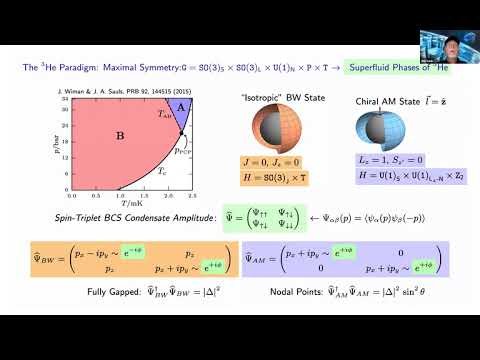
Triplet Superconductors
Desliza para desplazarte →
| Tecnología: | Estabilidad de los qubits | Global | Eficiencia energética | Madurez |
|---|---|---|---|---|
| superconductor | Moderada | Alto potencial | Low (cryogenics) | Pilotos comerciales |
| Trapped-Ion | Alta | Limitada | Moderada | Pilotos comerciales |
| Triplet Superconducting (Proposed) | Potencialmente alto | teorético | Potencialmente mejorado | Emparejamiento |
¿Por qué es importante?
In theory, spin could be a perfect medium of transfer of quantum information between qubits and between different quantum computers.
The issue is that in its current form, the technology is just too unstable and the transfer of information too complex to be of practical use.
This might, however, not be true if we got access to triplet superconductors. This is because they can transfer spin without energy loss, so the superconducting particles now carry spin with them.
“Triplet superconductors make a number of unusual physical phenomena possible. These phenomena have important applications in quantum technology and spintronics.”
Professor Jacob Linder – Norwegian University of Science and Technology
So while a more ordinary singlet superconductor can carry power without resistance, a triplet superconductor could also carry spin currents with absolutely zero resistance. As a result, a quantum or spintronic computer could be ultra-fast while also operating while using almost no electricity at all!
Niobium–Rhenium Alloy’s
In their work, the researchers discovered that NbRe, a niobium–rhenium alloy, displays behavior characteristic of a triplet superconductor.
More precisely, they found “inverse spin-valve effect”, a special case of magnetorresistencia gigante, a magnetic property of multilayer materials, which discovery won the 2007 Nobel Prize.
This is not, in itself, proof that NbRe is a triplet superconductor, but it definitely proves that it does not behave the way a conventional singlet superconductor should.
Long Term Potential
This discovery has extra potential as NbRe is readily available in thin-film form, and the simplicity of the heterostructure makes it especially viable as a potential scalable platform for superconducting spintronics.
In addition, the material works as a superconductor at relatively high temperature (at least by superconducting materials standards), or just 7 degrees Celsius above absolute zero at -273.15 °C (−459.67 °F), while most other candidate materials need as little as one degree above absolute zero.
However, both niobium and rhenium are expensive and rare metals, so they will not directly make quantum computers cheaper.
The next step will be to have other researchers confirm these findings and conduct further tests pointing to triplet superconductivity.
Triplet superconductors can also be used to create a very exotic type of particle called a “Majorana particle”, which is its own antiparticle. Therefore, it can perform calculations in a quantum computer in a stable way.
As other researchers are also getting closer to leveraging Majorana particles and Microsoft already has a chip with Majorana Zero Modes (MZMs), this seems to be an increasingly promising direction for the future advancement of quantum computing.
Detecting Quantum Material Defects
Too Quick Changes
The materials in which qubits are embedded often display defects that are responsible for the unreliability of the qubit. These defects can spatially fluctuate extremely fast, sometimes hundreds of times per second.
So the current method of detection of these defects, which can take up to a minute, is completely insufficient to catch them. In fact, nobody exactly knew how fast this happened until now.
Instead, researchers are forced to measure an average energy-loss rate, which often gives an incomplete picture of the qubit’s true performance.
As a result, quantum computers relying on superconductivity need to rely on many “tricks” to still manage to perform their computation, even when, a lot of times, the qubit has suffered decoherence, without the user being able to detect it.
Using Classic Computers To Help
To speed up the detection of defects, the researchers used a Field-Programmable Gate Array (FPGA), a specialized controller. These specialized chips are not as flexible as the ones used in CPUs or GPUs, but they are ultra-specialized, much faster at a specific task, and less energy demanding.
By running the experiment directly on the FPGA, they could form a “best guess” of how quickly the qubit would lose its energy based on only a handful of measurements.
While this seems like an obvious solution, programming the FPGA correctly was very challenging, especially if the FPGA needs to be a little flexible.
The method they used is that the chip updates its internal “knowledge”, called a Bayesian model, after every single qubit measurement.

Fuente: Revisión física X
This allowed the system to continuously adapt how it learned about the qubit’s state as efficiently as possible.
“The controller enables very tight integration between logic, measurements, and feedforward: these components made our experiment possible.”
Associate Professor Morten Kjaergaard – Niels Bohr Institute
Toward Real-Time Calibration
Until now, the quantum computing industry had to just “hope” that their qubits were still working, and worked hard at reducing the probability and speed of decoherence.
But this new approach opens the way for calculation actively picking reliable qubits, even with less than perfect materials.
“With our algorithm, the fast control hardware can pinpoint which qubit is ’good’ or ’bad’ basically in real time. We can also gather useful statistics on the ’bad` qubits in seconds instead of hours or days.”
Associate Professor Morten Kjaergaard – Niels Bohr Institute
In the long run, this will open a new field of investigation, where a better understanding of what makes an individual “bad” qubit, instead of relying on averages and guesses.
Conclusión
As at the dawn of electronics, quantum computing progress will come from a multitude of directions.
One important aspect will be the production of better superconducting materials, able to create more stable and durable qubits. And maybe also transport information in the form of a superconducting spin current at the same time.
Meanwhile, improved detection of the decoherence of a given qubit could provide a sensor & software-driven method to radically improve performance without relying on more complex or hard-to-manufacture materials.
Invertir en la innovación de la computación cuántica
Microsoft
Microsoft Corporation (MSFT + 0.97%)
Si bien Microsoft es más conocido por su fuerte presencia en sistemas operativos con Windows, también es un gigante en muchos otros campos tecnológicos.
Por ejemplo, es líder en soluciones empresariales, incluyendo Office (Outlook, Word, Excel y PowerPoint), pero también llamadas de empresa (Teams), almacenamiento compartido en la nube (OneDrive), Visio (diagramas, gráficos), Loop (espacio de trabajo colaborativo) y Access (base de datos).
Si bien no es el líder en servicios en la nube (dominado por AWS de Amazon), Microsoft representa el 20% de la infraestructura de nube global a través de su plataforma Azure, tan grande como las acciones combinadas de Google + Alibaba + Oracle.

Fuente: Statista
Microsoft también es propietario de LinkedIn, GitHub, Xbox y muchos de los estudios de videojuegos más grandes del mundo.
En lo que respecta a la IA, Microsoft se ha centrado más en casos de uso técnico y aplicaciones comerciales que en aplicaciones para consumidores, en particular con Programa AI4Science, sobre IA útiles para la investigación científica.
Esto incluye, por ejemplo, acelerar el trabajo de los científicos de materiales para diseñar nuevas moléculas o electrodos de baterías al tener Una IA redujo 32 millones de materiales potenciales a 500,000 candidatos, y luego a 800 en menos de 80 horas.

Fuente: Microsoft
Hasta ahora, en materia de computación cuántica, Microsoft parecía estar rezagado en comparación con Google o IBM; ofrecía servicios de computación cuántica en la nube con Azul cuánticoEl servicio también puede ofrecer “Computación híbrida”, que combina la computación cuántica con el servicio tradicional de supercomputadora basado en la nube..

Fuente: Microsoft
As Microsoft released its own Majorana particle-based chip in early 2025, the company has become one of the global leaders in quantum computing.
With new materials like triplet superconductors or new possibilities of real-time calibration, it is likely that Microsoft will be able to keep progressing and integrate these new tools into its own quantum computers.
(También puedes leer our article putting the spotlight on Microsoft as a whole in more detail to better understand the company).
Para llevar del inversor:
- Triplet superconductors remain experimental but high-upside.
- Real-time qubit calibration is near-term and practical.
- Microsoft offers diversified quantum exposure.
- IonQ, Rigetti, and D-Wave provide purer sector sensitivity.
Últimas noticias y novedades sobre las acciones de Microsoft (MSFT)
Structured Launches AI-Native Partner Marketing Execution Platform; Microsoft Deploys Globally
businesswire.com
•
Febrero 25, 2026
Microsoft Corporation $MSFT Holdings Decreased by New York State Common Retirement Fund
defenseworld.net
•
Febrero 25, 2026
Great Lakes Advisors LLC Sells 3,897 Shares of Microsoft Corporation $MSFT
defenseworld.net
•
Febrero 25, 2026
Microsoft Corporation $MSFT Shares Acquired by one8zero8 LLC
defenseworld.net
•
Febrero 25, 2026
Microsoft Japan raided over suspected violation of anti-monopoly law, Nikkei says
reuters.com
•
Febrero 25, 2026
SoftBank-Backed Wayve Raises $1.2 Billion From Microsoft, Nvidia, Automakers
wsj.com
•
Febrero 25, 2026
Estudio referenciado
1. F. Colangelo et al, Unveiling Intrinsic Triplet Superconductivity in Noncentrosymmetric NbRe through Inverse Spin-Valve Effects. Phys. Rev. Lett. 135, 226002 – Published 25 November, 2025. DOI: https://doi.org/10.1103/q1nb-cvh6
2. Fabrizio Berritta, et al. Real-Time Adaptive Tracking of Fluctuating Relaxation Rates in Superconducting Qubits. Phys. Rev. X 16, 011025 – Published 13 February, 2026. DOI: https://doi.org/10.1103/gk1b-stl3
