
Inteligencia artificial
El Gobierno de EE. UU. Implementa ChatGPT en Todas las Agencias


La GSA Lleva ChatGPT Enterprise a las Agencias Federales
In a landmark deal marking the growing influence of AI solutions at the highest levels, the U.S. General Services Administration (GSA) and OpenAI announced a partnership to make OpenAI’s ChatGPT Enterprise available to government agencies at a deeply discounted rate.
Esto refleja los rápidos cambios en la forma en que las empresas, y ahora el propio gobierno de EE. UU., son gestionados gracias a la IA.
Esto también destaca la posición privilegiada de OpenAI en relación con el gobierno de EE. UU., después del anuncio previo de la iniciativa de $500 B denominada “Project Stargate”, también en asociación con OpenAI, así como Oracle y SoftBank (ver más abajo para un recordatorio en contexto).
¿Qué es la GSA?
The General Services Administration is there to provide centralized procurement and shared services for the federal government.
Maneja $110 B en productos y servicios a través de contratos federales, y entrega servicios tecnológicos que sirven a millones de personas en decenas de agencias federales.
La GSA también administra una cartera inmobiliaria nacional de más de 360 millones de pies cuadrados alquilables.
A key initiative of the GSA is OneGov, a government-wide strategy to modernize how federal agencies procure and manage common goods and services.
Estrategia OneGov busca modernizar la forma en que el gobierno federal compra bienes y servicios. En esta primera fase, las agencias obtendrán un acceso más fácil a herramientas de TI con términos y precios estandarizados.
As such, the deal with OpenAI fits perfectly into the mandate and the strategy of the GSA, with the agency focused on streamlining and optimizing the often byzantine IT system and IT infrastructures used by the US government.
The strategy calls for deeper, direct engagement with OEMs to ensure more transparent pricing, streamlined acquisition, and improved cybersecurity protections.
While agencies have historically purchased software through resellers, this new approach prioritizes direct relationships to deliver better outcomes.
OpenAI is not the first step in that strategy, with notably in enero de 2025, a Microsoft agreement under the Governmentwide Microsoft Acquisition Strategy (GMAS).
Key elements of the GMAS initiative include:
- Medidas de ciberseguridad mejoradas que abordan riesgos críticos en los sistemas de TI gubernamentales.
- Compromisos para desarrollar capacidades mejoradas de soporte y educación a nivel gubernamental.
¿Qué Incluye el Acuerdo con OpenAI?
Mostly, it brings the ChatGPT Enterprise service to all participating U.S. federal agencies for a nominal fee of $1. OpenAI will also provide unlimited use of advanced models.
Además, a los empleados federales se les dará acceso a comunidades de usuarios gubernamentales y recursos de capacitación introductoria personalizados. También estarán disponibles plataformas de capacitación personalizadas y aprendizaje guiado.
So, in essence, the goal is to both train government employees to use ChatGPT, and provide them with the training to use it to its full potential.
“One of the best ways to make sure AI works for everyone is to put it in the hands of the people serving our country.
We’re proud to partner with the General Services Administration, delivering on President Trump’s AI Action Plan, to make ChatGPT available across the federal government, helping public servants deliver for the American people.”
Sam Altman – OpenAI CEO
The pricing is the striking point here, as a normal enterprise offer from OpenAI would normally cost $60,000 monthly for a mid-sized federal agency with 1,000 employees ($60 per user per month).
Obviously, the idea is to usher mass adoption of ChatGPT solutions into the government, with no question of budget, tenders, and other bureaucratic hurdles in the way anymore.
| Tamaño de la Agencia | Precio Estándar de OpenAI | Precio del Acuerdo GSA |
|---|---|---|
| Pequeña (100 usuarios) | $6,000/month | $1 total |
| Mediana (1,000 usuarios) | $60,000/month | $1 total |
| Grande (10,000+ usuarios) | $600,000+/month | $1 total |
¿Seguirán Otras Empresas de IA el Camino de OpenAI?
At first, this deal might seem to be more than a little bit of favoritism to the profit of OpenAI, as it significantly raises the profile of their AI services, and will also make thousands, if not millions, of US government employees familiar with their tool in particular.
So while it is likely costly to OpenAI in the short term, it could turn out to be a major strategy to boost adoption and familiarity with ChatGPT over its competition.
However, it seems that this is viewed by GSA as just the first step, before other AI companies offer similar deals to the US agencies.
“In support of the White House’s America’s AI Action Plan, GSA is making it easier for federal agencies to access powerful AI tools—improving the government’s productivity, efficiency, and ability to make better decisions on behalf of the American taxpayer.
We encourage other American AI technology companies to follow OpenAI’s lead and work with us as GSA’s OneGov continues to modernize and streamline government operations.”
Josh Gruenbaum – GSA Federal Acquisition Service Commissioner
Siguiendo el Proyecto Stargate
This is far from the first Trump administration push on AI.
Dubbed “Project Stargate“ and announced in enero de 2025, it is (was?) a $500B initiative for building data centers, making it, according to the US president, “the largest AI infrastructure project, by far, in history.”
The announcement was made with Trump, Larry Ellison, founder of Oracle, Masayoshi Son of SoftBank, and Sam Altman of OpenAI on the side of the US President.

Fuente: AP News
Ellison pointed out that the data centers are already under construction, with 10 being built so far. In total, 20 are planned, and the initiative should create 100,000 jobs.
There is, however, quite a bit of confusion about whether this project is going well or not.
On one hand, half a year later, the Wall Street Journal revealed that the project “struggled to take off the ground”.
“While the companies pledged at the January announcement to invest $100 billion “immediately,” the project is now setting the more modest goal of building a small data center by the end of this year, likely in Ohio.”
Funding also might be an issue:
At the same time, Fox reports instead an expansion of Project Stargate goals.
“An additional 4.5 gigawatts of Stargate data center capacity, a move expected to create over 100,000 jobs across operations, construction, and indirect roles such as manufacturing and local services.
The announcement noted that the Stargate I site has already created thousands of jobs, with more expected as operations expand. New jobs will originate from more than 20 states.”
So the collaboration between OpenAI and the US government is either going better than expected, with expanding scope, or not taking off the ground, depending on which partisan side you wish to believe…
“GSA is playing a leading role in the Trump Administration’s adoption of AI technology by the government.
Our government’s effective use of AI is critical to demonstrating we are the world’s AI leader and we are thankful for OpenAI’s partnership.”
Michael Rigas – GSA Acting Administrator
Qué Significa para la IA
Beyond the direct impact on OpenAI’s business, this is news that should affect how AI and LLMs like ChatGPT are perceived and their adoption rate.
For anyone who was still doubting that these AI tools have practical business applications, it is a clear clue that this is a very outdated point of view. OpenAI deployments for private companies and users might also benefit from the training and guidance developed for the US government employees.
Another implication is that it seems that for AI companies to get government support, they are likely to be forced to give away their services essentially for free. This will definitely increase the adoption rate and familiarity of white collar workers with these tools. But it will also be an additional drain on the finances of what is yet to be a profitable industry.
This deal somewhat puts into question the previous declaration in junio de 2025 by OpenAI, regarding a contract with the US Department of Defense:
“A contract, with a $200 million ceiling, will bring OpenAI’s industry-leading expertise to help the Defense Department identify and prototype how frontier AI can transform its administrative operations, from improving how service members and their families get health care, to streamlining how they look at program and acquisition data, to supporting proactive cyber defense. ”.
Will ChatGPT be free for the government, but more custom programs like this one be cash cows in exchange?
Another open question is how other governments in the world will react to this.
For China, it is likely that its push for open-source models like DeepSeek will continue, as it is the competitive edge that could help lead Chinese AI adoption globally.
The open-source nature of these models will help them to be adopted by foreign governments looking to avoid backdoors, data leaks, and spying by either the USA or China.
For the EU, it is unclear how it will go, as the region is both dreaming of digital sovereignty while also direly missing in domestic champions compared to the USA. However, the $1 deal from OpenAI might become a template for the adoption of AI at the government level all over the Western alliance, including maybe in Japan, South Korea, and other close allies.
Conclusión
The adoption of AI is moving fast, and the opening of all US federal agencies is accelerating adoption even faster. It is likely that several AI tools will soon be made accessible “for free” the way OpenAI’s ChatGPT already is after this deal.
This will train many people to use AI routinely and spread the practice further when these people change jobs or interact with private corporations.
This will also be a major test: does the adoption of AI at government scale improve public services and decision-making? Or does entrenched bureaucracy manage to limit the impact of AI tools?
In any case, this illustrates the need for a quick ramp-up of AI data centers’ capacity, as well as a power grid able to sustain the electricity demand driven by AI consumption.
Invertir en Inteligencia Artificial
Oracle
(ORCL )
As the other key technical partner in Project Stargate, together with OpenAI, Oracle is becoming a central partner for the US government’s AI strategy.
Oracle is a global leader in database management, having its infrastructure, either solely software or proprietary cloud, forming a solid base for almost all Western cloud computing offerings.
The company is planning to keep expanding its cloud capacities through a large $15B capital expenditure in 2025.

Fuente: Oracle
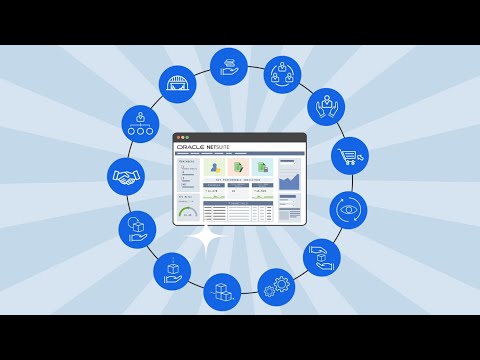
The company also has a strong presence in ERP software (Enterprise Resource Planning) through its software Netsuite, designed to integrate into a coherent and unified whole finance, HR, manufacturing, supply chain, sales, and procurement.
As the #1 cloud ERP software, NetSuite is a gold mine of data for AI adoption and optimization of existing operations at the enterprise as well as the government level.
Oracle also has a strong position in niche industries like, for example, healthcare software (hospitals, clinical trials, pharmaceutical companies, etc.).
Oracle is also a leader in AI in its own right, but in more niche applications than generalist LLMs like OpenAI.
Oracle’s AI Agents automate drug design, image and genomic analysis for cancer diagnostics, audio updates to electronic health records for patient care, satellite image analysis to predict and improve agricultural output, fraud and money laundering detection, dual-factor biometric computer logins, and real-time video weapons detection in schools.
Overall, Oracle’s strength in cloud, ERP, and its central role in project Stargate make it maybe the most important publicly traded company in AI adoption by the US government, on par with giants like Microsoft (MSFT ).
Últimas Noticias y Desarrollos de Acciones de Oracle (ORCL)



