
Informatique
ASML (ASML) : la pierre angulaire des semi-conducteurs modernes

 Ajouter Securities.io à vos sources préférées sur Google

Les outils de la fabrication de puces
Les semi-conducteurs, et tout particulièrement les puces informatiques, sont rapidement devenus l’une des technologies et des marchandises les plus importantes au monde. Depuis les débuts du PC jusqu’à l’essor des smartphones, du cloud computing et de l’IA, leur importance et la demande n’ont cessé de croître.

Source: Applied Materials
C’est une industrie intéressante, où aucun acteur n’est intégré verticalement ; à la place, elle est constituée d’une constellation d’entreprises ultra‑spécialisées, chacune réalisant l’une des nombreuses étapes critiques pour transformer le sable ordinaire (silicium) en machines pensantes.
Les plus grandes entreprises du secteur sont soit des concepteurs de puces comme Nvidia (NVDA ), soit des « fondeurs » qui fabriquent réellement les puces comme TSMC (TSM ) (suivez le lien pour des rapports d’investissement dédiés sur ces entreprises).
Ces entreprises dépendent fortement de fournisseurs spécialisés pour les machines nécessaires à la production des puces.

Source: ASML
Et aucune n’est plus importante que l’entreprise qui détient le monopole de la lithographie EUV (Extreme UltraViolet), la néerlandaise ASML.
ASML Graphique du prix
Le rôle d’ASML dans la fabrication de semi-conducteurs
Comment la lithographie alimente la miniaturisation des puces
ASML est spécialisée dans les machines de lithographie. La lithographie, qui signifie littéralement « gravure sur pierre », est le procédé qui grave le nœud d’un processeur sur une plaquette de silicium pour en faire une puce informatique.

Source: Nature
Plus la puce est avancée, plus le nœud est petit et plus le processus de lithographie est complexe. La miniaturisation continue des nœuds et l’amélioration de la lithographie ont permis aux ordinateurs de devenir chaque année plus puissants, suivant la loi de Moore.

Source: Steven Jurvetson
La lithographie est une étape du processus complet qui transforme une tranche de silicium en puces informatiques, avec généralement 40 à 80 cycles pour fabriquer une puce complète.

Source: ASML
Une limite physique clé de la lithographie est que le nœud gravé ne peut pas être plus grand que la longueur d’onde de la lumière puissante utilisée pour le faire.

Source: ASML
Ainsi, à mesure que les transistors deviennent plus petits, une fréquence de lumière de plus en plus élevée est requise, aujourd’hui se situant de plus en plus dans l’extrémité supérieure du spectre ultraviolet.
La première étape au-delà du spectre visible a été la technologie I-line, rapidement suivie par la lithographie DUV, ou ultraviolet profond.

Source: Icometrue
Ces méthodes ont porté l’industrie pendant la période de progression constante des smartphones et des centres de données. Mais les outils les plus avancés exigeaient une nouvelle technologie : la lithographie EUV, ou ultraviolet extrême.
Qu’est-ce que la lithographie EUV et comment fonctionne-t-elle ?
L’EUV permet de produire des nœuds extrêmement petits de 7 nm, 5 nm, 3 nm et moins. Ces niveaux avancés sont souvent considérés comme indispensables à l’IA, l’apprentissage automatique, la 5G, la réalité augmentée et virtuelle, ainsi qu’aux services cloud avancés.
ASML est un leader du DUV, mais l’EUV est encore plus important puisque l’entreprise est le seul fabricant de machines de production de puces EUV. Certaines sociétés chinoises cherchent toutefois à entrer au plus vite sur ce marché, comme expliqué plus loin.
La technologie EUV est extrêmement difficile à maîtriser en raison de plusieurs contraintes techniques :
- Le procédé se déroule sous vide, car presque toutes les matières absorbent la lumière EUV.
- Il nécessite une source d’énergie très puissante sous la forme d’un laser, dont la puissance peut atteindre 40 kW. Ce type d’amplificateur laser exige 7,3 kilomètres de câbles, pèse 17 tonnes et contient plus de 450 000 pièces.
- Le laser excite de minuscules gouttelettes d’étain de 25 micromètres de diamètre, à raison de 50 000 gouttelettes par seconde.
- L’étain est ensuite vaporisé en plasma par le laser et émet de la lumière EUV.

Source: Semi Engineering
Chacune de ces étapes exige des instruments de mesure, des outils, des commandes et des capteurs extrêmement avancés, avec une précision d’ingénierie mesurée en micromètres et en nanosecondes.
Grâce à l’expertise accumulée au fil de plusieurs décennies de construction de machines de lithographie, ASML demeure le maître incontesté de l’EUV. L’entreprise a également constitué un réseau dense de fournisseurs essentiels, notamment pour des miroirs pouvant mesurer un mètre de diamètre et dont la régularité de surface atteint le picomètre, soit un billionième de mètre.
Outre des machines d’une extrême précision, l’EUV nécessite aussi des logiciels spécialisés et propriétaires pour l’étalonnage, le diagnostic, l’évaluation et l’automatisation.
Si l’EUV constitue assurément l’avenir d’ASML et une part importante de ses revenus, les puces moins avancées fabriquées par DUV représentent encore la majorité de la production mondiale de semi-conducteurs.

Source: ASML
ASML
Aperçu de l’entreprise ASML & indicateurs clés
L’entreprise a été fondée en 1984 sous la forme d’une coentreprise entre les groupes néerlandais ASM et Philips. Elle emploie aujourd’hui plus de 44 000 personnes sur 60 sites. ASML collabore avec TSMC depuis ses débuts et fournissait déjà des équipements de lithographie pour les nœuds de 90 nm en 2004.
En 2011, ASML fournissait des machines de lithographie pour les nœuds de 32 nm, alors vendues en moyenne 27 millions d’euros.
En 2022, l’entreprise avait vendu 140 machines EUV à plus de 200 millions de dollars l’unité. Trois Boeing 747 étaient nécessaires pour transporter une seule de ces machines de 180 tonnes.
Indicateurs ASML
En 2024, ASML a réalisé 28,3 milliards d’euros de chiffre d’affaires en vendant 583 machines de lithographie. Sa marge brute remarquable de 51,3 % lui permet de réinvestir 4,3 milliards d’euros dans la recherche et le développement, soit presque deux fois plus qu’en 2020.

Source: ASML
L’entreprise prévoit un chiffre d’affaires de 44 à 60 milliards d’euros en 2030 et une marge brute de 56 à 60 %.
La réussite d’ASML, leader de la lithographie, a généré des rendements considérables pour ses actionnaires. En 2024, 3 milliards d’euros leur ont été reversés et le dividende a triplé depuis 2018.

Source: ASML
Au cours des quinze dernières années, l’entreprise a largement surperformé le Nasdaq, malgré une décennie déjà très favorable aux valeurs technologiques, tout en évoluant en phase avec les indices du secteur des semi-conducteurs.

Source: ASML
ASML prévoit que le parc installé de machines de lithographie continuera de croître jusqu’en 2030, stimulant fortement les revenus liés à la maintenance, au service et aux mises à niveau.

Source: ASML
Les machines EUV ne sont pas les plus vendues en volume, mais elles représentent la moitié du chiffre d’affaires en raison de leur prix élevé.
Fin 2024 et début 2025, la plupart des ventes ont été réalisées à Taïwan, en Corée du Sud, aux États-Unis et en Chine. Les ventes taïwanaises sont vraisemblablement destinées principalement à TSMC, les ventes sud-coréennes à Samsung et les ventes américaines à TSMC, qui ouvre une nouvelle fonderie au Nevada, ainsi qu’à Intel (INTC ).

Source: ASML
Les ventes en Chine étaient autrefois bien plus importantes. Les sanctions américaines et la volonté des fabricants chinois de se tourner vers des fournisseurs locaux ont toutefois réduit les ventes d’ASML dans le pays aux seules technologies de lithographie plus anciennes.
Risques du marché chinois d’ASML & impact des sanctions
Guerres de sanctions
La Chine est, avec Taïwan, l’un des plus grands producteurs mondiaux de semi-conducteurs, et ASML réalisait autrefois des ventes considérables sur ce marché.
Des années de tensions croissantes et de sanctions toujours plus sévères contre l’industrie chinoise des semi-conducteurs, imposées par plusieurs administrations américaines successives, ont toutefois profondément modifié ce marché pour ASML.
À l’été 2022, les États-Unis ont interdit l’exportation de machines EUV vers la Chine. Cette mesure a été possible parce qu’ASML, malgré sa nationalité néerlandaise, dépend de technologies et de droits de propriété intellectuelle américains essentiels à la production de ses machines.
Par la suite, même les exportations de machines DUV telles que la TWINSCAN NXT:1980Di d’ASML ont été limitées, ne laissant à la Chine que l’accès aux technologies DUV moins avancées. Cette série de sanctions a notamment répondu à la réussite de Huawei, qui a produit des puces avancées sans machine EUV en septembre 2023.
Solutions chinoises
Huawei cherche à développer ses propres solutions EUV et a déjà déposé un brevet en décembre 2022.
Une autre société chinoise, SMIC, est parvenue à utiliser d’anciennes machines DUV pour produire des puces de 5 nm sans EUV.
« Il a fallu superposer plusieurs étapes successives de lithographie et de gravure, notamment avec le procédé SAQP, afin de reproduire la précision de l’EUV. La méthode est plus lente, plus sujette aux erreurs et plus coûteuse, mais elle fonctionne. »
SMIC et Huawei cherchent également à produire des puces de 3 nm au moyen de la lithographie à quadruple motif auto-aligné (SAQP). Huawei travaille aussi sur une puce de 3 nm qui remplace le silicium par des nanotubes de carbone.
Enfin, des machines EUV fabriquées en Chine pourraient bientôt arriver sur le marché, d’abord pour un usage intérieur. Une autre solution consisterait à produire la lumière EUV au moyen d’un accélérateur de particules plutôt qu’avec un plasma d’étain. Cette idée, fondée sur une publication scientifique de 2022, était déjà débattue en 2023.
Un risque pour ASML ?
À long terme, ASML risque donc de perdre le marché chinois, le pays ne pouvant plus dépendre des technologies occidentales et devant reconstruire de zéro une chaîne d’approvisionnement parallèle complète pour les semi-conducteurs.
Pour l’heure, il s’agit davantage d’une rivalité stratégique entre les États-Unis et la Chine que d’une menace commerciale pour ASML.
Plusieurs raisons l’expliquent :
- Les ventes de machines DUV à la Chine ne représentent qu’une fraction du chiffre d’affaires total d’ASML.
- Les méthodes qui contournent l’EUV au moyen d’anciennes machines DUV sont techniquement réalisables, mais moins fiables et produisent donc des puces plus coûteuses.
- Elles peuvent convenir à Huawei et aux autres fabricants chinois privés de puces avancées, mais ne sont pas économiquement compétitives sur les marchés internationaux.
- Les machines EUV fabriquées par Huawei nécessiteront encore de nombreuses améliorations et mises au point. Produites en quantités limitées, elles ne pourront satisfaire que la demande intérieure chinoise pendant de nombreuses années.
- La génération d’EUV au moyen d’un cyclotron reste très théorique et demandera des années, voire des décennies, avant de constituer une alternative viable à la technologie actuelle.
Ventes non-EUV
Indépendamment des efforts chinois pour développer des machines EUV, les ventes de DUV devraient rester stables. L’EUV est devenu la norme pour la plupart des couches critiques des puces LOGIC et DRAM, mais toutes les autres couches sont encore gravées au moyen du DUV.
La solide position d’ASML dans le DUV garantit donc des revenus stables, notamment grâce au service et à la maintenance du parc existant, chaque machine pouvant fonctionner plus de vingt ans.
Le développement et l’adoption de l’EUV sont donc importants, mais pas indispensables aux perspectives à court terme de l’entreprise.
Il en va de même pour les systèmes annexes des machines de lithographie, comme les capteurs et la métrologie servant à mesurer et contrôler la qualité des produits finis.

Source: ASML
| Technology | Node Size | Typical Use | Key Limitation |
|---|---|---|---|
| DUV | 14nm–90nm+ | Puces plus anciennes, couches non critiques | Pas adapté aux nœuds les plus petits |
| EUV | 7nm–3nm | Logique avancée, DRAM | Complexe, coûteux, haute énergie |
| High-NA EUV | 2nm and smaller | Puces haute performance de prochaine génération | Coût plus élevé, déploiement limité |
Avenir de la lithographie
ASML continue d’innover et acquiert activement de nouvelles technologies essentielles. Le rachat du fabricant de verre optique Berliner Glas Group en 2020 l’aide ainsi à développer la prochaine génération de machines de production de puces.

Source: ASML
Des concurrents chinois pourraient proposer des solutions EUV à l’échelle commerciale dans les prochaines années. ASML travaille toutefois déjà sur l’étape suivante, la lithographie High-NA. Le sigle « NA » désigne l’ouverture numérique, une mesure de la quantité de lumière qu’un système optique peut recueillir et concentrer.
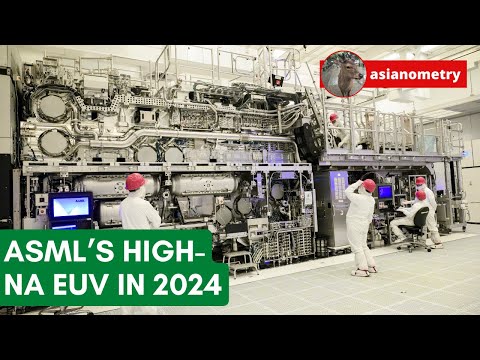
ASML progresse rapidement dans cette technologie. Sa dernière innovation optique fonde sa feuille de route EUV vers une stabilité au picomètre, soit environ 1/200 de la taille d’un atome de silicium, sur des miroirs asphériques.
Les optiques High-NA EUV doivent permettre de créer une plateforme EUV plus productive et d’améliorer encore les performances et la productivité de l’EUV au-delà de 2030.

Source: ASML
La technologie High-NA doit être non seulement plus précise et plus rapide, mais aussi plus économe en énergie, un enjeu croissant alors que les machines de lithographie toujours plus puissantes exigent beaucoup d’électricité.
La High-NA EUV sera vraisemblablement la méthode utilisée pour la production en série de puces aux nœuds de 2 nm et moins.

Source: ASML
Intel a adopté très tôt la High-NA EUV dans sa fonderie de l’Oregon. La technologie est encore en cours de déploiement dans les fonderies, et d’autres procédés, comme la gravure, pourraient aussi contribuer aux futures améliorations des performances.
« Avec la High-NA EUV, Intel disposera de la boîte à outils de lithographie la plus complète du secteur, ce qui lui permettra de faire progresser ses procédés au-delà d’Intel 18A durant la seconde moitié de cette décennie. »
Le prix de 400 millions de dollars par machine
incite également certaines fonderies à retarder l’adoption d’au moins une génération de puces.
La High-NA EUV devrait néanmoins constituer une évolution relativement simple pour ASML, puisqu’elle réutilise une grande partie des technologies et de l’expérience développées au cours des vingt dernières années pour rendre possible l’EUV « classique ».
Pourquoi avons-nous privilégié les composants communs et la modularité dans l’ensemble de nos systèmes de lithographie EUV ? Parce que tous nos systèmes bénéficient ainsi des enseignements tirés de vingt années de développement de l’EUV.
L’utilisation de technologies éprouvées réduit le risque de dysfonctionnement, tandis que les modules simplifient l’installation et l’intégration du système dans l’usine du client.
Conclusion
En visant la plus haute précision possible et l’excellence technique, ASML est devenue la référence de la lithographie et domine ce marché de niche.
L’entreprise détient de fait un monopole sur l’EUV, la technologie la plus importante pour produire les puces avancées nécessaires à l’IA, aux centres de données haut de gamme et aux dernières générations de smartphones.
Sans les sanctions américaines interdisant l’exportation d’EUV vers la Chine, ASML serait probablement restée sans difficulté le seul fournisseur essentiel de cette technologie pendant une ou deux décennies.
Les sanctions et les dizaines de milliards investis pour corriger cette vulnérabilité stratégique pourraient un jour faire des fabricants chinois de sérieux concurrents d’ASML. Ils restent cependant en retard et doivent se contenter de machines DUV, de rendements inférieurs et de coûts plus élevés.
Ils espèrent que leurs propres machines EUV offriront bientôt une meilleure solution. Lorsque Huawei et SMIC auront rattrapé le niveau de la technologie EUV de 2025, ASML déploiera probablement déjà la High-NA EUV.
Il serait dangereux de sous-estimer la capacité de la Chine à combler son retard et à bâtir une chaîne d’approvisionnement nationale, mais il ne faut pas non plus la surestimer. En l’état, ASML devrait rester le leader de la lithographie avancée pendant au moins dix ans et demeurer compétitif bien plus longtemps.
ASML occupe aussi une position très solide dans le DUV et la métrologie, qui apportent des revenus supplémentaires pour financer son budget de recherche et développement.
Au-delà de la qualité de l’entreprise, la valorisation est la dernière question que les investisseurs doivent examiner. En raison de son monopole et de la croissance générale du secteur, l’action ASML intègre déjà une grande partie de la croissance future.
Cette anticipation paraît raisonnable, mais signifie aussi que la valorisation est loin d’être bon marché : le ratio cours/bénéfice d’ASML a fluctué entre un point bas de 20 et un sommet de 54.
Dernières actualités et développements de l’action ASML (ASML)



