
Mégaprojets
LIGO: Détection des ondes gravitationnelles avec des optiques de précision

 Ajouter Securities.io à vos sources préférées sur Google

Voir la gravité: comment LIGO détecte les ondes gravitationnelles
L’histoire de l’astronomie est liée aux progrès des télescopes, révélant progressivement davantage de l’Univers. Elle a commencé avec le télescope primitif de Galilée et d’autres pionniers, et se poursuit aujourd’hui.
Nous avons couvert plusieurs de ces mégaprojets de télescopes, par exemple:
- DKIST, le télescope solaire le plus puissant du monde.
- The James Webb Space Telescope, situé à des millions de miles de la Terre.
- The Vera C. Rubin Observatory, un télescope de sondage qui observe tout le ciel en une seule fois.
- SKAO (Square Kilometer Array Observatory), étudiant le ciel dans le spectre des ondes radio.
- DUNE (Deep Underground Neutrino Experiment), détectant les neutrinos insaisissables.
Un nouveau type d’astronomie émerge, qui l’étudie d’une manière entièrement nouvelle: au lieu de la lumière et des longueurs d’onde des ondes électromagnétiques, il mesure les ondes gravitationnelles.
Théoriques jusqu’à une époque relativement récente, les ondes gravitationnelles sont désormais un phénomène avéré. Un projet cherche à les mesurer : le Laser Interferometer Gravitational-Wave Observatory (LIGO).
Mesurer la gravité avec l’astronomie des ondes gravitationnelles
Pendant longtemps, la gravité a été considérée comme une simple force fondamentale de l’Univers, au même titre que l’électromagnétisme ou les forces nucléaires à l’échelle atomique.
Au début du XXe siècle, la théorie de la relativité d’Einstein a toutefois décrit la gravité comme une courbure de l’espace-temps.

Sa théorie a correctement décrit le fonctionnement de la gravité pour les objets très massifs comme les étoiles, mais elle a aussi prédit de nombreux phénomènes spatiaux alors inconnus, tels que les étoiles à neutrons et les trous noirs.
Une autre prédiction concernait les ondes gravitationnelles, qui étirent et compriment l’espace comme des rides se propageant à la surface d’un lac.
Certains événements peuvent être assez massifs pour produire des ondes gravitationnelles suffisamment fortes pour être mesurées, par exemple la collision de deux trous noirs.

Aussi puissant qu’un tel phénomène puisse être en valeur absolue, l’immense distance entre la Terre et sa source, ainsi que la difficulté de mesurer l’espace-temps lui-même, exigent un instrument extrêmement sensible pour le détecter.
Lorsqu’elles atteignent la Terre après avoir parcouru des millions ou des milliards d’années-lumière, les ondes gravitationnelles sont des milliers de milliards de fois plus petites.
C’est pourquoi un instrument aussi impressionnant que LIGO a été conçu.
Lors de la première détection de LIGO, l’oscillation de l’espace-temps produite par les ondes était 10 000 fois plus petite que le noyau d’un atome.
Comment les interféromètres détectent les ondes gravitationnelles
La première preuve indirecte des ondes gravitationnelles a été obtenue en étudiant l’orbite d’un pulsar binaire. La perte d’énergie liée au ralentissement orbital correspondait à l’énergie que les ondes gravitationnelles devaient emporter, ce qui a valu aux chercheurs responsables de cette découverte le prix Nobel de physique 1993.

Source : Prix Nobel
La mesure directe exigeait un autre type de preuve, fondé sur un interféromètre. Son principe consiste à exploiter l’interaction entre des faisceaux lumineux. Si deux ondes lumineuses ont la même longueur d’onde, elles se superposent et créent un motif de zones sombres et claires.
Si un phénomène modifie ces longueurs d’onde, la perturbation peut être mesurée.
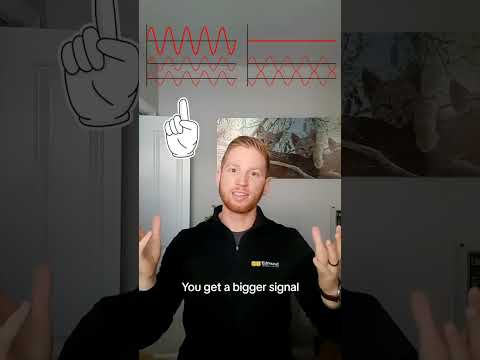
Comme l’expansion et la contraction de l’espace-temps provoquées par les ondes gravitationnelles allongent et raccourcissent un bras de l’interféromètre plus que l’autre, elles produisent un effet détectable et mesurable.
LIGO, une réalisation récompensée par un prix Nobel
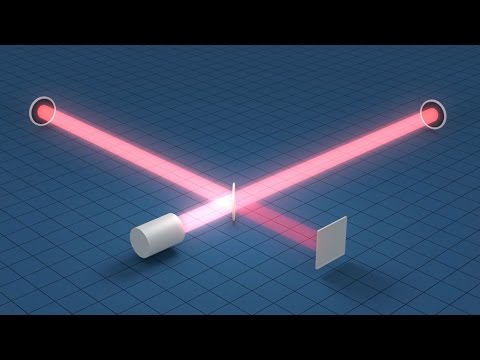
Dans sa forme la plus simple, LIGO comporte deux longs bras parcourus par la lumière, chacun mesurant 4 km. Leur longueur permet de détecter les variations les plus infimes : plus les bras sont longs, plus la mesure peut être précise.
Un faisceau laser est envoyé dans un bras de l’interféromètre puis divisé en deux. Les deux faisceaux sont ensuite réfléchis par des miroirs.
En temps normal, les deux faisceaux laser doivent s’annuler.
Mais si une onde gravitationnelle contracte ou allonge un bras plus que l’autre, l’interférence entre les faisceaux cesse et un signal lumineux est détecté.

Source : Prix Nobel
En 2015, le Laser Interferometer Gravitational-Wave Observatory de la National Science Foundation américaine (NSF LIGO) a confirmé la détection d’ondes produites par la collision de trous noirs situés à 1,3 milliard d’années-lumière.
Ces travaux révolutionnaires ont valu aux physiciens Rainer Weiss, Barry Barish et Kip Thorne le prix Nobel de physique 2017.
La construction de LIGO
Dans son principe, LIGO est un concept relativement simple, facile à comprendre dès lors que l’on saisit la notion d’onde gravitationnelle et que l’on possède quelques connaissances sur la lumière et les lasers.
Construire un système assez précis pour détecter une variation de longueur égale au dix-millième d’un atome est une tout autre affaire.
Deux installations semblables ont été construites, l’une dans le nord-ouest des États-Unis et l’autre en Louisiane, à environ 3 000 km l’une de l’autre.

Source : Prix Nobel
Les deux installations se confirment mutuellement : leur éloignement signifie qu’une onde gravitationnelle atteint l’une environ sept secondes après l’autre, tout en produisant le même signal.
Une seule détection pourrait toujours être attribuée à une erreur ou à une perturbation locale. En revanche, observer exactement le même phénomène des deux côtés des États-Unis avec l’intervalle prévu est presque impossible par hasard.
Les deux installations offrent également un avantage inestimable : la triangulation du signal. Elle permet de réduire la zone du ciel dont il pourrait provenir, avant que les astronomes classiques n’identifient l’objet stellaire responsable.
La quête d’une précision de mesure sans précédent
Le premier défi technique consiste à stabiliser autant que possible la longueur d’onde et l’intensité du laser. Sans cette stabilité, des fluctuations aléatoires pourraient être prises pour le signal d’une onde gravitationnelle.
Le faisceau doit ensuite frapper avec précision les miroirs suspendus, qui ne doivent pratiquement jamais bouger.
Ils ne doivent presque pas bouger, même lorsque des feuilles tombent des arbres voisins, qu’un enfant court à proximité ou qu’un camion passe sur une route éloignée. En même temps, ces miroirs suspendus doivent pouvoir osciller librement au passage des ondes gravitationnelles.
Il faut aussi compenser les variations infimes qui ne sont pas dues à la gravité, par exemple :
- Le mouvement thermique des atomes à la surface des miroirs.
- Les effets quantiques dans le laser.
- Les secousses sismiques.
- La moindre impureté de l’air perturberait la mesure : toute l’expérience doit donc se dérouler dans d’immenses tubes à vide.
En théorie, des bras de plus de 4 km permettraient des mesures encore plus précises. En pratique, la taille d’un interféromètre rencontre une limite matérielle.
Il est donc rapidement apparu qu’au-delà des travaux préliminaires, le projet exigeait un budget et une expertise technique bien supérieurs aux moyens d’une petite équipe de recherche.
En 1994, Barry Barish, chercheur au Caltech, a transformé le petit groupe d’environ 40 personnes en une collaboration internationale de plus d’un millier de participants, dotée d’un financement initial de 395 millions de dollars.
Il aura fallu au total 200 millions de dollars pour parvenir à la percée de 2015, lorsque LIGO a reçu des lasers dix fois plus puissants, des miroirs de 40 kg, un filtrage du bruit très avancé et l’un des plus grands systèmes à vide au monde.
Stabilisation sismique
La Terre n’étant jamais parfaitement stable, les miroirs de LIGO ne le sont pas non plus sans stabilisateurs sismiques.
Un premier dispositif passif de réduction des vibrations a été installé sur les miroirs : un système complexe de pendules absorbe les vibrations et empêche leur transmission à l’étage suivant.
L’ensemble réduit si efficacement les vibrations que celles présentes au sommet de la suspension sont divisées par 100 millions avant d’atteindre la masse d’essai.

Source : LIGO
Ce dispositif ne suffisait toujours pas ; il est donc complété par un système actif de stabilisation. Des sismomètres autour de chaque observatoire détectent différents mouvements du sol, puis envoient leurs signaux à un ordinateur qui les combine et calcule les mouvements compensatoires.

Source : LIGO
L’absence de vibrations a été un critère essentiel dans le choix des sites. Il fallait beaucoup d’espace libre et aucune activité humaine produisant des vibrations importantes, équivalent de la pollution lumineuse pour la détection des ondes gravitationnelles.
Optique
Pesant 40 kg chacune et suspendues au bas des systèmes d’isolation, les optiques de LIGO sont constituées de matériaux ultrapur déposés en couches nanométriques. Leur revêtement réfléchit tous les photons sauf un sur cinq millions.
Lasers
Les lasers, cœur de l’expérience, doivent conserver une longueur d’onde extrêmement stable afin que le motif d’interférence reste constant et ne soit perturbé que par les ondes gravitationnelles.
Les lasers commerciaux n’étaient pas assez précis. Celui de LIGO a donc été spécialement conçu pour être l’un des lasers les plus stables et les plus purs jamais réalisés.
Vide
Afin de réduire toute interférence de l’air ou de particules en suspension, les essais se déroulent sous ultravide.
Cela évite aussi que de la poussière s’accumule sur les miroirs, soit incinérée par le laser et détruise ces composants d’une valeur de deux millions de dollars.
La pression atmosphérique dans les bras de LIGO est mille milliards de fois inférieure à celle du niveau de la mer, soit environ dix millions de molécules seulement par centimètre cube.
Les réalisations de LIGO
Après la première détection d’une collision de trous noirs en 2015, l’observatoire a mesuré de nombreux autres événements de haute énergie dans l’Univers :
- Une autre fusion de trous noirs détectée en 2016, impliquant deux objets d’environ 30 masses solaires chacun, s’est produite à quelque 1,3 milliard d’années-lumière, soit près d’un dixième du rayon de l’Univers observable.
- Une troisième, puis une quatrième fusion de trous noirs en 2017.
LIGO a ensuite fermé pour être modernisé jusqu’en 2019, avant l’interruption provoquée par la pandémie. Les scientifiques en ont profité pour poursuivre les améliorations et intégrer au réseau VIRGO, l’installation sœur européenne située près de Pise, en Italie.
L’avenir de LIGO
Grâce aux améliorations précédentes, LIGO a réalisé pas moins de 79 détections d’ondes gravitationnelles ces dernières années, constituant un vaste catalogue d’événements impliquant des étoiles à neutrons et des trous noirs que d’autres astronomes peuvent identifier précisément et mieux comprendre.
Une future modernisation importante remplacera les miroirs actuels de 40 kg par des miroirs de 100 kg, accompagnés de systèmes de suspension beaucoup plus grands.
Cette sensibilité accrue devrait permettre d’obtenir davantage d’informations sur la gravité dans l’Univers.
Un autre domaine de recherche porte sur les « ondes gravitationnelles transitoires ». Ces signaux brefs provenant de sources inconnues ou imprévues restent théoriques et difficiles à détecter ; les analystes de LIGO doivent donc garder l’esprit ouvert pour décider ce qui constitue ou non un signal valable.
« Nous pourrions aussi détecter des ondes gravitationnelles provenant de systèmes dont nous ignorions jusqu’ici l’existence. Pour les rechercher, nous ne pouvons pas supposer qu’elles possèdent des propriétés bien définies, comme celles déjà modélisées par les scientifiques de LIGO.
Nos analyses ne peuvent donc pas se limiter aux seules signatures d’ondes gravitationnelles prédites par les chercheurs. »
Autres détecteurs d’ondes gravitationnelles
La prochaine génération d’interféromètres est aussi à l’étude, notamment Cosmic Explorer, doté de bras de 40 km, et l’Einstein Telescope, un détecteur triangulaire dont les bras de 10 km seraient enfouis profondément sous terre.
Un autre projet pourrait voir le jour : un immense détecteur spatial d’ondes gravitationnelles, LISA (Laser Interferometer Space Antenna). Déjà conçu et testé sous la direction de l’Agence spatiale européenne, il reposera sur trois engins spatiaux disposés en triangle et séparés chacun de 2,5 millions de kilomètres.
Faites glisser pour faire défiler →
| Détecteur | Emplacement | Longueur des bras | Type | Statut |
|---|---|---|---|---|
| LIGO | USA | 4 km | Interféromètre terrestre | Opérationnel |
| VIRGO | Italie | 3 km | Interféromètre terrestre | Opérationnel |
| KAGRA | Japon | 3 km | Interféromètre souterrain | Opérationnel |
| Cosmic Explorer | USA | 40 km | Interféromètre terrestre | Prévu |
| LISA | Espace | 2,5 million km (entre les engins spatiaux) | Interféromètre spatial | En développement |
Conclusion
LIGO est un projet très impressionnant, car il est passé d’une expérience pionnière à la validation immédiate de l’existence des ondes gravitationnelles.
Un projet comme LIGO peut, à première vue, sembler purement académique. Ce n’est que rarement le cas, bien que les applications directes puissent sembler difficiles à imaginer au départ.
Par exemple, la théorie de la relativité d’Einstein est aujourd’hui couramment utilisée pour calibrer les positions des satellites GPS, une application qui était difficile à imaginer comme un besoin commercial quotidien en 1919.
De même, LIGO pousse les scientifiques à inventer des miroirs, des systèmes de stabilisation et des lasers toujours plus précis, avec des niveaux d’ingénierie de classe mondiale.
Ces innovations sont susceptibles de porter leurs fruits dans toute technologie utilisant ces dispositifs, y compris l’informatique avancée ou les technologies spatiales.
Investir dans les optiques avancées
Corning Incorporated
GLW Graphique du prix
Alors que les télescopes repoussent les limites de la fabrication de verre avancé de précision, cela ouvre également de nombreuses possibilités industrielles dans des secteurs aussi variés que l’automobile, les semi-conducteurs, l’IA, la défense, la biotechnologie et les soins de santé. Le marché de l’optique avancée pèse 310 milliards de dollars et devrait croître à un taux annuel composé de 9,2 % jusqu’en 2032.
Corning est une entreprise de verre et d’optique qui existe depuis 170 ans. Au cours de son histoire, elle a produit les premières ampoules en verre pour l’éclairage électrique de Thomas Edison, la première fibre optique à faible perte, les substrats cellulaires qui permettent les catalyseurs, et le premier verre de protection résistant aux dommages pour les appareils mobiles.

Source : Corning
Aujourd’hui, l’entreprise se concentre sur les technologies de base de la fabrication du verre et de la céramique, ainsi que sur les technologies de physique optique, qui partagent des processus de fabrication et des marchés finaux communs.

Source : Corning
Cette interconnexion des technologies permet à l’entreprise de partager des capacités communes de fabrication, de recherche et d’ingénierie entre ses différentes gammes de produits. Avec plus de 52 000 employés, plus de 77 sites de production dans le monde et plus de 10 centres de R&D, l’entreprise est un acteur majeur dans son créneau.

Source : Corning
L’entreprise bénéficie du boom de l’IA et de la construction de centres de données (fibres optiques), ainsi que de la consommation globale de verre spécialisé dans les écrans et la biotechnologie.
Corning ne devrait pas être fortement impactée par les tarifs, car 90 % de ses revenus aux États‑Unis proviennent de produits d’origine américaine. Très peu des ventes réalisées en Chine proviennent d’installations américaines, 80 % des ventes chinoises étant réalisées en Chine.
Les tarifs pourraient même aider, car Corning entre sur le marché des panneaux solaires, avec le contrôle stratégique de Hemlock Solar, pour produire des panneaux fabriqués aux États‑Unis, alors que les panneaux solaires asiatiques (pas seulement chinois) sont soumis à des tarifs à quatre chiffres. 80 % de la capacité a déjà été sécurisée grâce aux engagements des clients.
L’énergie solaire a beaucoup de sens pour l’entreprise, le silicium étant au cœur de son expertise de fabrication, ayant produit du polysilicium depuis 60 ans, y compris du silicium ultra‑pur (99,9999999999 % pur) et lançant maintenant la production de plaquettes de silicium, un produit importé à 100 % aux États‑Unis.

Source : Corning
L’entreprise examine également d’autres technologies avancées où son expertise du verre et de la céramique pourrait offrir un avantage solide, notamment le verre pliable, la réalité augmentée, la capture du carbone, etc.

Source : Corning
Dans l’ensemble, Corning est une entreprise profondément technique, avec une fabrication localisée qui ne devrait pas souffrir de la déglobalisation. Elle embrasse également de nouveaux marchés qui correspondent à ses compétences de base, notamment le solaire et les communications optiques / l’infrastructure IA. Cela en fait à la fois une entreprise relativement conservatrice qui creuse davantage son créneau, mais aussi une action à potentiel de croissance sur les marchés high‑tech.
Dernières actualités et évolutions de l’action Corning Inc. (GLW)



