
교통
비행 택시: 전기차 이후의 차세대 교통 혁명

 Securities.io를 Google의 선호 소스에 추가

운송과 이동성은 우리 경제의 근본적인 부분이며, 선박 건조에서 자동차 제조에 이르기까지 역사 전반에 걸쳐 기술 혁신을 이끌어 왔습니다. 오늘날 산업 환경은 급격히 변화하고 있으며, 운송 방식을 근본적으로 바꾸는 혁신이 이를 주도하고 있습니다.
첫 번째 트렌드는 전기화이며, 점점 더 에너지 밀도가 높은 배터리 덕분에 전기차(EV)를 구동하고 곧 모든 차량에 적용될 수 있어, 2세기 동안 지속된 화석 연료 지배를 중단시키고 있습니다.
두 번째 트렌드는 자동화, 자율성 및 컴퓨터화입니다. 보다 진보된 자동화와 인공지능 덕분에 처음으로 자율주행 차량이 도로를 주행할 수 있게 되었습니다. 특히 Tesla (TSLA ) 가 스티어링 휠과 페달이 없는 차량인 Cybercab의 대량 생산을 시작했습니다, 이는 스티어링 휠과 페달이 없는 차량입니다.
마지막으로, 교통 방식 자체도 변화하고 있습니다. 지금까지 개인이나 소규모 그룹의 이동은 자동으로 자동차, 버스 및 기타 지상 차량의 역할이라고 여겨졌습니다. 소형 비행기와 헬리콥터가 존재하지만, 그 복잡성, 비용 및 위험 때문에 부유층만 이용할 수 있었으며 많은 전용 인프라가 필요했습니다.
이는 빠르게 변화하고 있으며, “플라잉 카”가 현실이 되고 대도시 일부에서 비행 택시가 곧 상업 서비스로 제공될 예정입니다. 헬리콥터와 달리, 소형 드론 설계에서 파생된 이보다 작고 안전한 비행 택시는 전기로 구동되어 소음이 크게 감소하여 도시 내 이동에 보다 적합합니다.
비행 자동차의 꿈
As soon as aviation and the automobile were invented, people dreamed of combining the two into an all-purpose flying vehicle, usable by individuals and families to go anywhere, free of the limitations of roads and traffic.

출처: PreLaunch
- 안전, as giant propellers at the level of people’s heads roaming the streets, is a disaster waiting to happen.
- 공간, as most plane-inspired flying “cars” need large wings to fly, needing either more space than normal roads can provide, or complex wings that fold.
- 가격: Propellers, more powerful engines, more complex engineering, no economies of scale, all designs proposed proved too expensive to reasonably replace cars in most people’s budget.
- 인프라: with most flying cars inspired by planes, a long runway to take off and land was still needed.
- 에너지 효율: No matter how efficient a plane is, lifting a whole vehicle in the air and keeping it flying is more energy-hungry than rolling wheels on the ground.
- 조종: Assuming everyone will acquire the skill and discipline of pilots to avoid accidents is likely unrealistic.
그렇다면 지난 한 세기 동안은 불가능했던 에어택시가 오늘날 가능해진 이유는 무엇일까요?
새로운 유형의 비행 차량
드론 산업을 기반으로
오랫동안 무언가를 날게 하는 방법은 비행기나 헬리콥터뿐이었습니다. 엄밀히 말하면 로켓도 포함할 수 있지만, 높은 비용과 최근까지 재사용이 불가능했다는 점 때문에 일상적인 교통수단으로 활용하기는 어렵습니다.
각 방식에는 저마다 문제가 있습니다.
- 비행기는 효율적이지만 이착륙을 위한 전용 공항이 필요하고 조종도 여전히 복잡합니다. 따라서 아무리 작은 비행 “자동차”로 설계하더라도 누구나 집 진입로에서 이용하기에는 적합하지 않습니다.
- 헬리콥터는 수직 이착륙이 가능하지만 소음이 극심합니다. 또한 조종과 정비가 매우 까다롭기로 악명 높으며, 오늘날에도 가장 위험한 교통수단 중 하나입니다.
But in the 2010s, a new form of flying tool emerged, the drone, and more precisely the quadcopter drones (four “wings”).
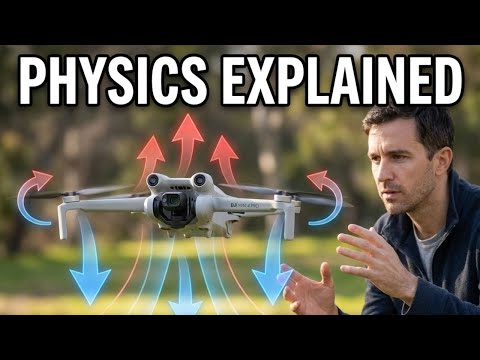
Leveraging battery density increase and advanced microcontrol systems for its four small motors, the quadropter drones are able to fly in a very easy-to-control fashion, staying stable even against strong winds and displaying remarkable maneuverability.
A key innovation was the mass availability of brushless motors, a rotor with a permanent magnet and several electromagnets surrounding it. Another one was a lithium-ion battery dense enough to enable flight lasting dozens of minutes or even hours.
These drones quickly evolved from interesting toys to valuable tools in photography, surveying, agriculture, forestry, construction, military, etc.
Drones kept getting bigger, with many now routinely used for transportation of heavy loads in difficult-to-reach areas. For example, the DJI FlyCart 100 has an 85 kg payload capacity (187 pounds) that can be used for logistics or agriculture.
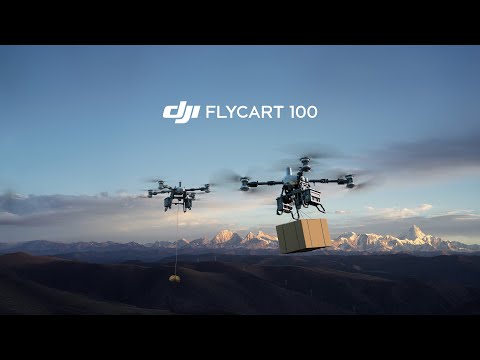
Today, almost all modern flying car designs are really just even more oversized drones, with an added passenger space, and enough power to lift hundreds of kilos of “payload”. The official classification is eVTOLs: electric vertical takeoff and landing aircraft.
전기화
The modern drone industry and the future flying cars industry are both built on the “electrification tech stack”.
This interconnected set of technologies started with lithium-ion batteries. Initially developed for small electronics, these batteries were produced in much greater quantities and at ever-decreasing costs thanks to the massive demand from electric vehicles (EVs).
In parallel, the growth of the EV industry helped the development of associated technologies like fast chargers, battery swapping, battery thermal management, etc.
The tooling industry is also quickly electrifying, with most construction and craft tools now available in electric versions using brushless motors and dense batteries.
Already in a scientific research paper from 2021, it was demonstrated that battery density around 215 Wh/kg to 275 Wh/kg would be the range required for economic flying vehicles. Overall, flying cars will be even more demanding on battery tech than EVs, and represent the logical next step once EV batteries are a well-mastered technology.

출처: Cell
최신 비행 택시 뉴스
미국의 진전
In 2026년 4월, an electric aircraft from Joby Aviation took off from JFK Airport (JOBY ) for a flight demonstrating the company’s future air taxi route to Manhattan. The design is an egg-shaped cabin, lifted by six tilt-rotor propellers, and powered by electric motors.

출처: TTNews
“항공기는 브루클린 해안을 따라 서쪽으로 이동한 뒤 도시를 향해 북쪽으로 방향을 틀었습니다. 이륙 약 14분 후 웨스트 30번가 헬리포트에 착륙하며 역사적인 비행을 마쳤습니다.”
The flying taxi/aircraft can carry five people, including one pilot. So it could technically carry passengers tomorrow. Except that the company is still waiting to receive official FAA certification for passenger services.
And it is a very long process, as the company received its first certification from the FAA in 2022, and is still waiting to be authorized to carry passengers.
Joby is also planning to establish an air taxi network between Texas cities like Dallas, Austin, San Antonio, and Houston. And Florida Governor DeSantis is freeing funding for flying taxi landing and take-off pads.
Regulations slowing down progress could change soon with the eVTOL Integration Pilot Program (eIPP), a White House-backed program aimed at accelerating the safe deployment of electric vertical-takeoff-and-landing aircraft in the US.
“흥미로운 점은 이 eIPP가 운항 측면에서 무엇을 허용할지입니다. FAA는 분명 어떤 형태의 상업 운항을 염두에 두고 있습니다. 아직 정확한 내용은 알 수 없습니다. 그것이 무엇일지 확인하기 위해 FAA와 협력하고 있습니다. 따라서 아직 미정입니다.”
The eIPP has selected 8 pilot projects to “create one of the largest real-world testing environments for next-generation aircraft in the world“, which will cover aerial taxis as well as logistic networks, emergency medical responses, offshore transportation, etc.
This represents a change in official stance, which until now seemed somewhat wary of authorizing new types of aircraft to operate in the US airways.

Overall, the eIPP program could let Jobby launch early pilot operations in Arizona, Florida, Idaho, New Jersey, New York, North Carolina, Oklahoma, Oregon, Texas, and Utah.
“America has set the pace and the standard in aerospace innovation since the Wright Brothers first took to the skies. This is how our country has always led — by bringing people together to turn breakthrough technology into real-world progress.
이와 동시에 회사는 두바이에서 최초의 승객 승인 에어택시를 운항할 계획입니다. 아랍에미리트 당국은 FAA보다 실험에 더 개방적입니다. 다만 이란과의 전쟁이 격화되며 역내 긴장이 고조될 경우 이러한 계획이 차질을 빚을 수 있습니다.
“The regulatory hurdles were a little lighter, not unsafe by any stretch of the imagination. But the whole government was leaning in.”
중국 기술
Over the Pacific, China’s strong lead in drone technology could give it an edge in the flying taxi field as well. For example, it is now possible to order and get delivered by drone drinks in Shenzhen (a Chinese city often described as the local Silicon Valley).
Activities in airspace below 1,000 meters (about 3,280 feet) accounted for business turnover worth 506 billion yuan ($70 billion) in 2023, about 0.4% of China’s economy. By 2035, it’s expected to hit 3.5 trillion yuan (about $490B).
Many companies are working on eVTOL, including automaker XPENG’s (through its flying car unit ARIDGE), logistics company SF Express (through its drone arm Phoenix Wings), and EHang.
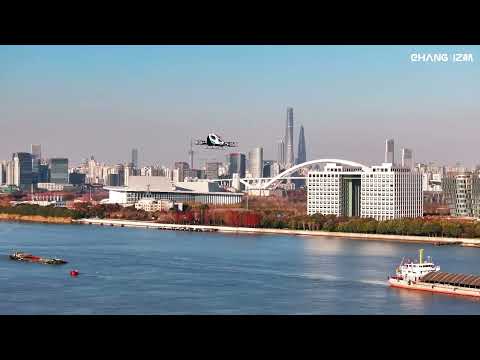
China’s Civil Aviation Administration has granted certificates allowing EHang to offer commercial passenger services with its pilotless eVTOL, a low-altitude aircraft that can reach speeds of 130 kph (81 mph) with a maximum range of 30 kilometers (19 miles). The company is planning to start with aerial sightseeing services and has been building takeoff and landing sites in 20 Chinese cities over the past two years.
전 세계 기타 지역
In the UK, Vertical Aerospace (EVTL ) said its Valo aircraft, which can take off vertically, will offer a “more sustainable”, zero-emissions alternative to road taxis. The aircraft is currently undergoing testing, and ultimately could travel at up to 150mph (241 km/h). The plan is to initially use it for premium airport transfers, with the end goal of a similar cost to hiring an Uber.
In Germany, the air taxi makers Lilium and Volocopter filed for bankruptcy, though the latter was later bought by Diamond Aircraft Group, a subsidiary of a Chinese firm. Both firms had been shortlisted for providing transport for tourists in Saudi Arabia.
In Japan, SkyDrive demonstrated flights for the World Expo in 2025 and has partnered with Suzuki for mass production.
In Brazil, Embraer-backed Eve Air Mobility conducted successful flight tests in 2026년 3월 and plans upcoming launches in Brazil and the U.S.
비행 택시의 경제성
While many flying taxi companies are looking at competing directly at a price range on par with Uber, this might be a little difficult in practice. At least as long as every flight requires a pilot.
This is in large part because a certified pilot will likely cost more than a freelancing Uber driver.
In addition, flight will always be more energy-consuming than driving. However, the advantage of avoiding traffic entirely and flying in a straight line can help reduce costs.
So, potentially, the total cost of the ride could be lower than expected, with shorter travel time compensating for higher operating costs.
A lot will depend on regulations and the designs authorized to carry passengers: for example, small eVTOLs will suffer from being unable to spread costs over larger passenger groups.
Requirement for dedicated landing facilities will also reduce the flexibility of air taxis, likely confining them to fixed high-demand routes, such as access to airports. Alternatively, more relaxed regulations could let any flat roof of flats, industrial buildings, and malls be turned into a landing pad.
Lastly, charging facilities will need to be considered. Battery swapping might be a better solution to optimize fleet utilization, but it comes with its own extra infrastructure and costs. Alternatively, ultra-fast charging could prove to be an extra compromise to make in the choice of battery, against considerations of performance or safety.
Still, flying taxis could provide significant advantages to economies that embrace this innovation. For example, Americans lost 99 h in 2019 sitting in traffic, which amounts to a $88B loss in productivity.
As the United Nations projects that 68% of the world’s population will live in urban areas by 2050, up from 55% in 2018, this issue of lost productivity from vlogged roads will only grow. For example, 인도네시아 수도 자카르타는대략 GDP의 2% 정도교통 체증으로 인해 손실될 것으로 추정됩니다.
곧 자율 비행 택시가 등장할까요?
So far, eVTOLs are regulated globally like aircraft, with the implication that they will be operated by a trained pilot. However, the same process that is seeing self-driving cars getting closer to mass deployment could be happening for eVTOL as well.
In some ways, it could even be easier to deploy a self-flying taxi than a self-driving one. After all, flying taxis do not need to have a perfect AI able to detect children crossing a road, deal with traffic jams and aggressive drivers, or wildlife at night.
This might, however, be a very tough pill to swallow for the FAA regulators and the equivalent in other countries.
Simply speaking, aeronautic regulations are focused on maximizing safety and tend to err on the side of caution and conservatism, as a crash of a full-size airplane can be catastrophic. And even if they are smaller, the crash of an eVTOL with its large mass, relatively high altitude of flight, and highly flammable lithium-ion batteries could cause a lot of damage as well.
In this field, China seems to have the advantage, as the EHang EH216-S, using solid-state batteries, has received the world’s first type certificate for pilotless passenger aircraft in late 2023 and has already begun carrying passengers in cities like Hefei and Shenzhen.
비행 택시 투자
Joby Aviation
JOBY 가격 차트
As illustrated by the recent progress made in the USA and Dubai, Joby is a global leader in pushing flying taxis into the commercial stage.
Joby has flown over 50,000 miles in dozens of flights over the past nine years. It is one of the few to have demonstrated the ability to transition from vertical takeoff to forward flight, and also one of the few to use pilots in its flight demonstrations. So while it is still not done getting certified for passenger transport, it is getting closer.

출처: Joby Aviation
The company also owns the helicopter company Blade, acquired in 2025 for $125M, which flies similar routes and maintains partnerships with Delta Air Lines (DAL ) and Uber, with 50,000+ passengers in 2024.
The company is planning to carry its first passenger in an eVTOL in 2026. It also plans to double production capacity in 2027 from two to four aircraft per month, and acquired a 700,000 square feet manufacturing facility in the Dayton, Ohio area.
Besides operating its own air taxi service, Joby is planning to sell its aircraft to other operators. For example, they signed a letter of intent to sell aircraft and services valued at up to $250 million in Kazakhstan. In Japan, Joby was selected by the Tokyo Metropolitan Government for their eVTOL implementation project, a multi-year plan to make commercial electric air taxi service a reality by 2030.
The company’s expertise in vertical flight is also opening new military applications. Joby’s Hybrid Demonstrator Flies, in a new partnership with L3Harris Technologies (LHX ), integrates the company’s hybrid turbine powertrain along with its SuperPilot™ autonomy stack.

출처: Joby Aviation
The demonstrator, modifying Joby’s passenger design, 최근 완료한 2025년 9월에 군사용 7,000마일 자율 비행 시연. The Department of Defense has requested $9.4 billion in its FY26 budget to advance autonomous and hybrid aircraft.
“AFWERX (Air Force Research Laboratory) has partnered with Joby’s team for several years with increasingly complex development and demonstration efforts of autonomy to support contested logistics missions.”
이런 프로젝트는 회사가 점진적으로 성장하고 상업용 에어택시 시장이 성숙하기를 기다리는 동안 추가 자금을 확보하는 데 도움이 될 수 있습니다. 현재까지 Joby는 Intel (INTC ), Toyota, JetBlue, Uber, Delta Air Lines, SK Telecom (SKM )의 벤처캐피털 부문을 포함한 다양한 투자자로부터 최소 20억 달러를 조달했으며, 이 가운데 12억 달러는 2026년에 조달했습니다.
“The magic of dual-use technology is that it creates value in both directions. By building on our proven technology stack, our partners can rapidly deliver new capabilities for the Department of War while we benefit from advancing the maturity of our hybrid and autonomous systems. In turn, this will help pave the way for commercial applications, from longer-range hybrid VTOL missions to autonomous air operations in commercial airspace.”
JoeBen Bevirt, Joby의 CEO 및 설립자
전반적으로 Joby는 상업용과 군사용 모두에서 eVTOL의 유력 기업으로 자리매김하고 있으며, 특히 중국 이외 지역에서 시장을 선도하고 있습니다. 회사의 미래는 미국과 전 세계에서 eVTOL 규제가 어떻게 발전하는지와 밀접하게 연결될 것입니다.
회사가 현금을 빠르게 소진해 온 만큼 지나친 신중함이나 지연은 위험할 수 있습니다. 하지만 여러 국가가 이미 시범 사업과 초기 노선을 시작하고 있다는 점을 고려하면, 시장이 형성되는 즉시 선점하기 위해 조기에 진입하고 확장하는 전략이 오히려 적절할 수 있습니다.
최신 Joby Aviation (JOBY) 주식 뉴스 및 개발



