
Robótica
Los inversores deben tomar nota: la robótica está tomando el control de la agricultura

 Añade Securities.io a tus fuentes preferidas en Google

En tiempos premodernos, la mayor parte de la actividad económica estaba impulsada por el sector primario: agricultura, ganadería y otras formas de producción de alimentos. Con la revolución industrial, nuestras economías pasaron a depender cada vez más de la industria y, posteriormente, de los servicios. Esto hizo que el sector primario, aunque sigue siendo responsable de la vital tarea de producir alimentos, se volviera cada vez más invisible en términos económicos.
Un factor clave fue la mecanización de la agricultura. En regiones pobres y subdesarrolladas como África, la agricultura puede ser el sustento de la mayor parte de la población y representa hasta un 15 % del PIB. En países como EE. UU., la agricultura representa menos del 1 % del PIB.
La mecanización y la agricultura industrial favorecieron varias tendencias que pueden perjudicar al medio ambiente:
- Expansión de monocultivos masivos en miles de hectáreas en lugar de ecosistemas diversificados con setos, múltiples especies, etc…
- Dependencia masiva de fertilizantes químicos.
- El uso intensivo de pesticidas y herbicidas provoca daños ecológicos y contaminación del agua.
- Degradación de la fertilidad del suelo por arado profundo, fertilizantes, fungicidas y compactación bajo el peso de tractores cada vez más grandes.
- Declive de la biodiversidad de los cultivos, con solo un puñado de variedades que a menudo representan el 80‑90 % de la producción total.
- Menor valor nutricional de los alimentos producidos.
Estas prácticas no son sostenibles. Las colonias de abejas están amenazadas por la desaparición de abejas obreras, conocida como síndrome de colapso de las colonias, un fenómeno asociado a varios factores, como parásitos, enfermedades, nutrición y exposición a pesticidas. Las dificultades económicas también ejercen una enorme presión sobre los agricultores, que, según algunos estudios, presentan un mayor riesgo de suicidio que la población general. La Organización de las Naciones Unidas para la Alimentación y la Agricultura (FAO) advierte que más del 90% de los suelos podrían estar degradados en 2050 si no se toman medidas. Una proyección anterior de la FAO estimó que la producción agrícola tendría que aumentar alrededor del 70% entre el período de referencia 2005–2007 y 2050. La degradación de los suelos dificulta ese objetivo, pero no significa que la mayoría se vuelvan inevitablemente estériles.
El panorama puede parecer bastante sombrío. Sin embargo, ya existen soluciones y se están poniendo en práctica.
Pasando al siguiente paso
No todo es negativo. La agricultura industrial ha reducido drásticamente el hambre pese al fuerte crecimiento de la población mundial. También ha liberado mano de obra para tareas más productivas, como la ciencia y la educación.
Sin embargo, hay tareas que la agricultura industrial sigue realizando de forma deficiente y en las que parece difícil mejorar:
- Control de malezas y plagas sin químicos.
- Cosecha y recolección, especialmente de frutas y bayas delicadas.
- Cuidado personalizado para cada pequeña sección del terreno cultivado.
- Riego óptimo que no desperdicie los valiosos recursos hídricos.
Hasta ahora, las soluciones han consistido en ignorar el problema mediante tratamientos químicos o resolverlo explotando mano de obra migrante barata para recoger fruta. Desde el punto de vista ecológico y ético, no resulta aceptable mantener las mismas prácticas.
Por suerte, la robótica está empezando a ayudar a que la agricultura sea más sostenible.
Imagine un futuro en el que la fruta la recojan robots inteligentes que no se lesionen la espalda ni se sobrecalienten bajo un sol abrasador; los grandes tractores diésel sean sustituidos por flotas de pequeños robots autónomos con ruedas y energía solar; los campos se vigilen constantemente mediante drones; y los pesticidas y herbicidas se sustituyan por agua caliente o un brazo robótico.
La buena noticia es que empresas de muchos ámbitos agrícolas ya trabajan en estas soluciones. No solo pequeñas empresas emergentes entusiastas, sino también gigantes industriales como Bayer. Incluso existen foros internacionales de robótica agrícola, como el celebrado en diciembre de 2021 en Francia. Se producen avances en muchos campos, que podemos agrupar en varias categorías.
Recolección robótica
Advanced.farm utiliza seis brazos robóticos, visión artificial y una ventosa para recoger manzanas con delicadeza sin presencia humana. También puede trabajar de noche, lo que permite cosechar las 24 horas. Además, ha diseñado una cosechadora de fresas que, según la empresa, es cinco veces más eficiente que una persona que recoge fruta. Por tanto, aunque su aspecto al trabajar de noche resulte algo inquietante (véase abajo), está diseñada para funcionar de forma segura y eficiente.

Fieldworkrobotics ha firmado una colaboración con el fabricante alemán de maquinaria Bosch para desarrollar robots que recojan frutas delicadas. Se especializa en frutas y hortalizas frágiles, como frambuesas, coliflores y tomates, mediante brazos robóticos avanzados.
Gestión robótica de malezas y plagas
Ecorobotix ha creado un robot que combina visión artificial con pulverización de precisión para reducir hasta un 95% el volumen de pesticidas y herbicidas utilizados. En lugar de rociar todo el campo, sus robots actúan únicamente sobre la planta que necesita el producto. Aunque no elimina por completo los productos químicos de la agricultura, este enfoque podría reducir considerablemente su consumo y la contaminación asociada.
Naio Technologies pretende eliminar por completo los herbicidas del campo. Un robot autónomo relativamente ligero (1,5 toneladas, comparable a un automóvil) recorre el terreno y corta o arranca las malas hierbas con pequeñas cuchillas. Utiliza LIDAR, navegación GPS y visión artificial para desplazarse y distinguir los cultivos de las malas hierbas sin supervisión directa.

Algunas empresas van más allá, como Blue River Technology, adquirida por el fabricante de maquinaria agrícola John Deere en 2017. Utiliza aprendizaje automático y visión artificial para identificar cada planta del campo. El robot puede eliminar malas hierbas y aclarar cultivos como la lechuga, aumentando el rendimiento sin intervención humana y realizando el trabajo de 9–10 personas. Puede obtener más información en el siguiente vídeo:
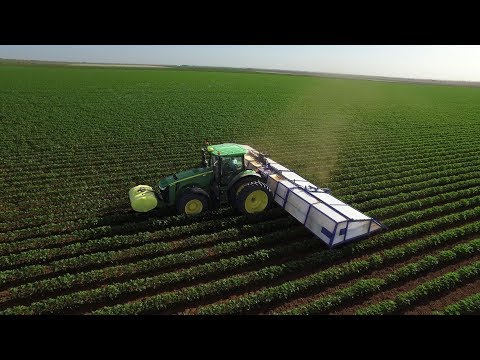
También desarrollan aplicaciones similares de visión artificial para aclarar cultivos y eliminar malas hierbas Vision Robotics, Ekobot y Aigro. Probablemente haya muchas otras empresas emergentes que todavía desarrollan sus productos sin anuncios públicos o que acaban de comenzar.
Riego con robótica
Osiris Agriculture es una empresa francesa que ha desarrollado un robot de riego. Al desplazarse por sí solo e identificar las necesidades de las plantas, reduce el consumo de agua un 30% y ahorra a los agricultores siete horas de trabajo por hectárea durante los meses de verano.

Monitoreo con robótica
Precision Hawk utiliza drones para vigilar la salud de los cultivos mediante sensores multiespectrales. Estos drones detectan tanto luz visible como infrarroja, lo que permite determinar si una zona necesita riego. También ha colaborado con DJI, el mayor fabricante de drones del mundo, en una aplicación que permite utilizar drones para vigilar cultivos.

Otras aplicaciones de la robótica
Existen muchas otras aplicaciones posibles. Por ejemplo, gestionar el ganado con Beefreeagro, que localiza y cuenta las reses de forma autónoma. También puede detectar signos tempranos de enfermedad y comprobar el estado de cercas y puertas.
Los robots también pueden contribuir a la reforestación. Biocarbon Engineering ha utilizado drones para plantar cientos de árboles en pocos minutos en una prueba de recuperación de manglares en Myanmar. Este método puede resultar especialmente eficiente en zonas de difícil acceso, como costas y montañas.
Como algunos cultivos, por ejemplo las flores, suelen producirse en interiores, también existen robots de plantación para invernaderos, como Roboplant.
Menciones especiales
No todos los campos se extienden en hileras planas durante kilómetros. Muchos están en pendientes o tienen configuraciones complejas, como viñedos o cultivos mixtos. También hay robots para esas condiciones. Slopehelper se desplaza sobre orugas como un tanque y realiza distintas tareas según el equipo instalado: pulverizar, segar, desherbar, colocar acolchado e incluso ayudar a quienes recogen fruta a alcanzar los frutos en huertos o viñedos.
Probablemente se generalicen los robots multifunción, capaces de combinar en una sola máquina la plantación, el riego, el control de plagas, el desherbado, la recolección y otras tareas. Esto podría ocurrir mediante la integración de algunas empresas emergentes en compañías tecnológicas líderes o en grupos agrícolas ya existentes, como John Deere y Bayer.
Por último, quizá no sea agricultor, sino aficionado a la jardinería y quiera cultivar parte de sus alimentos en casa, pero no tenga tiempo o capacidad física para encargarse del jardín. ¿O quiere ver personalmente los robots agrícolas en acción? Puede consultar el proyecto de código abierto Farm.Bot. Planta, desherba, riega y fertiliza de forma autónoma una superficie de hasta 3 × 6 metros, al precio anunciado entonces de «solo» 3.995 dólares.

Conclusión
Los robots apenas están comenzando a introducirse en la agricultura y seguirán presentes. La mano de obra continúa siendo un componente importante del coste de producción de alimentos. Los robots pueden contribuir a mantener precios asequibles y fomentar mejores prácticas agrícolas. Dentro de unas décadas, quizá consideremos que las prácticas actuales eran destructivas y cortoplacistas frente a métodos robotizados mucho más avanzados, capaces de ayudar a conservar la biodiversidad y reducir la contaminación.
Con el tiempo, los robots probablemente sustituirán a muchos tractores y cambiarán radicalmente la forma de cultivar. Esto supone tanto una amenaza como una oportunidad para las empresas establecidas. Desde el punto de vista de la inversión, puede ser interesante observar a las empresas agrícolas que adoptan la robótica y pueden adaptarse a un cambio tan profundo como la mecanización de hace casi un siglo.
Los inversores deberían prestar atención al sector agrícola, especialmente a las empresas que aplican análisis de datos y aprovechan la robótica.



