
Energia
Gerando Energia Usando a Radiação Térmica Ambiental da Terra

 Adicione Securities.io às suas fontes preferidas no Google

Aproveitando Gradientes de Temperatura
A maioria dos métodos de geração de energia depende de uma diferença de temperatura. Em geral, ela é criada aquecendo uma parte do sistema por meio da combustão de combustíveis fósseis (carvão, petróleo ou gás), fissão nuclear, perfuração profunda (energia geotérmica) ou concentração da luz solar.
Essa diferença térmica é então usada para aquecer água ou outro fluido, como sal fundido, e acionar uma turbina que gera eletricidade.
Embora também seja possível captar diretamente a luz solar com painéis fotovoltaicos ou movimentos naturais por meio de energia eólica, hidrelétrica e das marés, os gradientes térmicos continuam sendo a forma mais comum de geração, desde a era da máquina a vapor até hoje.
Outro gradiente térmico que, em teoria, pode ser aproveitado é a diferença de temperatura entre a Terra e o espaço sideral.
A temperatura média da superfície terrestre é de aproximadamente 15 °C (59 °F), enquanto o espaço sideral está a cerca de −270 °C (−454 °F). Essa enorme diferença térmica teórica intriga os pesquisadores há muito tempo, mas aproveitá-la está longe de ser simples.
Emitindo calor para o espaço
Para a radiação térmica com comprimentos de onda entre 8 e 13 μm, a atmosfera é praticamente transparente e permite que o calor da Terra escape para o espaço. Esse é o principal mecanismo que resfria o planeta depois de ele receber energia do Sol.
Em teoria, um motor capaz de emitir nessa faixa de comprimento de onda, ou em uma frequência suficientemente próxima, poderia enviar energia para o céu mais frio e gerar eletricidade a partir da temperatura ambiente.
O método já foi demonstrado com dispositivos semicondutores de baixo bandgap e geradores termoelétricos. No entanto, essas abordagens não são economicamente viáveis devido à baixa potência e à necessidade de elementos de terras raras.
Os cientistas Tristan J. Deppe e Jeremy N. Munday, da Universidade da Califórnia, podem ter encontrado uma alternativa baseada em motores Stirling. Eles publicaram o trabalho na prestigiosa revista Science1, com o título “Geração de potência mecânica usando a radiação ambiente da Terra”.
Como funcionam os motores Stirling
Enquanto a maioria dos gradientes de temperatura gera energia por meio de turbinas movidas a vapor, o motor Stirling oferece uma alternativa.
Esses motores produzem movimento mecânico quando um lado está mais quente ou mais frio que o outro. Diferentemente dos motores de combustão interna e das turbinas, não exigem a queima de material.
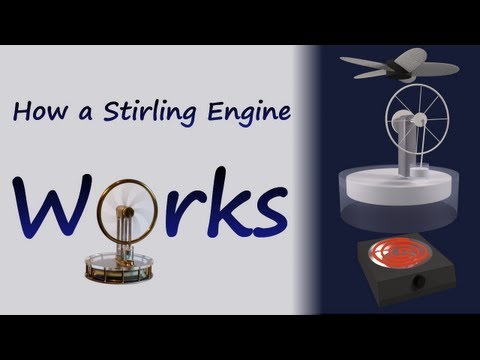
O movimento mecânico pode então ser convertido em eletricidade com um alternador simples.
Os motores Stirling são extremamente duráveis, embora relativamente pesados, o que limita seu uso em transportes.
Seu rendimento também é um pouco inferior ao das turbinas, o que explica por que não são comuns em usinas térmicas ou nucleares. Em contrapartida, funcionam mesmo com pequenas diferenças de temperatura, enquanto as turbinas precisam de centenas de graus entre as fontes quente e fria.
Como os Motores Stirling Capturam Energia Térmica Ambiental
O conceito básico de geração de energia térmica ambiente usado aqui tem dois componentes:
- A placa inferior do motor está em contato térmico direto com a superfície da Terra.
- A placa superior é acoplada opticamente ao céu.
Uma tinta emissora de infravermelho controla a emissão de calor da parte superior do motor para a atmosfera.

Fonte: Science Advances
O método aproveita a pequena diferença de temperatura entre o solo e o ar, especialmente à noite, que um motor Stirling consegue converter em movimento e energia.
Nossa demonstração de prova de conceito acopla radiativamente o motor ao céu e fornece mais de 400 mW/m² de potência contínua na Terra durante toda a noite.
Testes em condições reais
O método foi testado em Davis, Califórnia, com diferenças de temperatura de 10 °C (18 °F) e rotação de 1 Hz no volante do motor. Os testes ocorreram ao longo do ano e o sistema funcionou na maior parte do período, embora o inverno chuvoso e nublado tenha sido menos eficiente. Mais do que a temperatura absoluta, o teor de umidade do ar é o fator que mais afeta a eficiência.

Fonte: Science Advances
Em condições de alta umidade, a diferença entre as temperaturas diurna e noturna diminui devido à elevada concentração de água na atmosfera. Isso reduz o resfriamento radiativo e o potencial energético total.
Mapeando o potencial da energia ambiente
Com base nos resultados experimentais, os cientistas modelaram as regiões com maior potencial para a invenção.
Eles chegaram a algumas conclusões:
- A densidade de potência é maior em regiões áridas e cadeias montanhosas, onde a radiação descendente é mais baixa.
- Áreas de alta umidade têm menor potencial energético.
- A geração de energia é quase nula em regiões densamente florestadas, onde a umidade aumentada impede que o radiador exaure efetivamente o calor para o céu.
Com esses dados, criaram um mapa das áreas da Terra com maior potencial para a instalação de motores Stirling radiativos ambientais.

Fonte: Science Advances
As regiões com maior potencial são:
- África Sahariana.
- A Estepe Eurasiática.
- Antártida durante o verão.
- Regiões interiores da Costa Oeste dos EUA.
- Cordilheira dos Andes
- Planalto Tibetano.
Melhorias Futuras
Deslize para rolar →
| Parâmetro | Stirling Radiativo Ambiental | PV Solar Típico |
|---|---|---|
| Densidade de Potência | 0,4 W/m² durante a noite | 150–220 W/m² sob sol |
| Condições Ideais | Ar seco, céu limpo, noite | Luz solar direta |
| Materiais Necessários | Revestimentos emissores de IR, motor Stirling | Silício ou materiais de filme fino |
| Melhor Caso de Uso | Aproveitamento de calor residual e energia noturna off-grid | Geração elétrica diurna |
Este trabalho foi sobretudo uma prova de conceito, portanto vários elementos do projeto ainda podem ser aprimorados.
O primeiro seria aumentar a capacidade de resfriamento radiativo. Isso poderia ser alcançado com um material de resfriamento radiativo desenvolvido especificamente para essa finalidade, em vez de tinta comercial.
O segundo seria melhorar o acoplamento condutivo com a Terra, por exemplo aumentando a área de contato e usando materiais de maior condutividade térmica, como o cobre.
Um motor maior também poderia elevar a potência total e a eficiência. O uso de hélio ou hidrogênio no pistão, em vez de ar, reduziria o atrito e aumentaria o rendimento.
Por fim, nossa civilização industrial produz muito calor residual em estufas, fábricas, sistemas de climatização e edifícios aquecidos no inverno, entre outras fontes. Esse calor pode ampliar consideravelmente a diferença de temperatura entre o solo e o céu e aumentar a geração de energia.
Na prática, uma diferença de temperatura de 35–40 °C (95–104 °F) pode gerar quase quatro vezes mais potência do que uma diferença de 15 °C.

Fonte: Science Advances
Rumo a “Painéis Solares Reversos”
Como o projeto funciona melhor à noite, embora também possa operar durante o dia com alterações de design, ele parece ser um bom complemento para painéis solares fotovoltaicos.
Também pode maximizar o aproveitamento de calor residual proveniente de outras formas de geração, processos industriais, edifícios aquecidos — escritórios, apartamentos e casas — ou estufas.
Por fim, o sistema poderia ser instalado em edifícios como método adicional de resfriamento, absorvendo calor e irradiando-o de volta para o espaço.
Se implantado em escala suficientemente grande, o sistema poderia gerar energia ao mesmo tempo que reduz o calor total retido pela Terra, uma característica singular entre os métodos de geração.
Empresas de Motores Stirling
Aerojet Rocketdyne e L3 Harris: Inovadores Líderes em Motores Stirling
LHX Gráfico de preços
Os motores Stirling ocupam um nicho na geração de energia, mas ainda representam um mercado de US$ 1,17 bilhão em 2025, com previsão de crescimento anual composto de 8,5% até atingir US$ 1,62 bilhão em 2029. Poucas empresas do setor, porém, têm ações negociadas em bolsa.
A Aerojet Rocketdyne, divisão da empresa aeroespacial e de defesa L3Harris, colabora com parceiros como a NASA e a SunPower Inc. no desenvolvimento de motores Stirling para aplicações espaciais.
A Aerojet Rocketdyne foi adquirida pela L3Harris em julho de 2023 por US$ 4,7 bilhões, tornando-se a quarta divisão da empresa.
A Sunpower Inc. — que não deve ser confundida com a fabricante de painéis solares SunPower (SPWR ) — criou um projeto avançado de motor Stirling: o motor Stirling de pistão livre (FPSE). O FPSE pode gerar energia a partir de calor e também produzir resfriamento usando eletricidade.
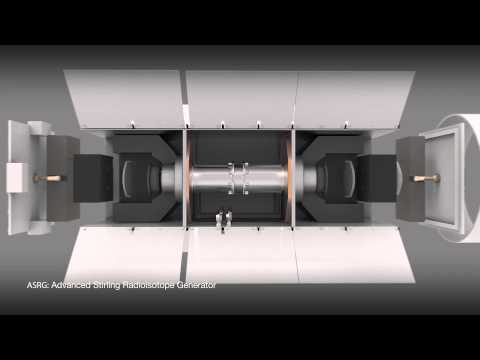
Essa tecnologia é especialmente adequada a sistemas de energia por radioisótopos (RPS), que usam o decaimento natural de material radioativo para produzir calor, posteriormente convertido em eletricidade pelo motor Stirling. Uma aplicação importante seria alimentar equipamentos na Lua ou até uma pequena base lunar.

Fonte: NASA
A NASA se interessa por motores Stirling há muito tempo devido à confiabilidade, operação sem manutenção e longa vida útil, especialmente no caso do Advanced Stirling Radioisotope Generator (ASRG).
Além dos motores Stirling lunares, a L3Harris é uma grande empresa militar e aeroespacial. Ela obtém 60% da receita do Departamento de Defesa dos Estados Unidos, 20% de encomendas internacionais de defesa e 20% de setores civis.
A Harris controla cerca de 45% do mercado mundial de rádios táticos, várias vezes mais do que o concorrente seguinte.
Em sistemas não tripulados, a L3Harris oferece o drone de decolagem vertical FVR-90, a embarcação autônoma Shadow Fox, de 13 metros, a família de drones submarinos Iver e atua como principal contratada do primeiro grande contrato da Marinha dos EUA para o Medium Unmanned Surface Vessel (MUSV).
A Aerojet também desenvolve mísseis hipersônicos e outros sistemas de mísseis.
Em síntese, a L3Harris é uma empresa tecnológica de destaque em sistemas autônomos, foguetes e sistemas aeroespaciais de energia, com sólida experiência técnica em contratos civis e militares.
Últimas Notícias e Desenvolvimentos de Ações da L3 Harris (LHX)
Estudo Referenciado
1. Tristan J. Deppe and Jeremy N. Munday. Geração mecânica de energia usando a radiação ambiental da Terra. Science Advances. 12 Nov 2025. Vol 11, Issue 46. https://www.science.org/doi/10.1126/sciadv.adw6833



