
Energie
Strahlungsbasierte Kühlung bekämpft den Klimawandel, indem sie den Weltraum als Wärmesenke nutzt

 Securities.io zu deinen bevorzugten Quellen auf Google hinzufügen

Urban environments are becoming increasingly sprawling and dense, resulting in more concrete and pavement than ever before. The problem with that is the amount of heat absorbed by buildings and roads. Surrounding areas become hotter, climate control systems must work harder, and greenhouse gas emissions skyrocket. With that in mind, a team of researchers based out of the University of Maryland has come up with a simple but effective solution. This is a recently developed material dubbed ‘cooling glass’, which can help to mitigate this growing problem and its effect on climate change through radiative cooling.
Der Durchbruch der strahlungsbasierten Kühlung
Battling climate change isn’t just about finding clean energy sources. It is also about efficiently using the electricity we already create. In this instance, cooling glass is a breakthrough that leverages the Albedo Effect and radiative cooling to essentially prevent thermal energy from the Sun from being trapped in typical building materials by reflecting it back into the emptiness of Space – a vacuum and limitless heat-sink that sits at a brisk -270ºC.
In its research article, the team states that it,
“…entwickelte ein randomisiertes photonisches Composite bestehend aus einem mikroporösen Glasgerüst, das selektive LWIR [long-wave infrared radiation]‑Emission (Langwellen‑Infrarotstrahlung) sowie relativ hohe Sonnenreflexion aufweist, und Aluminiumoxid‑Partikel, die das Sonnenlicht stark streuen und eine Verdichtung der porösen Struktur während der Herstellung verhindern.”
The resulting product, or ‘cooling glass’, is said to perform well in a variety of conditions, which, alongside a relatively easy manufacturing process, might just make it viable for large-scale applications in urban environments.

Source: www.cera.cool
As far as performance goes, the team indicates that,
“Diese mikroporöse Glasbeschichtung ermöglicht einen Temperaturabfall von etwa 3,5 °C bzw. 4 °C, selbst bei hoher Luftfeuchtigkeit (bis zu 80 %) während des Tages bzw. in der Nacht.”
In doing so, the paper indicates that a building leveraging cooling glass has the potential to reduce its carbon emissions by as much as 10% annually. When scaled across urban landscapes, this is significant.
While the idea of leveraging radiative cooling to battling climate change is nothing new, it is the performance and potential scalability of this new product that makes it particular interesting.
Was ist ein „Wärmesenke“?
For those wondering, a heat sink is a device or substance that absorbs and dissipates heat from another object using thermal contact (either direct or radiant). Man-made variants are commonly used in electronics and mechanical systems to manage temperature and prevent overheating. In the case of cooling glass, it is through radiation into the vacuum of space that this thermal dumping occurs.
Here’s an overview of the science behind heat sinks:
Thermische Leitung: Das Hauptprinzip einer Wärmesenke ist die thermische Leitung, ein physikalischer Prozess, bei dem Wärme durch ein Material übertragen wird. Wenn ein wärmeerzeugendes Bauteil (wie ein CPU in einem Computer) heiß wird, gibt es seine Wärme an die Wärmesenke ab.
Material: Wärmesenken werden typischerweise aus Materialien mit hoher Wärmeleitfähigkeit hergestellt, wie Aluminium oder Kupfer. Diese Materialien leiten die Wärme effektiv vom Bauteil weg und verteilen sie über eine größere Fläche.
Design und Oberfläche: Ein entscheidender Aspekt des Designs einer Wärmesenke ist ihre Oberfläche. Viele Wärmesenken besitzen Finnen oder andere Strukturen, um ihre Oberfläche zu vergrößern. Dadurch kann mehr Luft mit der Wärmesenke in Kontakt kommen, was die Wärmeabgabe verbessert.
Konvektion: Luft oder Flüssigkeit, die über die Oberfläche der Wärmesenke strömt, unterstützt die konvektive Kühlung. Bei passiver Kühlung dissipiert der natürliche Luftstrom die Wärme, während bei aktiven Kühlsystemen Ventilatoren oder Pumpen eingesetzt werden, um den Luft‑ bzw. Flüssigkeitsfluss zu erhöhen und so den Kühleffekt zu verstärken.
Strahlung: Wärmesenken geben Wärme auch durch Strahlung ab. Die von der Wärmesenke aufgenommene Wärme wird als Infrarotstrahlung emittiert, was zusätzlich zur Kühlung des Geräts beiträgt.
The effectiveness of a heat sink depends on several factors, including the material’s thermal conductivity, the design (especially the surface area), the ambient temperature, and the flow rate of air or liquid over the heat sink. By efficiently managing thermal energy, heat sinks play a crucial role in the reliability and longevity of electronic and mechanical systems.
Was ist „Strahlungsbasierte Kühlung“?
Meanwhile, radiative cooling is a natural process where objects release heat in the form of infrared radiation. This process already plays a role in nature with the Earth’s energy balance and has important applications in various technologies.
Here’s a closer look at the science behind radiative cooling:
Infrarotstrahlung: Alle Objekte emittieren Energie in Form von elektromagnetischer Strahlung, deren Intensität von ihrer Temperatur abhängt. Bei den auf der Erdoberfläche üblichen Temperaturen liegt diese Strahlung überwiegend im Infrarotspektrum. Strahlungsbasierte Kühlung tritt auf, wenn ein Objekt, wie die Erdoberfläche oder ein Gebäude, mehr Infrarotstrahlung abgibt, als es absorbiert.
Emission in den Weltraum: Ein zentraler Aspekt der strahlungsbasierten Kühlung ist die Fähigkeit bestimmter Materialien oder Oberflächen, Wärme direkt in den Weltraum zu emittieren. Das ist möglich, weil die Atmosphäre spezifische „Fenster“ besitzt, die für bestimmte Wellenlängen der Infrarotstrahlung transparent sind und so das Entweichen der Energie in den Weltraum ermöglichen.
Tages‑ vs. Nachtkühlung: Strahlungsbasierte Kühlung ist nachts am effektivsten, da tagsüber die Aufnahme von Sonnenstrahlung den Kühleffekt häufig ausgleicht. In der Nacht, ohne solare Energiezufuhr, können Oberflächen durch vermehrte Infrarotemission stärker abkühlen.
Beziehung zum Albedo‑Effekt: Der Albedo‑Effekt bezieht sich hauptsächlich auf die Reflexion von sichtbarem Sonnenlicht, während strahlungsbasierte Kühlung die Emission von Infrarotstrahlung betrifft. Sie stehen jedoch im Zusammenhang hinsichtlich des Energiebilanzes. Eine Oberfläche mit hoher Albedo reflektiert mehr Sonnenstrahlung und absorbiert weniger Wärme am Tag, was die strahlungsbasierte Kühlung nachts verstärken kann, da weniger Wärme erneut emittiert werden muss. Umgekehrt erwärmt sich eine Oberfläche mit niedriger Albedo stärker tagsüber und kann bei hoher Emissivität mehr Infrarotstrahlung emittieren.
Anwendungen: Strahlungsbasierte Kühlung findet praktische Anwendung in passiven Kühlsystemen, etwa in Gebäuden und Fahrzeugen. Sie wird zudem für nachhaltige Technologien erforscht, wie die hier diskutierten Kühlpaneele, die die Abhängigkeit von strombetriebenen Klimaanlagen reduzieren können.
Radiative cooling is an important natural process that helps regulate temperature by emitting infrared radiation. While distinct from the albedo effect, which involves the reflection of sunlight, both contribute to the thermal dynamics of surfaces and play critical roles in both natural and engineered environmental systems.
Branchenakteure im Kampf gegen den Klimawandel
For those interested in learning which publicly traded companies are actively developing solutions to battle climate change, consider the following.
*Figures provided below were accurate at the time of writing and are subject to change. Any potential investor should verify metrics*
1. FuelCell Energy, Inc.
FCEL Preisdiagramm
FCEL Preisdiagramm
| Marktkapitalisierung | Forward KGV 1 Jahr | Gewinn je Aktie (EPS) |
| 522,017,258 | -4.32 | $-0.31 |
FuelCell Energy (FCEL ) is a leader in the development and deployment of fuel cell technology. It focuses on designing, manufacturing, operating, and servicing highly efficient and clean fuel cell power plants. Its solutions are aimed at reducing reliance on fossil fuels and lowering carbon emissions, thereby contributing to the battle against climate change. The company’s fuel cells provide a unique combination of clean, reliable, and efficient power generation, making them a valuable part of the transition to sustainable energy.
2. Brookfield Renewable Partners L.P.
BEP Preisdiagramm
BEP Preisdiagramm
| Marktkapitalisierung | Forward KGV 1 Jahr | Gewinn je Aktie (EPS) |
| 11,640,020,573 | -86.17 | $-0.49 |
Brookfield Renewable (BEPC ) Partners (BEP ) operates one of the world’s largest publicly traded, pure-play renewable power platforms. Its portfolio includes hydroelectric, wind, solar, and storage facilities across North America, South America, Europe, and Asia. With a strong commitment to sustainability, Brookfield Renewable Partners (BEP.UN.TO ) focuses on long-term value creation through renewable energy assets, playing a significant role in the global shift toward clean, renewable sources of power to combat climate change.
3. ChargePoint Holdings, Inc.
CHPT Preisdiagramm
CHPT Preisdiagramm
| Marktkapitalisierung | Forward KGV 1 Jahr | Gewinn je Aktie (EPS) |
| 711,322,655 | -1.84 | $-1.06 |
ChargePoint (CHPT ) Holdings is at the forefront of the electric vehicle revolution, operating one of the most extensive and open EV charging networks. The company provides innovative and accessible charging solutions across multiple sectors, including residential, commercial, and public spaces. By facilitating the adoption of electric vehicles, ChargePoint Holdings is directly contributing to the reduction of greenhouse gas emissions and the shift away from fossil fuel dependence, marking a crucial stride in the fight against climate change.
Bemerkenswerte Unternehmen, die strahlungsbasierte Kühlung nutzen
While not publicly traded, there is a particularly noteworthy startup already working to implement and scale the science behind this cooling glass. In fact, it was founded by the very same researchers behind this breakthrough. This company is Ceracool.
Ceracool has developed a ‘radiative cooling paint,’ which functions based on the same concept of the cooling glass. The company touts its radiative cooling paint as offering “…free air conditioning by reflecting over 95% of solar irradiance and simultaneously emitting heat into the near-absolute-zero temperatures of deep space through the atmospheric transparency window.”What makes this product particularly interesting is that it can be applied easily to surfaces prone to thermal build-up (roofs, roads, etc) by either spraying or brushing.
Another example of a privately held company innovating with radiative cooling technology is SkyCool Systems.
SkyCool Systems is a clean energy company developing advanced cooling solutions that leverage radiative cooling. Its approach involves a radiative cooling material that is integrated into a panel system designed to significantly enhance the efficiency of vapor-compression based cooling systems. Like Ceracool, SkyCool Systems’ pioneering work in this field represents a promising step forward in addressing the world’s cooling challenges, offering both environmental benefits and energy cost savings.
Abschließende Gedanken
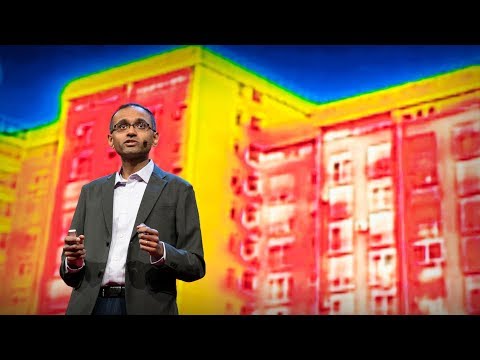
At the end of the day, efforts surrounding climate change need to extend beyond solely tapping into sustainable energy sources. While this is obviously a vital and important approach, it is essentially akin to juggling with one hand. Rather, we need solutions that also address inefficiencies in our power consumption – which is exactly what radiative cooling products are about. In an illuminating TedTalk from Aaswath Raman, he touched on the importance of addressing a potential feedback loop resulting from our cooling needs, and how radiative cooling may help.
Combined with other breakthroughs like Rückkontakt‑mikrometrische Photovoltaikzellen, it should be interesting to see the resulting benefits of initiatives being undertaken by companies like Ceracool in the coming years.



