

Energie
General Fusion geht mit einem 1-Milliarden-Dollar-Fusion-SPAC-Deal an die Börse.

Securities.io hält strenge redaktionelle Standards ein und erhält möglicherweise eine Vergütung für geprüfte Links. Wir sind kein registrierter Anlageberater und dies stellt keine Anlageberatung dar. Bitte beachten Sie unsere Affiliate-Offenlegung.

Zusammenfassung: General Fusion hat einen Unternehmenszusammenschlussvertrag mit Spring Valley Acquisition Corp. III unterzeichnet. (SVAC -0.29 %) Das Unternehmen würde damit zum ersten börsennotierten Unternehmen werden, das sich ausschließlich auf Fusionsforschung konzentriert. Der Deal impliziert einen Pro-forma-Eigenkapitalwert von rund 1 Milliarde US-Dollar und würde die Entwicklung der Magnetisierten Targetfusion (MTF) an die Börse bringen, während der globale Strombedarf rasant steigt.
General Fusion kündigt Pläne für den Börsengang an
General Fusion, ein führendes Unternehmen in der Entwicklung von Fusionsreaktoren, angekündigt die Unterzeichnung eines Unternehmenszusammenschlussvertrags mit Spring Valley Acquisition Corp. III (SVAC -0.29 %) Am 22. Januar 2026. Durch diese Transaktion würde das Unternehmen nach der Fusion mit rund einer Milliarde US-Dollar bewertet und sich damit für absehbare Zeit als wichtiger Akteur im Bereich der Fusionsforschung positionieren. Hier erfahren Sie alles Wichtige.
Energiebedarf
Dieses Abkommen könnte dazu beitragen, energieeffiziente Fusionstechnologie einem breiteren Publikum zugänglich zu machen und so eine sauberere und effektivere Lösung für den steigenden Energiebedarf von heute zu bieten. Der internationale Energiebedarf ist im letzten Jahrzehnt stetig gestiegen, und insbesondere der Energiesektor hat ein beschleunigtes Wachstum verzeichnet.
Jüngste Berichte der IEA zeigen, dass der weltweite Energiebedarf im Jahr 2024 um etwa 2.2 % steigen wird, wobei der Strombedarf sogar noch schneller zunimmt – bedingt durch die Elektrifizierung, das Wachstum der industriellen Last und den Ausbau von Rechenzentren, die neue Technologien wie künstliche Intelligenz unterstützen.
Weltweit decken fossile Brennstoffe nach wie vor rund 80 % des gesamten Primärenergieverbrauchs ab, während erneuerbare Energien etwa 15 % und Kernenergie rund 4–5 % beitragen. Obwohl erneuerbare Energien in der Stromerzeugung rasant gewachsen sind, bleibt ihr Anteil an der Gesamtenergieversorgung aufgrund von Schwankungen und Speicherbedarf begrenzt.
Für eine zuverlässige, kontinuierliche Stromerzeugung rund um die Uhr bieten Kernkraftwerke hohe Auslastungsgrade (oft über 90 % bei ausgereiften Anlagen) und sind im Gegensatz zu Solar- oder Windkraftwerken nicht von Wetterbedingungen abhängig. Diese Vorteile haben viele Wissenschaftler und politische Entscheidungsträger dazu veranlasst, die Fusionstechnologie als potenzielle Lösung der nächsten Generation zur Deckung des globalen Strombedarfs zu betrachten.
Warum die Fusion mit magnetisierten Targets wichtig ist
General Fusion hat maßgeblich zur Verbreitung der Fusionsenergietechnologie beigetragen. Nun wird das Unternehmen mit Spring Valley Acquisition Corp. III zusammenarbeiten, um seine Magnetized Target Fusion (MTF)-Reaktoren, darunter die Lawson Machine 26, zu kommerzialisieren und in größerem Maßstab zu betreiben.
Lawson-Maschine 26
Die Lawson Machine 26 („LM26“) ist die MTF-Demonstrationsanlage von General Fusion. Sie nutzt ein firmeneigenes Hybridfusionsverfahren, das magnetischen Einschluss des Brennstoffplasmas und Trägheitskompression kombiniert. Dieses Verfahren unterscheidet sich von Tokamak-Systemen und laserbasierter Trägheitskompression, da es auf schneller Pulskompression basiert und nicht ausschließlich auf großen supraleitenden Magneten oder Hochleistungslasern.
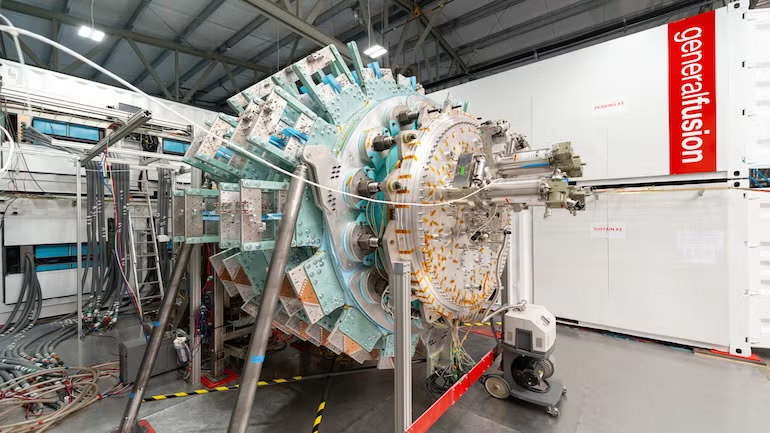
Quelle - Allgemeine Fusion
Die Lawson-Maschine 26 unterstützt das übergeordnete Ziel, Fortschritte beim Erreichen des Lawson-Kriteriums zu erzielen. Dieses Kriterium umfasst die Plasmatemperatur, -dichte und -einschlusszeit und ist erforderlich, damit eine Fusionsreaktion mehr Energie erzeugt als sie verliert. In der Praxis erfordert der Weg von der Demonstrationshardware zu netzgekoppelten Anlagen umfangreiche technische Validierungen, die über die physikalischen Laborexperimente hinausgehen.
Transaktionsdetails
Die Fusion der SPAC mit Spring Valley Acquisition Corp. III (SVAC) schafft ein gemeinsames Unternehmen mit einem geschätzten Pro-forma-Eigenkapitalwert von rund 1 Milliarde US-Dollar. Die Transaktion geht von keiner Rückzahlung aus dem Treuhandvermögen von SVAC in Höhe von rund 230 Millionen US-Dollar und der Beteiligung eines zugesagten und überzeichneten PIPE-Fonds (Private Investment in Public Equity) aus.
Der Vorschlag wurde von den Aufsichtsräten beider Unternehmen einstimmig angenommen. Die Führungskräfte gehen davon aus, dass der Zusammenschluss Mitte 2026 abgeschlossen sein wird (vorbehaltlich der Zustimmung der Aufsichtsbehörden und der Aktionäre). Im Rahmen der Vereinbarung haben die Unternehmen ihr Ziel bekundet, die MTF-Fusionstechnologie etwa Mitte der 2030er-Jahre kommerziell verfügbar zu machen.
In einer kürzlich veröffentlichten Mitteilung bestätigten die Unternehmen die Details der Vereinbarung und erklärten, dass sie nun die Zustimmung der Aufsichtsbehörden und der Aktionäre einholen werden. Sie gaben außerdem bekannt, dass das neue Unternehmen den Namen General Fusion tragen und unter dem Kürzel GFUZ an der Nasdaq notiert werden wird.
Zum Scrollen wischen →
TIPP: Wenn Sie ein Mobilgerät verwenden, wischen Sie horizontal, um den vollständigen Vergleich anzuzeigen.
| Unternehmen | Ansatz | Kernhardware-Konzept | Status | Kommerzialisierungsziel (öffentlich kommuniziert) | Relevanz für Investoren |
|---|---|---|---|---|---|
| Allgemeine Fusion | Magnetisierte Zielfusion (MTF) | Magnetisiertes Plasma + mechanische/elektromagnetische Kompression | Börsengang über SVAC SPAC | Mitte der 2030er Jahre (Ziel: erste Anlage dieser Art) | Reine Fusionsenergie-Exposure (GFUZ-Vorschlag) |
| Commonwealth-Fusionssysteme | Tokamak (Hochfeld) | Kompakter Tokamak + Hochtemperatur-Supraleitungsmagnete | Privat | Anfang bis Mitte der 2030er Jahre (variiert je nach Programm) | Benchmark-Marktführer im privaten Sektor; nicht direkt investierbar |
| Helion | Gepulste magneto-inertiale / FRC-basierte | Gepulste Plasmakompression in einer linearen Vorrichtung | Privat | Anfang der 2030er Jahre (vom Unternehmen vorgegebene Zeiträume) | Hochkarätiges Privattheaterstück; Zeitplan wird diskutiert |
| TAE-Technologien | FRC-basierte / fortschrittliche balkengetriebene Konzepte | Feldumgekehrte Konfiguration Plasmastabilisierung | Privat | Ab Mitte der 2030er Jahre (programmabhängig) | Langjähriger, privater Bauträger; nicht direkt investierbar |
| Energie zappen | Scherströmungs-Z-Pinch | Lineare Einschnürung mit Strömungsscherstabilisierung | Privat | Ab Mitte der 2030er Jahre (programmabhängig) | Nicht-Tokamak-Pfad; hohe technische Unsicherheit |
| Erste leichte Fusion | Trägheitsfusion (Konzept ohne Laseraufprall) | Projektil-/aufprallgetriebene Kompressionskonzepte | Privat | Ab Mitte der 2030er Jahre (programmabhängig) | Alternativer Trägheitspfad; nicht direkt investierbar |
Wofür die Mittel verwendet werden
Die Fördermittel werden mehrere Projekte voranbringen, darunter die Kommerzialisierung und die Weiterentwicklung der Magnetized Target Fusion-Technologie. Das übergeordnete Ziel ist die Entwicklung von Fusionssystemen für den kommerziellen Einsatz, was mit den langfristigen Dekarbonisierungszielen vieler Regierungen und Institutionen übereinstimmt.
Kommerzialisierung der Fusion im Netzmaßstab
Greg Twinney, CEO von General Fusion, sprach über den Zeitplan und betonte, dass dieser nicht besser sein könnte. Er ging darauf ein, wie Fusionsenergie zur Lösung der weltweiten Energieprobleme beitragen könnte und wie das Unternehmen die Kommerzialisierung mithilfe von MTF-Reaktoren vorantreiben will.
Wie die Technologie der Lawson Machine 26 die Welt verändern kann
Im Erfolgsfall könnte die Fusionstechnologie die Energieerzeugung revolutionieren, indem sie konstant verfügbare Energie in hoher Dichte und ohne CO₂-Emissionen am Entstehungsort liefert. Häufig zitierte Vergleiche weisen darauf hin, dass Fusionsreaktionen etwa viermal so viel Energie pro Masseneinheit Brennstoff erzeugen wie die Kernspaltung und millionenfach mehr als chemische Energiequellen wie Kohle, Öl oder Gas.
Allgemeine Fusion
General Fusion wurde 2002 mit dem Ziel gegründet, die MTF-Technologie weiterzuentwickeln. Der Firmengründer, Dr. Michel Laberge, gilt ebenso wie Twinney, der über zwei Jahrzehnte Markterfahrung verfügt und an der Börseneinführung zahlreicher Projekte beteiligt war, als Experte auf diesem Gebiet.
General Fusion hat die Innovation in der Branche kontinuierlich vorangetrieben und sich dabei Hunderte von Patenten gesichert. Dieser Innovationsgeist, gepaart mit einer zielgerichteten Strategie, hat dem Unternehmen geholfen, zu einer kleinen Gruppe privater Fusionsforschungsunternehmen zu gehören, die ihre Forschungsergebnisse in Fachzeitschriften veröffentlicht haben.
Investorenunterstützung
General Fusion erhält weiterhin starke Unterstützung von institutionellen Anlegern und Risikokapitalgebern. Das Unternehmen hat seit seiner Gründung rund 440 Millionen US-Dollar eingeworben. Diese Finanzierung stammt aus einer Mischung von Industriepartnern, Risikokapitalgebern, Investoren und staatlichen Fördergeldern, darunter auch Unterstützung aus dem kanadischen Strategischen Innovationsfonds.
Spring Valley Acquisition Corp. III
Spring Valley Acquisition Corp. III ist eine Zweckgesellschaft (SPAC), die gegründet wurde, um Unternehmenszusammenschlüsse im Energie- und Dekarbonisierungssektor anzustreben. Während General Fusion seinen Hauptsitz in Richmond, British Columbia, hat, agiert Spring Valley Acquisition Corp. III als US-börsennotierte SPAC.
Chris Sorrells, Vorstandsvorsitzender von SVAC, sprach darüber, wie diese Fusion dazu beitragen wird, den weltweit steigenden Energiebedarf zu decken. Er beschrieb eine Zukunft, in der die Kernfusion zu einer zentralen Form der Energieerzeugung wird, und erörterte anschließend, wie dieser Deal die Kommerzialisierung und den Infrastrukturausbau beschleunigen könnte.
Die Nachricht von der Übernahme hat den Aktienkurs von Spring Valley Acquisition Corp. III beflügelt. Investoren, die sich ein Investment sichern wollen, haben bereits begonnen, SVAC-Aktien zu kaufen. Dies ermöglicht eine Beteiligung vor der Fusion, noch vor dem Börsengang des neu gegründeten Unternehmens mit dem geplanten Kürzel GFUZ.
Spring Valley Acquisition Corp. III Stammaktien der Klasse A (SVAC -0.29 %)
Investoren-Takeaway: Die Transaktion zwischen General Fusion und SVAC bietet eine seltene Gelegenheit, am öffentlichen Markt in einen reinen Fusionskraftwerksentwickler zu investieren. Es handelt sich jedoch um eine langfristige und risikoreiche Anlage. Anleger sollten sie als Venture-Capital-Risiko in einem börsennotierten Rahmen betrachten: Zeitpläne können sich verzögern, der Investitionsbedarf kann steigen und technische Meilensteine (einschließlich Nettoenergie und Anlagenplanung) sind nicht garantiert.
Aktuelle Neuigkeiten und Geschäftsentwicklung von Spring Valley Acquisition Corp. III
Starboard Value erwirbt eine beträchtliche 8%-Beteiligung an Bill Holdings: Sollten Anleger ebenfalls kaufen?
Fool.com
•
November 17, 2025
Starboard reduziert Beteiligung an Kohl's, nachdem das Unternehmen im Januar versucht hatte, es zu übernehmen.
reuters.de
•
August 12, 2022
Ist das 9-Milliarden-Dollar-Angebot von Starboard eine faire Bewertung von Kohl's?
Fool.com
•
19. Februar 2022
Starboard Value Acquisition Corp. gibt die Zustimmung der Aktionäre zum Unternehmenszusammenschluss mit Cyxtera Technologies, Inc. bekannt; Bekanntgabe des Stichtags für die Optionsscheinausgabe
businesswire.com
•
Juli 28, 2021
3 Promi-Investoren, die Buffetts Anlageprinzipien brachen – und trotzdem erfolgreich waren
Investorplace.com
•
Juli 21, 2021
Warum nutzen nicht mehr Unternehmen SPACs für ihre Börsengänge?
Fool.com
•
Juli 19, 2021
General Fusion – Globale Nachfrage mit Technologie der nächsten Generation decken
General Fusion und Spring Valley Acquisition Corp. III werden künftig zusammenarbeiten, um die MTF-Fusionstechnologie vom Labor zur Marktreife zu bringen. Im Erfolgsfall könnte dies zu einer saubereren, dichteren und zuverlässigeren Energieversorgung führen – gerade in einer Zeit, in der Netzengpässe und Stromnachfrage zu zentralen wirtschaftlichen Herausforderungen werden.
Erfahren Sie mehr über weitere interessante Aktienentwicklungen. werden auf dieser Seite erläutert.



