
الذكاء الاصطناعي
الذكاء العضوي (OI) – خطوة تتجاوز الذكاء الاصطناعي القائم على السيليكون (AI)؟

 أضف Securities.io إلى مصادرك المفضلة على Google

في حين يُروّج عادةً للحوسبة الكمومية على أنها القفزة الكبيرة التالية التي ستحدث في مجال الحوسبة خلال حياتنا، هناك نهج آخر قد يكون له نفس الأثر – الذكاء العضوي (OI).
أي شخص مألوف بقانون مور – الذي ينص على أن كمية الترانزستورات التي يمكننا وضعها على دائرة متكاملة تتضاعف تقريبًا كل سنتين، بينما ينخفض التكلفة إلى النصف – ربما يكون على علم بأن فائدته تقترب من النهاية. بينما كان موثوقًا إلى حد كبير في توقع مستقبل الحوسبة منذ ملاحظته في عام 1965، وصلنا إلى نقطة حيث ستمنع القيود الأساسية استمرار النمو بهذا المعدل. القيد الأساسي الحالي ينبع من المتطلبات الحرارية للترانزستورات.
With Moore’s Law set to become obsolete within the decade, and conventional computing reaching its limits, it is only a matter of time before alternative approaches like OI become a reality.
ما هو الذكاء العضوي؟
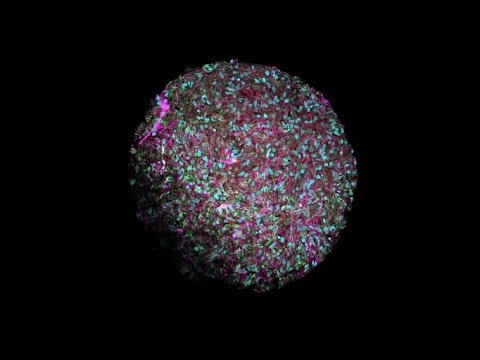
The فكرة وإمكانات الذكاء العضوي is actively being fleshed out by researchers at Johns Hopkins University. Those involved describe OI as an, “…مجال متعدد التخصصات ناشئ يعمل على تطوير الحوسبة البيولوجية باستخدام ثقافات ثلاثية الأبعاد لخلايا دماغ الإنسان (عضيات الدماغ) وتقنيات واجهة الدماغ-الآلة،”
Essentially, OI is a potential hybrid technology which will combine future biological computers with a brain-to-machine interface, allowing for directed tasks and learning to occur through use of external sensors/stimuli.
It should be noted that, realistically, advanced OI may be decades away. Although advanced OI may take some time to get here, the concept is one that has been developed over decades of research having already taken place involving lab-grown tissues.
As it stands, there have already been successful examples of brain cells learning ‘goal-directed’ tasks. The most prominent instance of this came in late 2022 when researchers at the UCL Queen Square Institute of Neurology علمت خلايا مزروعة في المختبر to play the video game Pong.
لماذا نطوّر الذكاء العضوي؟
The reason for developing OI is a simple one – we must move forward. Biological computing and silicon-based computing each have their own respective strengths and limitations. For example, the human brain is amazingly efficient when tasked with using logic, and completing complex decisions. Meanwhile, silicon-based computing thrives when tasked with calculations.
One of the researchers behind OI, Dr. Thomas Hartung, explains that “Frontier, the latest supercomputer in Kentucky, is a $600 million, 6,800-square-feet installation. Only in June of last year, it exceeded for the first time the computational capacity of a single human brain – but using a million times more energy”
Simply put, OI has the potential to be faster, smarter, more versatile, and more efficient than any existing approaches to computing. Current research being made in to its development is simply laying the foundation for what comes after silicon-based computing reaches its limits. Without it, technological growth may eventually stagnate.
For now, researchers have indicated that a large focus is being placed on how to scale the manufacturing of robust organoids. Currently, brain organoids being studied are three dimensional structures comprised of roughly 50,000 cells. In order to achieve anything resembling OI, this number would need to be scaled many times over. In the near future, there are those that believe existing silicon-based AI may act as a stop-gap, functioning to help develop new methods of doing just that.
حالات الاستخدام المحتملة
Jump forward to 2050. Basic OI is now a viable technology that can be put to use. Biological computers can now be tasked with running AI algorithms no longer hampered by the limitations of being silicon-based. What fields does OI, and the research put in to developing it, have the ability to advance our understanding of?
الإعاقات العصبية
Whether it be Alzheimer’s disease, Autism, Schizophrenia or some other neurological impairment, research into OI and the technology itself have the potential to shed light on their underlying pathologies.
Furthermore, not only would our understanding of the diseases themselves increase, so to would our ability to develop drugs and solutions to treat them.
الإدخال، التفسير، الدمج
Much like how research into OI may help our understanding of neurological impairments, it also will provide a much greater understanding of how a healthy brain functions and develops. This means looking at how the human brain,
- يستقبل المعلومات
- يفسر المعلومات
- يدمج المعلومات في قاعدة بياناته الحالية
By gaining a better understanding of each, we can more efficiently teach our youth while making the most of our brainpower throughout our lifetimes.
مخاوف حقيقية
Unsurprisingly, a technology such as OI raises multiple concerns. Researchers are talking about manipulating and testing on lab-grown brain cells after all. With that in mind, here are two of the issues that will no doubt play a major role in the future development of OI.
التفرد
As impressive as the human brain is, it has its limits – and OI is all about pushing past them. If successful, OI may be the technology that one day gives rise to the singularity – a point in time where technology reaches the point of intelligence that its growth becomes unchecked and unable to be stopped. It is the break-free point. While this may seem farfetched right now, this scenario is in 2050.
Many believe that if possible, it is at this point that technology will become self-aware. This is an idea explored by Ray Kurzweil in his book ‘The Singularity is Near’. In his writings, Kurzweil indicates that he believes the singularity will occur around 2045.
Humans fear change, and what they do not understand. Perhaps, it is for this reason that we continually produce works of fiction that envision and portray a self-aware technology as being malevolent. A warning to instill fear and trepidation towards something that may one day exceed our understanding.
الأخلاقيات
Being that research in to OI involves the studying of brain cells, it is reasonable to consider the ethics involved. As the technology progresses and testing structures become increasingly complex, how do we determine the point in time at which it is no long humane to test certain drugs or stimuli?
الكلمة الأخيرة
In 2023, OI is not even a fully formed concept yet. It is a technology envisioned that will combine technologies that have yet to advance themselves. Despite this, the potential for advancement in our understanding of the human brain, and computational capabilities is tantalizing to say the least.



