
에너지
안전하고 실용적인 핵융합의 해법: 포획 연료에 관한 새로운 통찰

 Securities.io를 Google의 선호 소스에 추가
핵융합 및 연료 효율성
핵융합은 위험한 부산물이나 방사성 폐기물(유일한 “폐기물”은 헬륨), 온실가스를 만들지 않는 궁극적인 친환경 에너지원이 될 수 있습니다. 연료로는 우주 전체에서 상당한 비중을 차지할 만큼 풍부한 수소 동위원소 중수소를 사용할 수 있습니다.
하지만 이것은 달성하기 매우 어려운 형태의 에너지 생산입니다. 지구에서 태양 핵심의 조건을 재현해야 하며, 엄청난 압력과 수천에서 수억도에 이르는 온도가 필요합니다.
핵융합은 수십 년 전부터 물리학 연구실에서 구현되어 왔지만, 투입 에너지보다 더 많은 에너지를 내는 반응은 아직 달성되지 않았습니다. 국제 거대 프로젝트 ITER부터 Commonwealth Fusion Systems, Proxima Fusion 같은 상업용 프로젝트까지 많은 주체가 이를 목표로 경쟁하고 있습니다.
Commercial viability will depend not only on achieving stable and energy-positive plasma generation, but also on the general efficiency of the process.
One open question is the fuel efficiency. Deuterium is known to be partially absorbed by the walls of the tokamak fusion reactors. Researchers at Princeton University, University of California, University of Tennessee, Sandia National Laboratory, and General Atomics are figuring it out.

연구진은 Nuclear Materials and Energy1에 “DIII-D 디버터 표면의 붕소화 필름에서 나타나는 중수소 보유 거동”이라는 제목으로 연구 결과를 발표했습니다.
중수소, 삼중수소 및 핵융합
원자가 가벼울수록 핵융합 때 방출할 수 있는 잠재 에너지가 더 큽니다. 따라서 대부분의 핵융합 프로젝트가 수소 동위원소의 결합에 초점을 맞추며, 가장 널리 쓰이는 선택은 중수소-삼중수소 융합입니다.

출처: Nature
중수소-중수소 융합도 가능하지만 기술적 이유로 상용화는 훨씬 더 어렵다고 여겨집니다. 그래서 ITER 같은 상업 프로젝트나 시제품은 거의 모두 중수소-삼중수소를 연료로 사용할 계획입니다.
삼중수소는 중수소와 달리 방사성이라는 문제가 있습니다. 따라서 원자로에 너무 많이 축적되거나 소재 위치를 추적할 수 없게 되어서는 안 됩니다. 이는 안전 문제인 동시에 규제 문제입니다.
“장치에 포함될 수 있는 삼중수소의 양에 대해 매우 엄격한 제한이 있습니다. 이를 초과하면 모든 것이 중단되고, 허가가 취소됩니다.
따라서 작동 가능한 반응기를 원한다면 삼중수소의 회계가 정확해야 합니다. 제한을 초과하면 이는 치명적인 문제입니다.
Alessandro Bortolon – PPPL 수석 연구 물리학자 (Princeton Plasma Physics Laboratory)
중수소 흡수
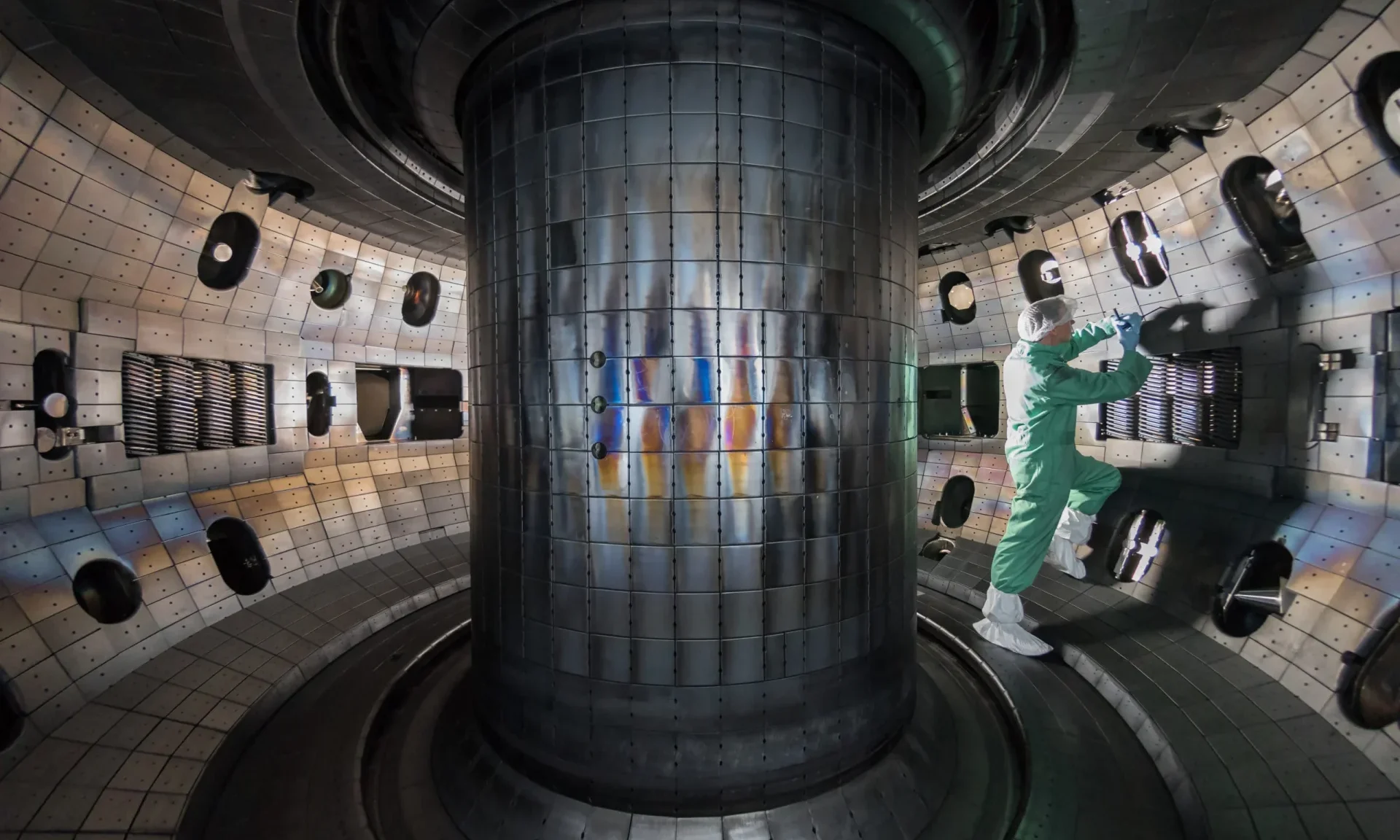
핵융합로의 벽은 흑연으로 만들고 붕소로 코팅합니다. 붕소는 산소, 탄소, 텅스텐 같은 플라스마 불순물을 줄이는 데 도움이 됩니다.

이 붕소 코팅 벽이 플라스마에서 일부 중수소를 흡수한다는 사실은 오래전부터 알려져 있었습니다. 그러나 그 메커니즘과 흡수량은 명확하지 않았습니다.
To understand it, they performed tests on DIII-D, a tokamak fusion reactor at General Atomics.
연구진은 중수소 흡수의 실제 원인이 붕소가 아니라 탄소라는 사실을 발견했습니다.

탄소와 붕소는 함께 중수소와 매우 강하게 결합할 수 있어 이 결합을 끊으려면 약 화씨 1,000도의 온도가 필요합니다. 따라서 핵융합 시스템을 손상시키지 않고 연료를 제거하기가 매우 어렵습니다.
“탄소는 최소화해야 합니다. 완전히 없앨 수는 없지만 가능한 모든 방법으로 탄소의 양을 최대한 줄이고 있습니다.
We want to get rid of all the carbon and have clean tungsten walls to ensure the calculations are even closer to what will be experienced in ITER.”
Florian Effenberg – PPPL 직원 연구 물리학자
해결책 찾기
Digging deeper, the researchers found that exposure to a plasma with small amounts of carbon contamination increased the amount of trapped deuterium significantly.
시료에 붕소 5단위가 포획될 때마다 중수소 2단위가 함께 포획되었습니다.
이 현상은 온도에도 좌우됩니다. 60만 K(화씨 약 100만 도)를 넘으면 중수소 보유량이 제한되고, 90만 K에서는 벽이 중수소를 다시 방출합니다.
그러나 벽 코팅이 이런 온도에 노출되면 소재의 장기 안정성이 저하되므로 원자로 벽의 연료 축적을 막는 실용적인 해결책은 아닙니다.
더 현실적인 해결책은 탄소 불순물이 원자로 벽으로 들어가는 것을 최대한 억제하는 것입니다. 탄소의 영향이 이토록 크다는 사실은 지금까지 알려지지 않았습니다.
이 결과는 ITER 원자로 벽의 최종 설계와 제조에 직접적인 영향을 줄 것입니다.
“ITER and future devices should be careful to minimize C impurity contamination to reduce deuterium retention.”
또한 이번 실험의 DIII-D처럼 벽에 흑연 타일을 사용하는 핵융합 장치의 실용성과 상업성을 제한할 가능성이 큽니다. 흑연은 탄소 원자로 이루어져 있어 시간이 지나면 삼중수소가 지나치게 많이 축적되고, 발전소 운전 허가를 받기 어려울 수 있습니다.
결론
핵융합은 점차 충분히 이해되는 기술이 되고 있으며 안정적인 플라스마 유지 기록도 계속 경신되고 있습니다. 최근 프랑스와 중국의 협력 실험에서는 22분을 기록했습니다.
With AI의 도움, it is likely that fusion will keep getting more efficient over time, up to the point where net energy is achieved.
기술이 상용화에 가까워질수록 연료 축적과 방사능 관련 규제 준수 같은 새로운 과제가 나타납니다. 실험용 원자로에서는 이런 문제를 상대적으로 덜 걱정해도 됐습니다.
Luckily, these issues are also being ironed out, and optimizing the quality of materials used for the reactors will help.
Combined with 초전도성에 대한 지속적인 이해 향상, this could help make our trouble generating green energy a thing of the past in the next 1-2 decades.
핵융합 기업들
현재 핵융합 상용화에만 전념하는 기업 중 상장사는 없습니다. 여기에는 Helion, General Fusion (GFUZ ), Commonwealth Fusion, TAE Technologies, ZAP Energy, NEO Fusion이 포함됩니다.
You can find an 핵융합 분야 스타트업의 포괄적인 목록을 Dealroom 전용 페이지에서 확인할 수 있습니다.
Still, one publicly-listed company has been active in the field of fusion, with a redirection of its concept from energy production to space propulsion: Lockheed Martin (LMT ).
LMT 가격 차트
One notable exception to privately-listed startups dominating the field is the publicly traded company Lockheed Martin Corporation, a giant of the defense industry.
Lockheed는 2010년대 초부터 2020년대에 완성될 것으로 예상됐던 핵융합로 Compact Fusion을 연구했습니다. 그러나 이후 2021년에 프로젝트 작업을 중단했다고 발표했습니다.
회사는 2021년 공개 발표 이후 이 프로젝트에 대해 거의 언급하지 않았습니다. 지금도 어떤 이유로 사업을 포기했는지는 분명하지 않습니다.
At the same time, it seems that it did not fully abandon the concept, notably with investments in 2024 in Helicity, a startup developing a fusion engine.
짧은 핵융합 폭발로 우주선을 추진한다는 구상입니다. Helicity는 General Fusion과 같은 방식인 플라스마 건을 사용할 계획입니다. Lockheed의 내부 실험에서 해당 설계가 에너지 생산에 적합한 방식으로 핵융합을 유지하지 못한다는 결과가 나왔을 가능성도 있습니다.
그러나 우주 추진에는 짧은 폭발만으로 충분하고 실제 제품화에도 훨씬 가까울 수 있습니다. 이는 회사의 전반적인 항공우주·방위 사업 구조와도 더 잘 맞습니다.
Lockheed Martin은 핵융합 프로젝트 외에도 세계 최대 항공우주·방위 기업 중 하나입니다. 2025년 11월의 “Lockheed Martin (LMT) 집중 분석: 방위·항공우주의 선도 기업”에서 자세히 다뤘습니다.
간단히 말해 이 회사는 Black Hawk 헬리콥터, F-16 같은 항공기뿐 아니라 F-35, 공중 레이더, C-5 Galaxy와 C-130J Super Hercules 같은 수송기를 생산합니다.

출처: Lockheed Martin
또한 JASSM, Javelin, ATACMS, HIMARS 등 미군의 핵심 미사일 체계를 생산합니다. 우크라이나 전쟁으로 재고가 줄면서 수요가 매우 높습니다.
Lockheed is the lead contractor for the design, development, testing, and production of the Orion spacecraft, which may be the least controversial part of the entire Artemis program.
회사는 GOES-R 기상위성, OSIRIS-REx의 소행성 시료 채취, 목성 탐사선 JUNO, 착용형 방사선 차폐 조끼 AstroRad 등 다른 우주 프로그램에도 참여합니다.
핵심 군사 체계부터 중요한 우주 및 핵융합 프로그램까지 Lockheed Martin은 미국 혁신의 최전선에 있으며, 많은 대형 방산 경쟁사보다 훨씬 날카로운 경쟁력을 유지한 것으로 보입니다.
Lockheed Martin Corporation 최신 소식
연구 참고:
1. Shota Abe et al. (2025) “보론화 필름의 중수소 보유 거동 (DIII-D 디버터 표면에서)”. Nuclear Materials and Energy Volume 42, 2025년 3월, 101855.



