
에너지
태양광 성장, 더 스마트하고 회복력 있는 전력망 필요

 Securities.io를 Google의 선호 소스에 추가

화석 연료에서 태양광 전력망으로의 전 세계적 전환
In the aftermath of the power grid collapse in the Iberian Peninsula (Portugal and Spain), many questioned the root cause of what happened. And, like many things today, the discussion quickly became politicized, with solar power accused of being the reason for the crash.

출처: RNZ
그리고 어느 정도는 부분적으로 사실일 수도 있습니다. 전력망은 수십 년 전, 몇 개의 거대한 발전소가 필요에 따라 전력을 생산하도록 설계된 중앙집중식, 화석 연료 중심의 구조였습니다.
이에 비해 분산형 및 재생 에너지 공급은 여러 방식으로 작동합니다. 태양광 비용이 낮아지면서 전체 에너지 생산 중 점점 더 큰 비중을 차지할 것으로 보입니다. 현재 태양광은 전력망에 추가된 신규 발전량의 80%를 차지하고 있으며, 풍력은 10%를 차지합니다.
2024년 전 세계 전력 확장 중 585GW의 용량이 추가되었으며, 재생 에너지가 전체 전력 확대의 90% 이상을 차지했습니다.
태양광과 풍력 에너지가 가장 크게 확대되었으며, 2024년 순 재생 에너지 추가량의 96.6%를 공동으로 차지했습니다. 용량 확대의 3/4 이상이 태양광으로, 32.2% 증가해 1 865GW에 이르렀으며, 풍력은 11.1% 성장했습니다.
출처: Irena
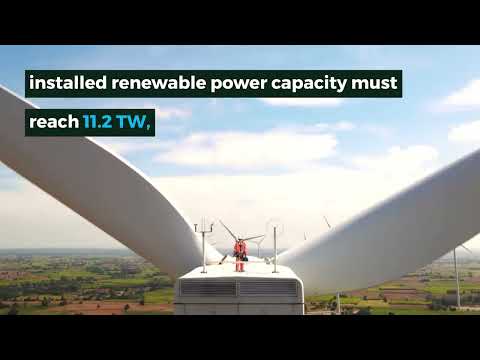
따라서 친환경, 재생 기반 전력 공급이 임박한 상황이지만, 전력망이 이를 감당하도록 만드는 것이 필수적입니다. 특히 최근처럼 전력망 고장이 실제로 태양광 공급 때문에 발생했다면, 이는 태양광 채택을 늦추고 탄소 배출량이 더 오래 높은 수준을 유지하게 만들 수 있습니다.
전기 전력망은 어떻게 작동하고 왜 실패하는가
A key element to understand about the importance of the power grid and the difficulties in keeping it running is that electricity is very hard to store.
In theory, this is what batteries are doing, but the power grid of a country is running power levels several orders of magnitude over what even the largest battery facilities can store.
So for now, power has to be produced in exactly the same quantity as it is consumed, in real time.
To add to this difficult task, power also needs to be delivered to the right place and at the right time. For example, solar power generated in Nevada will not help the Kansas grid if it is not connected to it with enough power lines it. In the case of Spain, the interconnections with the French power grid system were not large enough to save it from its localized problems.

출처: ResearchGate
마지막으로 전압 변환이 필요합니다. 장거리 전력 전송은 고전압에서만 효율적으로 수행될 수 있어, 전력을 전선에 공급하기 전에 전압을 올리는 변압기가 필요합니다. 소비 측에서는 낮은 전압이 필요하며, 이것도 변압기를 통해 이루어집니다.

출처: EIA
스페인 전력망 고장: 무엇이 잘못됐는가?
주파수 문제
While it is likely that the Iberian grid collapse root causes will be hotly debated, potentially for months and years to come, we have a few data points that can partly indicate what happened.
The first is that the actual failure point was not about excessive or insufficient power generation, but the electric frequency of the power grid.
Utility frequency is a technical characteristic of the grid, determined by the oscillation of alternating current.

출처: Wikipedia
다양한 전력망은 서로 다른 표준 주파수를 가지고 있어 호환되지 않을 수 있습니다. 예를 들어, 발트 3국은 수십 년간 구소련에서 물려받은 주파수를 사용하다가 최근에야 유럽 주파수로 전환했습니다.
주파수가 표준을 크게 벗어나면 변압기와 고전력 장비는 물론 일반 사용자 기기까지 파괴될 수 있습니다. 전력 장비에는 주파수가 과도하게 변동하면 자동으로 차단되는 메커니즘이 다수 내장되어 있습니다.
태양광이 스페인 전력망 고장의 원인인가?
The grid frequency used to be generated and stabilized by the physical rotation of massive generators, usually powered by fossil fuels, but also hydropower and nuclear plants. This gave the grid a lot of inertia, making it very hard for the frequency to deviate much from the intended levels. However, solar power does not generate such inertia.

출처: SmartGrid
따라서 태양광 발전 자체가 충돌을 일으킨 것이라기보다, 관성 부족으로 인해 전력망 주파수를 안정화시키지 못한 것이 충돌의 핵심 요인이었습니다.
하지만 이것만으로는 왜 주파수가 처음에 변동했는지를 설명하지 못합니다. 관성 부족 외에도, 일부 잘못된 관행과 오래된 설계가 이베리아 전력망 붕괴에 기여했으며, 이는 전력망 운영자가 “극히 드문 기상 현상”이라고 설명한 상황에 취약하게 만들었습니다.
재생 에너지 미래를 위한 전력망 업그레이드
As older designs of transformers, power lines, and other infrastructure are the most common cause of outages, it makes sense that the first step to improve the power grid is to upgrade the equipment.
One step forward is the so-called smart grids, which monitor much closer what is happening at every level of the power grid in real-time, instead of a more general analysis. This also includes plenty of individual automatic systems.
This way, a fluctuation in the frequency localized in one specific area, due to a weather event, for example, could be isolated from the rest of the grid immediately before it spreads the problem any further.
Improvements to the power lines can also help. A denser power network allows for rerouting power from one region to another and reduces the sensitivity to a single failure point. Better insulation or burying power lines can also protect them against storms, snow & frost, wildfire, etc.
More connections between distant regions can also help average fluctuations in power generation from one sunny area to another. This generally requires dedicated infrastructure for ultra-long distance power transportation, something that China is the global leader in, with its “super grid” using ultrahigh-voltage (UHV) AC and DC power lines, with already 30,000 km of UHV lines (18,600 miles).

출처: IEEE
유럽과 북미에서도 유사한 대륙 간 연결이 필요할 것으로 보이며, 예를 들어 스페인과 북유럽, 혹은 미국 동부와 서부 사이에 연결이 구축될 필요가 있습니다. 현재 많은 독립 전력망이 아직 충분히 연결되지 않았습니다.
그 점에서 최근 몇 년간 가장 큰 전력망 고장이 텍사스와 스페인에서 발생한 것이 우연이 아니라는 점을 주목할 만합니다. 두 지역 모두 비교적 작고 고립된 전력망을 가지고 있습니다.

출처: ASME
마지막으로, 전기차, 난방, 산업 공정 등에서 전기화가 주류가 되면서 석탄·석유·가스에서 벗어나기 위한 전력 전송 용량이 전반적으로 증가하고 있습니다. 이는 설계 변화나 새로운 기술이 아니라, 더 많은 전력선 구축을 위한 투자 확대가 필요함을 의미합니다.
재생 에너지 시스템에서의 전력망 주파수 안정화
배터리 저장 및 가상 관성
While smart grids are part of the answer, they are mostly going to reduce exposure to environmental effects and contain failures in smaller, more manageable areas than a country-wide crash.
To avoid crashes in the first place, especially as inertia-less solar power becomes the primary source of electricity, other solutions are needed.
Large-Scale Battery Storage (LSBS) could provide some help. These batteries are, anyway, going to be needed for a mostly renewable-based energy system, as solar panels are not producing energy in the evening at peak consumption time.
They can also provide frequency inertia, although in a different way than traditional large spinning generators. Inertia from batteries is called virtual inertia, or synthetic, simulated, or digital inertia.
When disturbances outside the normal frequency are detected, FFR pushes the grid frequency back into its normal operating range by rapidly injecting or drawing power from the grid.
Virtual inertia can respond even quicker than traditional generators to instability in the frequency, in less than 2 seconds.
This is a service that was first offered commercially in 2022 by battery facilities built by Tesla (TSLA ).
The Big Battery is able to provide ~2,000 “megawatt seconds” (MWs) of an inertia equivalency to help keep the grid stable. It does so via Tesla’s Virtual Machine Mode service. It will be able to provide ~15% of South Australia’s inertia shortfall.
태양광 패널이 전력망 주파수 안정화에 기여할 수 있는가?
By themselves, solar panels do not provide inertia, as there is no physical spin and kinetic energy to create it. But they could be used in ways to provide support to the grid as well.
For example, solar projects have been traditionally designed and incentivized to maximize production at all times. But by maintaining some spare generation capability, they could provide it in case of a drop in frequency.
This is very easy to do technically and has more to do with how solar plants are compensated by utility companies and grid operators.
Smaller scale of energy storage at the solar plant level could be similarly used to absorb small spikes in power and a rise in frequency. The grid operator could dedicate a specific amount of generation to be stored and made available for immediate dispatch if the frequency drops.
The same method could be used with the inverters linked to the solar panels. A plant controller could theoretically override the inverter controls for a short time frame to arrest a frequency drop, “running it hot,” but below the level where physical damage would be caused to the inverters.
In that scenario, every solar panel inverter would act as a mini stabilizer, providing additional virtual inertia.
기계식 회전 솔루션으로 전력망 관성 복원
If inertia is needed, and traditionally provided by spinning hundreds of tons of metal at high speed, maybe the solution to too little inertia is doing just that.
Some devices and energy storage forms are of the spinning type: synchronous condensers and flywheels.
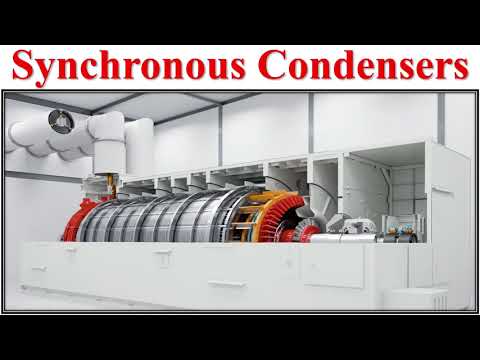
동기 콘덴서: 전력망에 관성 추가
Synchronous condensers are DC motors whose shafts are not connected to anything but spin freely. They are not generating or consuming power, but adjusting conditions on the electric power transmission grid.
They are actually a very good option for adding inertia to the grid, but provide very few other services. So if a lot of them need to be added, this will come as an extra cost, partially negating the progress made in reducing the price of renewable energy.
Condensers are also very important for restarting a crashed grid, as they provide the inertia needed when little power is present in the grid. They can also help absorb overcharge in the network for several seconds, reducing the risks of a short circuit.
플라이휠 에너지 저장으로 전력망 안정성 확보
Flywheels are another interesting option. These rotating disks are essentially spinning batteries, storing energy in a mechanical form instead of a chemical one.
They rotate in a vacuum on a magnetic bearing, rotating at speeds as high as 20,000 to 50,000 rotations per minute. The system stores or gives back energy by accelerating or slowing the flywheel.

출처: Stornetic
가상 관성이 아닌 “실제” 관성을 자연스럽게 제공함으로써, 플라이휠은 그린 그리드에 필요한 “배터리” 믹스에 좋은 옵션이 될 수 있습니다. 이는 에너지를 저장하고 다시 공급할 수 있는 점에서 단순 동기 콘덴서보다 우수합니다.
대체 회전식 에너지 저장 솔루션
Any energy storage that spins could add inertia to the grid system. So, beyond flywheels, other options are possible as well.
For example, the startup Cheesecake Energy offers a modular, containerized package of compressed air energy storage. The heat generated by the compression is stored in cheap gravel in heat batteries, and compression is done with repurposed old truck engines. The storage and regeneration of power also involves spinning metal shafts, similar to a conventional generator.
Other non-chemical energy storage exists, like gravity batteries, pumped hydro, concrete storage, heat batteries, or thermal solar energy, which we explored in the dedicated article “Non-Chemical Alternatives To Batteries For The Energy Transition”.
전력망 관성 및 주파수 제어를 위한 시장 창출
So far, inertia was somewhat of a “free service” provided by operators of power plants with spinning generators. Or more precisely, it was assumed that this was part of the service paid for when utilities bought megawatts from them.
Changes in energy generation mean that a more explicit market for frequency stabilization should be created in order to incentivize the provision of inertia.
This is something being pioneered by countries with small isolated grids, like the Baltic states.
With the launching of the frequency market by Litgrid (Lithuania), Augstsprieguma tīkls (Latvia), and Elering (Estonia) electricity producers can submit bids every morning for the following day, indicating how much energy they are willing to hold in reserve.
The price is about 0.5 cents per kilowatt-hour, which means approximately €1 per month for a household consumer.
전 세계 전력망 업그레이드를 늦추는 주요 과제
변압기 부족이 그리드 현대화를 위협
One of the most prominent issues in improving the grid today is transformer shortages. Decades of underinvestment in grid infrastructure led to the situation where not only is new equipment needed to deal with more consumption, but also to replace aging transformers.

출처: Utility Dive
An increase in damages from hurricanes and wildfires did not help either.
The extra demand also meets supply issues, as special electrical steel, vital to transformer power loss reductions, remains expensive and difficult to obtain.
“Delivery of a new transformer ordered today could take up to three years. Five years ago, that wait time was four to six weeks.”
Peter Ferrell – National Association of Electrical Manufacturers, or NEMA, Director of Government Relations
구리 부족이 재생 에너지 그리드를 방해할 수 있음
Another issue that could slow down the upgrades of the grid is a shortage of natural resources. While lithium and other minerals for batteries might be in adequate supply, it is unclear if global copper production is high enough especially as EVs and other technologies important to electrification are increasing consumption as well.
And turning the direction of copper supply might be very slow, with the shortage expected to persist for years.
“Demand could be met by opening three ‘tier-one’ mines (each with an annual capacity of 300,000 metric tons) every year for the next 29 years, which would represent a historic expansion for the industry, coming in at a cost of over $500bn.
Regulatory approvals for new copper mines are on a downward trend, having fallen to the lowest level in 15 years. This is particularly concerning, given mines can take 10 to 20 years to approve and develop”
Source: International Energy Forum
그리드 부품에 대한 관세가 미국 업그레이드를 지연시킬 수 있음
For the USA specifically, it is possible that trade wars and tariffs might get in the way of supplying the equipment it needs.
In 2024, China exported $46.5B of electrical transformers, being the 9th most exported product (out of 1,211) in China, with the USA the main destination (4.66B worth of trade).
Similarly, batteries and other electronic and power components are likely partially supplied by Chinese firms and will need alternative suppliers.
Lastly, most long-distance power lines use aluminum, which was also subject to special 25% tariffs this year. This could raise project costs and delay the much-needed upgrades to the power infrastructure of the country.
결론: 녹색 미래를 위한 회복력 있는 전력망 구축
Rebuilding the power grid to handle the switch to renewable energy is a rather daunting task. By reducing the importance of gas turbines and other fossil fuel power plants, the energy transition is also removing an important source of frequency stability, all while power production becomes more intermittent.
In parallel, electrification means that power grids are more strained than ever by a constantly increasing demand for transportation, heating, and industrial activity.
Green energy is likely to be the solution to the problem it causes. Battery packs, already needed in massive sizes to balance production intermittency, are likely to become the prime provider of frequency stability. Solar plant inverters will also likely be mobilized for this task.
Meanwhile, other technologies like compressed air, flywheel, and synchronous condensers are also likely to help.
In the short term, insufficient production of transformers and the special grade of steel they require will hamper grid improvements. In the longer run, the ability to properly reward providers of frequency stability, the political will to improve the power grid, and a steady supply of energy storage solutions will be the key factors in a successful energy transition.
전력망에 투자하기
GE Vernova
GEV 가격 차트
GE Vernova는 2024년 거대 기업 GE가 GE Aerospace (GE ), GE HealthCare, 그리고 에너지 부문인 GE Vernova로 분할된 결과물이며, Vernova는 에너지 부문에 해당합니다.
이러한 점에서 GE Vernova는 130년 역사를 가진 원래 General Electric (GE.TO ) 핵심 사업의 직접적인 후계자라고 할 수 있습니다.
현재 75,000명의 직원이 100개 이상의 국가에서 근무하고 있으며, 55,000대의 풍력 터빈과 7,000대의 가스 터빈을 생산해 전 세계 전력의 약 25%를 공급하고 있습니다.
풍력, 수력, 원자력 등 터빈 관련 분야뿐 아니라 전력망에서도 160억 달러 규모의 프로젝트를 보유하며 전력 생산 및 배전 전 단계에 관여하고 있습니다.

출처: GE Vernova
이 회사는 2040년까지 전력 수요가 두 배로 증가할 것으로 보고 있으며, 석탄 발전소를 대체하기 위해 4조 달러가 필요하다고 전망합니다. 이는 전기 장비 제조업체에게 거대한 기회가 됩니다.

출처: GE Vernova
GE는 프랑스 Engie, 미국 Duke Energy (DUK ), Southern Company (SOT.DE ) (SO ), 독일 RWE, 스페인 Iberdrola, 대만 Taiwan Power Company 등 세계 주요 유틸리티 기업과 긴밀히 협력하고 있습니다.
그리드 솔루션 및 전기화와 관련해 GE Vernova는 배터리 에너지 저장 시스템, 동기 콘덴서, 펌프 저장 발전소(PSPP), 전기로 구동되는 용광로, 열 저장, 태양광 인버터, 수소 압축기 등을 제공합니다.

출처: GE Vernova
GE Vernova는 탄소 포집, HVDC 케이블, 수소 가스 터빈, 그리고 히타치와 협력한 소형 모듈형 원자로(SMR) 설계 등 에너지 관련 R&D에 연간 10억 달러를 투자하고 있습니다.

출처: GE Vernova
미국 내 공급 문제와 산업 장비 부족은 회사에 기회가 될 수 있으며, 2028년까지 전 세계적으로 90억 달러 규모의 누적 CAPEX 및 R&D 투자 계획을 통해 신규 생산 시설을 구축하고 있습니다. 여기에는 차세대 원자력 연료 설계에 5천만 달러, 가스 전력 및 LNG 수출에 3억 달러, 그리고 2026년까지 미국 공장에 6억 달러가 포함됩니다.
GE Vernova의 활동 범위가 넓기 때문에, 투자자는 향후 5~10년 동안 어떤 기술이 에너지 전환을 주도할지 확신할 필요가 없습니다:
- 천연 가스가 여전히 중요한 역할을 한다면, GE Vernova는 이미 해당 부문에서 주요 기업입니다.
- 핵에너지 혁신이 일어나면, 핵 터빈 및 SMR이 성공할 것입니다.
- 수소, 풍력, 펌프 수력, 탄소 포집 및 저장이 급성장한다면, GE Vernova는 해당 시장에서도 입지를 확보할 수 있습니다.
따라서 전력 수요 증가와 더 나은 전력망 필요성을 인식하고, GE가 수력, 풍력, 원자력 등 다양한 형태의 에너지 솔루션을 제공할 것이라고 확신하는 투자자에게 GE Vernova는 고려해볼 만한 좋은 주식입니다.
GE Vernova 최신 소식



