
Biotechnologie
Klonierte Dire-Wölfe: Biotechnologischer Durchbruch definiert das Aussterben neu

 Securities.io zu deinen bevorzugten Quellen auf Google hinzufügen

Was hat Colossal tatsächlich erreicht?
Viele Arten starben aus, bevor moderne Zivilisationen entstanden. Klimaveränderungen nach der Eiszeit, weniger Beutetiere, Konkurrenz und menschliche Jagd spielten häufig zusammen. In Knochen und Zähnen aus kalten Regionen können Fragmente alter DNA erhalten bleiben. Die Klonierung von Dinosauriern aus intakter DNA wie in Jurassic Park bleibt dagegen Science-Fiction.
Im April 2025 erklärte Colossal Biosciences, drei genetisch veränderte Grauwolfwelpen mit ausgewählten Merkmalen des ausgestorbenen Dire-Wolfs hervorgebracht zu haben. Das Unternehmen nannte sie Romulus, Remus und Khaleesi und vermarktete sie als erste „wiederbelebte“ Dire-Wölfe.
Diese Bezeichnung ist wissenschaftlich umstritten. Die Tiere sind keine Klone eines ausgestorbenen Tiers und besitzen nicht das vollständige Genom des Dire-Wolfs. Es sind Grauwölfe, bei denen ausgewählte Genstellen für Merkmale wie Körpergröße, breiteren Kopf und helles Fell verändert wurden. Dieser Artikel bezeichnet das biologische Ergebnis deshalb als Grauwölfe mit dire-wolf-ähnlichen Merkmalen und kennzeichnet „Wiederbelebung“ als Unternehmensbegriff.
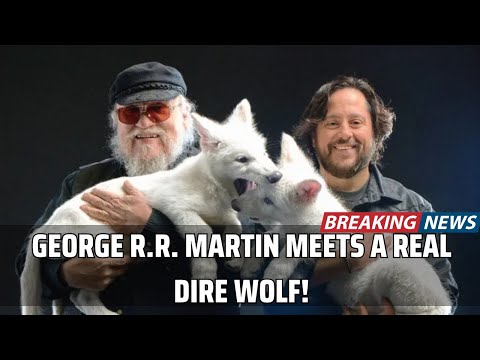
Die entscheidende Frage ist nicht, ob die Welpen reale Tiere sind. Zu klären ist, ob eine begrenzte Zahl von Änderungen die Bezeichnung einer seit Jahrtausenden ausgestorbenen Art rechtfertigt und welchen Nutzen die Technik für heute bedrohte Arten haben kann.
Der Dire-Wolf war eine eigene Art
Der Dire-Wolf, Aenocyon dirus, gehörte zu den Hundeartigen. Genetische Daten ordnen ihn einer anderen Gattung zu als den heutigen Grauwolf aus der Gattung Canis. Ähnlichkeiten bei Körperform und Zähnen bedeuten daher keine so enge Verwandtschaft, wie die Alltagsnamen nahelegen.

Quelle: Thallaso Atrox
Das Tier war ungefähr so groß wie die größten heutigen Grauwölfe oder etwas größer und hatte einen kräftigen Kopf, große Zähne und relativ kleine Pfoten. Angaben zur Beißkraft beruhen auf Fossilien und biomechanischen Modellen, nicht auf Messungen an lebenden Tieren.

Quelle: The Armory
Eine einzelne gesicherte Ursache des Aussterbens gibt es nicht. Erklärungen umfassen Umweltveränderungen nach der Eiszeit, den Rückgang großer Beutetiere, Konkurrenz mit anderen Raubtieren und menschlichen Einfluss. Das unvollständige Fossilmaterial erschwert die Gewichtung der Faktoren.
Wie entstanden die Tiere?
Von alter DNA zu ausgewählten Merkmalen
Colossal analysierte DNA-Fragmente aus einem etwa 13.000 Jahre alten Zahn und einem rund 72.000 Jahre alten Schädel und verglich die Varianten mit dem Grauwolfgenom. Alte DNA ist stark zerfallen und liefert kein vollständiges lebensfähiges Genom für eine direkte Klonierung. Das Unternehmen wählte deshalb eine begrenzte Zahl von Stellen aus, die mit körperlichen Merkmalen verbunden wurden, und bearbeitete entsprechende Stellen in Grauwolfzellen.
Nach Unternehmensangaben wurden 20 Änderungen in 14 Genen vorgenommen. Zellkerne aus den bearbeiteten Zellen wurden in entkernte Eizellen übertragen; die Embryonen kamen anschließend in Leihmütter. Das ist reproduktives Klonen veränderter Grauwolfzellen, keine direkte Klonierung einer erhaltenen Dire-Wolf-Zelle.
Die Verbindung zur „Wollmaus“
Vor den Welpen präsentierte das Unternehmen eine sogenannte Wollmaus. Bei diesen Mäusen wurden Gene verändert, die Felllänge, Struktur und Farbe sowie den Fettstoffwechsel beeinflussen. Das Experiment testete einzelne Merkmale für ein Projekt, das Elefanten mammutähnliche Eigenschaften geben soll.

Quelle: IFL Science
Verändertes Fell allein beweist nicht, dass ein Tier in der Arktis leben kann. Kälteanpassung umfasst auch Wärmeregulierung, Kreislauf, Verhalten, Ernährung, Immunität und Fortpflanzung.

Quelle: IFL Science
Der Rotwolf
Colossal hat Teile seiner Zellgewinnungs- und Klontechnik in Arbeiten zum Rotwolf eingesetzt, einem der am stärksten bedrohten wild lebenden Hundeartigen. Die Identität mancher Ausgangstiere und der Anteil von Kojoten-Abstammung werden unter Naturschutzbiologen diskutiert. Tiere in menschlicher Obhut beweisen für sich genommen nicht, dass eine genetisch vielfältige, stabile Wildpopulation wiederhergestellt wurde.
Die Unternehmensdefinition von Wiederbelebung
Colossal beschreibt sein Ziel als Verbindung von drei Elementen:
- Genvarianten zurückzubringen, die mit typischen Merkmalen der ausgestorbenen Art verbunden sind,
- zusätzliche Änderungen für die heutige Umwelt einzubauen,
- die Widerstandsfähigkeit gegen Krankheiten oder andere Gefahren zu erhöhen.

Quelle: Colossal
Die Arbeit erfordert Genomeditierung, Reproduktionsbiologie, Zellkultur, Embryotransfer und Bioinformatik. KI kann Genomdaten ordnen und Auswirkungen von Änderungen vorhersagen, ersetzt aber weder Experimente noch die langfristige Überwachung von Gesundheit und Verhalten.
Wurde die Art wirklich wiederbelebt?
Die Antwort hängt von der Definition ab. Wenn das Ziel ein Tier mit einigen Merkmalen einer ausgestorbenen Art ist, erfüllen die Welpen einen Teil davon. Wenn die Art mit ihrem vollständigen Genom, ihrer genetischen Vielfalt, ihrem Verhalten und ihrer ökologischen Rolle gemeint ist, erfüllen sie es nicht. Der größte Teil ihres Genoms stammt vom Grauwolf.
Alte DNA ist stark fragmentiert. Sie kann für Vergleiche rekonstruiert werden, liefert aber keine intakte Zelle zur direkten Klonierung. Die Tiere sind genetisch veränderte Grauwölfe mit einigen dire-wolf-ähnlichen Merkmalen.
Einordnung von Philip Seddon und Nic Rawlence, University of Otago
Diese Unterscheidung schmälert nicht die technische Leistung, mehrere Genstellen zu verändern und lebende Tiere hervorzubringen. Sie verhindert jedoch, konstruierte Merkmale mit der Wiederherstellung einer ausgestorbenen Population und ihrer Evolutionsgeschichte gleichzusetzen.
Naturschutz und ökologische Risiken
Colossal erklärt, dass die Projekte Werkzeuge für bedrohte Arten entwickeln: Zellbanken, assistierte Fortpflanzung, höhere genetische Vielfalt und Krankheitsresistenz. Solche Werkzeuge können wertvoll sein, wenn sie Teil von Programmen sind, die zugleich Lebensräume schützen sowie Jagd und Konflikte mit Menschen verringern.
Vor einer Auswilderung veränderter Tiere sind unabhängige Prüfungen von Tierwohl, Verhalten, Krankheitsübertragung, Fortpflanzung und Auswirkungen auf Beute und Konkurrenten erforderlich. Ein Tier, das einer alten Art ähnelt, übernimmt in einem seit Jahrtausenden veränderten Ökosystem nicht automatisch dieselbe Rolle.
Weitere Projekte und mögliche Anwendungen
Mammut, Dodo und Beutelwolf
Das bekannteste Projekt zielt auf einen asiatischen Elefanten mit Merkmalen des Wollhaarmammuts. Colossal verglich Genome von Mammuts und Elefanten auf Varianten für Kälte, Fell und Fettstoffwechsel. Das erklärte Ziel ist ein funktionaler Ersatz, keine exakte Kopie eines historischen Mammuts.

Quelle: Colossal
Die Pläne umfassen außerdem den Dodo und den Beutelwolf. Es handelt sich weiterhin um Forschung. Tourismus oder tierische Produkte sind spekulative Geschäftsideen mit ethischen und regulatorischen Grenzen, keine gesicherten Einnahmen.
https://www.youtube.com/watch?v=FJlvr9Oqk8g
https://www.youtube.com/watch?v=XCmJGm8o4yw
Veränderung heute lebender Arten
Dieselben Werkzeuge könnten Nutztiere oder Pflanzen widerstandsfähiger gegen Hitze und Krankheiten machen oder ihre Effizienz erhöhen. Jede Änderung erfordert eine Bewertung von Sicherheit, Tiergesundheit, genetischer Vielfalt und der Gefahr einer Ausbreitung der Gene in andere Populationen.

Quelle: Colossal
Umweltbiotechnologie
Colossal Laboratories hat Breaking mit aufgebaut, das Mikroorganismen für einen schnelleren Abbau bestimmter Kunststoffe entwickelt. Der Übergang vom Labortest zur großtechnischen Abfallbehandlung erfordert Wirksamkeitsnachweise, die Messung von Nebenprodukten und eine sichere Eindämmung der Organismen.
Bioinformatik und medizinische Werkzeuge
Die Arbeit brachte Werkzeuge für biologische Datenanalyse, Probenverfolgung und die gleichzeitige Bearbeitung mehrerer Genstellen hervor. Veränderte Zellen und Tiermodelle können Krankheiten untersuchen und Therapien testen helfen, benötigen aber unabhängige Validierung vor einer klinischen Anwendung.
Aus dem Unternehmensumfeld entstand Form Bio. Das Unternehmen nutzt Berechnung und KI zur Entwicklung von Zell- und Gentherapien sowie zur Planung der Herstellung viraler Vektoren. Diese Fähigkeiten belegen noch keine sichere oder wirksame klinische Behandlung.
Fazit
Die von Colossal präsentierten Tiere sind ein technischer Fortschritt bei Genomeditierung und reproduktivem Klonen. Sie sind keine geklonten Dire-Wölfe und keine vollständige Wiederherstellung einer ausgestorbenen Art. Die präziseste Beschreibung lautet: genetisch veränderte Grauwölfe mit ausgewählten dire-wolf-ähnlichen Merkmalen.
Die Werkzeuge könnten in Naturschutz, Landwirtschaft, Medizin und Bioinformatik nützlich werden. Tierwohl, genetische Vielfalt, ökologische Risiken und die Verteilung von Mitteln zwischen neu konstruierten Tieren und dem Schutz heute lebender Arten und Lebensräume müssen dennoch getrennt bewertet werden. Technischer Erfolg beantwortet diese Fragen nicht von selbst.



