
علوم المواد
إعادة تدوير نفايات المعادن باستخدام “ShAPE” قد تغير عاداتنا في التدوير

 أضف Securities.io إلى مصادرك المفضلة على Google

تحسين التدوير
As industrial civilization progresses in time and scale, it becomes clear that we need to optimize our resource utilization. One such activity is metal recycling, with metal-based material, in theory, recyclable endlessly.
في الواقع، الأمر ليس بهذه السهولة، إذ أن معظم تدفقات النفايات التي تحتوي على مواد معدنية تتضمن مزيجًا معقدًا من معادن مختلفة. أحيانًا يكون النفاية سبيكة، وأحيانًا يكون خلط المعادن المختلفة في المنتج المعاد تدويره وفرزها أمرًا معقدًا جدًا أو مكلفًا.
هذا يخلق مشكلة؛ فإعادة استخدام هذا الخليط المعدني سيؤدي إلى منتجات ذات جودة منخفضة أكثر عرضة للانحناء أو الكسر مقارنة بالمعادن المصنوعة من خام جديد، وهو ما قد يكون خطرًا على المستخدمين النهائيين.
على سبيل المثال، لإعادة تدوير خردة الألمنيوم يجب خلطها مع 40٪ من الألمنيوم المستخرج والمصقول حديثًا. هذا يساعد، لكنه واضح أنه ليس تدويرًا “حقيقيًا”.
هذا هو السبب في أن الباحثين في Pacific Northwest National Laboratory (PNNL) طوروا طريقة جديدة تسمى ShAPE (Shear Assisted Processing and Extrusion). نشروا كيف تعمل ولماذا يمكنها السماح بمعدل تدوير 100٪ للألمنيوم في مجلة Nature Communications تحت العنوان “Upcycled high-strength aluminum alloys from scrap through solid-phase alloying1“.
مشكلات تدوير الألمنيوم
When it comes to aluminum, most of the costs, both money and energy, as well as the assorted CO2 emissions, come from having to completely melt back aluminum, a metal with a high melting point.
يجب القيام بذلك لأن الألمنيوم المعاد تدويره يحتوي على شوائب صغيرة، مثل كتل الحديد. يجب تخفيف هذه الشوائب بالألمنيوم الجديد للحصول على منتج مقبول.
ShAPE
Instead of spending a lot of energy and additional fresh ore to just create a standard aluminum product, the PNNL researchers found a way to create a better aluminum alloy without all the intermediary steps.
This process directly skips the sorting, melting, and casting steps. Instead, it feeds the aluminum scraps directly into a process called “solid-phase extrusion”, developed in 1993 by the Welding Institute in the United Kingdom.
Solid-phase extrusion uses friction instead of heat to melt the metal, leading to a very homogeneous mix despite using a lot less energy. You can see it in action in the short video below:
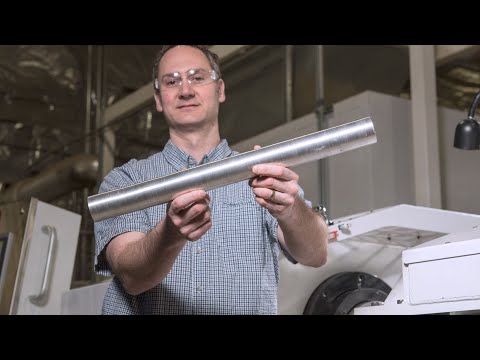
The machine has a rotating head that spins 500 times a minute with 2,200 foot-pounds of torque. The other end of the machine contains a hydraulic press capable of exerting 200,000 pounds of force against the rotating head.

المصدر: Nature Communications
The aluminum scraps are mixed with copper (Cu) powder, zinc (Zn) powder, and ZK60 magnesium (Mg) ribbons. When uniformly mixed together, they form a high-strength aluminum alloy product in a matter of minutes. In comparison, the traditional aluminum recycling process takes days.
The whole method also consumes 50% less energy.

المصدر: PNNL
الهيكل المتفوق والأداء
When analyzed under a microscope, the new method demonstrates a radically different metallic structure. The upcycled material displays much smaller grains (7.7 µm), compared to the traditionally recycled aluminum (43.1 µm).

المصدر: Nature Communications
This proves that during ShAPE, atomic-scale features called Guinier-Preston zones form within the alloy. These features are well known to improve strength in metal alloys.
It directly leads to superior performance for the upcycled metal, with resistance to mechanical stress 200% higher than the normally recycled alloy.

المصدر: Nature Communications
Another improvement brought by this method is that the production of aluminum profile, tubes, and other metal parts happens in solid-state, potentially helping to develop a new type of alloy that would not work with the traditional melting stages.
السبائك في الحالة الصلبة قابلة نظريًا للتطبيق على أي تركيبة معدنية يمكنك تخيلها، وحقيقة أن التصنيع يحدث بالكامل في الحالة الصلبة يعني أنه يمكنك البدء في التفكير في سبائك جديدة تمامًا لم نتمكن من تصنيعها من قبل.
Cindy Powell – Chief science and technology officer for energy and environment at PNNL
التجاوز عن الألمنيوم المعاد تدويره
This technique could be deployed for other metals that are hard to sort or recycle.
It could also be used to produce alloys that have superior performance, such as stronger, safer car structures, or to use less material for the same result.
The same method could also probably be expanded to other solid-phase manufacturing processes. , like cold spray or friction stir welding & processing.
قدرتنا على إعادة تدوير الخردة مثيرة، لكن ما يحمسني أكثر في هذا البحث هو أن السبائك في الحالة الصلبة لا تقتصر فقط على سبائك الألمنيوم والمواد الخام غير الصالحة.
Cindy Powell – Chief science and technology officer for energy and environment at PNNL
الطباعة ثلاثية الأبعاد للمعادن
Lastly, this method could be used to create a high-quality feed for metal 3D printers.
Because the method adds a certain amount of extra metals in a precise way, it can be used to create tailored alloys for specific needs in additive manufacturing.
The improved 3D structure is also likely to help make the final 3D printed product extra-strong.
من الصعب الحصول على أسلاك تغذية ذات تركيبات مخصصة للتصنيع الإضافي القائم على الأسلاك. السبائك في الحالة الصلبة طريقة رائعة لإنتاج سبائك مخصصة بتركيبات دقيقة مثل 2٪ نحاس أو 5٪ نحاس.
Xiao Li – PNNL materials scientist
شركة تدوير الألمنيوم
Radius Recycling
مع تطور طرق جديدة لتحسين التدوير، يمكن للجهات الفاعلة القائمة في الصناعة الاستفادة من خلال أخذ حصة سوقية من المنتجين الأساسيين.
مع زيادة كمية المواد التي نعيد تدويرها، ومع تحولنا نحو كهربائية التدفئة والنقل، من المتوقع أن يتزايد حجم العمل لشركات التدوير ببطء ولكن بثبات. من المتوقع أن ينمو سوق تدوير المعادن من 915 مليار دولار في 2024 إلى 1.29 تريليون دولار بحلول 2033، بمعدل نمو سنوي مركب 3.9٪.
تأسست شركة Radius Recycling في عام 1906 وتوظف حاليًا أكثر من 3,500 موظف. لديها أكثر من 100 موقع لإعادة تدوير المعادن والسيارات في جميع أنحاء كندا والولايات المتحدة، بالإضافة إلى موقع واحد لتصنيع الصلب، مما يجعلها واحدة من أكبر شركات تدوير المعادن في المنطقة.

المصدر: Radius Recycling
The company processes both:
- المعادن الحديدية، التي تحتوي على الحديد، مثل الكابلات، البراميل، الأسقف المعدنية، الدراجات، السيارات، الأجهزة، إلخ.
- المعادن غير الحديدية: الألمنيوم، النحاس، الفولاذ المقاوم للصدأ، الزنك، بطاريات الرصاص الحمضية، الأسلاك، الملفات، المحركات الكهربائية، المشعات، إلخ.
In the nonferrous segment, the largest metals are copper and aluminum.

المصدر: Radius Recycling
The company is balancing its capital allocation between shareholders (with a dividend paid every quarter since going public in 1993, – at a yield of 4.5% at the time of writing of this article), controlling debt costs, and reinvestment in growth (including 2 new recovery centers on the US West Coast).
Overall, the company is a good pick for investors looking for exposure to the recycling industry and overall circular economy, a stable dividend income, and activity focused on the North American market.
مرجع الدراسة:
1. Wang, T., Li, X., Li, Z., et al. (2024). Upcycled high-strength aluminum alloys from scrap through solid-phase alloying. Nature Communications, 15, 10664. https://doi.org/10.1038/s41467-024-53062-2



