지속가능성
새로운 나트륨 이온 배터리로 리튬 수요가 급락할 것인가?

리튬 이온을 넘어선다
Batteries have progressively become the key technological innovation of the decade, the way the previous decades were shaped by the rise of the PC or the Internet.
이는 배터리 기술의 진보가 전기차 혁명을 이끌 뿐만 아니라, 재생 에너지의 간헐성으로 인해 전력망을 친환경화하는 데 핵심적인 제한 요소로 나타났기 때문이다.
초고밀도 및/또는 저가 배터리는 중공업(화학, 금속공학, 제조) 및 운송(트럭, 선박, 항공)과 같이 에너지 소비가 큰 분야를 전기화하고 탈탄소화하는 데에도 필수적일 것이다.
지금까지는 리튬 배터리의 변형, 즉 리튬이온(리튬‑니켈‑망간 NMC 및 리튬‑니켈‑코발트‑알루미늄 NCA) 혹은 리튬‑인산철(LFP) 배터리를 사용해 왔다. 이는 2019년 화학 노벨상을 받은 변혁적인 기술이었다(리튬 이온 배터리 발명 역사는 링크를 참고).
지금까지 이러한 배터리는 매우 높은 에너지 밀도로 인해 배터리 시장을 계속 장악할 것으로 예상되었다.

출처: S&P Global
이후 고체 전해질 배터리는 배터리 밀도를 더욱 높이고 리튬 사용량을 크게 늘리는 가능한 다음 단계로 고려되고 있다. 자세한 내용은 “5 Best Solid-State Battery Stocks to Watch or Buy”를 참고하라.
하지만 리튬이 배터리에서 유일한 이온은 아니다. 식탁용 소금의 기본 물질인 훨씬 풍부하고 저렴한 나트륨도 후보가 된다.
문제는 나트륨 이온 배터리가 지금까지 에너지 밀도가 낮아 저가·저사양 전기차나 고정식 대규모 배터리에 국한돼 왔다는 점이다.
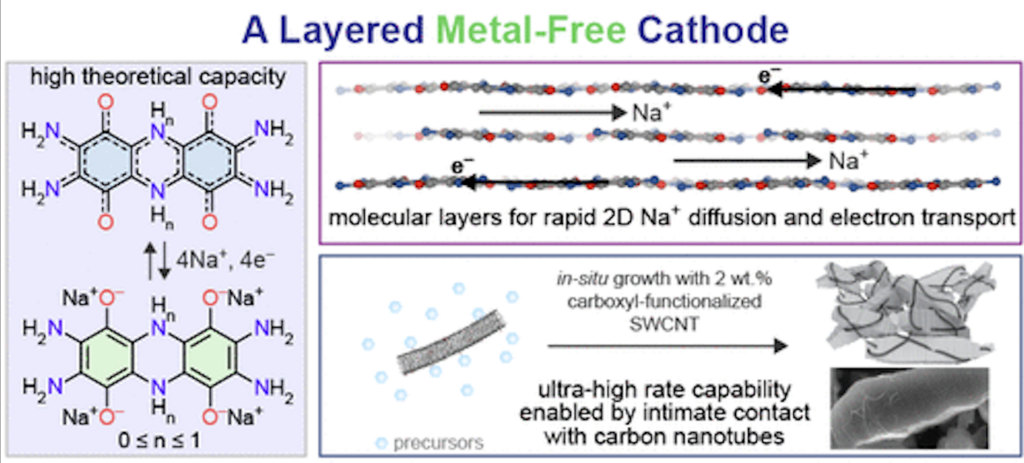
이 상황은 MIT와 브루크헤이븐 국립 연구소 연구진이 “High-Energy, High-Power Sodium-Ion Batteries from a Layered Organic Cathode”라는 제목으로 미국화학회지에 발표한 TAQ 양극을 이용한 나트륨 이온 배터리 발명으로 바뀔 수 있다1.
TAQ 양극
We previously reported on the TAQ cathode in “Designing a Better Battery – Out with Cobalt and In with…TAQ?“. TAQ, or bis-tetraaminobenzoquinone, is a layered organic solid compound.
2024년 연구에서 연구진은 TAQ가 슈퍼커패시터 물질로서의 잠재력뿐 아니라 기존 리튬 양극보다 뛰어난 성능을 보인다는 것을 발견했다.

출처: GreenCarCongress
그들은 TAQ가 양극의 스테인리스 스틸 전류 수집체에 잘 부착되도록 개선하는 방법을 찾아 새로운 개념 증명 양극 프로토타입의 안정성을 높였다.
셀룰로오스와 고무를 함유한 물질을 TAQ에 첨가함으로써 2,000회 이상의 충·방전 사이클을 안전하게 달성했으며, 에너지 밀도는 코발트 기반 양극보다 높았고 충전 시간은 6분 미만이었다.
Back in 2024, we mentioned the potential for other battery chemistry to use TAQ as well:
It is also worth noting that organic cathodes have been discussed for other types of batteries as well, for example, for aluminum-ion, sodium/potassium-ion, zinc, or calcium-based dual-ion batteries. So, it is possible that the discovery of TAQ’s properties can be applied to other battery types than lithium-ion.
And this is exactly what the research team did, creating an ultra-high energy density sodium-ion battery.
TAQ 나트륨 이온 배터리
왜 나트륨인가?
The reason for the researchers to have picked sodium for the next step of their research is how abundant the material is.
“It’s always better to have a diversified portfolio for these materials. Sodium is literally everywhere. For us, going after batteries that are made with really abundant resources like the organic matter and seawater is among our greatest research dreams.
Being on the front lines of developing a truly sustainable and cost-effective sodium ion cathode or battery is truly exciting.”
There is also a business rationale as this study, as well as the 2024 initial study on TAQ, has been funded by Automobili Lamborghini S.p.A. Cheaper materials and battery technology that is not dependent on a China-dominated supply chain could be a savior for a somewhat struggling European car industry, which is lagging when it comes to electrification.
TAQ 양극을 나트륨 배터리에 적용하기
To make it work with sodium, the researchers had to modify their design to match the requirements of sodium-ion batteries.
One challenge was to create a homogeneous electrode containing both TAQ and carbon.
“The binder we chose, carbon nanotubes, facilitates the mixing of TAQ crystallites and carbon black particles, leading to a homogeneous electrode. The carbon nanotubes closely wrap around TAQ crystallites and interconnect them.
Both of these factors promote electron transport within the electrode bulk, enabling an almost 100% active material utilization, which leads to almost theoretical maximum capacity.”
Dr. Tianyang Chen – MIT Researcher
고성능
This extremely high capacity achieved on a prototype could quickly convert into very efficient batteries, especially regarding charging time, a regular limitation of EVs, and complaints of consumers.
“The use of carbon nanotubes considerably improves the rate performance of the battery, which means that the battery can store the same amount of energy within a much shorter charging time, or can store much more energy within the same charging time.”
Dr. Tianyang Chen – MIT Researcher
This was achieved while keeping the advantages of TAQ, namely stability against air and moisture, long lifespan, ability to withstand high temperatures, and environmental sustainability.
The final product was a cathode energy density of 472 Wh/kg electrode when charging/discharging in 90 s and a top specific power of 31.6 kW/kg electrode.
For reference, this is somewhat close to the density of commercial Ni/Co-based layered cathodes (∼740 Wh/kg-cathode) referenced in a 2024 scientific publication.
미래 개발 및 상업적 잠재력
Overall, it is likely that high-end lithium-ion and, later on, solid-state batteries will keep controlling the high-end EV market.
However, for more price-sensitive segments like low- and mid-range EVs, commercial trucks, utility storage, etc., other factors will likely be more important, like overall cost, availability of resources, durability, etc.
This could put a cap on lithium demand, as sodium is increasingly shaping into a viable alternative, thanks to innovative cathode materials like TAQ.
Other improvements could contribute as well, for example, removing the need for an anode entirely (the other end of the battery), as we discussed in 2024년 7월 in “Anode-Free Sodium Solid-State Batteries Could Reduce Reliance on the ‘Lithium Triangle’.”
This has not been tested yet, and will likely require some tinkering, but we can easily imagine in the long run that most EVs and commercial trucks will not need massive 1,000-2,000-mile range batteries using the best possible solid-state lithium battery.
Instead, a future anode-free, TAQ-cathode sodium battery, maybe solid-state, maybe sodium-ion, will be enough to reach the 400-600 miles range capacity at a better price.
Besides innovation in chemistry, structural design can also improve batteries, like the honeycomb structure used in the “condensed state” battery from CATL, the largest battery producer in the world. Maybe such an idea could be deployed to sodium-ion batteries as well. (see more information in “CATL (300750.SZ): The Battery Juggernaut”).
첨단 배터리 기술에 투자하기
Batteries are at the center of the trend of electrification, itself a major multi-trillion-dollar endeavor looking to remove fossil fuels from our power sources.
You can invest in battery-related companies through many brokers, and you can find here, on securities.io, our recommendations for the best brokers in the USA, Canada, Australia, the UK, as well as many other countries.
If you are not interested in picking specific battery companies, you can also look into battery ETFs like Amplify Lithium & Battery Technology ETF (BATT), Global X’s Lithium & Battery Tech ETF (LIT), or the WisdomTree Battery Solutions UCITS ETF (WT ), which will provide a more diversified exposure to capitalize on the growing battery industry.
유기 양극 기업
Volkswagen AG
The research of Pr. Mircea Dincă on TAQ cathode, both in 2024 (lithium-ion) and 2025 (sodium-ion), was funded by Automobili Lamborghini S.p.A., a subsidiary of Audi, itself owned by the Volkswagen Group.
A patent application for the organic cathode technology has been filed.
The German automaker is the second-largest car producer in the world, behind only Toyota. The company was, for a time, lagging in EV technology but has worked hard to catch up since, notably with the ID car series and multiple hybrid models as well.

출처: Volkswagen
The collaboration with the MIT researchers is just one among many, with other partnerships about EVs including:
- A $700M investment in Chinese Xpeng to boost EV sales in China.
- A partnership with Chinese SAIC Motor to supply EV platforms to Volkswagen.
- A partnership with Jetta Motor for acquiring EV technology.
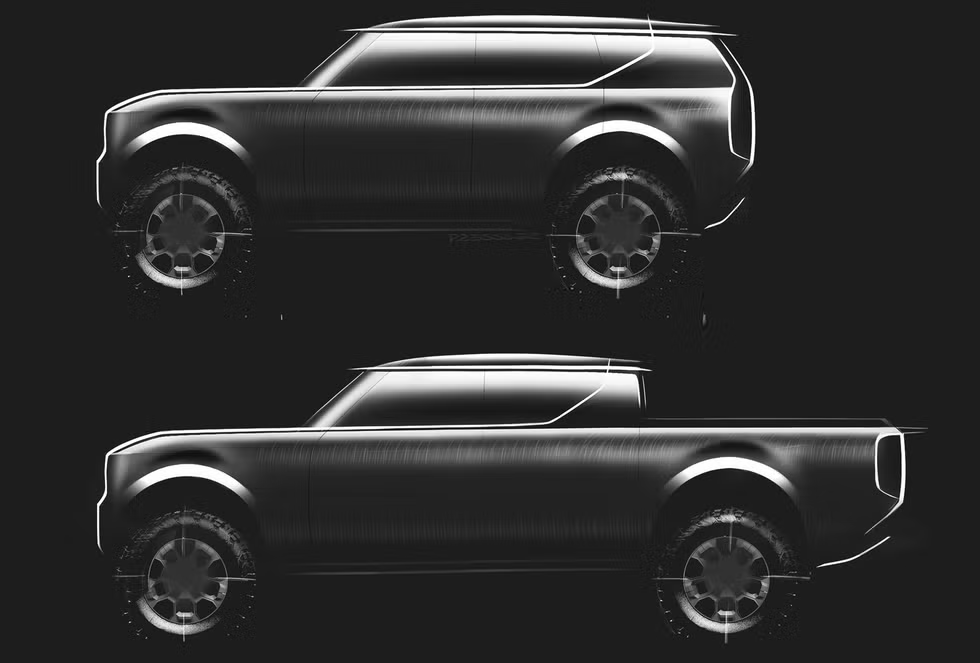
- A $492M partnership with Magna to revitalize the iconic Scout brand as an EV

Scout cars – 출처: Volkswagen
With its ambitious plans regarding EVs and access to advanced EV technology from leading Chinese companies, Volkswagen is in a good position to look at MIT’s organic cathode patented technology and work on deploying it at scale in its future EVs.
It might, however, in the meantime, look to first focus on hybrids and keep ICE cars longer than initially planned in order to “maintain flexibility”.
You can read more about Volkswagen and its EV strategy, including the fixing of its software issues through a deal with Rivian, and the unification of EV architecture throughout the Volkswagen Group and its brands in “Volkswagen Closing German Factory? What’s Next for the Troubled Automaker?”.
연구 참고문헌:
1. Chen, T., Wang, J., Tan, B., Zhang, K. J., Banda, H., Zhang, Y., Kim, D.-H., & Dincă, M. (2025). High-energy, high-power sodium-ion batteries from a layered organic cathode. Journal of the American Chemical Society, 147(7), 6181–6192. https://doi.org/10.1021/jacs.4c17713