에너지
우주를 열 싱크로 활용한 방사형 냉각이 기후 변화를 막는다

Urban environments are becoming increasingly sprawling and dense, resulting in more concrete and pavement than ever before. The problem with that is the amount of heat absorbed by buildings and roads. Surrounding areas become hotter, climate control systems must work harder, and greenhouse gas emissions skyrocket. With that in mind, a team of researchers based out of the University of Maryland has come up with a simple but effective solution. This is a recently developed material dubbed ‘cooling glass’, which can help to mitigate this growing problem and its effect on climate change through radiative cooling.
방사형 냉각 돌파구
Battling climate change isn’t just about finding clean energy sources. It is also about efficiently using the electricity we already create. In this instance, cooling glass is a breakthrough that leverages the Albedo Effect and radiative cooling to essentially prevent thermal energy from the Sun from being trapped in typical building materials by reflecting it back into the emptiness of Space – a vacuum and limitless heat-sink that sits at a brisk -270ºC.
In its research article, the team states that,
“…developed a randomized photonic composite consisting of a microporous glass framework that features selective LWIR [long-wave infrared radiation] emission along with relatively high solar reflectance and aluminum oxide particles that strongly scatter sunlight and prevent densification of the porous structure during manufacturing.”
The resulting product, or ‘cooling glass’, is said to perform well in a variety of conditions, which, alongside a relatively easy manufacturing process, might just make it viable for large-scale applications in urban environments.

출처: www.cera.cool
As far as performance goes, the team indicates that,
“This microporous glass coating enables a temperature drop of ~3.5° and 4°C even under high-humidity conditions (up to 80%) during midday and nighttime, respectively.”
In doing so, the paper indicates that a building leveraging cooling glass has the potential to reduce its carbon emissions by as much as 10% annually. When scaled across urban landscapes, this is significant.
While the idea of leveraging radiative cooling to battling climate change is nothing new, it is the performance and potential scalability of this new product that makes it particular interesting.
‘열 싱크’란 무엇인가?
For those wondering, a heat sink is a device or substance that absorbs and dissipates heat from another object using thermal contact (either direct or radiant). Man-made variants are commonly used in electronics and mechanical systems to manage temperature and prevent overheating. In the case of cooling glass, it is through radiation into the vacuum of space that this thermal dumping occurs.
Here’s an overview of the science behind heat sinks:
열 전도: The primary principle behind a heat sink is thermal conduction, a physical process where heat is transferred through a material. When a heat-generating component (like a CPU in a computer) becomes hot, it transfers its heat to the heat sink.
재료: Heat sinks are typically made from materials with high thermal conductivity, such as aluminum or copper. These materials effectively transfer heat away from the component and spread it out over a larger area.
설계 및 표면적: A key aspect of a heat sink’s design is its surface area. Many heat sinks have fins or other structures to increase their surface area. This allows more air to come into contact with the heat sink, enhancing heat dissipation.
대류: Air or liquid moving over the surface of the heat sink facilitates convective cooling. In passive cooling, natural air flow dissipates heat, while in active cooling systems, fans or pumps are used to increase the flow of air or liquid, respectively, enhancing the cooling effect.
복사: Heat sinks also dissipate heat through radiation. The heat absorbed by the heat sink is emitted as infrared radiation, which further helps in cooling the device.
The effectiveness of a heat sink depends on several factors, including the material’s thermal conductivity, the design (especially the surface area), the ambient temperature, and the flow rate of air or liquid over the heat sink. By efficiently managing thermal energy, heat sinks play a crucial role in the reliability and longevity of electronic and mechanical systems.
‘방사형 냉각’이란?
Meanwhile, radiative cooling is a natural process where objects release heat in the form of infrared radiation. This process already plays a role in nature with the Earth’s energy balance and has important applications in various technologies.
Here’s a closer look at the science behind radiative cooling:
적외선 복사: All objects emit energy in the form of electromagnetic radiation, the intensity of which depends on their temperature. At the temperatures commonly found on Earth’s surface, this radiation is mostly in the infrared spectrum. Radiative cooling occurs when an object, such as the Earth’s surface or a building, emits more infrared radiation than it absorbs.
우주로의 방출: One of the key aspects of radiative cooling is the ability of certain materials or surfaces to emit heat directly into space. This is possible because the atmosphere has specific ‘windows’ that are transparent to certain wavelengths of infrared radiation, allowing this energy to pass through and escape into space.
주간 vs. 야간 냉각: Radiative cooling is most effective at night, as during the day, the absorption of solar radiation tends to offset the cooling effect. At night, without the input of solar energy, surfaces can cool down by emitting infrared radiation more effectively.
알베도 효과와의 관계: The albedo effect primarily concerns the reflection of visible sunlight, while radiative cooling is about the emission of infrared radiation. However, they are related in terms of energy balance. A surface with a high albedo reflects more solar radiation, absorbing less heat during the day. This can enhance radiative cooling at night, as there’s less absorbed heat to be re-emitted. Conversely, a low-albedo surface heats up more during the day, potentially emitting more infrared radiation if it has high emissivity.
응용 분야: Radiative cooling has practical applications in passive cooling systems, such as in buildings and vehicles. It’s also being explored for use in sustainable technologies, like the cooling panels discussed here, that can reduce reliance on electricity-powered air conditioning.
Radiative cooling is an important natural process that helps regulate temperature by emitting infrared radiation. While distinct from the albedo effect, which involves the reflection of sunlight, both contribute to the thermal dynamics of surfaces and play critical roles in both natural and engineered environmental systems.
기후 변화에 대응하는 산업 플레이어
For those interested in learning which publicly traded companies are actively developing solutions to battle climate change, consider the following.
*아래 제공된 수치는 작성 시점에 정확했으며 변동될 수 있습니다. 잠재적 투자자는 지표를 확인해야 합니다*
1. FuelCell Energy, Inc.
FCEL 가격 차트
FCEL 가격 차트
| 시가총액 | 예상 P/E 1년 | 주당순이익 (EPS) |
| 522,017,258 | -4.32 | $-0.31 |
FuelCell Energy (FCEL ) 는 연료 전지 기술 개발 및 배치 분야의 선두주자입니다. 고효율·청정 연료 전지 발전소의 설계, 제조, 운영 및 서비스를 중심으로 활동합니다. 이 솔루션은 화석 연료 의존도를 낮추고 탄소 배출을 감소시켜 기후 변화와의 싸움에 기여합니다. 회사의 연료 전지는 청정하고 신뢰성 높은 전력 생산을 결합하여 지속 가능한 에너지 전환에 중요한 역할을 합니다.
2. Brookfield Renewable Partners L.P.
BEP 가격 차트
BEP 가격 차트
| 시가총액 | 예상 P/E 1년 | 주당순이익 (EPS) |
| 11,640,020,573 | -86.17 | $-0.49 |
Brookfield Renewable (BEPC ) Partners는 세계에서 가장 큰 상장 순수 재생 에너지 플랫폼 중 하나를 운영합니다. 포트폴리오에는 북미, 남미, 유럽, 아시아 전역에 걸친 수력, 풍력, 태양광 및 저장 시설이 포함됩니다. 지속 가능성에 대한 강한 의지를 바탕으로, 재생 에너지 자산을 통한 장기 가치 창출에 집중하며, 청정 재생 에너지로의 전환을 촉진해 기후 변화와 싸우는 데 중요한 역할을 합니다.
3. ChargePoint Holdings, Inc.
CHPT 가격 차트
CHPT 가격 차트
| 시가총액 | 예상 P/E 1년 | 주당순이익 (EPS) |
| 711,322,655 | -1.84 | $-1.06 |
ChargePoint (CHPT ) Holdings는 전기차 혁명의 최전선에 서 있으며, 가장 광범위하고 개방된 EV 충전 네트워크를 운영합니다. 주거, 상업, 공공 공간 등 다양한 분야에 혁신적이고 접근성 높은 충전 솔루션을 제공하여 전기차 채택을 촉진합니다. 이를 통해 온실가스 배출 감소와 화석 연료 의존도 감소에 직접 기여하며, 기후 변화와의 싸움에서 중요한 진전을 이루고 있습니다.
방사형 냉각을 활용하는 주목할 만한 기업
While not publicly traded, there is a particularly noteworthy startup already working to implement and scale the science behind this cooling glass. In fact, it was founded by the very same researchers behind this breakthrough. This company is Ceracool.
Ceracool 은 ‘방사형 냉각 페인트’를 개발했으며, 이는 cooling glass와 동일한 개념을 기반으로 작동합니다. 회사는 이 페인트가 “태양 복사의 95% 이상을 반사하고 대기 투명성 창을 통해 깊은 우주의 거의 절대 영도에 가까운 온도로 열을 방출함으로써 무료 에어컨 효과를 제공한다”고 홍보합니다. 이 제품이 특히 흥미로운 점은 스프레이나 브러시로 쉽게 적용할 수 있어 열 축적이 발생하기 쉬운 지붕, 도로 등 표면에 적용 가능하다는 것입니다.
Another example of a privately held company innovating with radiative cooling technology is SkyCool Systems.
SkyCool Systems는 방사형 냉각을 활용한 고급 냉각 솔루션을 개발하는 청정 에너지 기업입니다. 이 회사는 증기 압축 기반 냉각 시스템의 효율성을 크게 향상시키도록 설계된 패널 시스템에 통합된 방사형 냉각 소재를 사용합니다. Ceracool과 마찬가지로, SkyCool Systems의 선구적인 작업은 전 세계 냉각 문제를 해결하는 데 유망한 진전이며, 환경적 이점과 에너지 비용 절감을 동시에 제공합니다.
마무리 생각
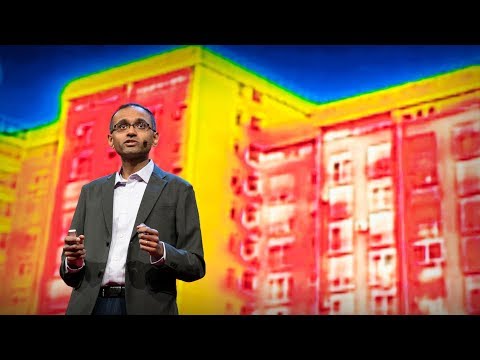
At the end of the day, efforts surrounding climate change need to extend beyond solely tapping into sustainable energy sources. While this is obviously a vital and important approach, it is essentially akin to juggling with one hand. Rather, we need solutions that also address inefficiencies in our power consumption – which is exactly what radiative cooling products are about. In an illuminating TedTalk from Aaswath Raman, he touched on the importance of addressing a potential feedback loop resulting from our cooling needs, and how radiative cooling may help.
Combined with other breakthroughs like back-contact micrometric photovoltaic cells, it should be interesting to see the resulting benefits of initiatives being undertaken by companies like Ceracool in the coming years.