
Tekoäly
AI sisällä: Aivochipit, jotka johtavat seuraavaan harppaukseen ihmisen evoluutiossa

 Lisää Securities.io suosikkilähteisiisi Google-palvelussa

Aivochipit eivät enää ole tieteiskirjallisuutta. Ne ovat todellisuutta ja muuttavat ihmisten elämää teknologisten edistysaskelten ansiosta, jotka mahdollistavat tietokoneen aivosignaalien purkamisen, ihmisen aikomusten päätelmän ja lopulta niiden toteuttamisen suoraan koneen kautta.
Nämä mahdollistavat järjestelmät kutsutaan BCI:ksi tai aivo‑tietokone‑rajapinnaksi, joka tutkii aivojen toiminnan signaaleja. Neuralink on alansa tunnetuin yritys, joka luo yleistetyn aivorajapinnan ihmisen potentiaalin vapauttamiseksi.
But while BCIs have been in development since the 1960s, recent advancements in AI are helping achieve miracles. These advancements have led to significant strides in practical applications, particularly for people with disabilities, showcasing the evolving impact of this technology.
Nykyiset sovellukset ja läpimurrot
While BCI development is still primarily confined to the research laboratory, with the evolution of AI, we’ve begun to see the demonstration of BCI practicality in people with disabilities.
Tekoälypohjaiset aivoimplantit palauttavat puheen ja liikkeen
With about 1.3 billion of the world’s population living with moderate to severe levels of disability, AI implants in humans are improving rapidly to completely remove these limitations.
In a pair of studies published in the tiedejulkaisu Nature, researchers from Stanford University and the University of California San Francisco showed that their BCIs have allowed two women with paralysis to speak again with unprecedented speed and accuracy. The BCIs read speech-related brain activity and feed the data into a language learning model, which is then output in usable speech via computer-generated voice or on-screen text.
Stanfordin tutkijat asensivat popcornin siemenen kokoisia elektrodipaketteja 68‑vuotiaan Pat Bennetin puhemotoriseen aivokuoreen, mikä sitten yhdistyy tietokoneohjelmistoon, jonka avulla hän pystyy puhumaan. Samaan aikaan UCSF:n tutkijat antoivat 30‑vuotiaalle Annille, joka on vakavasti halvaantunut, kyvyn puhua ja tehdä kasvoilmeitä (digitaalisen avatarin kautta). Molemmat tutkimukset rekisteröivät valtavia parannuksia sanavaraston koossa, kielen purkamisen nopeudessa ja puheen tarkkuudessa.
Tekoälyn ja mikrosähkötekniikan yhdistäminen aivohäiriöiden torjumiseksi
AI, along with neural implants, is also being used to treat disorders such as epilepsy and Parkinson’s by modulating abnormal activities directly. The Toronton yliopisto kokoitti yhteen electrical and computer engineers along with clinicians, neuroscientists, and data material scientists to improve brain health and chart alternative treatment paths.
By using deep learning, the team extracts deep-level information, even identifying hidden biomarkers, and then activates the neural implants at the optimal time. The idea is to use neuromodulation therapies in the future to target:
- Krooninen kipu
- Masennus
- Dementia
- Alzheimerin tauti
- Unihäiriöt
Neuralinkin ihmiskoe
Musk’s brain-chip startup, Neuralink, has finally received approval to begin its first human trial. Previously, the US Food and Drug Administration (FDA) raised safety concerns for its first-in-human clinical trial before giving clearance, and the company has now also been approved by an independent review board to begin recruitment.
For its PRIME (Precise Robotically Implanted Brain-Computer Interface) study, Neuralink is looking for patients with paralysis due to cervical spinal cord injury or amyotrophic lateral sclerosis. The trial, which is expected to take about six years to complete, will involve surgically placing a wireless BCI implant in the brain to assess the system’s ability to enable patients to control external devices with their thoughts.
With the Neuralink AI brain chip, Musk aims to facilitate speedy surgical insertions of its chip devices to treat conditions like autism, depression, and schizophrenia. So far, the company has been testing on animals, but now it’s recruiting paralyzed volunteers to improve the quality of life for millions.
Teknologiset ja tieteelliset edistysaskeleet
Over the last many decades, groundbreaking research has been conducted in the field of BCI, which provides a direct communication link between the brain and a computer. Now, AI has taken it even further through its ability to analyze complex data and generate human-like output from it.
While speech implants have been crucial for individuals who have lost their speech abilities due to paralysis or other injuries, they have been extremely slow and not articulate. However, significant advances in neuroscience and modern computing together are now making it possible to have commercially available AI chip implants to restore sensory and movement functions.
Today, this marvel of modern technology is giving those who have lost the ability to speak a voice by converting brain signals into text, that too with speed and efficiency. In Stanfordin tutkimuksessa, the team had just a 9.1% word error rate, which is 2.7x more accurate than previous BCIs. This was achieved by using an algorithm that decodes 62 words per minute and is approaching the conversational speed of 160 words per minute, which is simply incredible. For this, the study tapped into the largest vocabulary library used for speech decoding using an implant — at roughly 125,000 words.
A new study, a part of the BrainGate2 Neural Interface System trial, meanwhile, used a type of deep learning called recurrent neural networks (RNNs), which are also used to model brain processes like memory, attention, and perception. The algorithm easily separated different types of facial movements for speech based on neural signals alone with over 92% accuracy.
Given that decoding behavior or cognitive state from neural signals is critical for BCI research, deep learning has emerged as the method in many machine learning tasks such as image segmentation and speech recognition. Its success has led to its usage in predicting common outputs, including movement, speech, and vision.
In another case, scientists developed a noninvasive AI system called a semantic decoder, which was developed in part by using a transformer model similar to those that support chatbots ChatGPT and Google’s Bard. Researchers at the University of Texas at Austin trained the system, which requires no surgical implants, by listening to several hours of podcasts within an fMRI scanner. It then generates a stream of text when the participant is listening to or imagines telling a new story.
As we saw here, the use of AI has been really helping neuroscience research immensely. However, there are certain considerations that must be taken when dealing with this fast-moving space.
Eettiset, yksityisyys- ja turvallisuusharkinnat
Given the life-altering changes AI-brain implants have for humans, we have been seeing a rapid advancement of neurotech and AI brain chips. However, it is not without its risks.
To put it simply, AI systems are prone to errors and malfunctions, just like any other technology, which can have potentially harmful outcomes. Built on complex algorithms that process vast amounts of data, AI systems are also vulnerable to hacking and manipulation. Not to mention, the data they are trained on can have inherent biases leading to discriminatory outcomes.
The increased investment in AI-based programs that can read people’s minds and store neural data has the United Nations Educational, Scientific and Cultural Organization (UNESCO) herättämään hälytyksen on the advancing neurotechnology, which it said threatens human rights and requires global regulation.
“Lupaus … saattaa tulla korkealla hinnalla ihmisoikeuksien ja perusvapauksien suhteen, jos sitä väärinkäytetään. Neuroteknologia voi vaikuttaa identiteettiimme, autonomiaan, yksityisyyteen, tunteisiimme, käyttäytymiseemme ja yleiseen hyvinvointiimme.”
– sanoi Gabriela Ramos, Unescon apulaisjohtaja sosiaalisissa ja humanistisissa tieteissä.
As a result, the UN’s scientific and cultural organization said that it will begin to develop a “universal ethical framework” for neurotechnology.
While Ramos is concerned about the technology changing “the very essence of what it means to be human,” others like Mariagrazia Squicciarini, lead author of a Unesco report on the rapid pace of innovation in neurotechnology is concerned about the addition of AI, which according to her puts “neurotechnology on steroids.”
It is estimated that private investments in neurotech companies have increased over 20x in the decade from 2010, reaching $7.3bn in 2020, while patents related to neurotech surged 266% during this period. Data shows that the market for neurotech devices is projected to exceed $24bn in the next four years.
With advanced AI models needing decoding of the brain data, regulation proponents argue that mental privacy has also become more urgent than ever. As we are seeing in China, workers wear caps that scan their emotional states, indicating a broad spectrum of applications for this technology. Similarly, in the US, the military is exploring such technologies to enhance mental skills, control objects with thoughts, and make soldiers more fit for duty.
Ethical concerns have also been raised regarding BCI’s impact on society. Many fear giving unprecedented access to people’s brains could make dystopian possibilities a reality.
Yritykset, jotka toimivat tekoälypohjaisten aivoimplanttien alalla
Now, let’s take a look at some of the most prominent companies in the AI brain chip space:
1. Neuralink
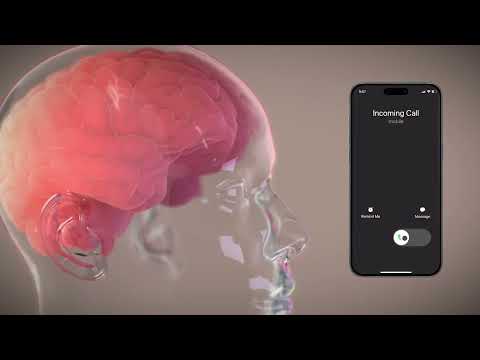
Miljardööri-yrityspohjainen Muskin perustama yritys kehittää langattomia implantteja, jotka voivat lukea aivoaaltoja. Viimeksi Neuralink ilmoitti keränneensä lisä 43 miljoonaa dollaria, jonka johti Peter Thielin Founders Fund.
Kesäkuussa yrityksen arvo oli noin 5 miljardia dollaria, ja sen arvioitu vuotuinen liikevaihto oli 115,7 miljoonaa dollaria. Marraskuussa 2023 Yhdysvaltain lainsäätäjät pyysivät SEC:iä tutkimaan Neuralinkia eläinkokeiden kuolemia koskevien tietojen piilottamisesta. Mitä tulee Neuralinkin aivochipin julkaisupäivään, Musk sanoo sen olevan vielä vuosien päässä.
2. Synchron

New Yorkissa toimiva Synchron pyrkii tarjoamaan implantoitavaa endovaskulaarista neurotmodulaatiohoitoa. Tänä vuonna yritys julkaisi tutkimuksensa tulokset arvioidakseen Synchron Switchin tehokkuutta ja toteutettavuutta vakavasti halvaantuneilla potilailla.
Laite asetetaan aivojen verisuoneen, mistä se lähettää hermosignaaleja pitkän ajan ilman haittavaikutuksia. Synchronin tukevat Bezos ja Gates, ja se on kerännyt yhteensä 135,7 miljoonaa dollaria CB Insightsin mukaan. Yrityksen arvioitu vuotuinen liikevaihto on 37,3 miljoonaa dollaria vuodessa.
3. Blackrock Neurotech
Tämä yksityinen yritys tunnetaan neuroteknologiaratkaisuistaan, mukaan lukien BCI-järjestelmät. Viime vuonna Blackrock Neurotech ilmoitti ennätyksellisen virstanpylvään: 30 000 päivää potilaskäyntejä BCI-tutkimuksessa, mikä sen perustajan ja puheenjohtajan Florian Solzbacherin mukaan tarkoittaa, että “teknologia on valmis siirtymään laboratoriosta potilaiden koteihin”.
Se sai 10 miljoonaa dollaria rahoitusta, houkutellen korkean profiilin sijoittajia, kuten Christian Angermayerin re.Mind Capital, Peter Thiel, Tim Sievers ja Sorenson Impactin University Venture Fund II vuonna 2021.
4. BrainGate
BrainGate‑tutkimuskonserni on luonut aivoimplantin, joka sisältää 100 piikikkästä elektrodia, jotka kirurgisesti upotetaan aivoihin. Sen BCI-järjestelmä on suunniteltu antamaan halvaantuneille mahdollisuus hallita robottikäsiä tai tietokoneita ajatuksillaan. BrainGate:n lopullinen tavoite on palauttaa liikkuvuus, viestintä ja itsenäisyys nelinkaarisen halvaantuneiden henkilöiden keskuudessa.
5. Precision Neuroscience
Kesäkuussa Precision Neuroscience, jonka perusti Neuralinkin toinen perustaja, suoritti ensimmäisen kliinisen tutkimuksensa ihmisen aivosignaalien kartoittamiseksi. Heidän lippulaiva‑BCI-järjestelmänsä on Layer 7 Cortical Interface, joka on elektrodipaketti ja ohuempi kuin ihmisen hius.
Tänä vuonna yritys, jonka tavoitteena on rakentaa minimaalisen invasiivisia BCI-implanteja kallon mikrosäletekniikalla, keräsi 41 miljoonaa dollaria, mikä nosti sen kokonaisrahoituksen 53 miljoonaan dollariin alle kahden vuoden aikana.
6. Kernel
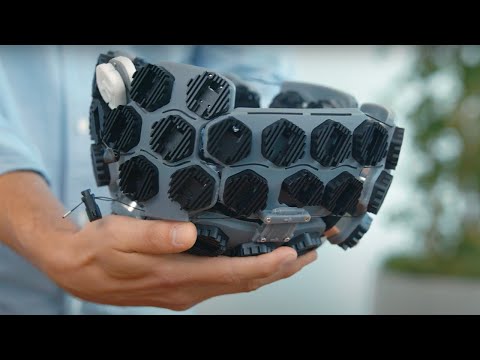
Bryan Johnsonin perustama yritys on kehittänyt ei‑invasiivisen BCI-teknologiansa nimeltä “Kernel Flow”, joka seuraa aivojen toimintaa käyttäen aika‑alue‑funktionaalista lähi‑infrapunaspektroskopiaa (TD‑fNIRS).
Verkkosivustonsa mukaan Kernel Flow on kannettava ja monimodaalinen neurokuvantamiskypärä, jonka asennus kestää muutaman minuutin. Kypärä yhdistää tarkkuusoptisen hemodynaamisen kuvantamisen EEG‑mittauksiin tarjoten monimodaalista dataa kattaviin oivalluksiin.
7. Neurable
Tämä yritys tarjoaa BCI-järjestelmiä sekä kliinisiin että pelisovelluksiin. Sen ei‑invasiivinen, EEG‑pohjainen BCI-teknologia pyrkii parantamaan ihmisen ja tietokoneen välistä vuorovaikutusta AR‑ ja VR‑ympäristöissä.
#8. Ctrl-labs
Ei‑invasiivista hermorajapintateknologiaa kehittävä startup ostettiin Mark Zuckerbergin Metan (entinen Facebook) toimesta arvioidulla miljardin dollarin arvolla. Vuonna 2018 yritys julkaisi elektrodeilla varustetun rannekkeen BCI:ta varten. Metan tavoitteena on lopulta antaa ihmisille mahdollisuus hallita näppäimistöjä ja muuta pelkästään ajatuksillaan.
Tulevaisuuden näkymät ja haasteet
AI brain implants have emerged as a powerful tool in neuroscience with the potential to transform our understanding of the brain as well as revolutionize treatments. While the technology is already seeing great success in restoring lost functionality, its implications are far greater.
US military-funded researchers have been developing systems to capture brain signals and autonomously activate neural pathways as a treatment for mental health disorders. Preliminary trials of ‘closed-loop’ brain implants began back in 2017 and detected patterns related to mood disorders and then shocked the brain back to a healthy state without needing a physician.
In addition to restoring sensory functions, brain chips help in prosthetic limb control and treating abnormal brain activity. Moreover, neurofeedback in real-time allows individuals to gain greater control over their mental states and actively regulate their own emotions and behaviors. Researchers have also started exploring the possibility of brain-to-brain communication to allow for direct and seamless exchanges of information.
Another way AI chips can truly change the landscape is by enhancing cognitive abilities. The technology can be used to augment brain functioning for even those people who do not have any therapeutic needs. By directly interfacing with and stimulating specific brain regions, these AI chips in the brain can potentially augment focus, memory, and learning capabilities.
While these chips offer new avenues for human augmentation, it is vital to address the ethical considerations associated with accessibility and privacy.
According to the Pew Research Centerin vuoden 2022 kyselyn mukaan 78 % amerikkalaisista sanoi, etteivät he haluaisi tietokonechip‑implanttia, ja vain 20 % oli kiinnostunut. Tämä ei ole muuttunut merkittävästi viisi vuotta sitten, jolloin kaksi kolmasosaa amerikkalaisista sanoi, etteivät he haluaisi chipiä “merkittävästi parantamaan keskittymiskykyä ja tiedon prosessointia” aivoihinsa. Jos tekoäly‑aivochipin käyttö yleistyy, kuusi kymmenestä Yhdysvaltain aikuisesta uskoo, että suurin osa ihmisistä kokisi painostusta saada implantti, uuden kyselyn mukaan.
Mahdollisista ongelmista tietokonechip‑implanteissa 52 % nosti esiin hakkerien pääsyn ihmisten tietoihin, kun taas ei‑toivotut muutokset aivoihin ja chipin toimintahäiriöt olivat merkittäviä huolenaiheita. Tunnustaen nämä riskit, 83 % amerikkalaisista haluaa, että näitä implanteja testataan korkeammalla standardilla kuin lääketieteellisiä laitteita.
Tämä osoittaa tarpeen löytää oikea tasapaino, jotta tekoäly‑aivochipien merkittävä potentiaali voidaan avata samalla suojellen yksilöiden ja yhteiskunnan terveyttä, turvallisuutta ja perusarvoja.
Klikkaa tästä saadaksesi listan kymmenestä parhaasta bioteknologiayrityksestä lääketieteen alalla.
Yhteenveto
Brain‑computer interface technology, jota tukee kielten oppimiseen suunniteltu tekoäly, auttaa käsittelemään aivotietoja hämmästyttävällä nopeudella, mahdollistaen vammaisten ihmisten lopulta puhumisen ja liikkumisen. Jopa ajatusten lukemiseen perustuvat implantit lähestyvät nyt todellisuutta.

Vaikka teknologia tarjoaa valtavan lupauksen, samanaikaisesti tekoälychipien eettiset, yksityisyys- ja turvallisuusriskit ihmisissä vaativat tarkkaa harkintaa. Yritysten on toteutettava tiukkaa testausta, tarjottava täyttä läpinäkyvyyttä ja suoritettava jatkuvaa seurantaa noudattaen eettisiä ohjeita, jotta teknologian todellinen potentiaali voidaan hyödyntää.
Kaiken kaikkiaan tekoälypohjaisten aivochipien mahdolliset sovellukset ovat laajat, ja niiden vaikutukset ovat syvällisiä.
Klikkaa tästä saadaksesi kaikki tiedot tekoälyyn sijoittamisesta.



