
컴퓨팅
방사선 내성 칩이 CERN 가속기를 구동한다

 Securities.io를 Google의 선호 소스에 추가

고방사선 환경을 위한 전자기기 구축
Electronics are at the core of almost any technology invented in the past decades. As the world digitalizes even more processes and data, this is becoming more true every day.
하지만 일부 환경에서는 표준 전자기기가 따라잡기 어렵습니다. 그 중 하나가 입자 가속기입니다.
한편으로 입자 가속기는 초당 수 테라바이트에 달하는 데이터를 생성하므로 초고효율 전자 부품이 필요합니다. 다른 한편으로는 방사선이 전자 시스템을 뒤섞어 버립니다.
Scientists at the CERN in Switzerland were faced with this dilemma. At the LHC particle accelerator at CERN, the world’s largest, radiations were emitted, making measurement difficult.
“표준 상용 부품을 시험했지만 모두 망가졌습니다. 방사선이 너무 강했습니다. 제대로 작동하는 장치가 필요하다면 우리가 직접 설계해야 한다는 것을 깨달았습니다.”
The first chip of this kind was developed in 2017 and put to the test in 2022 for the ATLAS experiments. ATLAS is the largest particle detector ever built, at 46 meters (150 feet) long and 25 meters (82 feet) in diameter.
The detectors contain 100+ million sensitive electronic channels to record the particles produced by the collisions. It contains many sub-detectors, each playing a separate role, to detect at the same time photons, electrons, muons, pions, etc.

출처: ATLAS
A second chip, the data acquisition ADC, has recently passed its final tests and is now in full production. It is fully described in a recently published paper1 in the journal IEEE Explore, under the title “A Radiation-Hard 8-Channel 15-Bit 40-MSPS ADC for the ATLAS Liquid Argon Calorimeter Readout”.
방사선이 전자기기에 미치는 영향
Since the dawn of electronics, it has been known that radiation tends to damage electronic components and/or make them give out the wrong data.
Among the many effects radiation can have, the most problematic ones can be quickly listed:
- 트랜지스터 전압 변동으로 인해 오류 데이터가 발생하거나 트랜지스터가 파괴됩니다.
- 메모리 구성 요소에서 개별 비트(0 &1)가 뒤바뀝니다.
- 집적 회로의 전기적 또는 열적 소손.
- 광 검출기와 광원 손상이 즉시 파괴되거나 수명이 단축됩니다.
This is a serious problem in high-radiation environments, like space, medical accelerators (radiation therapy, radiography), or nuclear facilities.
한 가지 해결책은 충분한 차폐를 사용하여 전자 부품을 보호층(보통 물이나 납과 같은 무거운 원소) 뒤에 배치하는 것입니다.
또 다른 방법은 중복성과 오류 정정입니다. 부품을 여러 개 복제하거나 프로그램을 여러 번 실행하면 하나에서만 발생한 오류를 감지하고 무시할 수 있습니다.
The last option is to build electronics systems that are naturally resistant to radiation, which is the only option for electronic systems that have to be directly exposed to radiation, like the detectors of a particle accelerator.
| 방사선 효과 | 설명 | 영향 |
|---|---|---|
| 전압 임계값 이동 | 방사선이 트랜지스터 동작을 변화시킴 | 논리 오류 또는 부품 고장을 초래 |
| 단일 이벤트 업셋(SEU) | 메모리 또는 논리 회로에서 비트 뒤바뀜 | 데이터 손상 또는 시스템 충돌 가능 |
| 래치업(Latch-Up) | 충전 입자에 의해 유도된 단락 | 칩을 영구적으로 손상시킬 수 있음 |
| 총 이온화 선량(TID) | 방사선 노출에 따른 점진적 악화 | 디바이스 수명을 감소시킴 |
방사선 방지 전자기기 구축
상업적 실현 가능성
The problem the CERN engineers and scientists faced is that off-the-shelf components simply can’t survive the harsh conditions inside the accelerator.
At the same time, the market for radiation-resistant circuits is too small to entice investment from commercial chip manufacturers.
“Developing state-of-the-art instrumentation is crucial to our success. Industry just couldn’t justify the effort, so academia had to step in.”
In this specific case, the researchers needed to develop analog-to-digital converters (ADCs). These devices’ task is capturing electrical signals produced by particle collisions inside CERN’s detectors and translating them into digital data that researchers can analyze.
This is done through a device called a liquid argon calorimeter, which converts particle collisions into an electronic signal.
Columbia’s ADC chips convert these delicate analog signals into precise digital measurements, capturing details that no existing component could reliably record.
가혹한 조건
The researchers carefully chose and sized components and arranged circuit architectures and layouts to minimize radiation damage, as radiation shielding is not realistic in the particle detector.
Not only that, but they had to take into account that the electronic boards in question are inaccessible during operation and can be accessed for maintenance at most once per year.
The radiation levels the components will experience in a 12-year operating lifetime are typically encountered by satellites in geostationary orbit.
Temporary errors can be tolerated, but permanent damage cannot be accepted, as it would hinder the work of all the research projects requiring ATLAS.
검증된 반도체 제조 기술 재사용
Reinventing how to produce semiconductors was not going to be a viable path to create a useful device within a reasonable budget and time frame.
So the researchers used commercial semiconductor processes validated by CERN for radiation resistance and applied innovative circuit-level techniques.
A key decision in that respect was to rely on older, tried and tested lithography methods, using a commercial, triple-well 65-nm CMOS process for production of the ASIC custom chip (Application-Specific Integrated Circuit).
This 65 nm process is known to be inherently radiation hardened.
Another design choice was to minimize the components not directly present on the chip, reducing the risk of errors by integrating the chip’s internal clocks, memories, etc.

출처: IEEE Explore
However, calibration calculations are done off-chip to prevent radiation-induced errors in the calculation that would give erroneous data.
They also looked at capacitors, which can be overcharged by the ionizing effect of radiation.
Metal-insulator-metal (MiM) capacitors are naturally 30x-80x thinner than a more conventional metal-oxide–metal (MoM), while also being half the size, reducing the surface potentially hit by radiation and high-energy particles.

출처: IEEE Explore
최종 칩 설계 및 테스트
The final chip is an electronic design specifically designed to be optimal against radiation, instead of high-speed, ease of manufacturing, or boosted performance like commercial products.
In total, 45,617 of these chips will be used in the ATLAS detector.

출처: IEEE Explore
Eighteen devices were characterized for analog performance; further validation of long-term analog accuracy and an extensive radiation testing campaign was undertaken.
All results indicated that the chips would perform well in the environment of the ATLAS detector.
Still, no matter how hardened, these levels of radiation will cause some errors and problems in any electronic systems. So the researchers then built digital systems that automatically detect and correct errors in real time.
Double- and triple-bit errors, which are more problematic, are detected by periodically reading back all memory registers and comparing them to the initial programming. Any measurement taken when such double and triple errors occur is also discarded.
결론
This research project will enable the advanced analysis of high-energy particles generated by the LHC.
It will also be a vital component of a major upgrade of the accelerator with the “High Luminosity LHC” (HL–LHC), an upgrade intended to boost the luminosity of the LHC by 10x.
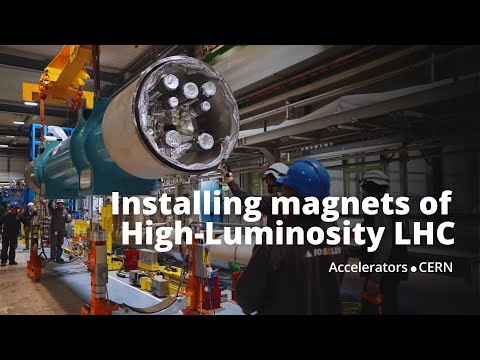
For example, the High-Luminosity LHC will produce at least 15 million Higgs bosons per year, compared to around three million from the LHC in 2017.

출처: CERN
It is likely that later CERN’s projects, like the Future Circular Collider (FFC), with first experiments starting in the mid-2040s, will also require similar or even more advanced radiation-proof electronics.
Lastly, this sort of project, funded through academic budgets in fundamental physics, can be an inspiration for a commercial version of radiation-proof electronics.
As mankind is looking to explore deep space, including potentially permanent lunar and Martian bases, or asteroid mining, more durable and radiation-proof electronics will be very useful.
첨단 센서에 대한 투자
CEVA 가격 차트
CEVA는 센서 기업이며 CERN과 파트너십을 맺어 기관의 알고리즘을 활용해 센서의 효율성과 전력 소비를 개선하고 있습니다. CEVA 솔루션과 IP(200개 특허)는 180억 디바이스에 통합되어 있습니다.
이 회사의 솔루션은 전 세계 주요 전자 브랜드에서 널리 사용됩니다.

출처: CEVA
CEVA와 CERN 간 협업의 주요 적용 분야는 “Edge AI”이며, 이는 데이터 센터(클라우드)에서 멀리 떨어진 디바이스에서 인공지능 애플리케이션을 실행하는 것을 의미합니다.
입자 물리학 알고리즘이 AI 애플리케이션에 재활용되는 것은 놀라운 일이 아닙니다. 예를 들어 신경망은 힉스 보존 입자를 찾는 데 사용되었습니다. 입자 가속기 데이터 분석은 방대한 데이터 양 때문에 클라우드가 아니라 현장에서 수행되어야 합니다.
CEVA는 CERN이 새로운 압축 알고리즘을 개발하도록 도왔으며, 이는 향후 실험에 활용될 것이며 CEVA는 이 기술을 자사 제품에 통합할 수 있을 것입니다.
“Thanks to our collaboration with CERN, we were able to develop an innovative approach that enables the networks to run up to 15x faster compared to 16-bit baseline models.
It’s enhancing network speed and reducing energy consumption by up to 90% while maintaining comparable accuracy.”
This is but one of CEVA’s technological progresses, with the company active in wireless connectivity, sensors (vision, audio, motion), and neural network algorithms.

출처: CEVA
CEVA는 5G 연결(위성 5G 포함)과 사물인터넷(IoT) 분야에서 임베디드 AI 솔루션을 결합한 추세로 큰 혜택을 보고 있습니다. 또한 WiFi 6 솔루션의 선두주자이며 WiFi 7에서도 선도적인 위치를 차지하고 있습니다.

출처: Ruije
소프트웨어 및 IP 기업으로서 CEVA는 엔지니어들 사이에서 잘 알려져 있으나 IoT와 5G 분야에 관심 있는 투자자들에게는 종종 간과됩니다.
It can be an interesting company at the very edge of technological progress in data processing and edge AI, as illustrated by CERN’s selection of it to help with some of the most complex data analyses ever performed by mankind.
최신 CEVA (CEVA) 주식 뉴스 및 개발 현황
참조 연구:
1. Rui Xu; Jaroslav Bán; Sarthak Kalani; Chen-Kai Hsu; Subhajit Ray; Brian Kirby. A Radiation-Hard 8-Channel 15-Bit 40-MSPS ADC for the ATLAS Liquid Argon Calorimeter Readout. IEEE Explore. 28 2025년 5월. pp 180 – 199 DOI:10.1109/OJSSCS.2025.3573904



