
Energia
Uusi ymmärrys haihtumisesta saattaa nähdä fotonien parantavan suolanpoistoprosesseja ‘fotomolekyyliefektin’ kautta

 Lisää Securities.io suosikkilähteisiisi Google-palvelussa

Until recently, there were a few agreed-upon variables that could result in/affect the evaporation of water – the process by which water transitions from a liquid to a gas. However, new tutkimus coming out of the Massachusetts Institute of Technology (MIT) is set to upend this, pointing to a new understanding of how simple photons (light) can play an outsized role in the process. With that in mind, researchers have found that photons can evaporate water both alongside and in the absence of heat.
Ennalta olemassa olevat muuttujat
Before diving into why this discovery matters, take a moment to refresh on the previous list of variables that play a role in evaporation.
- Lämpö: Haihtumisen ensisijainen syy on lämpö. Vesimolekyylit liikkuvat jatkuvasti, ja kun ne saavat lämpöenergiaa, niiden liike kasvaa. Kun energia riittää voittamaan molekyylien välisten voimien pitämät sidokset nestemäisessä tilassa, ne voivat paeta ilmaan höyrynä.
- Pinta-ala: Haihtumisnopeus riippuu myös veden pinta-alasta. Suurempi pinta-ala mahdollistaa useampien molekyylien altistumisen ilmalle, jossa ne voivat haihtua.
- Kosteus: Ilmassa jo olevan vesihöyryn määrä vaikuttaa haihtumiseen. Jos ilma on jo kyllästynyt vesihöyryyn, haihtuminen on hitaampaa. Tämä johtuu siitä, että korkea kosteus vähentää ilman kykyä vastaanottaa lisää vesimolekyylejä, mikä hidastaa haihtumisnopeutta.
- Ilman liike: Tuuli tai ilman liike voi poistaa vesihöyryä sen muodostuessa, vähentäen kosteutta suoraan veden yläpuolella ja mahdollistamalla enemmän veden haihtumista.
- Paine: Ilmakehän paine vaikuttaa myös haihtumiseen. Kun ilmakehän paine on alhaisempi, vesi kiehuu alemmassa lämpötilassa ja haihtuu nopeammin. Korkea ilmakehän paine voi estää haihtumista.
- Veden lämpötila: Ulkoisten lämmönlähteiden lisäksi myös veden oma lämpötila on tekijä. Lämmin vesi haihtuu nopeammin, koska sen molekyyleillä on keskimäärin enemmän energiaa.
Essentially, water evaporates when its molecules have enough energy to break free from the liquid phase and become water vapor. This process is influenced by temperature, humidity, pressure, wind, and the physical characteristics of the water body itself. Now, we can put exposure to photons on the list.
Älä sekoita
It is also important to understand the distinction between evaporation and the following processes.
Vaporisaatio: Yleinen termi, joka sisältää haihtumisen, mutta kattaa myös kiehumisen, jossa neste muuttuu höyryksi kiehumispisteessään koko nestemäärän läpi.
Kondensaatio: Haihtumisen käänteinen prosessi, jossa kaasu jäähdytetään ja se siirtyy nestemäiseen vaiheeseen.
Evaporation, on the other hand, is a type of vaporization that occurs at the surface of a liquid below its boiling point.
Miten se saavutettiin?
So how did MIT Researchers discover that photons can be added to the list of variables associated with evaporations? The team’s findings were achieved through a series of experiments and simulations focused on the evaporation behavior of water when contained within a hydrogel. This work was first undertaken as the team looked to understand and reaffirm past experiments that yielded results in which water evaporation rates surpassed the expected thermal limit – the maximum amount of evaporation possible when a given amount of heat is applied.
To recreate these results, the researchers utilized a ‘solar simulator’. Here, saturated hydrogels were subjected to various wavelengths of light in the absence of heat. Interestingly, results showed that despite no influence by heat, a measurable loss in mass occurred over time, with the most pronounced differences being found when green light was used. With the response being independent of thermal effects, it affirmed that light, not heat, was the cause of evaporation.
In the end, the researchers discovered that, against conventional expectations, a combination of water and hydrogel enabled the energy from photons to be harnessed to drive evaporation beyond known thermal limits. The process is now being called the ‘photomolecular effect’.
Miksi se on tärkeää?
This discovery of the photomolecular effect could revolutionize several industries and environmental sciences. They may extend to include renewable energy storage and recovery systems, where controlled evaporation rates are critical. For instance, this could lead to the development of new materials or surfaces designed to maximize water evaporation for energy storage in dry climates.
In agriculture, this principle might be used to develop more efficient irrigation systems that minimize water loss by restricting exposure to certain wavelengths, thereby conserving water while sustaining plant growth.
In the field of meteorology, understanding the photomolecular effect could improve weather prediction models by providing a more accurate representation of water cycle dynamics.
Additionally, the pharmaceutical and food industries, which often rely on precise drying processes, could see improvements in the efficiency and control of moisture removal from products.
Lastly, in urban planning and the development of sustainable architecture, this discovery might inspire innovative cooling systems that use solar energy more efficiently, reducing reliance on traditional air conditioning and contributing to energy-saving building designs.
Ensimmäiset hyödynsaajat fotoneista
While there is a large variety of industries that may see process efficiencies improved through this new understanding of evaporation, the researchers behind its discovery believe that the most obvious example would be those involved with the solar desalination of salt water.
Desalination is simply the process by which salt and minerals are removed from water, making it suitable for both consumption and irrigation. With the rise of renewables, this process is increasingly powered through solar energy. The following are each companies involved with solar desalination, which could soon benefit from the findings discussed above.
Consolidated Water (CWCO ) (NASDAQ: CWCO): Sijaitsee Caymanin saarilla, Consolidated Water on kasvanut perustamisestaan vuonna 1973 lähtien monikansalliseksi yritykseksi, joka on erikoistunut meriveden suolanpoistolaitoksiin.

At time of writing, Consolidated Water boasted the following metrics.
Markkina-arvo:$465,675,764
Forward P/E 1 v.: 20.06
Osakekohtainen tulos (EPS): N/A
Solar Water Plc: Tämä Yhdistyneessä kuningaskunnassa toimiva yritys on kehittänyt aurinkokupoli-teknologian, jonka tarkoituksena on suolanpoistaa merivesi, erityisesti kohdistuen alueisiin, joilla on korkea aurinkosäteily ja niukkaa makean veden resurssia.
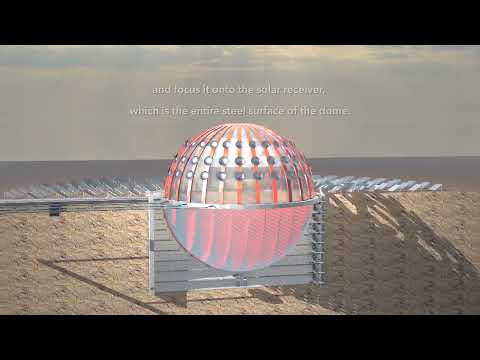
Abengoa: Espanjalainen monikansallinen yritys, joka on ollut mukana suurten aurinkovoimalla toimivien suolanpoistolaitosten kehittämisessä, erityisesti Lähi-idän ja Pohjois-Afrikan alueilla.
Huolimatta toiminnan laajuudesta, Abengoa on ollut useiden vuosien ajan konkurssin partaalla. Uudet prosessit, joilla on potentiaalia nostaa operatiivista tehokkuutta merkittävästi, voivat olla avain selviytymiseen.
These companies are active in various parts of the world, addressing the freshwater needs of arid regions and areas with limited access to clean water – a need that will only continue to grow in time.
Lopulliset ajatukset
While such a discovery may seem mundane at first glance, it is anything but. Not only does it show how limited our understanding is of käsitteistä ja prosesseista that have long been thought to be mastered, but it also holds the potential for widespread applications.
Innovative and forward-thinking companies are reliant on scientific advancements such as this to build out and offer solutions leveraging new capabilities and efficiencies. Now, companies like Consolidated Water, Veolia, and Solar Water PLC need to adapt and run with it.



