
Spotlights
John Deere (DE): De hightechtransformatie van de landbouw

 Voeg Securities.io toe aan je voorkeursbronnen op Google

Robots en AI nemen de landbouw over
Bij technologieën zoals satellietgeolocatie, 5G-netwerken, autonome voertuigen en robotica denken beleggers meestal aan bedrijven als Tesla (TSLA ) of Palantir. Deze technologieën worden echter ook buiten de auto- en defensiesector toegepast, onder meer in de landbouw.
Sinds het begin van de landbouwmechanisatie loopt de sector voorop in innovatie. Uiterst gespecialiseerde werktuigen zijn erop gericht menselijke arbeid te besparen en de productiviteit te verhogen.
De landbouw wordt tegenwoordig steeds meer een hightechsector, waarin machine learning, AI, computer vision, autonome systemen en geavanceerde sensoren samenwerken in zogenoemde precisielandbouw.
Geen enkel bedrijf is in de geschiedenis van landbouwinnovatie zo belangrijk geweest als John Deere. Het bedrijf zet deze traditie voort met het speciaal opgerichte John Deere Technology Innovation Center (JDTIC).
Nu landbouwbedrijven steeds afhankelijker worden van uiterst nauwkeurige gegevens en autonome systemen omarmen, is John Deere goed geplaatst om marktleider te blijven. Het bedrijf is niet alleen actief in de landbouw, maar ook in bosbouw en bouw.
DE Prijsgrafiek
John Deere Geschiedenis
Het bijna twee eeuwen oude bedrijf werd opgericht in 1837. De innovatie begon toen John Deere, die als leerling-smid had gewerkt, een nieuw soort ploegblad ontwikkelde dat de kleverige grond van de prairies in het Midwesten beter afwierp dan bestaande ontwerpen.

Bron: John Deere
In 1838 werden twee ploegen verkocht, in 1839 tien en in 1840 veertig. Het bedrijf kwam in 1843 echt van de grond na een overeenkomst met de lokale ondernemer Leonard Andrus en verkocht in 1846 al 1.000 ploegen per jaar.
De grond bleef aan de onderkant van de ploeg kleven, waardoor boeren om de paar meter moesten stoppen om het vuil weg te schrapen.
Deere was ervan overtuigd dat een ploeg met een sterk gepolijst oppervlak de kleverige grond tijdens het ploegen zou afwerpen en maakte daarom een ploeg van het staal van een gebroken zaagblad.
De behoefte aan een zelfreinigende ploeg was zo groot dat naar verluidt honderden mensen samenkwamen op de boerderij van Lewis Crandall bij Grand Detour om de jonge smid zijn nieuwe product te zien testen.
They then started to Engels staal importeren en een productie van 10.000 ploegen bereiken tegen 1857.
In de loop der tijd ging het bedrijf complexere machines produceren. Kort voor de Eerste Wereldoorlog breidde het uit naar oogstmachines, tractoren en motoren. In 1928 had het al een herkenbaardere vorm: 50% van de omzet kwam uit tractoren, motoren en oogstmachines.
Na de Tweede Wereldoorlog breidde het bedrijf internationaal uit met fabrieken in Mexico, Duitsland en Spanje.
In de jaren zestig moderniseerde John Deere zijn assortiment met grotere vier- en zescilindertractoren. Ook werd een divisie voor consumentenmaterieel opgericht, die gazon- en tuintractoren en hulpstukken zoals maaiers en sneeuwblazers produceerde. John Deere voegde zelfs recreatieve producten toe, zoals fietsen en sneeuwscooters.
John Deere omarmde digitale technologie al vroeg, met een pakket voor opbrengstkaarten op maaidorsers in 1993 en camera’s aan boord. Sindsdien heeft het bedrijf steeds geavanceerdere technologieën toegevoegd, waaronder satellietkaarten, apps en AI-besturing voor tractoren.

Bron: John Deere
John Deere Segmenten
Productie Landbouw
Het grootste onderdeel van John Deere is de zogenoemde productielandbouw, met zeer grote tractoren en gespecialiseerde machines zoals maaidorsers, katoenplukkers, katoenstrippers en suikerrietoogstmachines.

Bron: John Deere
Dit segment verkoopt ook veel gespecialiseerde modulaire werktuigen, zoals getrokken schrapers, grondbewerkings-, zaai- en toepassingsmachines, waaronder sproeiers.
Dit is een zeer veeleisende activiteit. Onderhoud en service van de machines vormen dan ook een andere belangrijke inkomstenbron voor John Deere.
Kleine Landbouw en Turf
Dit segment omvat kleinere tractoren die op kleine boerderijen worden gebruikt om bijvoorbeeld hooi en andere materialen te verplaatsen, sneeuw te ruimen, lasten te tillen en veevoer te vervoeren.

Bron: John Deere
Het omvat ook het segment “turf”, voornamelijk maaitractoren voor golfbanen en openbare ruimten.
Constructie & Bosbouw
In deze sector is Deere veel minder dominant dan concurrenten zoals Caterpillar (CAT ). Toch is het een nuttig segment, omdat de fabrieken voor zware tractormachines ook kunnen worden gebruikt voor graafmachines, laders en andere bouwmachines.

Bron: John Deere
Het dichte netwerk van verkooppunten en onderhoudswerkplaatsen op het platteland is voor John Deere ook een voordeel bij zijn bosbouwactiviteiten.
John Deere in Cijfers
Met 75.800 werknemers, van wie 45.700 buiten de Verenigde Staten en Canada, en een nettowinst van 51,7 miljard dollar in 2024 is John Deere wereldwijd de grootste producent van landbouwmachines.
Hoewel Deere een multinational is, blijft het bedrijf sterk op Noord-Amerika gericht: “slechts” 34% van de netto-omzet en inkomsten komt van buiten de Verenigde Staten en Canada.

Bron: John Deere
Landbouwmachines vormen nog altijd de kern van het bedrijf, maar bosbouw en kleiner materieel zijn eveneens belangrijk en zijn samen goed voor de helft van de omzet.

Bron: John Deere
Innovatie van John Deere
Voor een productiebedrijf besteedt John Deere veel aan onderzoek en ontwikkeling. Een groeiend deel van de totale omzet gaat naar innovatie: software- en materieelonderzoek samen zijn goed voor maximaal 6%.

Bron: John Deere
Een belangrijke reden voor het innovatiesucces van John Deere is het John Deere Technology Innovation Center. Het werd samen met de University of Illinois opgericht en levert technische expertise voor de productontwikkeling van John Deere.
De inspanningen van John Deere richten zich op enkele technologische pijlers: sensoren, connectiviteit, autonomie en alternatieve energie.

Camera’s & Sensoren
Een belangrijke toevoeging aan moderne tractoren en zware machines is de sterke uitbreiding van hun waarnemingsmogelijkheden.
Het in 2021 geïntroduceerde See & Spray Ultimate-systeem gebruikt bijvoorbeeld 36 camera’s om gewassen van onkruid te onderscheiden en het gebruik van herbiciden te optimaliseren met computer vision en machine learning.
Die onderscheiding gebeurt binnen 200 milliseconden met beeldverwerkingseenheden die meer dan 2.100 vierkante voet per seconde kunnen scannen. In 2023 werd het systeem al op 1 miljoen acre gebruikt en verminderde het herbicidegebruik met 8 miljoen gallon.

Bron: John Deere
In de landbouw maakt dit precisielandbouw mogelijk. Gegevens van camera’s, satellieten en luchtkaarten worden gecombineerd met bodemanalyses, zoals pH, voedingsstoffen en watergehalte, om de middelen van het landbouwbedrijf beter te benutten.
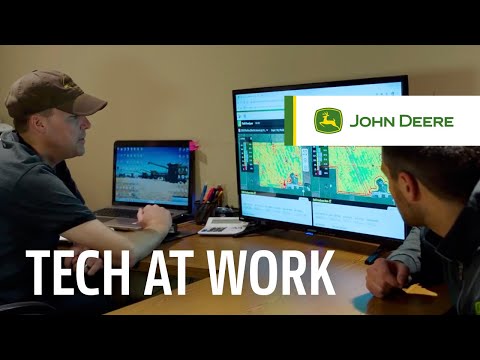
Dit AI-niveau wordt bereikt met edge computing: de berekeningen worden lokaal uitgevoerd door hardware in de tractor en niet in de cloud.
Voortbouwend op onze 186-jarige geschiedenis als fabrikant van wereldklasse zijn we nu ingericht om een wereldleider in robotica en kunstmatige intelligentie te worden.
Jorge Heraud – vicepresident Automation & Autonomy
Connectiviteit
Toen landbouwbedrijven tien jaar geleden begonnen te digitaliseren, verschenen voor elke taak op de boerderij tientallen apps. Dat was vaak revolutionair, maar ook overweldigend.
Gecentraliseerde apps presteren daardoor meestal beter: ze kunnen de gegevens integreren en communiceren van nature met de belangrijkste machines, zoals tractoren en maaidorsers.
Zie het John Deere Operations Center als de digitale tweeling van een landbouwbedrijf, of uiteindelijk van een bouwplaats of wegenbouwproject. Het is onze belangrijkste oplossing waarmee gebruikers essentiële werkzaamheden beheren, de kwaliteit en productiviteit volgen en de resultaten van het seizoen analyseren om de oogst in het volgende seizoen te verbeteren.
Dankzij dit connectiviteitsniveau kunnen dealers ook diagnoses op afstand uitvoeren, apparatuur programmeren en updates via de ether installeren.
Connectiviteit is ook belangrijk in de fabriek, waar inmiddels een particulier 5G-netwerk is uitgerold. Vergeleken met standaard wifi is dat belangrijk, omdat 5G veel meer apparaten per radiopunt ondersteunt: Deere meldt maximaal 800 apparaten per radiopunt binnen zijn particuliere mobiele 5G-netwerk.
Tot nu toe heeft het bedrijf meer dan 100 via 5G bestuurde automatisch geleide voertuigen ingezet om motoren, aandrijflijnen, cabines, wielen en andere onderdelen binnen het assemblageproces te verplaatsen. Computer vision gebruikt de ultralage latentie en snelle gegevensoverdracht van 5G om lasnaden te controleren en de veiligheid van werknemers te bewaken.
Autonomie
Hoewel mechanisatie veel landbouwwerk heeft geautomatiseerd, maken landbouwers nog altijd zeer lange werkdagen, vooral doordat ze jaarlijks met tractoren duizenden acres doorkruisen.
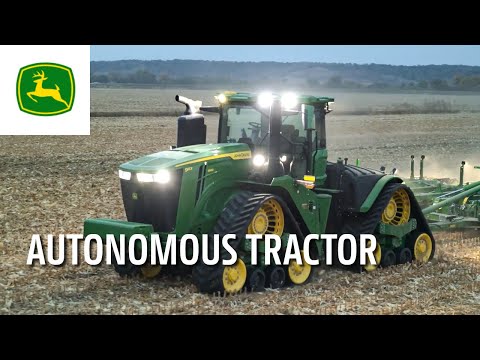
Dat kan veranderen, omdat tractoren waarschijnlijk veel eerder volledig autonoom worden dan auto’s. John Deere introduceerde in 2022 zijn eerste volledig autonome tractor, een bestuurderloze versie van de 8R-rijgewassentractor. Het voertuig oriënteert zich met GPS en zes paar stereocamera’s voor obstakeldetectie en navigatie rondom.

Bron: John Deere
Deze introductie volgde op de overname van startup Bear Flag Robotics door John Deere voor 250 miljoen dollar.
In 2023 introduceerde John Deere ook een robotgestuurd bemestingssysteem om het gebruik van chemicaliën te optimaliseren.
ExactShot gebruikt een sensor om vast te stellen wanneer elk zaadje de grond in gaat, aldus Deere. Op dat moment spuit een robot precies de benodigde hoeveelheid meststof, ongeveer 0,2 ml, rechtstreeks op het zaadje terwijl het de bodem ingaat.
Alternatieve Energie
John Deere introduceerde in 2023 ook een elektrische graafmachine, gericht op bouwprojecten in steden die geluidsoverlast willen verminderen. De machine gebruikt een accu van Kreisel, een Oostenrijks bedrijf waarin Deere in 2022 een meerderheidsbelang verwierf en dat elektrische accumodules met een hoge energiedichtheid en lange levensduur produceert.
De accutechnologie van Kreisel richt zich op een maximale levensduur en duurzaamheid, ook onder buitenomstandigheden, door celveroudering zoveel mogelijk te beperken. Daardoor past ze goed bij machines zoals die van John Deere.
De machine werkt uiterst stil, maar heeft nog steeds een hoge verdichtingskracht; ik merkte geen verschil. Het is ook prettig dat de machine precies hetzelfde wordt bediend als de dieselmachine, zodat ik vanaf het begin op de vertrouwde manier kon werken.
Tot dusver zijn de elektrische oplossingen vooral gericht op niet-agrarische segmenten. Tegen 2026 komen er meer dan twintig elektrische en hybride-elektrische bouw- en bosbouwmodellen, in feite een elektrische optie voor elk model.
Tractoren vragen namelijk veel meer energie en werken veel verder van ondersteunende infrastructuur, vooral bij de teelt van handelsgewassen zoals maïs en sojabonen.
“Een van onze grotere tractoren, de 8R… Als we die met een accu zouden aandrijven, zou de accu tweemaal zo groot zijn als de machine.
De 9R heeft een brandstofcapaciteit van 400 gallon, goed voor bijna 2.800 pond extra gewicht. Volledige elektrificatie zou bijna 60 accu’s vereisen met een totaalgewicht van bijna 67.000 pond, ruim 20.000 pond meer dan de tractor zelf.”
Deanna Kovar – President, Wereldwijde Landbouw & Turf Divisie
Totdat accu’s voldoende zijn verbeterd voor deze toepassing, richt John Deere zich meer op efficiëntere motoren en een groter gebruik van biobrandstoffen. Het bedrijf werkt onder meer aan een 9-litermotor op ethanol.
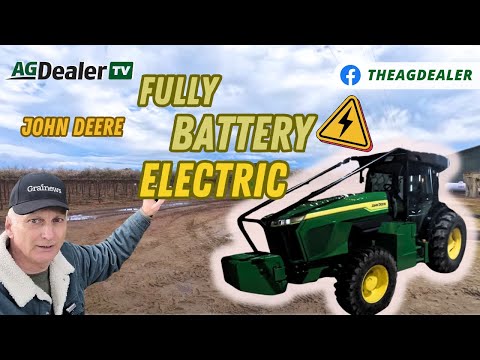
Dat betekent niet dat er geen elektrische tractor komt. Een voorbeeld is het prototype E-Power, dat kleiner is dan sommige veel grotere maaidorsers van het bedrijf.
Data is Koning
De langetermijninspanning om alle John Deere-tractoren te verbinden betaalt zich ook uit in een enorme voorsprong bij de gegevensverzameling. Momenteel zijn 775.000 verbonden John Deere-machines actief op maximaal 455 miljoen acre landbouwgrond. Daarvan geldt 125 miljoen acre als “sterk betrokken” en 197 miljoen acre als “duurzaam betrokken”.

Bron: John Deere
Naarmate de digitalisering vordert, verandert John Deere steeds meer in een software- en databedrijf dat in de verkochte machines is ingebed.
Daarom digitaliseert het bedrijf niet alleen de landbouw in hoog tempo, maar ontwikkelt het ook “precisiebosbouw”.

Bron: John Deere
Tarieven
Voor een productiebedrijf met een zeer grote blootstelling aan de Noord-Amerikaanse markt is de gevoeligheid voor de tarieven van Trump een belangrijk aandachtspunt voor potentiële beleggers.
Deere heeft het grootste deel van de productie in de Verenigde Staten gehouden: 75% van alle producten die in de VS worden verkocht, wordt daar geassembleerd.
Het bedrijf leek de richting van politieke relaties en potentiële handelsconflicten correct te hebben voorspeld en investeerde sinds 2019 2,5 miljard dollar in zijn Amerikaanse fabrieken.
“Wat de herkomst van onderdelen betreft, komt ongeveer 10% van de productiekosten van onze in de VS verkochte goederen uit Mexico, minder dan 2% uit China en ongeveer 1% uit Canada.”
In totaal heeft het bedrijf 30.000 mensen in dienst op meer dan 60 Amerikaanse locaties in 16 staten.
Wij zijn een netto-exporteur van in de VS geassembleerde Ag & Turf-machines. John Deere is een wereldwijd merk dat in meer dan 30 landen actief is.
Tarieven kunnen echter twee kanten op werken. Vergeldingstarieven tegen de VS schaden de export van in Amerika gemaakte Deere-machines. Ze verstoren ook de toeleveringsketen, omdat ten minste sommige onderdelen in het buitenland worden gemaakt. Waarschijnlijk haalt het bedrijf ook grondstoffen als elektronica, staal, chemicaliën en kunststoffen uit andere landen.
In september 2024 kondigde Trump aan dat hij een tarief van 200% op de producten van John Deere zou opleggen als het bedrijf meer productiecapaciteit naar Mexico zou verplaatsen.
Een zwakke verkoop van handelsgewassen kan eveneens gevolgen hebben voor de belangrijkste klanten van Deere, de Amerikaanse boeren, nu China als vergelding voor de tarieven Amerikaanse leveranciers probeert te vervangen.
Handelsoorlogen en tarieven kunnen het bedrijf op korte termijn dus raken, maar anders dan bijvoorbeeld sommige autofabrikanten hoeft Deere waarschijnlijk niet zijn volledige toeleveringsketen op grote schaal te verplaatsen.
Reputatie en Marges
John Deere staat bij boeren bekend als een zeer krachtige en geavanceerde fabrikant, maar ook om zijn zeer hoge prijzen. Veel kleinere landbouwbedrijven laten hun langdurige trouw aan het merk varen omdat ze de prijs van de premiumtractoren van Deere eenvoudigweg niet kunnen betalen.
Een ander twistpunt tussen Deere en boeren is de manier waarop het bedrijf omgaat met alle digitale innovaties en software in de tractoren. Voor vrijwel elke update en wijziging van de software is goedkeuring van het bedrijf nodig. Daardoor gaan onderhoud, reparaties en foutopsporing vaak gepaard met hoge servicekosten.
“De “techniciteit” van zware landbouwmachines is een belemmering geworden voor betekenisvol eigendom. Nu hebben bedrijven zoals John Deere het volledige ecosysteem voor apparatuur verticaal geïntegreerd, waardoor klanten reparatieservices exclusief bij dealers moeten aanschaffen en software wordt gebruikt om onafhankelijke reparaties te voorkomen.”
Het bedrijf verwacht dat softwarevergoedingen tegen het einde van dit decennium 10% van de omzet vormen. Dat kan een ernstig probleem worden als er een nieuwe wet over het “recht op reparatie” wordt aangenomen of als boeren Deere verlaten vanwege de beperkingen op software-updates.
Hoewel de situatie nog niet dramatisch is, moeten beleggers met aandelen John Deere dit onderwerp blijven volgen.
Financiën
John Deere staat bekend als een zeer aandeelhoudersvriendelijk bedrijf. Tussen 2015 en 2024 werd ongeveer 63% van de operationele kasstroom aan aandeelhouders teruggegeven.
Het bedrijf heeft dit geld teruggegeven via de inkoop van eigen aandelen, in het afgelopen decennium voor 3 tot 4 miljard dollar per jaar.

Bron: John Deere
Sinds 2004 heeft het bedrijf zijn dividend ook gestaag verhoogd.

Bron: John Deere
Over het geheel genomen is het bedrijf winstgevend en is de operationele kasstroom de afgelopen jaren gestaag gegroeid, al lag 2024 onder de recordcijfers van 2023.

Bron: John Deere
Conclusie
John Deere is wereldwijd marktleider in landbouwmachines, maar ook in bosbouw- en bouwmaterieel, van de grootste machines tot apparatuur voor commerciële en hobbylandbouw en terreinonderhoud.
Het is ook een bedrijf dat sinds zijn oprichting bijna twee eeuwen geleden weet dat innovatie en hoge kwaliteit de enige weg vooruit zijn. Tegenwoordig omvat dat uiteenlopende technologieën als machine vision, AI, autonome tractoren, uiterst duurzame accu’s, slimme fabrieken met 5G en geavanceerde software en apps.
Ondanks de incidentele controverse over buitenlandse fabrieken is Deere ook een typisch Amerikaans productiebedrijf. Het lijkt beter dan veel andere zware industriebedrijven voorbereid op een tijdperk van protectionisme en hoge tarieven.
De overgang naar een software- en databedrijf verloopt echter niet zonder problemen. Er zal waarschijnlijk een evenwicht moeten worden gevonden tussen controle over gegevens en winstgevendheid enerzijds en de autonomie en het recht op reparatie van boeren anderzijds.
Laatste over John Deere



