Antariksa
AI Berbasis Luar Angkasa: Frontier Berikutnya untuk Skala Cloud
Mengapa infrastruktur AI berpindah ke orbit? Seiring pesatnya pertumbuhan AI, muncul sejumlah keterbatasan pasokan. Kendala pertama adalah GPU, yang beralih dari perangkat khusus untuk gim menjadi kebutuhan massal pusat data AI. Akibatnya, Nvidia sebagai pemimpin sektor ini tumbuh menjadi perusahaan terbesar di dunia, tetapi ada keterbatasan lain yang mendorong komputasi menuju luar angkasa.

 Tambahkan Securities.io ke sumber pilihan Anda di Google

Why AI Infrastructure Is Moving to Orbit
As AI booms, several supply constraints have emerged. The first was GPUs, with specialized hardware moving from a niche gaming use to mass adoption by AI data centers. As a result, Nvidia (NVDA ), the leader of the sector, has grown into the world’s largest company.
But another limitation is becoming the main issue: energy supply.
This is because AI data centers are now measured not so much by their computational power, but by their power consumption. This is why AI companies are scrambling to restart nuclear power stations, secure the first SMR prototypes, or state regulators are putting new gas-fed power plants on a fast track for approval.
As the rush to find energy for data centers intensifies, eyes are turning to another option: space-based AI, giving a whole new physical meaning to “cloud computing.”
The possibility of an unlimited energy supply from orbital satellites is something we already analyzed extensively in “Space-Based Energy Solutions For Endless Clean Energy.”
But this concept is always somewhat limited by the need to convert solar energy into power, turn this electricity into microwaves to beam it back down to Earth, and then convert it back into power.
This increases the complexity of the power satellites, requires more ground-based infrastructure, and overall reduces the efficiency of the procedure drastically, as each conversion into a different form of energy leads to losses. This could likely only work with very cheap orbital launches.
Alternatively, if the power were directly used in orbit, this would be a lot more efficient and become economically viable sooner—especially if the final “product” can be easily sent back to Earth.
In theory, data centers in space could be the ideal option: they need a lot of power, but sending the results of the calculations back to Earth is trivial, requires no new infrastructure, and does not cause energy losses.
The idea is not just theoretical; for example, Alphabet (GOOG ) /Google just announced “Project Suncatcher,” an orbital AI computation system prototype that we covered in “Google’s Project Suncatcher and the Rise of Orbital AI.”
So, could it work, and why could it be the next step in building AI infrastructure?
The Collision of Two Trends
Solving the Terrestrial Power Constraint
More energy than ever is needed to power human civilization, and the commercialization of LLMs has only increased the need for new power installations. So far, most newly installed power generation is solar energy.

Sumber: ARK Invest
But this poses a problem for terrestrial grids, as solar energy only produces power when the sun shines, resulting in lower production during cloudy days, winter, or in the evening. In contrast, power-demanding sources like AI data centers require a continuous supply of energy, with peak consumption often occurring in the evening and in winter.
In theory, this can be solved with cheap energy storage, like utility-scale battery parks. But in practice, this cancels many of the advantages of solar as a green and cheaper source of energy.

Sumber: ARK Invest
ARK Invest estimates that capital expenditure in power generation must scale ~2x to ~$10 trillion by 2030 to meet global electricity demand. Of this, deployments of stationary energy storage will have to scale 19x.

Sumber: ARK Invest
This will also require massive investment in the power grid, adding further to costs. Any alternative that skips battery and grid costs could be competitive, even with its own unique infrastructure costs, such as the orbital launch of space-based AI data centers.
The Starship Deflationary Cycle
It is no secret that SpaceX (SPCX ) is the most successful space-focused company ever created. By unlocking reliable reusable launchers, the company has dramatically reduced the cost of lifting useful payloads to Earth’s orbit. Costs have declined by ~95%, from ~$15,600/kg to under ~$1,000/kg in the 17 years since 2008.
The new super-heavy launcher, Starship, will likely continue this trend and ultimately bring launch costs into the ~$100/kg range.

Sumber: ARK Invest
What has not yet been fully understood is that this does not just make satellites or space missions cheaper; it radically changes what can be done in space.
When putting a kilo of material in space costs only $100, sending anything useful or light enough into orbit becomes economically viable. This is true for thin-film solar cells, which can be very light when they do not need to be protected by glass or rigid metal frames against terrestrial weather.
This is also true for materials that are highly profitable on a per-kilo basis, such as computer chips.
For example, a full GB300 NVL72 Rack/Cabinet from NVIDIA costs as much as $4M but weighs only around 1.8 metric tons (4,000 lbs). The cost of sending such material into orbit at $100/kg is only $180,000—almost a rounding error relative to the hardware cost.
Of course, the total price would be higher when taking into account supporting equipment (shielding, cooling, power generation, etc.), but it means that getting an AI computing system into orbit will not massively inflate its costs soon. It is likely that the turning point is around $500/kg of launch costs.

Sumber: ARK Invest
As an extra bonus, the rise of orbital AI could further improve the economics of reusable rockets by creating a massive market to service. While finishing the Starlink constellation might require 11x the cumulative upmass lifted by SpaceX until 2025, 100 GW of AI compute would increase demand for orbital lift by another 60x. In turn, this volume will decrease launch costs further.

Sumber: ARK Invest
Why Orbital AI Has Structural Advantages
Geser untuk menggulir →
| Penggerak | Pusat Data AI Terestrial | Pusat Data AI Orbital | Mengapa Hal Ini Penting |
|---|---|---|---|
| Ketersediaan daya | Terbatas oleh kapasitas jaringan, pasokan bahan bakar, dan jadwal perizinan | Potensi surya hampir kontinu di orbit yang tepat; tidak ada interkoneksi jaringan | Komputasi orbital menghindari bagian paling lambat dari skala AI: daya + perizinan |
| Faktor kapasitas | Surya bersifat intermiten; penstabilan memerlukan penyimpanan atau pembangkit yang dapat diatur | Ketersediaan surya tinggi dengan intermitensi berkurang dibandingkan surya darat | Mengurangi atau menghilangkan belanja modal penyimpanan untuk penstabilan daya |
| Beban pendinginan | Beban HVAC/pembuangan panas tinggi; keterbatasan air di banyak wilayah | Pendinginan radiasi melalui radiator panas besar; tidak memerlukan air | Lebih banyak komputasi per watt ketika energi pendinginan lebih rendah (tetapi massa radiator penting) |
| Latensi & bandwidth | Sangat baik untuk beban kerja interaktif; infrastruktur serat optik padat | Paling cocok untuk batch/HPC, pelatihan, atau inferensi asinkron; bergantung pada tautan satcom | AI orbital kemungkinan dimulai dengan beban kerja tidak sensitif terhadap latensi |
| Kecepatan penyebaran | Pengadaan lahan, perizinan, peningkatan jaringan, dan konstruksi memakan tahun | Kedalaman peluncuran menjadi faktor penghalang jika platform standar ada | Model “pembuatan + peluncuran” dapat mempercepat waktu ke kapasitas |
| Risiko keras | Perizinan, kemacetan jaringan, batas air/termal lokal | Radiasi, puing/tabrakan, layanan, dan pembuangan akhir hayat | Ekonomi orbital bergantung pada mitigasi mode kegagalan spesifik ruang |
| Titik tumpu ekonomi | Daya + interkoneksi + belanja modal pendinginan mendominasi skala | Peluncuran + massa platform + waktu aktif di orbit mendominasi skala | Persimpangan terjadi ketika $/kg dan platform standar menurunkan total komputasi yang diberikan |
Perfect For Solar
Solar energy is abundant in space—up to 4x the output for the same nominal capacity, thanks to direct sunlight without atmospheric loss. In the right orbit, it is also much more reliable, shining 24/7 consistently.
This removes the limitations suffered by land-based solar power. In theory, this could be the final form of solar energy generation. However, due to the difficulty of bringing that power back to Earth, it will require ultra-cheap launch costs or in-orbit manufacturing to be economically viable.
Alternatively, simpler orbital mirrors shining on land-based solar farms, as championed by Reflect Orbital, might skip the light-to-microwave conversion losses.
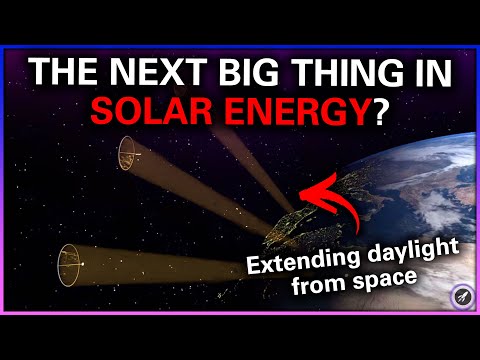
In contrast, if power is used in orbit, none of these steps are required. Once computation is finished, the resulting data can be sent back to Earth using standard telecommunication methods, with satellite bandwidth improving quickly.
Natural Cooling
Another unique advantage of space-based AI data centers is cooling. When not exposed to the Sun’s radiation, space is extremely cold, standing at -148°F (-100°C) for a spacecraft in the shadow of the Earth or its own arrays.
A significant portion of terrestrial data center energy consumption comes from cooling. Locating them in the Arctic or even the stratosphere has been proposed, so space offers a natural advantage. This will likely require massive passive cooling systems to radiate away heat, but this is technically feasible.
Ubiquitous Satellite Intelligence
SpaceX and its broadband satellite network have completely changed the orbital landscape, with Starlink satellites making up roughly half of all satellites in orbit.

Sumber: ARK Invest
This has caused an exponential decrease in satellite bandwidth costs, dropping nearly 100x between 2020-2024, with further gains expected from Starship flights.

Sumber: ARK Invest
Telecommunication in space is becoming so ubiquitous and cheap that orbital data centers can use preexisting networks to communicate with Earth without the need to build dedicated capacity. Furthermore, a dense satellite network could lead to additional maintenance services, such as refueling or “towing,” which would increase the lifespan of these assets.
Separating Space & Land Infrastructures
Because orbital AI data centers do not connect to the regular grid, they will not impact power prices on Earth. If anything, the extra demand for solar technology will help make solar energy cheaper globally.
Furthermore, these centers will not need to wait for terrestrial grid upgrades, which can take years. The process also avoids the use of land and precious water resources, improving the overall economics.
Investing In Orbital AI
Broadcom
AVGO Grafik Harga
Besides GPU producers and AI model developers, companies producing connectivity and specialized IT equipment for data centers are major winners of the AI boom. One major company in this category is Broadcom (AVGO ), a tech giant with roots dating back to the dot-com era.
Following the merger of Broadcom and Avago in 2016, the company’s activities are split between infrastructure software and connectivity hardware (wireless, servers, AI networks, etc.).

Sumber: Broadcom
Another growing AI-related activity is the design and manufacturing of XPUs, which merge the CPU, GPU, and memory into a single electronic device. Broadcom utilizes its experience in producing ASICs (Application-Specific Integrated Circuits) to create chips designed specifically for AI computing.

Sumber: Broadcom
These types of dense, energy-efficient computing units are a perfect match for orbital AI, which requires an optimized balance between performance and weight. ASICs’ higher energy efficiency is also a plus, as lower power consumption reduces the mass of solar panels needed in orbit.
Catatan Investor:
- Hipotesis inti: Kendala utama AI beralih dari komputasi ke ketersediaan daya dan jadwal perizinan; komputasi orbital merupakan solusi struktural potensial.
- Pemicu ekonomi: Biaya peluncuran yang mendekati ~$500/kg secara signifikan memperluas kombinasi muatan yang layak (surya, radiator, pelindung) untuk penyebaran komputasi orbital yang menguntungkan.
- Pemenang awal: Penyedia “alat dan bahan”—desainer ASIC/XPU, fotoniik/optik co-packaged, dan manajemen termal—mendapatkan manfaat sebelum ada “awan orbital murni” yang tersedia secara publik.
- Risiko utama: Penguatan radiasi, logistik layanan di orbit, dan risiko puing/tabrakan dapat menggerus ekonomi bahkan jika harga peluncuran turun.
- Jangka waktu: Perlakukan AI orbital sebagai tema infrastruktur jangka panjang; fokus pada perusahaan yang memonetisasi skala AI terestrial saat ini sambil membangun opsi untuk beban kerja ruang.
Latest Broadcom (AVGO) Stock News and Developments