
Råvarer
Rio Tinto (RIO): Udvinding af fremtidens metaller

 Føj Securities.io til dine foretrukne kilder på Google
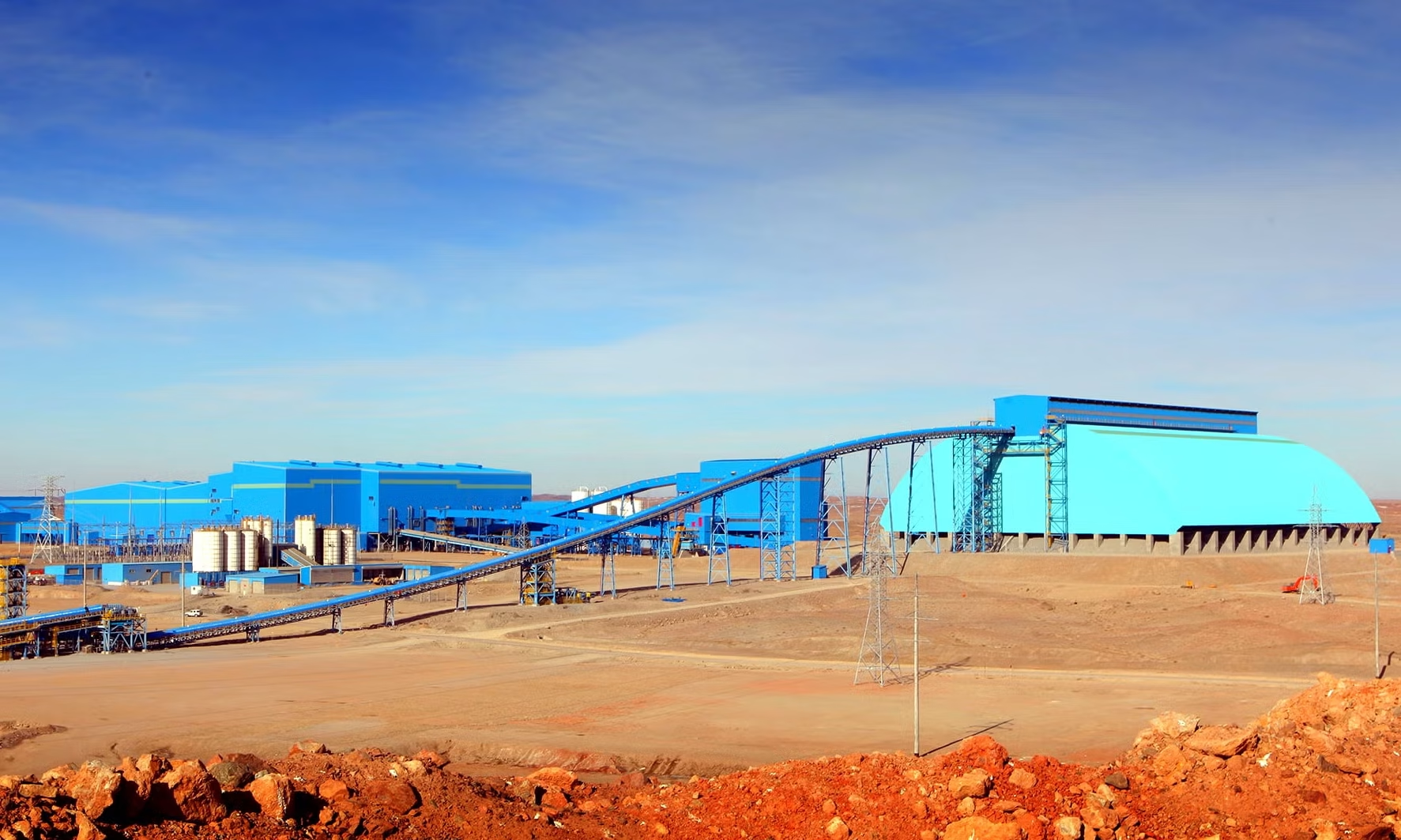
Forbereder minedrift til energitransitionen
Minedrift opfattes ofte som en beskidt og lavteknologisk industri af den brede offentlighed og som en dårlig investering sammenlignet med mere innovative brancher.
Og det er bestemt sandt for mange dele af industrien, hvor der er større fokus på at udvinde ressourcer på den billigste måde muligt.
Men samtidig er den moderne verden bygget på metaller udvundet af minearbejdere: lithium, kobber, aluminium, titanium og sjældne jordarter. Alle disse materialer udgør grundlaget for AI‑datacentre, el‑biler, solpaneler, batterier, rumfartøjer og meget mere.
RIO Prisdiagram
Så selvom det ikke er den mest glamourøse del af energitransitionen og innovationen, er det alligevel en afgørende komponent. Og nogle virksomheder går ud over blot udvinding.
De største minevirksomheder er også forsknings‑ og udviklingskraftcentre, der bruger deres enorme skala til at reducere energi‑ og vandforbrug, forurening og generelt forbedre, hvordan disse kritiske metaller produceres. De udvikler sig også og bevæger sig væk fra kul og basismetaller mod mere strategisk vigtige metaller i fremtiden, såsom lithium og kobber.
Blandt verdens fem største mineselskaber er der ingen, der bedre illustrerer overgangen til en mere bæredygtig mineindustri, end Rio Tinto (RIO ).
Resumé
- Rio Tinto er stadig drevet af jernmalm, men fremtiden er i stigende grad knyttet til kobber, lithium, aluminium og andre kritiske metaller.
- Virksomheden udvider sig ud over Pilbara‑jernmalmen med Simandou i Guinea, Oyu Tolgoi i Mongoliet, nye kobberprojekter i Amerika og Arcadium‑lithium‑opkøbet.
- Vækstprojekter som Rincon og Arcadium giver Rio indflydelse på batterier, el‑biler og netudbygning i energitransitionen.
- Rio implementerer nye teknologier inklusive Nuton‑bioudvinding for kobber, direkte lithium‑ekstraktion (DLE) og ELYSIS‑lav‑kulstof‑aluminium‑smeltning.
- Ledelsen har som mål at returnere 40–60 % af de underliggende indtjening til aktionærerne og har leveret næsten 60 % udbytte i ni år, selvom udbyttet forbliver cyklisk med råvarepriser.
Rio Tinto forretningsoversigt: Kerne‑metaller og strategi
Rio Tinto er verdens næststørste minedriftsvirksomhed. Den største del af virksomhedens forretning er i jernmalm, med betydelige historiske aktiver i Australien og en ny megamine i Afrika.
Men den er også en meget stor producent af kobber og aluminium, med stærke udvidelsesplaner for kobberproduktionen.
Endelig har den udvidet sig hurtigt ind på lithium‑markedet takket være nogle få projekter og et stort opkøb i 2024 af Arcadium Lithium .
Samtidig er virksomheden også førende inden for produktion af titanium, bor og aluminium, hvor sidstnævnte giver mulighed for at udvide til sjældne jordarter (se nedenfor).

Kilde: Rio Tinto
Dette placerer Rio Tinto som en stor producent i nogle af verdens største råvaremarkeder. Endnu vigtigere er, at de fleste af deres miner enten er meget store eller indeholder rige malme, hvilket fører til effektive minedriftsoperationer og produktionsomkostninger blandt de laveste i verden.

Kilde: Rio Tinto
På grund af fokus på miner i Australien, Amerika og Afrika er Rio Tinto en af de vigtigste strategiske leverandører af disse metaller til Vesten, med over 81 % af produktionen i OECD‑lande. Dette kan være afgørende, da nationalisering og overtrædelse af ejendomsrettigheder kan udgøre en betydelig fare for investorer i minedriftsvirksomheder i mere risikable jurisdiktioner.

Kilde: Rio Tinto
Jernmalm: Pilbara og Simandou som Rio Tintos kerne
Pilbara – Australien
Mens de øvrige metaller skaber ekstra pengestrømme eller kan forme selskabets fremtid, er jernmalm Rio Tintos historiske udgangspunkt og fortsat kernen i virksomheden.
Jernproduktionen vil ikke være tilstrækkelig i de kommende år, idet der ventes et stort udbudsunderskud sidst i 2020’erne, når mindre producenters ressourcer udtømmes.

Kilde: Rio Tinto
Investeringerne i nye ressourcer var historisk lave fra 2016 til 2023. Da nye miner tager flere år eller over et årti om at gå fra projekt til fuld produktion, er et stramt udbud af jernmalm i det kommende årti næsten uundgåeligt.

Kilde: Rio Tinto
En stor del af Rio Tintos og verdens jernmalm kommer fra den røde jord i det vestlige Australien, især Pilbara-regionen, hvor Rio Tinto opererer sammen med andre minegiganter som BHP (BHP ) og Fortescue (FMG.AX).
Rio Tintos aktiviteter i regionen har en kapacitet på 345–360 millioner ton om året, fordelt på 13 mineknudepunkter og 2.000 kilometer jernbane, som transporterer malmen til særlige havne.

Kilde: Rio Tinto
Simandou – Guinea
Selskabet har arbejdet målrettet på at tilføje Simandou-forekomsten i Guinea, som kan nå 60 millioner ton om året, når den er fuldt udbygget.

Kilde: Rio Tinto
Det er et enormt projekt i et land, som hidtil har manglet den nødvendige infrastruktur til at føre malmen til havet og videre til internationale markeder. En 600 kilometer lang jernbane gjorde logistikken mulig, og driften af minen, der ejes af Guineas regering, et kinesisk konsortium og Rio Tinto, begyndte i november 2025.
“I dag åbner vi en enestående ny kilde til jernmalm af høj kvalitet, som kunderne efterspørger til fremstilling af stål med lavere CO₂-udledning, og styrker vores førende portefølje af jernmalmminer i Pilbara og Canada.”
Jernbanen og havnene er nu 61 % færdige, minen er 60 % færdig, og der er hidtil investeret 3,3 milliarder dollar i projektet.
“Iværksættelsen af Simandou-projektet er en vigtig bedrift, som bygger på den enighed, de to landes statsoverhoveder har opnået. Den afspejler Kinas og Guineas fælles indsats og pragmatiske samarbejde og bidrager til Guineas industrialisering og modernisering.”
Vækst inden for kobber, lithium og kritiske metaller
Swipe to scroll →
| Project | Metal | Region | Role in Strategy | Indicative Scale / Timing |
|---|---|---|---|---|
| Pilbara Iron Ore System | Iron ore | Western Australia | Kerneforretning med stærk pengestrøm, der finansierer vækst og udbytter. | På vej mod en samlet kapacitet på cirka 345–360 millioner ton om året på mellemlang sigt. |
| Simandou | High-grade iron ore | Guinea, West Africa | Spreder jernmalmproduktionen ud over Australien og leverer malm af høj kvalitet til stål med lavere CO₂-aftryk. | Driften begyndte i november 2025; samlet eksportkapacitet på op til cirka 120 millioner ton om året. |
| Oyu Tolgoi | Copper, gold | Mongolia | Vigtigt kobberaktiv, som understøtter Rio Tintos eksponering mod elektrificering. | Central drivkraft bag koncernens kobberprognose for 2025 på 860–875 tusind ton. |
| Rincon | Lithium (brine) | Argentina, Lithium Triangle | Skaber en stor og langtidsholdbar lithiumposition til batterier i elbiler. | Projekt til 2,5 milliarder dollar; op til cirka 60.000 ton Li₂CO₃ om året, 40 års levetid og første produktion ventet i 2028. |
| Arcadium Lithium | Lithium (various) | Global assets | Gør Rio Tinto til en førende lithiumproducent med avanceret DLE-teknologi. | Erhvervet i begyndelsen af 2025; verdens tredjestørste lithiumproducent med den største ressourcebase. |
| Nuton | Kobber fra lavkvalitetsmalm | Global applications | Teknologiplatform til at frigøre strandede kobberressourcer og udnytte mineaffald. | Bioudvaskning med en udvindingsgrad på op til cirka 85 %; første kobber produceret under virkelige driftsforhold i 2025. |
Verdens sult efter metaller
Flere strukturelle tendenser understreger behovet for større metalproduktion i en verden, hvor de fleste af de bedste malmforekomster allerede udnyttes eller er udtømte.
Den første er befolkningstilvækst. Mange af verdens største lande, herunder Kina, Indien, Indonesien og lande i Sydøstasien, befinder sig i en udviklingsfase, der kræver store mængder metal til infrastruktur og grundlæggende forbrugsvarer.
Den anden tendens er elektrificering, som kræver flere batterier, elmotorer, transformatorer og kraftledninger.

Kilde: Rio Tinto
Samtidig har det aldrig været langsommere eller dyrere at udvikle nye miner, hvilket begrænser udviklingen af store forekomster til en håndfuld selskaber som Rio Tinto.

Kilde: Rio Tinto
Rio Tinto har derfor vedtaget en ny strategi om at øge produktionen med gennemsnitligt 3 % om året fra 2024 til 2033. Simandou skal fortsætte væksten i jernmalmforretningen og mindske afhængigheden af australske kilder, men selskabets mest gennemgribende satsning ligger inden for kobber og lithium.
Kobber til elektrificering: Oyu Tolgoi & andre projekter
Kobber er det centrale metal i elektrificeringen og kræves i store mængder i alle elbiler, batterier, transformatorer og strømkabler. Det bevæger sig derfor fra at være en industriråvare til en værdifuld strategisk ressource. Samtidig er de fleste store kobberforekomster allerede udbygget og ved at blive udtømt.
Den mongolske mine Oyu Tolgoi er en vigtig drivkraft for Rio Tintos kobbervækst, efterhånden som den underjordiske udvidelse øges. Rio Tinto forventer en samlet kobberproduktion på 860–875 tusind ton i 2025, hvor Oyu Tolgoi bidrager med en betydelig del af stigningen efter mange års investeringer i forekomsten og infrastrukturen.

Kilde: Rio Tinto
Kobberet fra Mongoliet supplerer den eksisterende produktion i Chile og USA. På længere sigt kommer Nuevo Cobre i Chile, udviklet i samarbejde med Codelco, La Granja i Peru, Winu i Australien og Resolution i USA.

Kilde: Rio Tinto
Nuton
En anden stor kobbersatsning er Nuton, et teknologiselskab for bæredygtig kobberproduktion. Gennem mere end 30 år har det udviklet en avanceret bioudvaskningsmetode, som kan udvinde langt mere kobber fra malm end tidligere teknologier.
Teknologien kan ændre verdens kobberforsyning ved at gøre vanskeligt udnyttelige malme økonomisk rentable. Den anvender bakterier og elektroudvinding til at opnå udvindingsgrader på op til 85 %.
“Nuton-teknologien kan ændre spillereglerne ved at gøre sulfidhaltige malme, som historisk har været vanskelige at udvaske, økonomisk rentable. Vi opnår brancheførende kobberudvinding på op til 85 %, hvilket overgår de nuværende normer.”
Den kan også hjælpe med at udvinde mere kobber fra mineaffald, som tidligere ikke kunne udnyttes fuldt ud. Nuton producerede sit første kobber under virkelige driftsforhold i begyndelsen af 2025.
Se: Rio Tintos Nuton-teknologi i praksis (video)
Lithium: Arcadium, Rincon og Rio Tintos satsning på batterimetaller
Arcadium
Som ny aktør i sektoren gjorde Rio Tinto et markant indtog i lithiumindustrien, da selskabet afsluttede købet af Arcadium Lithium i begyndelsen af 2025.
Arcadium Lithium var selv resultatet af fusionen mellem de store lithiumproducenter Livent og Allkem.

Kilde: Arcadium
Arcadium var verdens tredjestørste lithiumproducent og havde den største ressourcebase, hvilket også gav selskabet de bedste forudsætninger for at øge produktionen.
“Ved at kombinere Rio Tintos skala, finansielle styrke samt erfaring med drift og projektudvikling med Arcadiums førsteklasses aktiver og tekniske og kommercielle kompetencer skaber vi en lithiumforretning i verdensklasse ved siden af vores førende aktiviteter inden for jernmalm, aluminium og kobber.”
Det er værd at bemærke, at købet blev gennemført mod slutningen af en dyb nedtur på lithiummarkedet. Trods de lave lithiumpriser havde Arcadium stadig en EBITDA-margin på 40 % i første halvår af 2024, takket være ressourcer af høj kvalitet og markedsledende teknologi til direkte lithiumudvinding (DLE).
Arcadium har arbejdet med direkte lithiumudvinding siden 1996 i kombination med fordampningsbassiner og har for nylig gjort store fremskridt med at gøre metoden kommercielt levedygtig som selvstændig udvindingsmetode.
Arcadium udviklede også LIOVIX, en printbar lithiumfolie, som kan forbedre batteriers ydeevne, sænke produktionsomkostningerne og reducere lithiumforbruget.

Kilde: Arcadium
Et andet stort lithiumprojekt er Rincon i Argentinas lithiumtrekant. Investeringen på 2,5 milliarder dollar, som blev annonceret i december 2024, skal skabe en stor producent med kapacitet på op til 60.000 ton batterikvalitets lithiumkarbonat om året.
Rincon-minen forventes at få en levetid på 40 år. Den første produktion er planlagt til 2028, efterfulgt af tre års optrapning til fuld kapacitet.
Projektet Jadar i Serbien skulle øge Rio Tintos lithiumproduktion yderligere med EU-markedet som mål, men protester og politisk ustabilitet har indtil videre sat projektet i bero.
Aluminium
Rio Tinto er også en stor aluminiumproducent med aktiviteter i hele værdikæden, fra bauxit over aluminiumoxid til aluminium.
Selskabet har placeret sine aluminiumaktiviteter i regioner med billig energi og lave udledninger, især vandkraft i Canada og vandkraft og geotermisk energi på Island, men også i USA.
Sektoren kan drage fordel af amerikanske toldsatser, fordi lokal produktion bliver mere rentabel, og priserne i regionen har tilpasset sig de nye toldinkluderende niveauer.
En anden mulighed i aluminiumsegmentet er, at aluminiumoxid ofte er rigt på sjældne jordarter. En af grundene til Kinas ekspertise i raffinering og produktion af sjældne jordarter er, at landet pålagde aluminiumraffinaderierne også at udvinde dem.
Rio Tinto overvejer at gå ind i den samme aktivitet, hvilket kan skabe indenlandsk og allieret produktion af sjældne jordarter uden for Kinas indflydelse. Selskabet kan også producere gallium fra sin aluminiumproduktion.
Der skal sandsynligvis tydeligere markedsincitamenter eller nye politiske tiltag til, før satsningen bliver gennemført.
“Det næste skridt er at se lidt nærmere på kritiske mineraler og ikke nødvendigvis betragte dem som selvstændige miner. Fraværet af et robust spotmarked for mange kritiske mineraler er årsagen til, at man normalt ikke ser de fem største mineselskaber i dette område.”
Andre projekter og metaller
Selv om de ikke er afgørende for selskabets hovedaktivitet, har Rio Tinto flere andre miner, der er værd at nævne:
- Diavik i Canada, som producerer diamanter.
- Dampier Salt i Australien, som producerer havsalt.
- Burra i Australien, et projekt med mulighed for at producere scandium, der anvendes i aluminiumlegeringer for at forbedre fleksibilitet og modstandsdygtighed over for varme og korrosion.
- Produktion af bor i Californien, som dækker 30 % af den globale efterspørgsel.
- Rio Tinto Iron and Titanium (RTIT) i Quebec, som producerer jern, scandium og 19 % af verdens titanium, samt Richards Bay Minerals i Sydafrika og QIT Madagascar Minerals (QMM) på Madagaskar.
Innovation og bæredygtighed
Ud over Nutons nye teknologi til kobberudvinding og Arcadiums teknologi til direkte lithiumudvinding investerer Rio Tinto kraftigt i at reducere sit CO₂-aftryk og hurtigt tage nye teknologier i brug.
Selskabet er eksempelvis sammen med BHP begyndt at bruge de første batterielektriske Caterpillar-minelastbiler i Pilbara som erstatning for dieselkøretøjer. (CAT )
“Disse forsøg vil hjælpe os med at forstå, hvordan alle brikkerne passer sammen: batteriteknologier, produktions- og ladeinfrastruktur, energistyring samt de forsyningskæder, der potentielt kan levere dette i stor skala.”
Selskabet fremmer bæredygtighedsmærkning for aluminium, kobberkatoder og metalpulver.
Det udvikler teknologien ELYSIS til aluminium med lavere udledninger, som muliggjorde kulstoffri elektrolyse i stor skala for første gang i august 2025.
Cadmiumtellurid (CdTe), der anvendes i tyndfilmssolpaneler som dem fra First Solar (FSLR ), produceres også ved Rio Tintos Kennecott-kobbermine.
“Mere end 90 % af tellur fremstilles som et biprodukt ved kobbersmeltning og -raffinering, og Kennecott er et af blot to større primære kobbersmelteværker, der stadig findes i USA.”
Rio Tinto investerer også i bæredygtighed gennem blandt andet brintbaseret raffinering af aluminiumoxid i samarbejde med Australian Renewable Energy Agency og Sumitomo Corporation, marint biobrændstof til skibene, CO₂-fangst med islandske Carbfix og andre partnere samt produktion af biokul med Aymium.
Endelig har Rio Tinto en venturekapitalafdeling, der investerer i startups inden for minedrift, raffinering, metallegeringer og bæredygtighed.
Konklusioner for investorer
- Central pengestrømsmotor: Pilbara-jernmalm og nu Simandou giver eksponering mod jernmalm med lave omkostninger og høje marginer, som understøtter Rio Tintos udbyttekapacitet.
- Eksponering mod energiomstillingen: Vækst inden for kobber og lithium gennem Oyu Tolgoi, Rincon og Arcadium positionerer selskabet som en vigtig leverandør til elbiler, elnet og batterier.
- Potentiale i lavemissionsmetaller: Vandkraftbaseret aluminium, ELYSIS-teknologi og biprodukter som tellur og mulige sjældne jordarter skaber ekstra potentiale, hvis grønne præmier opstår.
- Attraktiv kapitaludlodning: Rio Tinto sigter mod at tilbageføre 40–60 % af det underliggende resultat til aktionærerne og har udbetalt omkring 60 % i ni år, selv om udbytterne fortsat følger råvarecyklussen.
- Risici at følge: Råvarepriscyklusser, projektgennemførelse i Simandou, Rincon og Resolution, ESG-kontroverser og jurisdiktionsrisici betyder, at RIO fortsat er en cyklisk aktie og ikke en obligationslignende investering.
Konklusion: Er Rio Tinto (RIO) en aktie for fremtidens metaller?
Rio Tinto producerer råvarer, som er helt afgørende for den moderne industriøkonomi, fra rigeligt jern til stålproduktion til aluminium med lavere CO₂-aftryk, titanium, kobber og lithium.
Selskabet har også en solid historik med en aktionærpolitik, der udlodder 40–60 % af det underliggende resultat, og har i ni år udbetalt omkring 60 %.
Sammen med verdens stadigt voksende metalbehov, energiomstillingen, befolkningstilvæksten og Rio Tintos jævne produktionsvækst i det kommende årti gør det aktien attraktiv for investorer, der ønsker et solidt udbytte kombineret med vækst.
Det er også en relativt sikker mineaktie med hensyn til jurisdiktionsrisici, selv om investorer bør huske, at sådanne risici aldrig kan fjernes helt i mineindustrien.
Rio Tinto er desuden en innovationskraft i mineindustrien, fra mere effektiv teknologi til udvinding af kobber og lithium til produktion af stål og aluminium med lavere CO₂-aftryk, elektrificeret mineudstyr og råmaterialer til tyndfilmssolceller.
I en periode med ustabilitet og inflation, måske endda stagflation, kan det derfor være fornuftigt at få eksponering mod strategiske råvarer og samtidig drage fordel af elektrificeringen og den grønne omstilling, mens man modtager udbytte.
Seneste nyheder og udviklinger om Rio Tinto-aktien (RIO)



