
Materialvetenskap
Uppgradering av metallavfall med ‘ShAPE’ kan förändra våra återvinningsvanor

 Lägg till Securities.io bland dina föredragna källor på Google

Bättre återvinning
När industrins produktion växer blir det allt viktigare att använda resurser effektivt. Metallåtervinning är en del av detta arbete. Metaller kan i princip återvinnas många gånger, men förluster och blandade material gör att processen behöver anpassas till varje avfallsström.
I praktiken innehåller metallavfall ofta blandningar av olika material. Ibland består det av legeringar, och ibland har flera metaller blandats vid insamlingen. Att skilja dem åt kan vara tekniskt svårt eller kostsamt.
Om en metallblandning återanvänds utan kontroll av sammansättningen kan materialets egenskaper försämras. Föroreningar och olämpliga legeringsämnen kan exempelvis påverka hållfastheten. Därför måste den återvunna produkten uppfylla kraven för sin avsedda användning.
Vid traditionell aluminiumåtervinning tillsätts ibland primäraluminium för att späda ut oönskade ämnen. Andelen varierar med skrotets sammansättning och produktkraven; 40 procent är inte ett allmänt krav för allt aluminiumskrot. Tillsatsen minskar däremot andelen återvunnet material i slutprodukten.
Forskare vid Pacific Northwest National Laboratory (PNNL) har därför undersökt en metod kallad ShAPE (Shear Assisted Processing and Extrusion), som kombinerar skjuvning och strängpressning. De visar hur aluminiumskrot kan förädlas utan tillsats av primäraluminium, tillsammans med utvalda legeringsämnen. Studien publicerades i Nature Communications med titeln ”Upcycled high-strength aluminum alloys from scrap through solid-phase alloying1”.
Aluminiumåtervinningsproblem
Omsmältning och andra bearbetningssteg kräver energi vid traditionell aluminiumåtervinning. Primärproduktion av aluminium från malm kräver dessutom betydligt mer energi och orsakar stora utsläpp. Det är därför viktigt att skilja mellan primärproduktion och återvinning när kostnader och klimatpåverkan jämförs.
Aluminiumskrot kan innehålla oönskade ämnen, exempelvis järnrika partiklar. Vid konventionell återvinning kan tillsats av primäraluminium behövas för att få rätt sammansättning. Behovet beror på skrotets kvalitet och den legering som ska tillverkas.
ShAPE
PNNL-forskarna undersökte hur skrot kan bli en aluminiumlegering med förbättrade egenskaper utan de vanliga smältnings- och gjutningsstegen. Genom att tillsätta noggrant valda legeringsämnen förädlade de skrotet direkt i fast fas.
Metoden bearbetar förberett aluminiumskrot genom strängpressning i fast fas, utan fullständig omsmältning och gjutning. Friktionsextrudering utvecklades vid brittiska The Welding Institute 1993. Skrotets sammansättning behöver fortfarande vara känd för att rätt mängd legeringsämnen ska kunna tillsättas.
Friktionsextrudering använder mekanisk bearbetning som skapar friktion och värme, men metallen smälts inte i sin helhet. Materialet blandas och pressas i fast tillstånd. Videon nedan visar principen:
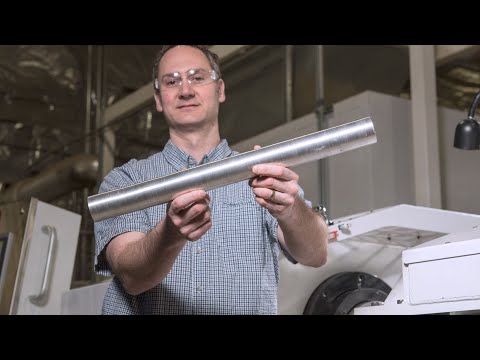
Maskinen som beskrivs i artikeln har ett roterande verktyg med en hastighet på 500 varv per minut och ett vridmoment på 2 200 pundfot. En hydraulpress kan trycka materialet mot verktyget med en kraft på 200 000 pundkraft.

Källa: Nature Communications
Aluminiumskrotet blandas med kopparpulver (Cu), zinkpulver (Zn) och band av magnesiumlegeringen ZK60. Bearbetningen fördelar ämnena och ger en höghållfast aluminiumlegering på några minuter. En motsvarande konventionell produktionskedja med smältning, gjutning och vidare bearbetning kan ta flera dagar.
Att undvika fullständig omsmältning kan minska energibehovet. Hur stor besparingen blir beror på processen och jämförelsealternativet; resultatet är inte en generell energiminskning på 50 procent för all metallåtervinning.

Källa: PNNL
Överlägsen struktur & prestanda
Mikroskopi visade en tydlig skillnad i materialstruktur. Det förädlade provet hade en genomsnittlig kornstorlek på 7,7 µm, jämfört med 43,1 µm i jämförelseprovet av återvunnen 6063-legering. Båda proverna hade framställts med friktionsextrudering.

Källa: Nature Communications
Analysen visade också Guinier–Preston-zoner och andra nanostrukturer i den förädlade legeringen. Sådana strukturer kan bidra till ökad hållfasthet.
I försöken ökade både sträckgränsen och brottgränsen med mer än 200 procent jämfört med det återvunna jämförelseprovet. Resultatet gäller de undersökta materialen och är inte en generell förbättring för alla återvunna metaller.

Källa: Nature Communications
Tillverkning av profiler, rör och andra metallprodukter i fast fas kan också öppna för nya legeringar som är svåra att framställa med traditionella smältprocesser.
Legering i fast fas är i teorin tillämplig på alla tänkbara metallkombinationer. Att tillverkningen sker helt i fast tillstånd innebär att vi kan börja överväga helt nya legeringar som vi tidigare inte har kunnat framställa.
Cindy Powell — vetenskaplig och teknisk chef för energi och miljö vid PNNL
Gå bortom återvunnet aluminium
Tekniken kan även undersökas för andra metaller som är svåra att sortera eller återvinna.
Den skulle kunna användas för legeringar med bättre egenskaper, exempelvis starkare fordonskonstruktioner eller produkter som kräver mindre material för samma funktion. Sådana användningar behöver valideras för respektive produkt.
Forskarna bedömer att principen också kan användas i andra tillverkningsprocesser i fast fas, exempelvis kallsprutning eller friktionsomrörningssvetsning & bearbetning.
”Vår förmåga att förädla skrot är spännande, men det som entusiasmerar mig mest med den här forskningen är att legering i fast fas inte är begränsad till aluminiumlegeringar och skrot som råvara.”
Cindy Powell — vetenskaplig och teknisk chef för energi och miljö vid PNNL
3D-utskrift i metall
Metoden skulle också kunna användas för att framställa råmaterial av hög kvalitet till 3D-skrivare för metall.
Genom att tillsätta bestämda mängder legeringsämnen kan sammansättningen anpassas till särskilda behov inom additiv tillverkning.
Hur egenskaperna överförs till en färdig 3D-utskriven produkt beror också på utskriftsprocessen. Vid metoder där matartråden smälts behöver den slutliga mikrostrukturen och hållfastheten undersökas på nytt.
”Det är svårt att få fram matartråd med anpassad sammansättning för trådbaserad additiv tillverkning. Legering i fast fas är ett utmärkt sätt att tillverka skräddarsydda legeringar med exakt sammansättning, exempelvis 2 procent koppar eller 5 procent koppar.”
Xiao Li — materialforskare vid PNNL
Aluminiumåtervinningsföretag
Radius Recycling
Nya återvinningsmetoder kan skapa möjligheter för etablerade företag att förädla mer material och konkurrera med primärproducenter. Nyttan beror dock på teknikens genomförbarhet, kostnad och kundernas krav.
Ökad materialåtervinning och elektrifiering av transporter och uppvärmning kan påverka efterfrågan på återvinningstjänster. En marknadsprognos som artikeln hänvisar till anger en ökning från 915 miljarder dollar 2024 till 1,29 biljoner dollar 2033, motsvarande omkring 3,9 procent per år. Det är en prognos, inte ett garanterat utfall.
Radius Recycling grundades 1906. Enligt uppgifterna i artikeln hade företaget över 3 500 anställda, mer än 100 anläggningar för metall- och bilåtervinning i USA och Kanada samt ett stålverk. Uppgifterna avser perioden då artikeln skrevs.

Källa: Radius Recycling
Företaget hanterar flera materialgrupper:
- Järnhaltiga metaller, exempelvis vanligt stål i metalltak, cyklar, bilar, hushållsapparater och andra produkter.
- Andra återvinningsflöden, bland annat aluminium, koppar, zink, rostfritt stål, blybatterier, ledningar, spolar, elmotorer och kylare. Rostfritt stål innehåller järn, även om det kan redovisas separat i kommersiell skrothantering.
Koppar och aluminium är viktiga material i företagets hantering av icke-järnmetaller.

Källa: Radius Recycling
Artikeln beskriver hur företaget fördelar kapital mellan utdelningar, hantering av skuldkostnader och investeringar i tillväxt, däribland två nya återvinningscenter på USA:s västkust. Den anger kvartalsutdelningar sedan börsintroduktionen 1993 och en direktavkastning på cirka 4,5 procent vid skrivtillfället. Direktavkastning och framtida utdelningar kan förändras.
Företaget kan vara relevant för investerare som undersöker återvinningsindustrin och den cirkulära ekonomin i Nordamerika. Bedömningen behöver även omfatta konjunkturkänslighet, metallpriser, skulder och utdelningarnas hållbarhet.
Studierreferens:
1. Wang, T., Li, X., Li, Z., et al. (2024). Upcycled high-strength aluminum alloys from scrap through solid-phase alloying. Nature Communications, 15, 10664. https://doi.org/10.1038/s41467-024-53062-2



