
Megaprojekt
Hyper‑Kamiokande: Japans gigantiska neutrindetektor

 Lägg till Securities.io bland dina föredragna källor på Google

Få en glimt av den mest undflyende partikeln
As fundamental physics advances, we are beginning to better understand the subatomic particles that make up our universe.
Trots detta finns fortfarande frågor utan svar, särskilt en förenad fysikteori som förenar Einsteins relativitet och kvantfysik. Den exakta naturen av antimaterie och gravitation är förmodligen den saknade nyckelbiten.
För att studera dem behövs en bättre förståelse av en undflyende partikeltyp som kallas neutrino. Detta kan snart uppnås tack vare en rad nya neutrinoexperiment.
Vi har tidigare behandlat två av dem: Jiangmen Underground Neutrino Observatory (JUNO) och Deep Underground Neutrino Experiment (DUNE).
Ett annat viktigt neutrino‑megaprojekt är det japanska Hyper‑Kamiokande, en efterträdare och uppskalad version av Super‑Kamiokande, ett tidigare experiment som har revolutionerat vår förståelse av neutriner.

Källa: Kamioka Observatory
Vad är neutriner?
Neutriner är elektriskt neutrala partiklar med en extremt liten massa, så liten att man länge trodde den var noll.
För närvarande vet vi inte varför neutriner har massa, förutom att det verkar fungera på ett annat sätt än för andra partiklar.
Det som gör neutriner unika är att de i princip är “spökpartiklar”, som knappt interagerar med annan materia. Detta beror på att neutriner bara interagerar med 2 av de 4 grundläggande krafterna i universum: gravitation och svag växelverkan.
Eftersom den svaga växelverkan har en mycket kort räckvidd och gravitation knappt påverkar de lågmassa neutrinerna, passerar neutriner vanligtvis genom materia utan att interagera eller bromsas. Som ett resultat färdas neutriner nästan med ljusets hastighet.

Neutriner är grundläggande partiklar som inte kan delas upp i mindre komponenter och finns i tre varianter: elektronneutriner, muonneutriner och taunutriner. För att komplicera saken ytterligare verkar neutriner regelbundet skifta mellan dessa tre varianter.
Övergången mellan alla tre varianterna av neutriner är kopplad till massan för varje neutrintyp och innehåller svar om den grundläggande naturen av materia och universum självt.

Och så finns antineutriner, antimaterieversionen, som är ännu mindre förstådda och som kommer att vara en viktig fokuspunkt för Hyper‑Kamiokande.
De flesta neutriner produceras av kärnreaktioner, från kärnfusioner i stjärnor till radioaktivt sönderfall i jordens kärna.
Trots sin undflyende natur anses neutriner vara den mest abundanta partikeln i universum. Ungefär tusen biljoner neutriner passerar genom våra kroppar varje sekund.
(Du kan lära dig mer om neutriner på den dedikerade webbplatsen “all things neutrinos” skapad av Fermilab).
Hyper‑Kamiokande‑design
Från Kamiokande → Super‑K → Hyper‑K
Hyper‑Kamiokande är arvtagare till Kamiokande och Super‑Kamiokande, de tidigare mindre versionerna av neutrindetektorer som byggdes på samma forskningsplats i Japan, respektive 1983 och 1996.
Kamiokande var den första observatoriet som upptäckte neutriner från en supernovautbrott och från vår sol, vilket skapade fältet neutrinoastronomi.
Super‑Kamiokande var ansvarig för upptäckten av neutrinooscillationer, vilket visade att neutriner har massa.
Kärnan i Hyper‑Kamiokande‑detektorn består av en cylindrisk tank med ett vattendjup på 71 m och en diameter på 68 m. Detta gör den till världens största underjordiska vattentank.
Varje iteration av konceptet har blivit större och tyngre, vilket har förbättrat kvaliteten på dess neutrindetekteringsförmåga. Till exempel använde Kamiokande 4 500 ton vatten, Super‑Kamiokande 50 000 ton, och Hyper‑Kamiokande kommer att använda 260 000 ton.

Källa: Hyper‑Kamiokande
På vattentankens vägg har 20 000 ultrahögkänsliga fotosensorer och 1 000 sammansatta ögon‑fotosensorer installerats för att upptäcka det mycket svaga Cherenkov‑ljuset som genereras i vattnet. Detta är cirka 4 × fler än i Super‑Kamiokande och 40 × fler än i Kamiokande.
Fotomultiplikatorrör är som sensorer (pixlar) i en ultrahögpresterande kamera. Tack vare detta är Hyper‑Kamiokande en gigantisk kamera som kan fånga även en enda foton. De är så känsliga att de skulle kunna fånga ljuset från en ficklampa på månens yta.
Dessa resultat uppnåddes tack vare en förbättrad fotosensordesign, som kan stå emot dubbelt så högt vattentryck och har hälften så mycket residual bakgrunds‑radioaktiv aktivitet som tidigare versioner.
Vatten‑Cherenkov: Omvandla spår till ljus
Det centrala konceptet i Kamiokande‑serien är “vatten‑Cherenkov‑detektorn”. Den detekterar ett svagt blått ljus som emitteras av laddade partiklar som färdas genom vatten snabbare än ljusets hastighet i vatten (vilken är lägre än i luft eller vakuum).
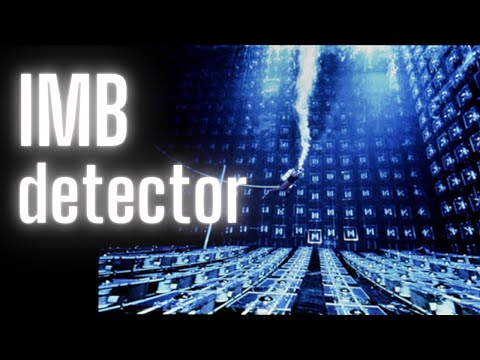
När en neutrino träffar atomerna i vattnet skapas laddade partiklar samt Cherenkov‑strålning i en konformad stråle längs deras bana.
Tids- och intensitetsinformationen i ljussignalerna används för att rekonstruera den ursprungliga partikelns egenskaper.
Gå under jord
Hyper‑Kamiokande är byggt under ett berg för att minska interferensen från andra partiklar än neutriner. Kosmiska strålar, radioaktivitet och annan interferens kan skapa liknande signaler som neutriner som slår mot vattenmolekylerna.
När man är under ett djupt lager av berg blir påverkan från dessa andra energikällor försumbar, vilket lämnar endast de undflyende neutrinerna som möjliga orsaker.

Källa: Hyper‑Kamiokande
Orsaken till den massiva vattenvolymen är att neutriner interagerar mycket sällan med materia. Så ju mer “reaktiv massa”, desto större chans att någon interaktion sker och kan detekteras.

Källa: Hyper‑Kamiokande
När en neutrino interagerar med vattnet kan den producera neutroner. Gadolinium‑atomerna fångar sedan dessa neutroner tack vare deras stora neutroninfångnings‑tvärsnitt, vilket avger en gammastrålning som kan detekteras.

Källa: Hyper‑Kamiokande
Gadolinium finns naturligt i japansk jord på en koncentration av cirka 3‑7 ppm, så projektet anses inte utgöra någon risk för föroreningar från vattenläckor.
J‑PARC‑stråle + naturliga källor
Förutom naturliga neutriner såsom atmosfäriska neutriner och solneutriner, kommer en högintensiv och högkvalitativ neutrinstråle från J‑PARC‑partikelacceleratorn i Tokai att användas.
Hyper‑Kamiokande förväntas observera 20 × så många neutriner som de tidigare experimenten efter ökningen av J‑PARC‑stråleffekten. Hyper‑Kamiokande och J‑PARC är separerade med 295 km (183 miles), ett avstånd som är tillräckligt långt för att studera övergången från en neutrintyp till en annan.

Källa: Hyper‑Kamiokande
Varje av Hyper‑Kamiokande‑detektorerna är indelad i en “Inner Detector” och en “Outer Detector”, som är optiskt separerade från varandra.

Källa: Hyper‑Kamiokande
Inner Detector är huvuddetektorn, medan Outer Detector har rollen att avvisa inkommande kosmiska‑strålnings‑muoner som utgör en del av bakgrunden i mätningarna av nukleon‑nedbrytningar och neutriner. Mer än 99,9 % av kosmiska muoner som når detektorn filtreras bort, efter att de redan kraftigt filtrerats av berget ovanför.
(För att lära dig mer om Hyper‑Kamiokande‑design, kan du också konsultera denna kompletta officiella 282‑sidiga designrapport).
Swipe för att rulla →
| Detektor | Medium | Massa / Storlek | Nyckelutrustning | Primära mål | Tidslinje |
|---|---|---|---|---|---|
| Kamiokande | Vatten‑Cherenkov | ~4,500 t; 16 m H × 15.6 m Ø | ~1,000 PMT‑er | Sol‑ och SN1987A‑neutriner | 1983–1995 |
| Super‑Kamiokande | Vatten‑Cherenkov | ~50,000 t; 41.4 m H × 39.3 m Ø | ~13k PMT‑er; **SK‑Gd** 0.01–0.03% | Neutrinooscillationer; SRN | 1996–present |
| Hyper‑Kamiokande | Vatten‑Cherenkov | ~260,000 t; ~71 m H × 68 m Ø | New ultra-sensitive PMTs; >99.9% muon veto | CPV, protonnedbrytning, sol/ SN, DSNB | Driftmål 2027; datainsamling 2027–28 |
Obs: Massa/storlek & PMT‑er och muon‑veto från Hyper‑K/SK‑sidor; SK‑Gd‑siffror från SK‑Gd‑dokument.
Hyper‑Kamiokande‑schema
The project was approved in 2020, and excavation of the tunnel was started in 2021, together with the mass production of photomultiplier tubes.
The detector’s main cave excavation was finished in juni 2025.

Källa: Hyper‑Kamiokande
Since then, the construction of the observatory itself has started, with the first observations expected for 2028.
It should be noted that while complex and very powerful, this design is ultimately now well understood, and is being built relatively quickly when compared to other fundamental physics megaprojects and next-generation telescopes.
Hyper‑Kamiokandes mål
The overarching goal of Hyper‑Kamiokande is to elucidate the history of the evolution of the Universe and the Grand Unified Theory of physics, which unified all fundamental forces of the Universe into one common equation, a situation that is thought to have briefly existed right 0.00000000001 seconds after the Big Bang.

Källa: Hyper‑Kamiokande
Sol‑ och supernovaneutriner — och sökningar efter mörk materia
Thanks to its greater mass and efficiency, Hyper‑Kamiokande will be able to detect a lot more neutrinos coming from our Sun and distant exploding stars.
By observing special types of neutrinos, it will be able to better understand the Sun’s fusion reactions and make the first observation of the higher-energy HEP neutrino flux.
Supernovae are the other big source of neutrinos in the sky, creating massive bursts when they explode. On 23 februari 1987, Kamiokande observed neutrinos from a supernova explosion that occurred in the Large Magellanic Cloud (MCLOUD.BO ).

Källa: Shio’s HP
Unfortunately, no supernova explosions occurred during the experiences with Super‑Kamiokande.
Thanks to a greater detection range, Hyper‑Kamiokande is a lot more likely to catch supernova explosions. If a supernova occurs in our galaxy (10kpc), Hyper‑Kamiokande will be able to detect approximately 50,000 neutrinos.
This should give scientists a clue not only about the detailed mechanisms of supernova explosions, but also to further elucidate the nature of neutrinos.
Hyper‑K and DUNE are almost perfectly complementary in their sensitivity to supernova neutrinos, with DUNE detecting νe (via scattering off argon) and Hyper‑K ν̅e (via inverse beta decay).
Hyper‑Kamiokande might even be able to detect the diffuse supernova neutrino background, coming from very distant supernova explosions that have accumulated a neutrino flux over the entire history of the Universe.
These specific radiations will especially be detected thanks to the addition of gadolinium to the detector (inverse beta decay, instead of just muon decays neutrinos).
Lastly, dark matter could also be responsible for the production of neutrinos. So if such a neutrino source is detected at a place with high dark matter concentration, like the center of the galaxy, it could help elucidate the nature of dark matter.
Protonnedbrytning‑sökningar
The occasional nedbrytning av protoner into lighter subatomic particles, such as a neutral pion and a positron, is something physicists have tried to prove the existence of and measure since the construction of the original Kamiokande.
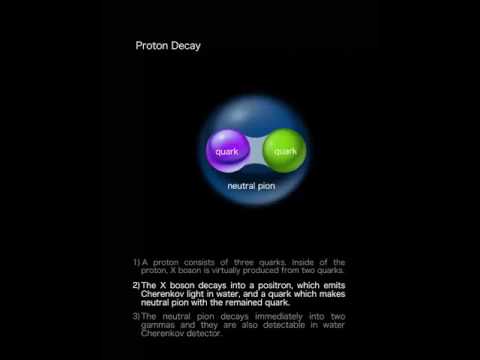
Specifically, Hyper‑Kamiokande will be able to detect the 2.2 MeV gamma ray from neutron capture on hydrogen, which will be a distinct detection event from the one caused by neutrinos.
If the detector measures proton decay, it will not only prove it happens, but help estimate the rate of this decay, which has been revised upward when none was detected by Super‑Kamiokande, as well as how they decay.
If still nothing is detected, this would force physicists to find out why protons decay even less than previously thought, or maybe not at all.
No one knows the answer to when proton decay can be observed or whether it ever really breaks down in the first place. However, we cannot move forward without actually conducting the experiment.
I believe that protons decay. We hope that readers will look forward to the day when proton decay is discovered.
Dr. Masato Shiozawa, the co-spokesperson of Hyper‑Kamiokande.
CP‑brott: Varför materia vann
At the origin of the Universe, physicists think that the same amount of matter and antimatter was created.
Neutrino oscillations could be different from antineutrino oscillations, a hypothetical phenomenon called CP‑brott, or the breakdown of Charge conjugation-Parity (CP) symmetry.

Källa: Hyper‑Kamiokande
CP‑brott har redan bekräftats för kvarkar (beståndsdelarna i protoner och neutroner). Detta är dock bara en biljondel av den skillnad som behövs för att skapa det nuvarande universum.
The neutrinos and antineutrinos created in the J‑PARC particle accelerator will be key for this experiment.
Hyper‑Kamiokande plans to increase the intensity of this J‑PARC beam by a factor of 2.5 compared to Super‑Kamiokande, to reduce errors due to insufficient data and to increase the number of measurements to further improve reliability.
It is expected to be possible to determine whether the CP symmetry is broken or not for neutrinos in 10 years, with results in the 2030s.
Slutsats
Neutrino observatories like Hyper‑Kamiokande, DUNE, and JUNO are likely going to be very important science experiments to finally solve questions regarding physics that have been unanswered for decades, and have blocked the development of further progress in theoretical physics.
While this might sound a little far from our daily concerns, many of our cutting‑edge technologies actually need a better understanding of neutrinos to progress.
For example, a quantum computing chip (Majorana-1) built recently by Microsoft (MSFT )
literally created a new state of matter (topoconductors) using a Majorana particle, a type of particle that is its own antiparticle.
In the same way, better understanding the Sun’s fusion reaction could help us unlock artificial fusion.
So a better understanding of neutrinos, antimatter, or dark matter is not just a giant science project, but can have very direct applications in the development of new world‑changing technologies like quantum computing or fusion power plants.
Investera i neutrinforskning
1. Microsoft
MSFT Prisdiagram
Microsoft is one of the world’s largest tech company, having a quasi monopoly on operating systems, and a very strong position on B2B software, through its Office365 software, its Azure cloud computing systems, LinkedIn social media, as well as a strong presence in video game (Xbox and many of the world’s largest videogame studios), ads, and programming tools (GitHub).
The company is also very active in AI, notably with the deployment of its Copilot AI throughout all its products. Microsoft AI efforts were initially through a collaboration with OpenAI, and now it is more on its own.

Källa: Microsoft
Microsoft is also active in quantum computing, with the stunning announcement of its Majorana-1 chip.
When cooled to near absolute zero and tuned with magnetic fields, these devices form topological superconducting nanowires, containing so-called Majorana Zero Modes (MZMs) at the wires’ ends.

Källa: Microsoft
(You can read more about all the business activities and opportunities of Microsoft in our dedicated investment report on the company.)
2. Neutrino Energy
While rich in potential future applications, neutrino science seems far from being directly used for commercial applications.
This could be changing, according to a very ambitious German private startup, Neutrino Energy.
The company is exploring the very novel concept of neutrinovoltaics, or the generation of electricity from the constant flux of neutrinos around us. How this works is by using a layer of graphene, a 2D material made of carbon (follow the link for a complete explanation of 2D materials like graphene or goldene).
This method aims to convert the constant motion of graphene atoms, influenced by surrounding radiation and particles like neutrinos, into usable electricity. While promising in theory, the process is still unproven and remains highly experimental.. A similar phenomenon is happening to graphene, with neutrinos “pushing” the atom nuclei, as with argon atoms in the DUNE neutrino detector.
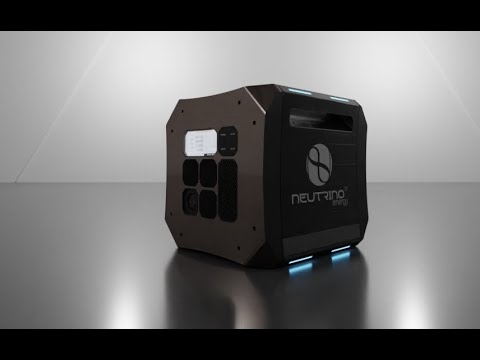
The company has been announcing its upcoming first prototype, called the Powercube, which is supposed to demonstrate the technology developed with the assistance of AI.
The company has also been working with the Centre for Materials for Electronics Technology (CMET) in India, aiming “to create a self‑charging electric vehicle powered by neutrinovoltaic technology”.

It is hard to tell how close to any commercialization the concept is, as it seems that, for now, it is just that, a concept with little reveal about the potential power output or economics.
It is also so extraordinary in its claim of a fuel‑less infinite source of energy that a heavy dose of skepticism is in order, especially considering the very low level of interaction of neutrinos and other forms of matter.
But this is definitely the closest to a “neutrino company” currently on the market, with the risk of a deceptive presentation of the technology’s potential to be kept in mind by potential investors.



