
Megaprosjekter
Gordie Howe Bridge: Infrastruktur Investeringsspill

 Legg til Securities.io blant dine foretrukne kilder på Google

Internasjonal handel er avhengig av god infrastruktur for å sikre jevn og effektiv bevegelse av både varer og mennesker. Dette skjer ofte via jernbane eller havner, spesielt for råmaterialer og tyngre varer. Imidlertid er gode veiforbindelser like viktige, spesielt når det gjelder utviklede land med en lang landegrense.
Dette er tilfelle ved Canada‑USA‑grensen, hvor 25 % av all varehandel mellom USA og Canada etter verdi passerer kun én bro, den private eide Ambassador Bridge. Denne broen håndterer 60 % til 70 % av den kommersielle lastebiltrafikken i regionen.
Dette handelsområdet som forbinder Michigan med Ontario er økonomisk svært viktig, spesielt for å opprettholde forsyningskjedene i bilindustrien i USA og Canada. I tillegg pendler opptil 5 000 kanadiere daglig til jobb i nabobyen Detroit.
“Over 100 milliarder dollar i handel foregår over Detroit‑Windsor‑grensen hvert år. Den nye spennet er grunnleggende for vår delstat og lands fremtid og vil føre til nye investeringer, samt flere og bedre jobber og muligheter for våre innbyggere.” Doug Rothwell, president og administrerende direktør for Business Leaders for Michigan
Ambassador Bridge ble bygget i 1929. I de senere år har den blitt privatisert, noe som har ført til kritikk av at slik infrastruktur med et kvasi‑monopol på den lokale Canada‑USA‑handelen ikke bør være i private hender.
Denne debatten vil nå bli løst gjennom byggingen av Gordie Howe International Bridge. Broen vil gi en ubrutt motorveiflyt, en stor oppgradering fra Ambassador Bridge. Den vil også bli verdens lengste kabelstøttebro, som krysser vann uten tårn eller peler i vannet, med en hovedspenn på 853 meter (2 799 fot).
Den vil også tilføre sårt tiltrengt ekstra kapasitet og konkurranse til transporten mellom USA og Canada i området.
Sammendrag:
- Redundans for en kritisk handelsåre: Detroit–Windsor er en viktig fraktkorridor mellom USA og Canada, historisk dominert av 1929‑året Ambassador Bridge.
- Moderne motorvei‑til‑motorvei‑flyt: Gordie Howe International Bridge knytter I‑75 direkte til Ontarios Highway 401, og reduserer friksjon på overfladiske veier for lastebiler og pendlere.
- Nær ferdigstillelse: Byggingen startet i 2018, dekksammenkoblingen ble fullført i 2024, og prosjektet sikter mot åpning i 2026 med bompengeinnkreving og systemtesting på gang.
- Investeringsvinkel: Eksponeringen er indirekte – gjennom entreprenører og infrastrukturoperatører (f.eks. Aeon) i stedet for å kjøpe selve broen.
Hvorfor Gordie Howe-broen var nødvendig
Ambassador Bridge sin arv
Ambassador Bridge ble bygget av private selskaper som ønsket å forbedre Canada‑USA‑handelsforbindelsen, etter at mange offentlige prosjekter hadde mislyktes siden 1880‑tallet. På tidspunktet for fullføringen var den den lengste hengebroens sentrale spenn i verden.
Som følge av dette har broen alltid vært et privat foretak, først som Detroit International Bridge Corporation, deretter delvis eid av Warren Buffetts Berkshire Hathaway (BRK.A ) (BRK-B ), og senere av den lokale lastebilentreprenøren Manuel Moroun, som til slutt privatiserte broen.
Den er som mange andre viktige infrastrukturer i USA og Canada: imponerende, men viser sin alder på nesten et helt århundre. Den mangler særlig sammenkoblinger som direkte forbinder I‑75 og I‑96 motorveiene. I tillegg til alderen har den blitt beskrevet som «forfallende» allerede i 2015, og generelt har eieren blitt anklaget for å ikke vedlikeholde den ordentlig.

Ambassador Bridge-eier Manuel Moroun ble tilbudt 2 milliarder dollar i 2009 av den kanadiske regjeringen for broen, men nektet å selge den for mindre enn 3 milliarder dollar.
Bygge neste generasjon
Det er i denne konteksten av den stadig utilstrekkelige tjenesten som Ambassador Bridge leverer at Gordie Howe International Bridge ble tenkt ut. Den ble først forestilt på 2000‑tallet, med tidlige tillatelsesarbeider som startet tidlig på 2010‑tallet.
Til tross for motstand og ulike søksmål fra Moroun angående konkurransen den nye broen ville påføre Ambassador Bridge, fortsatte det nye prosjektet.
Forhåpentligvis kan den også bidra til å opprettholde nære forhold mellom de to landene, til tross for politiske spenninger.
“De kanadiske og amerikanske medlemmene av International Authority ønsker i dag velkommen til grunnsteinsutlegget for oppstart av avansert bygging i Michigan. Dette er ikke bare en viktig milepæl for Gordie Howe International Bridge, det representerer en betydelig økonomisk mulighet for lokalsamfunn på begge sider av grensen.” Kristine Burr, styreleder, Windsor‑Detroit Bridge Authority, International Authority
Broen vil eies likt av Canada og delstaten Michigan, og har kostet 6,4 milliarder dollar for Canada. Til dags dato er prisen på bompengebilletter ennå ikke kunngjort.
Broen er oppkalt etter den kanadiske ishockeyspilleren Gordie Howe, som hadde en karriere på 25 år med Detroit Red Wings.
Byggingen startet i 2018, brodekket ble ferdigstilt i 2024, og broen forventes å åpnes i 2026, etter at bygging og idriftsetting nådde 98 % ferdigstillelse.
Den er for tiden i fasen med belysning og bompenge‑testing, og beveger seg mot den offisielle storslåtte åpningen.

“Denne broen, sammen med den tilstøtende infrastrukturen, vil koble direkte fra Interstate‑75 til Ontarios motorveisystem, kjent som Highway 401, uten at lastebiler eller biler må stoppe ved trafikklys underveis.” Heather Grondin, chief relations officer for Gordie Howe International Bridge.
Gordie Howe International Bridge etter tallene
Sveip for å bla →
| Måling | Ambassador Bridge | Gordie Howe International Bridge | Hvorfor det er viktig |
|---|---|---|---|
| Åpnet / Era | 1929 | Forventet åpning 2026 | Alder korrelerer med vedlikeholdsbyrde og funksjonelle designbegrensninger. |
| Eierskap | Privat | Canadas regjering (via WDBA) | Offentlig eierskap endrer insentiver og langsiktig korridorplanlegging. |
| Fraktrolle | Historisk dominerende | Legger til redundans + kapasitet | Reduserer risikoen for enkelt‑punkt‑svikt i bil‑/industrielle forsyningskjeder. |
| Veiforbindelse | Friksjon på overfladisk vei | Motorvei‑til‑motorvei (I‑75 ↔ Hwy 401) | Raskere, mer forutsigbar transport = lavere logistikkostnader og tomgang. |
| Kjørefelt | (varierer etter operasjoner) | 6 kjørefelt (3 i hver retning) | Gjennomstrømningskapasitet + hendelses‑resiliens. |
| Grensebehandlingsomfang | Eldre fasiliteter | Formål‑bygde innreiseporter (Canada ~130 acre; USA ~167 acre) | Flere kjørefelt + moderne skanning støtter gjennomstrømning uten å gå på kompromiss med sikkerhet. |
| Bompengeinnkreving | Tradisjonell bompengeinnkreving | Multi‑Lane Free‑Flow (MLFF) + tradisjonell | Reduserer stopp‑og‑gå‑køer og forbedrer pålitelighet i reisetid. |
| Overvåking / sikkerhetsteknologi | Konvensjonell | ITS‑overvåkning + fiberoptisk strukturell helsesensor | Forbedrer vedlikeholdsplanlegging, oppetid og hendelsesrespons. |
Totalt er broen 2,5 km lang (1,55 miles) med en 853‑meter spenne over vannet (2 799 fot).
216 stay‑kabler holder broen hvert 15 meter (49 fot), hver holder et 300‑tons brodekksegment. Kablene kobler dekket til de 220‑meter høye tårnene, som er ment å gjenspeile kurven på en hockeykølle i midt‑slapshot.
Broen vil ha 6 kjørefelt, 3 i hver retning. Den 37,5 m (123 fot) brede broen inkluderer også en flerbrukssti som kan brukes av fotgjengere og syklister. En betongbarriere på 1,2 meter/4 fot skiller syklister og fotgjengere fra kjøretøytrafikk.
Broen er også tenkt som et visuelt landemerke, med et dynamisk nattlig utseende, takket være 6 000 programmerbare LED‑armaturer på tårnene, kablene og dekket.

En vegg laget av stolper på 2,9 meter/9,5 fot høyde, totalt 34 000, sikrer reisendes sikkerhet ved å være både ekstremt motstandsdyktig (inkludert mot potensielle kjøretøykollisjoner) og uklatrbar. De er formet som en hockeykølle, som en referanse til hockeyspilleren som ga broen sitt navn. Et mellomrom på 0,15 meter/0,5 fot mellom stolpene opprettholder klare siktlinjer.

Siden dette ikke bare er en bro, men også en grensekryssing, har begge sider bygget omfattende infrastruktur for å håndtere nødvendige kontroller. På stedet brukes fullskala avbildning for å sjekke lastebiler så raskt som mulig.
Den kanadiske innreiseporten er omtrent 130 acre med 11 bygninger, 16 bompengefelt og 24 primære inspeksjonsfelt. Den amerikanske siden er omtrent 167 acre med 13 bygninger og 36 primære inspeksjonsfelt.
Den vil kobles til Michigan‑interutvekslingen som fikk tillegg av 4 nye veibroer, 5 nye gangbroer og 4 inter‑utvekslingsramper.
Byggingen skapte 2 500 jobber, og broen forventes å operere i minst 30 år uten større renovering.
Teknologien bak Gordie Howe International Bridge
Broen vil inkludere et Multi‑Lane Free‑Flow (MLFF) bompenge‑system. Denne elektroniske bompenge‑teknologien bruker RFID og andre deteksjonssystemer for å muliggjøre registrering og betaling av bompengeavgiften av et kjøretøy uten å måtte stoppe. Selvfølgelig vil tradisjonell bompengeinnkreving også fortsatt være tilgjengelig.
Dette vil være spesielt viktig for Gordie Howe International Bridge, ettersom den vil ha en stor andel av den totale trafikken bestående av lastebilfrakt og vanlige daglige pendlinger.
Trafikkovervåkingssystemer og automatisk oppdagelse av lastebilbrudd vil også bli integrert i broens trafikkstyringssenter, samt Intelligent Transport Systems (ITS)‑video som vil fange uautorisert bevegelse i nærheten av lastebiler.
Til slutt vil broens strukturelle helse kontinuerlig bli overvåket, ikke bare visuelt, men med integrerte høy‑presisjons fiberoptiske struktursensorer.
Fiberoptiske sensorer overgår tradisjonelle sensorer i strukturell helsesporing (SHM) på grunn av deres høye følsomhet, motstand mot elektromagnetisk interferens, og evne til å levere nøyaktige, sanntidsdata over lange avstander.
Investere i Gordie Howe International Bridge
Aecon
ARE Prisdiagram
Det nordamerikanske infrastrukturselskapet Aecon har spilt en sentral rolle i byggingen av Gordie Howe International Bridge. Det var den kanadiske entreprenøren for prosjektet, og overvåket de fleste kritiske trinn, fra bygging av fundamentpæler til montering av brodekket.
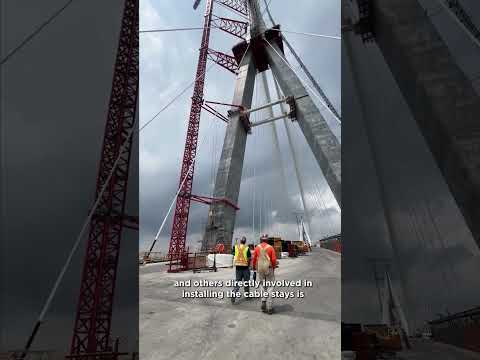
“Vi er nå en del av en eksklusiv gruppe som har installert de lengste stay‑kablene på kontinenten. Vi har et svært dedikert team som kontinuerlig jobber for å nå våre mål og overvinne utfordringer.” Ozi Noel Jr. fra Aecon, Cable Stay Engineer.
Selskapet har vært involvert i utallige infrastruktur‑megaprosjekter, fra store broer til tunneler, vannkraftdammer, kjernekraftverk, bytransport og industrielle anlegg.
I sine byggeaktiviteter representerer kjerne- og sivilingeniørarbeid de største aktivitetene, etterfulgt av verktøy og industrielle anlegg.

Source: Aecon
Selskapet driver også konsesjoner av store infrastrukturprosjekter, og vil eie en 20 % andel i Gordie Howe International Bridge. Dette inkluderer 50,1 % av Bermuda LF Wade International Airport og 50 % av Cyril E. King Airport og Henry E. Rohlsen Airports.

Source: Aecon
Selskapet har allerede en svært stabil pipeline av kommende prosjekter, med de fleste lokalisert i Nord-Amerika. Totalt er selskapets prosjektbacklog verdt 10 milliarder dollar.

Source: Aecon
Selskapet genererte 4,2 milliarder dollar i inntekter i 2024, og er kjent blant investorer for å øke sine utbytter med 7 % CAGR.
En tredje aktivitet for selskapet er virksomheten som et verktøysselskap. Det leverer rørledninger, elektrisk kraftnett og telekommunikasjonsnett, hovedsakelig i Canada. Verktøygrenen i selskapet eies med 27,5 % av de store infrastruktur‑ og investeringsfirmaene Oaktree Capital Management, L.P. Med nesten 1 milliard dollar i tilbakevendende inntekter det siste året, blir dette en betydelig del av selskapet.
Alt i alt er Aecon et selskap sentrert rundt infrastruktur og store byggeprosjekter, med den ekspertisen som deretter brukes i ulike nisjer som verktøy, kjernekraftverk, sivilingeniørarbeid osv.
Dette gjør det til et godt selskap å satse på en gjenoppliving av infrastrukturutgifter i Nord-Amerika, drevet av et politisk mål om re‑industrialisering og i den bredere konteksten av de‑globalisering.
Investor‑innsikter:
- Tema å følge: Nordamerikansk re‑lokalisering + modernisering av infrastruktur støtter flerskiftige sivilbygge‑backlogs.
- Hva som er viktig økonomisk: konvertering av backlog, marginutførelse på megaprosjekter, og eventuelle konsesjonsrelaterte tilbakevendende kontantstrømmer.
- Nøkkelrisiko: byggesøksmål/overskridelser og tidsforsinkelser kan komprimere marginer selv når inntektsutsiktene er høye.
- Valgfritt tillegg: Når bompengepriser kunngjøres, fungerer det som en katalysator for å estimere langsiktige korridorekonomi (trafikkblanding, elastisitet, avledning fra Ambassador).
Siste Aecon (ARE) aksjenyheter og utviklinger
