
Energi
Generering af strøm ved hjælp af Jordens omgivende termiske stråling

 Føj Securities.io til dine foretrukne kilder på Google

Udnyttelse af temperaturgradienter
De fleste af vores energiproduktionsmetoder er afhængige af en temperaturforskel. Denne skabes ofte ved at opvarme en del gennem forbrænding af fossile brændstoffer (kul, olie, gas), kernefission, boring dybt under jorden (geotermisk), eller ved at koncentrere sollys (koncentreret sol).
Denne termiske forskel bruges derefter til at opvarme vand eller en anden væske (såsom smeltet salt) for at aktivere en turbine, der genererer elektricitet.
Så selvom direkte indfangning af sollys (fotovoltaik) eller naturlige bevægelser (vindkraft, vandkraft, tidevand) også er en mulighed, er temperaturgradienter den mest almindelige form for energiproduktion, fra dampmaskinens tid til i dag.
En anden termisk gradient, der teoretisk kunne udnyttes, er forskellen i temperatur mellem Jorden og det ydre rum.
Jordens gennemsnitlige overfladetemperatur er cirka 15 °C (59 °F), mens det ydre rum ligger på −270 °C (−454 °F). Denne enorme teoretiske termiske forskel har længe fascineret forskere, men at udnytte den er langt fra trivielt.
Udsendelse af varme til rummet
For termisk stråling ved bølgelængder mellem 8 og 13 μm er atmosfæren fuldstændig gennemsigtig og tillader Jordens varme at slippe ud i rummet. Dette er den primære mekanisme, der gør det muligt for vores planet at køle ned efter at have modtaget energi fra Solen.
Teoretisk set kunne en motor, der kan udsende ved denne bølgelængde, eller en tæt nok frekvens, udsende energi ind i den køligere himmel (sammenlignet med jorden) og generere elektricitet fra den omgivende temperatur.
Faktisk er denne metode allerede blevet demonstreret ved brug af enten lav-båndbredde halvlederkomponenter eller termoelektriske generatorer. Men disse metoder er ikke praktiske for økonomisk energiproduktion på grund af deres lave effektudbytte og behovet for sjældne jordarter.
Men forskerne Tristan J. Deppe og Jeremy N. Munday, der arbejder ved University of California, kan have fundet et alternativ ved brug af Stirling-motorer. De offentliggjorde deres arbejde i den prestigefyldte videnskabelige tidsskrift Science1, under titlen “Mechanical power generation using Earth’s ambient radiation”.
Stirling-motorer forklaret
Mens de fleste temperaturforskel bruges til at generere strøm med turbiner drevet af damp, er et alternativ Stirling-motoren.
Disse motorer skaber en mekanisk bevægelse, når den ene side af motoren er varmere eller koldere end den anden. I modsætning til forbrændingsmotorer eller turbiner kræver den ingen forbrænding af materiale.
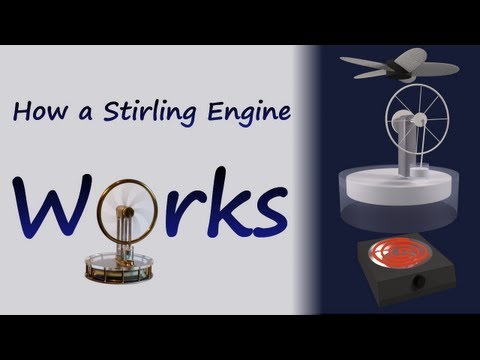
Den mekaniske bevægelse kan derefter omdannes til elektricitet med en simpel alternator.
Stirling-motorer er bemærkelsesværdigt holdbare, selvom de er relativt tunge, hvilket begrænser deres anvendelse til transport.
Deres udbytte er også lidt lavere end turbiner, hvilket forklarer, hvorfor de ikke er almindeligt brugt i termiske eller nukleære kraftværker. De kan dog fungere selv med en lille temperaturgradient, mens turbiner kræver flere hundrede grader forskel mellem varmt og koldt.
Hvordan Stirling-motorer indfanger omgivende termisk energi
Det grundlæggende koncept for den omgivende termiske energiproduktion, der anvendes her, har 2 komponenter:
- Motorens bundplade er i direkte termisk kontakt med Jordens overflade.
- Toppladen er optisk koblet til himlen.
For at styre udsendelsen af varme til luften for den øverste del af motoren anvendes en infrarød‑emitterende maling.

Kilde: Science Advances
Denne metode udnytter den lille temperaturforskel mellem jord og luft, især om natten, som kun en Stirling-motor kan indfange til bevægelse/energi.
Vores proof‑of‑concept‑demonstration kobler radiativt motoren til himlen og leverer >400 mW/m² kontinuerlig kraft på Jorden gennem natten.
Test i virkelige forhold
Metoden blev testet i Davis, Californien, med temperaturforskelle på 10 °C (18 °F) og en 1‑Hz rotation af motorens svinghjul. Testene blev udført året rundt, hvor størstedelen af perioden fungerede, selvom vinter med regn og skyer var mindre effektiv. Mere end den absolutte temperatur er det luftens fugtighedsindhold, der påvirker systemets effektivitet mest.

Kilde: Science Advances
I høj‑fugtighedsforhold reduceres forskellen mellem dag‑ og nattemperatur på grund af høje vandkoncentrationer i atmosfæren, hvilket mindsker den radiative kølekraft og påvirker det samlede energipotentiale.
Kortlægning af omgivende energipotentiale
Ved hjælp af deres eksperimentelle resultater gik forskerne videre med at modellere de områder med det bedste potentiale for deres opfindelse.
De trak nogle få konklusioner:
- Effekttettheden er højest i tørre regioner og bjergkæder, hvor den nedadgående stråling er lavest.
- Områder med højere fugtighed har lavere energipotentiale.
- Energiproduktion er næsten nul i kraftigt skovklædte regioner, hvor den øgede fugtighed forhindrer køleren i effektivt at udlede varme til himlen.
Ved hjælp af disse data lavede de et kort, der viser de områder på Jorden med det bedste potentiale for at implementere omgivende radiative Stirling‑motorer.

Kilde: Science Advances
De regioner med det bedste potentiale er:
- Saharas Afrika.
- Den eurasiske steppe.
- Antarktis om sommeren.
- Indlandsområder på den amerikanske vestkyst.
- Andesbjergene
- Det tibetanske plateau.
Fremtidige forbedringer
Swipe for at rulle →
| Parameter | Ambient Radiative Stirling | Typisk sol‑PV |
|---|---|---|
| Effekttethed | 0,4 W/m² om natten | 150–220 W/m² i sollys |
| Ideelle betingelser | Tør luft, klar himmel, nat | Direkte sollys |
| Nødvendige materialer | IR‑emitterende belægninger, Stirling‑motor | Silicium eller tynde film‑materialer |
| Bedste anvendelsestilfælde | Affaldsvarmeudnyttelse & off‑grid natkraft | Elektrisk produktion om dagen |
Dette arbejde var i høj grad et proof‑of‑concept, så flere designelementer kunne forbedres.
Det første element ville være at forbedre den radiative kølekraft. Dette kunne opnås ved at bruge et skræddersyet radiativt kølematerial i stedet for kommerciel maling.
Det andet element ville være at øge den ledende kobling til Jorden, for eksempel ved at bruge en større kontaktflade og materialer med højere termisk ledningsevne som kobber.
En større motor kunne også øge den samlede effektudgang og effektivitet. Brug af helium eller hydrogen i stedet for luft i Stirling‑motorens stempel kunne også reducere friktion og øge udbyttet.
Endelig genererer vores industrielle civilisation betydelig affaldsvarme fra drivhuse, fabrikker, HVAC‑systemer og opvarmede boliger om vinteren, blandt andre kilder. Dette kunne øge temperaturforskellen mellem jord og himmel markant og booste energiproduktionen.
I praksis kan en temperaturforskel på 35‑40 °C (72 °F) generere næsten 4 gange så meget kraft sammenlignet med en forskel på 15 °C.

Kilde: Science Advances
Mod “Omvendte solpaneler”
Da dette design fungerer bedst om natten (selvom det også kunne køre om dagen med designændringer), synes det at være et godt supplement til fotovoltaiske solpaneler.
Det kunne også være en fremragende måde at maksimere udnyttelsen af affaldsvarme, uanset om den stammer fra andre former for energiproduktion, industrielle processer, varme bygninger (kontorer, lejligheder, huse) eller drivhuse.
Endelig kunne det designes som en ekstra kølemetode til installation på bygninger, hvor systemet absorberer varme og stråler den tilbage ud i rummet.
Hvis det implementeres i tilstrækkelig stor skala, kunne det endda generere strøm, mens det reducerer Jordens samlede indfangede varme, hvilket er ret unikt sammenlignet med alle andre energiproduktionsmetoder.
Stirling-motorvirksomheder
Aerojet Rocketdyne og L3 Harris: Ledende innovatører inden for Stirling-motorer
LHX Prisdiagram
Stirling-motorer er en nicheanvendelse inden for energiproduktion, men udgør stadig et marked på 1,17 mia. $ i 2025, forventet at vokse med 8,5 % CAGR indtil 2029 og nå 1,62 mia. $. Få virksomheder i sektoren er dog børsnoterede.
Aerojet Rocketdyne , en gren af rum‑ og forsvarsentreprenøren L3 Harris, samarbejder med partnere som NASA og SunPower Inc om at udvikle Stirling‑motorer til rumapplikationer.
Aerojet Rocketdyne blev opkøbt af L3 Harris i juli 2023 for 4,7 mia. $, tilføjende en 4th afdeling til virksomheden.
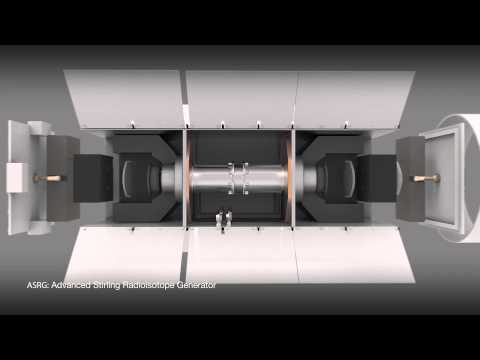
Sunpower Inc (for at undgå forveksling med Sunpower, solcellevirksomheden (SPWR )) er opfinder af et avanceret Stirling‑motor‑design: Free‑Piston Stirling Engine (FPSE). FPSE kan både producere kraft fra varme og køle ved brug af kraft.
Denne teknologi er især anvendelig til Radioisotope Power Systems (RPS), som udnytter den naturlige nedbrydning af radioaktivt materiale til at generere varme, som Stirling‑motoren omdanner til brugbar elektrisk energi. Et stort projekt for en sådan motor ville være at forsyne udstyr på Månen eller endda en lille månbasis.

Kilde: NASA
NASA har i lang tid været interesseret i Stirling‑motorer på grund af deres pålidelighed, vedligeholdelsesfri drift og lange levetid, især med den avancerede Stirling Radioisotope Generator (ASRG).
Udover måne‑Stirling‑motorer er L3 Harris en stor militær‑ og rumfartsvirksomhed. Den genererede 60 % af sine indtægter fra den amerikanske forsvarsminister (DoD), 20 % fra internationale forsvarsordrer og 20 % fra civile industrier.
Bemærkelsesværdigt kontrollerer Harris 45 % af det globale marked for taktiske radioer, flere gange større end den næste konkurrent.
Vedrørende ubemandede systemer har L3Harris en vertikal start‑drone, FVR‑90, den marine autonome båd Shadowfox (13 m lang), familien af undervandsdroner Iver, og er hovedentreprenør for den amerikanske flådes første store kontrakt for Medium Unmanned Surface Vehicle (MUSV).
Aerojet er også udvikler af hypersoniske missiler og andre missilsystemer.
Samlet set er L3 Harris en førende teknologivirksomhed inden for autonome systemer, raketvidenskab og rumfarts‑energisystemer, med solid teknisk ekspertise for både civile og militære kontrakter.
Seneste L3 Harris (LHX) aktienyheder og udviklinger
Studie refereret
1. Tristan J. Deppe and Jeremy N. Munday. Mekanisk energiproduktion ved hjælp af Jordens omgivende stråling. Science Advances. 12. nov 2025. Vol 11, Issue 46. https://www.science.org/doi/10.1126/sciadv.adw6833



