
Megaprojeler
Site C Barajı: Kanada’nın En Cesur Temiz Enerji Projesi

 Securities.io sitesini Google'daki tercih ettiğiniz kaynaklara ekleyin

Site C Barajının Mühendislik Zorlukları
Some megaprojects are remarkable for the extreme precision of their technology, like the James Webb Uzay Teleskobu or the CERN parçacık hızlandırıcısı. Others try to bring mankind to new frontiers, like the Artemis Görevleri.
Ve diğer mega projeler ise sadece girişimin muazzam ölçeğiyle dikkat çeker. Bir örnek, kuzeydoğu British Columbia, Kanada’da yeni açılan “Site C” hidroelektrik barajıdır.

Kaynak: Engineering Source Record
Bu, bugüne kadar Kanada’nın en büyük altyapı projelerinden biridir ve 1,3 milyar dolar değerinde sivil inşaat yapılmıştır. Baraj, tabanda 500 m genişliğe, üstte ise sadece 10 m genişliğe sahiptir. Toplamda projenin maliyeti 11,8 milyar doları aşmıştır.

Kaynak: Acciona
Kapsamının yanı sıra, proje Kanada dağlarının sert kış koşulları ve katı çevre ve güvenlik düzenlemeleriyle de mücadele etmek zorunda kaldı.
Sonuç olarak, bir nükleer santral ya da birkaç fosil yakıt santrali kadar enerji üretecek, ancak karbon emisyonu ya da nükleer atık üretmeyecek.
Peace Nehri Hidroelektrik Projeleri
Peace Nehri Havzasının Hidrolojisi
The Peace River is an almost 2,000-kilometre-long (1,200 miles) river in the Rocky Mountains of British Columbia.
The Peace River is a tributary of the Mackenzie River, part of the Finlay–Peace–Slave–Mackenzie river system, the 13th longest river system in the world.

Kaynak: Geology Page
Site C, Peace Nehri üzerindeki üçüncü barajdır ve orta yirminci yüzyılda önerilen dört büyük barajdan biridir.
The first two were built in 1968 and 1980, respectively, and were named the W. A. C. Bennett Dam and the Peace Canyon Dam.
The Bennett Dam has a capacity of 3.9GW and is the third-largest artificial lake in North America. The Peace Canyon Dam has a capacity of 700 MW.

Kaynak: NiCHE
Both dams are under the management of BC Hydro (British Columbia Hydro and Power Authority). The electric utility is the main electricity distributor of the state, serving more than 4 million customers, 95% of the covered population.
In total, BC Hydro has completed 6 large hydropower projects between 1960 and 1980. To this day, the vast majority of BC Hydro power production comes from clean or renewable sources.
The fourth proposed dam on the British Columbia segment of the Peace River, Site E, is near the BC–Alberta border. The project was cancelled from the planning process during hearings in 1982.
Site C Projesinin Yeniden Canlandırılması ve Planlama Zaman Çizelgesi
Site C was also rejected as a dam project in the early 1980s, due to doubts regarding the economics of the project and the need for its electricity generation capacity.
The option was reconsidered as early as 2004, when BC Hydro began discussions with First Nations, the Province of Alberta, and local communities. After extensive analysis of the impact of the dam (environmental, economic, social, heritage, and health), construction started in 2015.
Site C Hidroelektrik Barajı
Genel Bakış
The hydropower dam will have a nominal capacity of 1,100 megawatts (1.1 GW), and should produce about 5,100 gigawatt hours (GWh) of electricity each year. This will be enough energy to power the equivalent of about 450,000 homes per year in British Columbia, or 1.7 million electric vehicles.
The power generation is created by 6 units of generators, each of which is capable of producing over 180 MW of electricity, or each turbine with an output of 250,000 horsepower.

Kaynak: Construct Connect
The earthfill dam measures approximately 1,050 meters long and 60 meters high (3,450 feet long and 200 feet high), representing 16 million cubic meters of material (565 million cubic feet). The project consumed 950,000 cubic meters of concrete (33.5 million cubic feet). This concrete dam is expected to last at least 100 years.
The water reservoir will be 83 kilometers long (51 miles), and up to 3 times the width of the current river.
The dam will be made of 2 parts: an earthfill dam blocking most of the river, and the generating station and spillway in a bent L-shape, with access roads to both sides of the dam.
The project will be connected to the Canadian electric grid via two 500-kilovolt AC transmission lines.

Kaynak: Straight
| Baraj | İşletmeye Alındı | Kapasite | Rezervuar |
|---|---|---|---|
| W. A. C. Bennett Dam | 1968 | 3,900 MW | Williston Gölü (Kuzey Amerika’da 3. en büyük) |
| Peace Canyon Dam | 1980 | 700 MW | Peace Canyon Rezervuarı |
| Site C Dam | 2024 | 1,100 MW | 83 km rezervuarı |
Site C Jeneratörleri ve Türbin Özellikleri
The turbines can each fill an Olympic-sized swimming pool with one second of maximum discharge. They notably include massive “runners”, the part that converts water flow into mechanical energy, measuring 4.2 meters high and 7.4 meters in diameter (14 feet high & 24 feet in diameter).
“Runner, türbin montajının bir parçasıdır. Rezervuardaki suyun potansiyel enerjisini dönen enerjiye çevirerek jeneratörü döndürür.”
The turbines, runners, and penstocks were all manufactured in Brazil.

Kaynak: SewerView
They underwent a lengthy ship trip from the Atlantic Ocean, through the Panama Canal, and up the Pacific Coast to arrive at Site C.
Site C İnşaatı İçin Nehir Saptırma Stratejisi
When building a hydropower dam, a major issue is that construction in the path of the river is not possible while the river is flowing. Most of the time, this is managed by digging a parallel river bed, rerouting the whole river for the years it takes to build the barrage.
In the case of Site C, an even more ambitious approach was chosen. Two massive tunnels were dug. Each was 800 meters long (2600 feet) and 11 meters in diameter (36 feet), and was operational from 2020 to 2024.

Kaynak: Acciona
The tunnels are now being closed and filled so that the Peace River waters are back to their normal path and reaching the Site C dam.
Dolum
Since the closing of the tunnels, the reservoir was filled up in 11 weeks in the summer of 2024, with water levels rising between 30 centimeters and three meters a day.
In total, the reservoir will have a total surface of 9,330 hectares (23,000 acres).
Many roads and surrounding infrastructure had to be rebuilt and redesigned to handle the new water line and the water reservoir, which became much wider than the previous river bed.

Kaynak: Site C Project
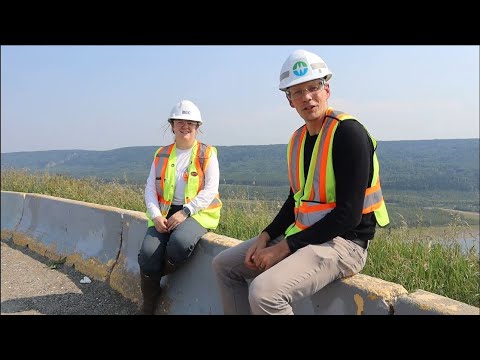
The stability of the side of the reservoir, potentially collapsing from water erosion, has also been modeled and predicted, and is constantly monitored in these early stages of filling up the reservoir.
Sorunlu Bir İnşaat
Zorlu Koşullar
Besides the size of the project, an additional challenge was the climatic conditions of the construction site. The dam is located far in the North, so it was impossible to do all types of work year-round.
Instead, the 6 months of winter had to be limited to planning, tunnel excavation, drilling, and grouting (injecting concrete to fortify the tunnels). Temperature dropped at times as low as -31 °C/ -23.8°F.

Kaynak: Acciona
As temperatures rose in spring, construction of the concrete dam accelerated. At the peak of construction in 2023, there were more than 6,000 workers on the project.
This sort of megaproject is also very dangerous to work at. For example, almost a hundred people died in the construction of the Hoover Dam in Nevada in the 1930s.
Technology helps, notably the deployment of RID-equipped helmets, warning heavy machinery drivers when workers are in close proximity. In part thanks to this sort of equipment, no lives were lost in the entirety of the construction project.
Tartışmalar
Yerel Etki
While likely to provide low-carbon electricity to British Columbia in the context of electrification of transport and heating, the Site C project was not without controversy.
The first one was the impact on First Nations’ culture and way of life.
Site C barajı yüzlerce mezar ve tören alanını yok edecek.
Eğer inşa edilirse, Site C, 8. Antlaşma kapsamındaki İlk Uluslar haklarını ihlal edecek ve onları alay edilecek kadar önemsiz hâle getirecek.
David Suzuki Foundation
Decaying trees and organic matter in the newly flooded reservoir could also release toxic methyl mercury for many years, further hurting any hunting and fishing in the region and traditional ways of life. The forced relocation of locals inhabiting the future reservoir added to the disruptions.
As this is already what happened with the construction of the Bennett Dam, these fears are rather understandable. Still, these objections would ultimately not prove enough to stop the project.
Lastly, the impact on local agriculture, relying on the unique microclimate of the Peace River riverbanks, adds to the economic and ecological impact of the dam.
“Doğu‑batı Peace River Vadisi’nin derin alüvyal toprakları, uzun kuzey gün ışığı süresi ve tarım için mikro iklim, yılda bir milyondan fazla insanın beslenme ihtiyacını karşılayacak meyve ve sebzeler üretebilir.”
British Columbia, taze sebzelerin %57’sini ithal ederken, bu toprakların su basması kararı, bu alanların daha verimli hâle getirilmesi yerine su basma kararını sorgulamaya yol açtı.
Ekonomi
A reason why the Site C project was canceled in the 1980s was that BC Hydro’s economic study was criticized for being overly optimistic about its economic model.
A point of contention is the growth of electricity consumption.
“2007’de Site C ilk kez yeniden değerlendirildiğinde, Hydro, yük artışının yılda sabit %2 olacağını iddia etti.
British Columbia, 2016‑17’de yılda 70 teravat‑saat tüketmesi bekleniyordu. Ancak şu anda 60 tüketiyoruz.”
Harry Swain – Former federal deputy minister of Industry Canada and Indian and Northern Affairs Canada.
Possibilities exist to export the produced power to the USA or neighboring Alberta. But overall, the economic profitability of the project, at least in the next 10 years, is uncertain.
However, considering we can expect electrification of transportation to ramp up in that interval, and the 100+ years of lifespan of the dam, it is likely that in the long run, this will be a valuable source of low-carbon energy.
In addition, the presence of cheap and carbon-neutral energy in the region could have an impact on future consumption, with maybe some industries relocating to use it, even if this is a slow process.
For example, the gigawatt-sized AI data centers being built around the world, and now desperate for stable & low-carbon energy, might consider British Columbia in the future.
Ekolojik Etkiyi Hafifletme
Bears were trapped, tranquilized, and relocated prior to the reservoir fill-up.
A temporary fishway was constructed to allow passage for fish ascending the Peace River during construction, in order to reduce impact on aquatic ecosystems as much as possible.
BC Hydro also restored various shallow-water habitats and reestablished streamside vegetation to support aquatic life.
Another mitigating strategy was aimed at carbon emissions. Normally, dam construction relies heavily on large trucks to move the millions of tons of materials used to build the earthfill.
Instead, a nearly five-kilometer conveyor belt was built to transport glacial till (clay, silt, sand, gravel, and boulders), the core material of the earthfill dam.
As the conveyor belt is powered by electricity, this has reduced emissions by more than 1,500 tons of CO2.

Kaynak: STM
Overall, the project was not without ecological impact, but should not have any long-term damage to the local ecosystem after a few years, and will help Canada reduce its carbon emissions.
Sonuç
The Site C dam is one of Canada’s most ambitious energy projects in decades, adding as much as the equivalent of a nuclear power plant’s worth of clean electricity generation.
It is also a very impressive technical feat, including diverting an entire major river via mega-tunnels, moving millions of tons of materials, and bringing massive turbines and associated equipment from Brazil.
Maybe more impressive is the high safety of the project, reflecting that large-scale infrastructures can today be built in conditions almost unimaginable for workers a century ago.
This is not to say that it did not have an impact on local fauna and flora, as well as native inhabitants of the region.
As is often the case with ambitious endeavors, it has been the center of polemics, and the question of its economics is hotly debated.
Still, with more and more power being consumed by electric cars, heat pumps, and digital infrastructure, it is likely that this clean electricity will find good use sooner rather than later. As global carbon emissions are still much higher than the targeted levels to control global warming, a large hydropower project like Site C will likely help, together with the large-scale deployment of wind and solar energy.
Sürdürülebilir Enerjiye Yatırım
GE Vernova
GEV Fiyat Grafiği
Born from the split-up of the giant industrial conglomerate General Electric (GE.TO ) (GE), GE Vernova (GEV ) is the branch dedicated to energy generation, especially turbine technology.
This makes GE Vernova the direct heir of the original activity started by Thomas Edison, as GE was a pioneer in hydroelectric in 1918, with Niagara Falls’ 3 GE 12,000-volt generators. GE was also a pioneer in high-voltage direct current (HVDC) in 1972, which is still an important technology for power grids today and a strong business for the company.
The company is still a giant in electricity generation, with its expertise in turbine production relevant in hydropower, nuclear, and wind power, as well as fossil fuel power plants. GE has, for example, 55,000 wind turbines and 7,000 gas turbines currently operating, and based on the company’s technology base, these, along with many hydro and nuclear power plants, generate approximately 25% of the world’s electricity.

Kaynak: GE Vernova
GE, dünyanın en büyük hizmet şirketlerinden birçokyla yakın ortaklık kurmuş ve sonuçta bu şirketlerin ilgili ülke ya da bölge elektrik sistemlerinin belkemiği konumundadır; bunlar arasında Fransız Engie, Amerikan Duke Energy (DUK ) (DUK +0.21%), Southern Company (SO ) (SOT.DE ) (SO -0.44%), Alman RWE, İspanyol Iberdrola, Tayvan Power Company vb. yer alır.

Kaynak: GE Vernova
This is not to say that GE Vernova is not also active in preparing for new energy-related technology, including the new generation of nuclear power plants, carbon capture, or hydrogen.

Kaynak: GE Vernova
Especially in nuclear, the company is taking a leading approach. GE Vernova is now directly involved in building the power plant itself instead of just its turbines. The company BWRX-300 is the first North American commercial contract for an SMR, signed with Ontario Power, with a framework agreement for three more SMR units later.
As illustrated by large hydropower projects like Canadian Site C or the many mega-dams built by China, large turbines are still going to be very important for the energy grid in the future.
As electric cars, heating, and soon electric trucks and the electrification of heavy industries, will continuously increase the demand for more power generation to replace oil and gas, GE Vernova is well-positioned to benefit.
Because of the breadth of GE Vernova’s activity, investors in the company’s stock do not need to be certain about which technology will win the energy transition in the next 5 or 10 years:
- Doğal gaz önemli kalırsa, GE Vernova zaten bu segmentte ana aktördür.
- Nükleer enerji gerçekten bir yeniden doğuş yaşarsa, nükleer türbinler ve SMR çok fazla gelir sağlayacaktır.
- Rüzgar enerjisi, yenilenebilir enerji üretiminde güneş enerjisiyle eşit seviyede kalırsa, GE Vernova da bu sektörde ana aktör olacaktır.
- Hidrojen, amonyak, metanol, pompalı hidroelektrik ya da karbon yakalama ve depolama patlaması yaşarsa, GE Vernova erken dönemdeki ileriye dönük Ar-Ge yatırımları sayesinde bu pazarların bir kısmını da yakalayabilecektir.
- Ana yatırım konusu şebeke istikrarı ve akıllı şebeke yükseltmesi olursa, GE zaten dünyanın en büyük hizmet şirketlerinin çoğu için tercih edilen ortak konumundadır.
(Şirketle ilgili özel raporda GE Vernova tarihçesi ve iş modeli hakkında daha fazla okuyabilirsiniz.)
En Son GE Vernova (GEV) Hisse Senedi Haberleri ve Gelişmeler



