
Aerospace
SpaceX’s $1.75T IPO: Breaking Records and Bending Rules

 Add Securities.io to your preferred sources on Google

SpaceX has been the focus of attention of all space and science enthusiasts for the past decade. The company has single-handedly changed in a radical way how mankind travels to space, making the first ever reusable rockets.
It has since made the Internet accessible anywhere on Earth through the Starlink satellite network, and will be instrumental in putting Western astronauts back on the Moon ahead of China through the Artemis missions.
So this is massive news that the privately-listed SpaceX is finally doing its long-awaited IPO, with the first day of trading scheduled for June 12, 2026.
And of course, its founder, Elon Musk, is also the controversial mega-billionaire behind Tesla (TSLA ), which kickstarted the EV revolution and is one of the most popular stocks ever with retail investors. A man who might be on his way to becoming the world’s first trillionaire if the IPO goes well.
Since its merger with the artificial intelligence company xAI, SpaceX is also looking to build data centers in space and manage X.com, the social media company.
This is going to be the IPO with the highest valuation in history, a price tag that has drawn both awe and criticism, especially with the change of many IPO rules, especially for SpaceX.
So what should the market expect from SpaceX’s IPO? And more importantly for most investors, both small retail investors and large institutional investors: should they buy SpaceX’s stock?
Quick Recap on SpaceX History
Changing Orbital Flight Forever
It would be too long to detail the complex path that transforms a crazy bet on space travel by a millionaire from having just sold PayPal (PYPL ) into the giant it is today.
But it can be said that what made SpaceX different from all previous private ventures in space rockets was a clear technical and organizational vision. The idea was to simultaneously aim for a target everyone believed was impossible (reusable rockets) while also questioning every assumption upon which the entire aerospace industry was built until then.
Most notable was the “Idiot Index“, or the ratio of a finished product’s price to the cost of its basic raw materials. It creates a framework with which to identify which product might be over-engineered, produced in too costly a fashion, or just priced excessively by the supplier, and better made in-house.
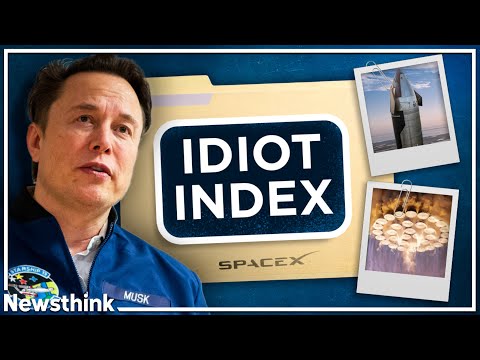
By making most of a rocket reusable, instead of burning it in the atmosphere every launch, SpaceX completely collapsed the cost structure of orbital launch, divided it by more than 10x, and, more importantly, radically changed the trajectory of space exploration as a whole.

Source: Visual Capitalist
Building Its Own Demand
However, cheaper, more frequent, and ever larger orbital launches soon were going to face an issue. The market and demand for satellites were soon going to be simply smaller than the total launch capacity developed by SpaceX. And if (much) cheaper launches were helping grow the market, commercial market, and the frequent NASA and Pentagon contracts would soon not be enough to fit SpaceX’s growing capacity.
So the company went to create its own demand with the Starlink program, a network of satellites in Low-Earth Orbit (LEO) that could deliver high-speed, low-latency Internet connection anywhere on Earth, at a price competitive with most traditional telecom companies. This network is now making up the majority of satellites orbiting around Earth.

Source: ARK Invest
Today, Starlink is a more than 10,200-satellite constellation, and might grow in the future to 42,000 satellites (approved and pending approval), or even 100,000+ satellites in the long term. This expansion would use the V3 satellites launched by the Starship rocket, designed to achieve gigabit internet speeds and 100 times more network bandwidth.
It has become the core revenue engine of the company, with $11.39B in revenues in 2025, and a remarkable operating profit of $4.42B.
Starlink’s user base more than doubled in that year, reaching 10.3 million users in 160 countries, and 12 million as of June 4, 2026, or 27,700 new customers per day. Besides individual users, the Starlink constellations also connect 1,000 corporate/business jets and over 150,000 maritime vessels.
The xAI / SpaceX Merger
In early 2026 and ahead of SpaceX’s IPO, the company merged with another of Elon Musk’s ventures that was privately listed: xAI. Initially mostly made of X.com, the social media platform, it has quickly evolved into a world-leader in AI data center deployment.
With 555,000 NVIDIA (NVDA ) H100 and H200 GPUs, xAI’s Colossus is the single largest AI training system on Earth, consuming 2GW of power, or the equivalent of two nuclear power plants.
The deal valued xAI at $250B and formed a $1.25T company. The goal of the merger was to evolve SpaceX’s mission from space exploration to a much more diversified company:
“To form the most ambitious, vertically-integrated innovation engine on (and off) Earth, with AI, rockets, space-based internet, direct-to-mobile device communications and the world’s foremost real-time information and free speech platform.”
Besides merging together Musk ventures, there is also the idea of building massive data centers in space, as an unlimited sunlight supply and no permitting issues could solve two of the ground-based AI data centers most stringent issues.
“The basic math is that launching a million tons per year of satellites generating 100 kW of compute power per ton would add 100 gigawatts of AI compute capacity annually, with no ongoing operational or maintenance needs. Ultimately, there is a path to launching 1 TW/year from Earth. My estimate is that within 2 to 3 years, the lowest cost way to generate AI compute will be in space.”
SpaceX IPO
A Record-Breaking IPO
The IPO will be done under the ticker SPCX (SPCX ), to not mismatch with (SPCE ), which matches another space company, Virgin Galactic Holdings.
At a fixed share price of $135/share, SpaceX is looking to raise “only” $75B, and it would bring the company to a total valuation of $1.75T.
This would instantly position the company in the top ten largest US public corporations on day one. And it will be by far the largest IPO in the world’s history. This would more than double the previous record held by Saudi Aramco, one of the world’s largest commodity companies.
A Fair Price?
While reflecting the optimism surrounding Elon Musk’s managerial talent and ability to turn moonshot ideas no one believed in at first into trillion-dollar companies like Tesla and now SpaceX, this valuation raises a few eyebrows among seasoned investors.
Considering the current financial numbers of SpaceX, this values the company at a price-to-sales ratio of almost 100x, a frankly eye-watering level, so much higher than other market darlings like the 20-25x of NVidia or the 10x of Apple.
Even in the context of SpaceX being both an AI company and a uniquely successful aerospace company at the dawn of a new space race, this valuation might feel a little rich to many.
In addition, Starlink was the only profitable segment of the company, as other major segments are losing money and/or investing massively:
- The social media X.com is more of a PR/marketing/propaganda/data mining tool than a pure business venture at this point.
- xAI is spending a lot of money on boosting its AI training capacity by building ever larger AI data centers.
- The launch business is busy testing and scaling up Starship, the super-heavy launcher system that is only now managing to reach orbit without “rapid unscheduled disassembly” (catastrophic explosions).
In total, this created a $4.9B net loss, linked to massive capital expenditures, for example, no less than $12.7B in capex for AI in 2025.
This has led many Wall Street analysts to attack the targeted price for the IPO, some saying it’s worth only “half as much”.
This is, however, not so outrageous in the context of other major AI IPO incoming, with OpenAI and Anthropic reportedly aiming for near-trillion-dollar valuations as well.
Still, many investment professionals are not happy with the price proposed, which might reflect that SpaceX waited a long time to IPO. So several commentators are seeing it as a liquidity exit for insiders who invested early, instead of a good deal.
A Rule-Breaking IPO?
Another contentious point about SpaceX’s IPO is that US regulators and markets seriously bent IPO rules to make it happen on Elon Musk’s terms.
Several major stock market index providers, including Nasdaq and FTSE Russell, have recently changed or adopted fast-entry rules that could allow companies like SpaceX to be added to major indexes much sooner than they typically would.
So SpaceX should join the Nasdaq-100 after 15 trading days, and some of the FTSE Russell’s indexes in just five trading days. In contrast, Tesla was public for about 10 years before it was added to the S&P 500.
As such, this would quickly boost demand for SpaceX shares through the flow of passive investing, pension funds, etc. Right at the exit of the IPO, helping stem any launch troubles.
Ultimately, this is a major departure from practices and rules that put guardrails in place before newly public companies could be added to major indexes, put in place in the aftermath of the dot-com bubble implosion.
Another departure from standard practices was that SpaceX had set the IPO price before meetings with investors at a roadshow, which Wall Street always uses to test demand and set a price range.
“This is a real break from the normal IPO process, as typically the price range gives investors a starting point and lets the company adjust based on feedback during the roadshow,”
Matt Kennedy – senior strategist at Renaissance Capital, a provider of IPO-focused research and ETFs.
But maybe SpaceX adequately assessed that the bulk of demand was going to come from retail investors who have eagerly waited to invest in Musk’s other main venture for more than a decade. For this reason, SpaceX also took the unusual move to reserve as much as 30% o fthe offering to individual investors.
This has been criticized as providing exit liquidity for insiders, especially as SpaceX employees will be able to sell some of their shares in stages before the usual six-month restriction period ends.
Lastly, the control structure will be unusual for such a large public company. Musk will retain an estimated 80-85% of SpaceX voting rights, making him more of a dictator than another shareholder of the company. This is despite owning only 42% equity, thanks to “supershares” with more voting rights than the ones offered in the IPO.
This can be seen as a good thing for its fans, arguing that lower control over Tesla had been a problem, but as a bad thing for detractors of the billionaire and its controversial positions, including in politics.
In all cases, the shares offered at the IPO are rather few, representing only 4.25% of the total ownership of the company (555,555,555 shares), an uncommonly low level of “float” for a multi-trillion dollar company.
Overall, SpaceX’s IPO does not break any rules, but made many bend quite a bit, and is definitely highly unusual in its details compared to other, more traditional IPOs.
Could SpaceX Be A Good Investment?
SpaceX’s Bull Case
So the large valuation and the investing and business cases in favor of a publicly listed SpaceX are reliant on a few pillars.
The first one is the quickly expanding Starlink constellation. Not only can it provide cash flow to fund xAI’s growth, but it also provides an outlet for the massive capacity of Starship launchers.
More importantly, the arrival of Starship will help replace the existing constellation with the V3 Starlink satellites, increasing 100x the available bandwidth. So this creates a massive space for the space-based Internet service to grow without risking saturation.
The second business case is centered around AI. Be it the existing ground-based data center or the eventual space-based ones, xAI has demonstrated remarkable capacity in building AI data centers quickly, relatively speaking, cheaply, and operating them efficiently. So as long as AI is a booming industry, so should be this segment of the company, even if it absorbs a lot of the available free cash flow.
This could change, as Google recently signed a deal to pay $920M a month for compute capacity at xAI data centers. This might reflect xAI excellence. Or that Google is a large shareholder of SpaceX (5-6%) and wants the IPO to go smoothly…
Lastly, the space launch business should not be forgotten. It could, of course, be precious just for the launch of telecom and data center satellites. But it is in providing a cheap way to send 150-200 tons of material into Earth orbit that the real price might reside. This type of capacity is so unprecedented that it is hard to fully understand its effect yet.
For example, it makes the idea of building an actual industry off the Moon’s resources a possibility in the next few decades. It could also make asteroid mining or space tourism move from science fiction to viable industries.
It could help mankind reach Mars and set up a research station there, even if the priorities of SpaceX have shifted to the Moon for now.
Or maybe it could build massive power satellite constellations, providing unlimited solar energy, 24/7, without any constraint of land availability, weather, or season, a topic we discussed in detail in “Space-Based Energy Solutions For Endless Clean Energy”.
In any case, the bull case for SpaceX is Elon Musk, and the perspective of a massive new market in the future for the company, be it the well-established space telecom, more speculative AI businesses, or the even more prospective future space economy.
“It’s a referendum on Elon and how much faith investors have in this individual entrepreneur. I think they’ve got a lot, because he’s done a lot, and they’re betting on his ability to open up new markets, but that is highly speculative. I wouldn’t want to invest and I wouldn’t want to guess either way on an IPO like this.”
Matt Calkins, CEO of enterprise software company Appian
Who Is Buying?
Even if many Wall Street professionals are unhappy with the price offer or the lack of a pre-IPO roadshow, many will still buy some SpaceX shares to avoid having zero exposure to what may be the biggest investing story of the quarter or the year.
As mentioned, passive investing from indexes will also provide a steady flow of buyers mere days after the IPO starts, a fact that will likely be priced in and impact the price positively.
But it is retail investors that are likely to be the core of demand for SpaceX shares, due to the cult following the company and Elon Musk enjoy with tens of millions of fans. Early data indicate that SpaceX’s IPO is drawing more than $70B in retail orders, or almost as much as the entirety of the targeted $75B in capital raise. In total, the IPO is said to be 4x oversubscribed, implying there is a lot of unsatisfied demand that should be more than enough to absorb sales by insiders.
As with all IPO, time only will tell. But so far, the bet of SpaceX to count on retail investors and fix the IPO price itself seems to be paying off.
SpaceX IPO Impact
The immediate impact will be that anyone who owned SpaceX shares before the IPO is getting richer.
This is true for Musk, as it seems he might become the first trillionaire in history on June 12th, 2026: $841B from SpaceX, plus $350B from Tesla. It is also true for early investors and SpaceX employees, especially early ones.
Another effect might be to turbocharge the space sector and other publicly traded stocks in this segment. This is likely to be directly true for other space telecom companies like Eutelsat (ETL.PA – and its OneWeb space constellation, an “European Starlink”), or Intuitive Machines (LUNR ). The effect could be more mixed for orbital launch stocks like Rocket Labs (RKLB ), which has long absorbed money flow from investors frustrated to not be able to access SpaceX.
(Follow the links for our investment reports on these companies).
This IPO, if a success, could also set the bar for future AI companies IPOs, a sector still massively privately listed and soon to see equally massive IPOs.
A Future Tesla-SpaceX Merger?
It has long been rumored that Elon Musk is looking to bring back together his corporate empire into one company, an eventual “X” company that would merge together SpaceX, xAI, X.com, Tesla, and maybe even the less discussed The Boring Company and Neuralink, all ahead of his life-long plan to engineer the colonization of Mars.
If SpaceX manages to achieve its publicly traded $1.75T market cap, or exceeds it, thanks to investors’ enthusiasm, this could make it easier to later absorb the Tesla $1.45T market cap through a merger. And with his SpaceX’s supershares, Musk would then control the absolute majority of voting rights of all its companies at once.
Certainly, the slow integration of x.com + xAI, and then into SpaceX, would fit such a pattern.
It would also match surprising news like that at the end of January 2026, Tesla announced it would stop the production of some of its cars, the models S & X, and the factory would be retooled to produce its line of humanoid robots Optimus.
Could Tesla become the producer of the physical body of xAI / Grok AI brains, as well as solar panels for satellites? And then turn humanoid robots into its new blue ocean market, away from an increasingly competitive EV market?
Alongside space AI data centers and space colonization, this might be the new narrative to keep pushing forward Elon Musk’s technological and business empire…
SpaceX’s IPO Future View
SpaceX IPO might be remembered as an historical financial milestone of the 2020s.
For Elon Musk’s fans, this could be the moment when the man became a trillionaire, prove all its critics wrong once and for all, and create a social media-space-AI conglomerate never seen before, maybe preparing the ground for a merger with a humanoid robots-EV-producing Tesla that will leave him fully in control.
For Musk’s detractors and investing bears, this might be the last bell ringing in an overheated market that ignores its own IPO rules to boost an AI company at the height of a speculative bubble bound to blow up soon, led by a megalomaniac con artist keen on dumping overpriced insider shares on retail investors.
It is highly likely that the truth is a bit in the middle.
Markets are definitely pricing anything AI-related at very high valuations in 2026, and retail eager participation in this Ai gold rush is as much a positive news as a warning sign.
At the same time, just the space part of SpaceX’s business is incredibly impressive, with a amazing track record, and future revenues are hard to model with a 10-20 year long view. The company’s AI activity is equally remarkable, and Musk’s talent to just “make things happen” is unmatched, as is his cult-like following.
In any case, the SpaceX IPO could be shaping up to be a popular one, as much for its outlandish promises straight out of a science-fiction novel as for its potential financial gains.



