
Aerospace
Teledyne Technology (TDY): The Sensors And Industrial Electronic Conglomerate

 Add Securities.io to your preferred sources on Google
Securities.io may receive compensation when you use links to products we review. This does not influence our editorial evaluations. We are not a registered investment adviser; this is not investment advice. Read our affiliate disclosure.

In the industrial history of the USA, an archetype emerges again and again: the conglomerate.
The idea is to bring together dozens or even hundreds of smaller companies through acquisitions, and to create synergies by providing each of these smaller subdivisions of the same larger group with shared supporting structures (R&D, capital access, IT, HR, etc.) while keeping them relatively independent.
This way, the technical excellence of the part can be combined with the financial firepower and connections of a big corporation, but without the inefficiency of the associated large bureaucracy that tends to overwhelm large companies.
Teledyne is one such example, with a focus on advanced electronic, imaging, aerospace, and unmanned vehicles.
After a period of too low focus in the late 1990s, the conglomerate has reinvented itself in the past two decades and is now a giant in key technologies essential for the reindustrialization of the USA.
TDY Price Chart
Teledyne Overview
Teledyne History
Teledyne was founded in 1960, initially under the name Instrument Systems (changed later the same year), with $450,000 in funding from Arthur Rock, one of America’s first venture capitalists. The name Teledyne signifies “distant force” or “power from afar”.
The company’s plan was from the beginning to acquire existing technology companies and bring them together in a growing conglomerate. After acquiring 3 electronic manufacturers, it did its IPO in 1961. The company was mostly active in sales of electronic components for aerospace applications, notably through contracts with NASA and the DoD.
By the end of the second fiscal year, Teledyne sales had increased 230% and net income by about 570%.
Throughout the 1960s, the company expanded into optics, microwaves, and avionics. In 1966, it merged with Vanadium-Alloy Steel Company (Vasco), adding materials technology as a major business activity of Teledyne. In total, the company acquired more than 150 companies in this decade alone, with 16 groups with 94 profit centers in 120 locations.
It also entered the electronic consumer market, with products like speakers, computers, television receivers, and even the offshore drilling and earth-science instrumentation fields.
By 1980, Teledyne made $3B in sales, and peaked at $3.53B in 1989, when its founder, Henry Singleton, retired.
The 1990s saw the conglomerate being a little aimless, with many leadership changes, lawsuits for false test reports, and fending off attempts at hostile takeovers. After restructuring and selling some parts of the conglomerate, the company was making $765M in sales in 2000.
Restarting the initial strategy of serial acquisitions and consolidation, but with a greater focus on key technology, the company resumed growth, reaching $1.6B in sales in 2010 and $6.15B in 2025.

Source: Teledyne
Teledyne By The Numbers
Today, Teledyne is a 15,800+-employee company operating in 257 locations globally. While it is mostly concentrated in the USA, it also has an important presence in 13+ countries, including Germany, the UK, Canada, France, Japan, and Mexico.
The USA represents half of the company’s sales, itself divided 50-50 between government contracts and commercial applications. Europe as a whole represents another 1/4 of the sales, with the rest of the world another 1/4.

Source: Teledyne
The company holds a total of 5,131 patents, of which 2,000+ are active.
In 2026, Teledyne owned around 135 subsidiaries and acquired 150+ companies that it still owns today. The company has realized on average 1.8 acquisitions per year over the last five-year period.
Most of Teledyne’s acquisitions are small, relatively speaking, with many worth around $10M and most below the $100M threshold. The exception has been in digital imaging, with by far the largest acquisition being that of FLIR Systems for $8B in 2021 (see more about FLIR below).

Source: Teledyne
Teledyne Business Lines
Over the course of its complex history, the importance of each business segment within the Teledyne conglomerate has changed. It is today divided into four main divisions:
- Digital Imaging.
- Instrumentation.
- Aerospace & Defense.
- Engineered Systems.
The company has progressively exited too competitive markets where it did not hold a key technological advantage or the proper economies of scale, like aerospace metal casting and aerospace engines, sold to Northrop Grumman (NOC ) (follow the link for our investment report on this company).
FLIR & Imaging
Imaging has become, over time, the company’s main business activity, especially thanks to the acquisition of FLIR, which alone increased the segment’s contribution to total company sales from 32% to approximately 59%.
This is by far the biggest change in recent years regarding the composition of the company, as imaging was a very small part of the overall business as late as 2010.

Source: Teledyne
The deal also brought into the company strong relationships with defense and law enforcement (see Black Hornet mini drones below) that are reinforcing this segment as well.
The deal merged FLIR’s dominance in thermal and infrared imaging with Teledyne’s expertise in visible-light sensors, creating a much more dominant actor in the sector. It also increased the range of possible applications for Teledyne imaging sensors: “from deep space to deep sea”. The acquisition also added around 3,000 employees to Teledyne, making up 1/5th of the current workforce.
Besides FLIR, the acquisition of DALSA in 2010 was also important in growing this segment.
In practice, this segment covers a wide range of different products, from handheld thermal cameras to sophisticated sensors for underwater vehicles, satellites, and space probes.
The strategic thinking of Teledyne in going all-in on imaging is that these sensors will be essential for a number of advanced applications poised for explosive growth:
- Industrial/Machine Vision.
- Advanced Healthcare(X-rays, tomography, endoscopy, robotics, radiotherapy, lab-on-a-chip).
- Aerospace Semiconductors.
- Geospatial data (lidar, sonar, cameras, GPS coordinates), used in drones, autonomous vehicles, etc.
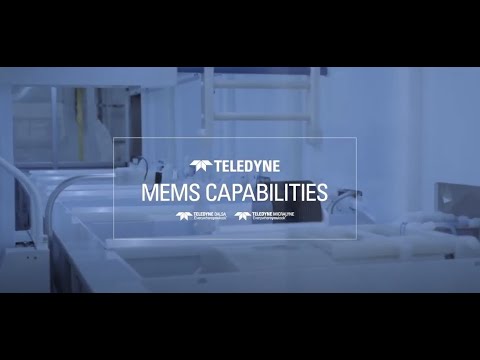
These growth prospects are supported by Teledyne’s long-standing leadership in the manufacturing of MEMS (micro-electromechanical systems), as the company is the #1 independent pure play MEMS foundry.
“Our foundries boast more than 60,000 square feet / 5,600 m2 of clean rooms that operate 24/7 and deliver over 100,000 wafers per year in both 150 mm and 200 mm formats. Our state-of-the-art processes and industry-leading quality systems allow us to exceed our customer requirements.”
MEMS are microscopic devices that integrate mechanical elements, sensors, actuators, and electronics, all onto a single silicon chip. MEMS are used in micro-optics, miniaturized sound sensors, inertial sensors, gas and chemical detection, and microfluidic manipulations.
Instrumentation
The expertise in imaging sensors is complemented by a similar expertise in other sensors used in instrumentation systems.
This covers multiple applications:
- Maritime instrumentation: used to monitor almost everything below the surface of the sea, using Hydrophones, sonars, cameras, and lights.
- The company also provides turnkey dredge and construction solutions for offshore construction and civil engineering, as well as hydrographic software to integrate smoothly the collected underwater data.
- Environmental instrumentation: these tools can measure gases and liquids to detect pollutants, measure product purity, chemical composition, quantity, and the concentration of a given molecule, etc.
- As such, Teledyne sensors are used in multiple settings: chemical industry, manufacturing (paper, oil & gas, steel, semiconductors, clean rooms), safety control, medical, etc.
- Electronic Tests: Teledyne’s oscilloscopes and other electronic test systems are used in data centers, automotive manufacturing, defense, aerospace, and power conversion to test the quality and reliability of key tools and machines.
After imaging, instrumentation is the most important part of Teledyne, with 1/4th of total revenues.
Aerospace & Defense
Teledyne’s presence in aerospace has mostly shrunk in recent years due to the divestment of its engine manufacturing presence. It is, however, stronger than ever in its new core competency of sensors and specialized electronics.
Among the most remarkable other space projects the company participated in are NASA’s mission to Jupiter’s moon Europa, the Habitable Worlds Observatory (HWO) to be launched in the late 2030s, or the Mars rover Perseverance.

Source: Teledyne
It is, however, in the defense sector that Teledyne has likely the most growth potential for this segment.
It acquired the nanodrone Black Hornet and the Rogue 1 drone when it acquired FLIR. Teledyne is also a leader in Autonomous Underwater Vehicles (AUVs), an emerging category for the military, as surface ships are increasingly vulnerable to cheap drones and missiles. The company’s models can dive from 500 meters depth to up to 6,000 m deep (1640 feet – 20,000 feet).
The company also sells avionics (plane controls), aviation-grade batteries, and various types of aerospace and defense electronic components (microwave, power distribution, composite materials, radiation-hardened semiconductors, etc.).

Source: Teledyne
Together, the production of components for drones, satellites, and aircraft, as well as niche drones with little competition in that specific niche, can be a very profitable activity for the company, especially as the USA is planning to grow its defense budget to $1.5T and the global geopolitical tensions are high.
Engineered Systems
This segment covers the products from Teledyne that are not individual electronic components or dedicated to a specific application already incorporated in the other 4 segments.
This activity is split between the applications it targets.
Energy Systems: this includes currently electrolytic, thermoelectric, and fuel cell systems, and has notably provided the Martian probe Perseverance’s power source and is contributing to the nuclear fusion program ITER.
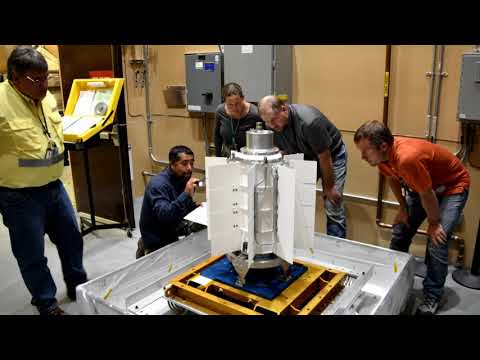
The segment is also active in the nuclear industry, including uranium enrichment process hardware and nuclear plant design and maintenance.
Maritime Systems‘ current programs include a 30mm gun for LCS warships, Shallow Water Combat Submersible (SWCS), Littoral Battlespace Sensing Glider (LBS-G), and the Missile Round Trainer (MRT). The company also developed in the past a mine hunter. Its other divisions also provide sonar, lidar, and other sensors to the US Navy.
This segment is supported by a 1-million-gallon test pool located at Teledyne’s facility in Huntsville. AL.
Military Mission Systems includes all the non-maritime military programs. Current programs include the Extended Air Defense Simulation (EADSIM), the Tactical Range Air Defense Missile (TACRAM), and a missile detection system (MASC-T). It previously developed software for the Air Force Research Laboratory (AFRL), the Ground-Based Missile Defense (GMD), and Space-Based Infrared Systems (SBIRS-Low).
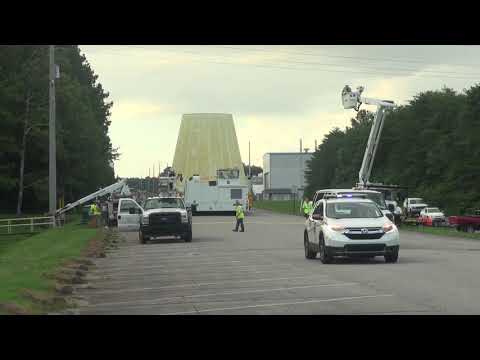
Space Systems covers ongoing programs like the Launch Vehicle Stage Adapter (LVSA) used in the Artemis missions, the hyperspectral sensors Multi-User System for Earth Sensing (MUSES), and DLR Earth Sensing Imaging Spectrometer (DESIS).
Understanding The Bigger Picture
Teledyne businesses are all very technical and focused on niche applications, be it in industry, space, defense, etc. This can make it difficult to understand and forecast for most investors. Instead, potential shareholders should focus on a few key elements.
The first is Teledyne’s leadership in the imaging sector, the largest segment of the company, with massive opportunities across many types of image sensors for drones, healthcare, robotics, automation, etc.
If this massive bet pays off, the company should keep growing quickly, and its stock will bring good returns. If this fails, the rest of the company will likely struggle to compensate fully, even if these segments do fine.
Another important segment is the aerospace and engineered systems. These segments are much more tied to US government spending. Teledyne is uniquely positioned for capturing the growth from emerging niches like nanodrones and underwater autonomous vehicles. Its specialized electronics are also important for many other weapon and aerospace programs.
So, as geopolitical tensions explode, the US military budget reaches all-time highs, and a new space race is ongoing, it is likely that electronics and drones from Teledyne will be in high demand for the foreseeable future.
Future segments, like counter-drone systems, are also likely to become an explosive new demand for sensors and imaging solutions.
Together, the imaging and the defense/aerospace segments will determine the company’s growth trajectory and margins. So instead of trying to grasp everything the company is doing, investors should focus on these two central themes.
Teledyne’s Future
Historically, Teledyne was an aerospace and defense electronics company that diversified too much to stay efficient, producing, on top of its core competency, products as diverse as offshore drills, specialized metals, TV, and speakers.
After a painful and needed restructuring, the company has been on a much more disciplined path since the mid-2000s.
With its acquisition of FLIR, Teledyne has strategically moved into a new sector, while leveraging all its pre-existing advantages: MEMS manufacturing excellence, connection to defense procurement, reputation in specialized electronic manufacturing, and previous presence in other imaging and sensing technologies.
So far, this strategy seems to have worked well, with earnings per share having grown 21.4% CAGR and equally strong free cash flow growth.
Overall, the conglomerate strategy seems as solid as ever, and the niches picked by Teledyne as fare as 2021 feel almost prescient in the troubled times of 2026.
Latest Teledyne (TDY) Stock News and Developments



