
Aerospace
NASA’s Curiosity Finds More Evidence Of Past Life On Mars

 Add Securities.io to your preferred sources on Google

Mars is the most studied planet in our solar system and for good reasons. Contrary to Mercury or Venus, it could be potentially habitable with the right technology, having an atmosphere and a temperature range that is cold, but not dramatically so. And it is larger, closer to the sun, and overall more hospitable than any planetary bodies further from the Sun, like the moons of Jupiter and Saturn.
Recent discoveries have given us a clearer picture of Mars past and available resources. For example, we now understand better why Mars lost most of its early atmosphere. Giant underground oceans, enough to entirely cover the whole surface of the planet, have also been discovered. Meanwhile, it was discovered that Mars used to have abundant liquid water on its surface, and that some forms of Earth life could maybe survive the Martian surface, or be very close to doing so, like synthetic lichens or desert mosses.
Launched in 2011 and landed on Mars in 2012, the Curiosity rover has been instrumental in improving our understanding of the red planet dramatically. And it is still doing so, as a recent discovery seems to have found life-building blocks on the Martian surface, using the Sample Analysis at Mars (SAM), a suite of instruments and sensors built specifically to analyze Mars’ chemistry.
The discovery was made by NASA researchers, alongside researchers at the University of Florida, University of California, University of Minneapolis, Pennsylvania State University, Georgetown University, Mexico City Ciudad Universitaria, and Sorbonne Université (France).
They published their results in the prestigious journal Nature Communications1, under the title “Diverse organic molecules on Mars revealed by the first SAM TMAH experiment”.
Life On Mars?
Since the first (erroneous) belief that Mars was crisscrossed by canals, mankind has looked at the planets of the solar system and wondered if they harbored life. Ultimately, better telescopes and robotic probes would show that Earth is exceptional in harboring intelligent life, as well as a very dense biosphere.
Still, as we now know that Mars was a lot warmer, with more atmosphere and liquid water in the past, at least some form of microbial life in that era is not unlikely. It is even possible that some life is still active on Mars, although in a reduced state, hidden from radiation in the depths of the Martian regolith.
This is why the Curiosity rover is exploring the Glen Torridon region of Gale crater, a region that might harbor either a large lake or several small ones.

Source: Space.com
This makes it a place that scientists believe could have supported conditions that were favorable to supporting ancient life, if it was ever there in the first place. Of special interest are the clay deposits that could still contain proof of past biological activity.
Detecting Biosignals On Mars
The Sample Analysis at Mars (SAM)
In operation since 2012, the first year of the $2.5B exploration robot on Mars, the Sample Analysis at Mars (SAM) already detected molecules of water, chlorine, sulphur, nitrate, as well as methane, ammonia, benzoic acid, and chlorobenzene potentially of biological origins.
SAM is combined with the rest of the tools of the rover, which include robotic arms and a drill. SAM is constituted of three different instruments that work together to create ultra-sensitive detection capacities:
- A quadrupole mass spectrometer (QMS), which detects gases sampled from the atmosphere or those released from solid samples by heating.
- A gas chromatograph (GC)is used to separate out individual gases from a complex mixture into molecular components. The resulting gas flow is then analyzed by the mass spectrometer.
- A tunable laser spectrometer (TLS), which can make precision measurements of oxygen and carbon isotope ratios in carbon dioxide (CO2) and methane (CH4). This data helps distinguish between a geochemical or biological origin of these gases.
New Martian Chemical Experiment
The new study used a chemical called tetramethylammonium hydroxide (TMAH) to detect organic molecules in the region’s clay-rich sandstone. TMAH hydrolyzes organic molecules present in the sample, either free or bound to mineral surfaces.
In addition, pyrolysis at a maximum of 550 °C and methylation released more organic fragments from free or macromolecular materials as volatile products. This made the resulting molecules or molecular fragments usable for gas chromatography-mass spectrometry (GC-MS) analysis.

Source: Nature Communications
This is the first experiment using TMAH, and Curiosity is equipped to do another one later, once the results of this first one have been properly understood, so the last sample of TMAH can be used to its maximum potential.
The use of TMAH on another world is a groundbreaking first, greatly improving the analytical capacity of Curiosity and opening the way for similar experiences in the future, both on Mars and elsewhere in the solar system (see below).
“This experiment and its results have been a labor of love and science. This was the first time that TMAH had been used on another world and our team worked extensively to interpret and confirm the molecules detected in this first-of-its-kind experiment.”
Amy Williams – Associate professor at the University of Florida.
The result of the experiment was the detection of newly identified high-molecular-weight chemicals, including nitrogen and sulfur-bearing molecules that are similar to the raw material that helped spur life on Earth.

Source: Nature Communications
The scientists’ interpretation is that these molecules are the result of breaking down even larger and more complex molecules preserved in the Martian clay.
“We propose that this suite of organics represents TMAH thermochemolysis breakdown products from ancient organic macromolecular material that has been preserved in billions-of-years-old sedimentary rocks in Gale crater.”
Amy Williams – Associate professor at the University of Florida.
Martian Organic Molecules’ Origins
Comparing the results to previous Curiosity samples and to similar analyses on a meteorite, the scientists built a compelling case that the molecules are not from meteoric, but Martian origins.
“We iterated on molecule identifications using some of the SAM flight spare equipment to confirm our findings. I think the time was well spent, as we now have evidence that the suite of molecules broken apart by the TMAH reagent derived from more complex macromolecular carbon that is preserved in the martian subsurface.”
Amy Williams – Associate professor at the University of Florida.
How complex the original molecules are is unclear, as the experiment is not designed to answer that question, nor are SAM’s instruments made for that task.
It is also unclear from which part of the sample the detected molecules originate. So it is still possible that it has been introduced to the Martian surface by meteorites.
It is also possible that the origin is not biological but geological, with aqueous processing such as serpentinization or electrochemical production potentially responsible.
Still, this represents a solid demonstration that the surface of Mars contains a much more complex chemistry than previously thought, especially macromolecular carbon. And the most likely candidate for producing these molecules in quantity is biological activity.
If this demonstrates the existence of life on Mars in the distant past (potentially up to 3.5 billion years ago), in a more recent period, or even subterranean ongoing life, it will only be clarified in future experiments.
Preparing For Future Missions
The next rover to land on Mars, the Rosalin Franklin Mars rover to be launched in 2028, will carry the Mars Organic Molecule Analyser (MOMA) instrument.
MOMA will also use TMAH and other chemicals to analyze the Martian chemical composition with a mass spectrometer.
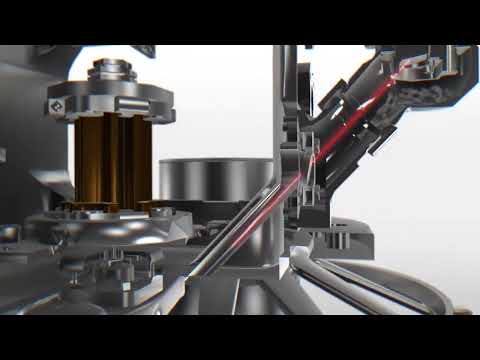
The data from Curiosity’s TMAH experiment will be important for the training of the machine learning algorithm planned to be used with MOMA analyses.
The same TMAH chemical will also be used in the Dragonfly Mass Spectrometer (DrAMS) instrument onboard the Dragonfly’s mission to Titan.
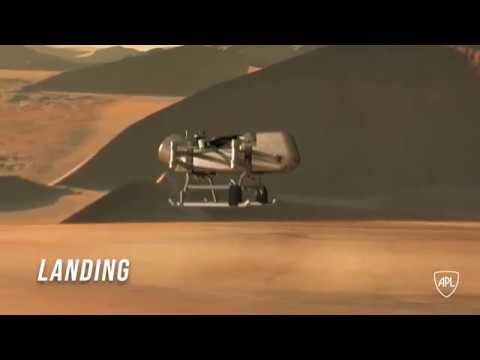
Overall, these results represent not just the finding of complex molecules on Mars, but a new level in space exploration, where very advanced chemical analysis instruments and imported chemicals are giving us new insight from modern space probes.
Investing In Space Exploration
Revvity
RVTY Price Chart
Revvity, formerly PerkinElmer and Consolidated Systems Corporation, provided the foundational technology for the mass spectrometers used in SAM’s development. Revvity is a large corporation, for which NASA projects like SAM are just a small component of their activity, and a good way to push what is technically possible while also cultivating an image of high-tech capacity and contacts with the US governmental agencies.
The company sold its applied, food, and enterprise services businesses in 2023 to the private equity firm New Mountain Capital to concentrate on its life sciences and diagnostics businesses.
So today, Revvity’s main activities are medical diagnostics (hospitals, analysis labs) and life science analysis (research, pharmaceuticals, biotech). More than 1/3 of revenues are from North America and 1/3rd from Europe, with the rest made in Asia-Pacific. Most revenues are recurring, coming from sales of chemicals and reagents for the analytical machines produced by Revvity.

Source: Revvity
In the past few years, the company acquired smaller companies, adding new capacities in analysis of large molecules (Biolegend, Horizon, Nexcelom) and autoimmune, allergies, & new infectious diseases (Euroimmun, Oxford Immunotec, IDS).
The company has also recently launched Signals Xynthetica, an AI Models-as-a-Service platform for chemical and biotech analysis, and established a collaboration with Lilly Tunelab AI offering.
The focus on specific biomolecules and use cases gives the company a profitable and defensible niche against more generalist chemical analytical tool companies.

Source: Revvity
Combined with automated end-to-end workflows and growing AI capacities, this makes the company a key partner for all top labs, hospitals, and bioresearch facilities, as illustrated by NASA’s trust in using Revvity mass spectrometer in the critically important for NASA Curiosity mission.
Revvity is somewhat invisible but a very important part of the supply chain in bioresearch and bioanalyses, a sector poised to boom thanks to progress in AI and personalized medicine, making these data extra valuable.
So investors should look to see if the company can get back to steady growth, driven by these underlying trends, following its restructuring in the past few years.
Latest Revvity (RVTY) Stock News and Developments
Study Referenced
1. Williams, A.J., Eigenbrode, J.L., Millan, M. et al. Diverse organic molecules on Mars revealed by the first SAM TMAH experiment. Nature Communications. 17, 2748 (2026). https://doi.org/10.1038/s41467-026-70656-0



