
Γεωργία
Το Μέλλον της Γεωργίας: Μεταξύ Υψηλής Τεχνολογίας και Οικολογίας

 Προσθέστε το Securities.io στις προτιμώμενες πηγές σας στο Google

Η Ανάγκη για μια Νέα Γεωργική Επανάσταση
Farming is the central technology that has allowed human civilizations to thrive. In the modern era, it has become more mechanized and industrialized and is a distant concern for most of the population. Only 2% of the US population works in farms and ranches today. On average, one U.S. farm feeds 169 people annually in the U.S. and abroad.
Industrial farming freed up labor for industries and services and to feed an ever-growing global population. But it also comes with a wide array of issues:
- Decline in food nutritional value.
- Pollution of water resources and food chain by pesticides, herbicides, and fertilizers.
- Damage to the ecosystem, from insect population to global biodiversity.
- Erosion of soil, threatening arable lands and farmlands’ fertility.
- Greenhouse emissions, with 22% global emissions from agriculture, forestry, and other land use.
It is becoming increasingly clear that the Green Revolution, while alleviating the 1970s fear of global famines, needs an upgrade to tackle these problems. Luckily, the trend of bigger tractors, bigger farms, and more chemicals is being reversed by progress in biotech, robotics, software, and even space technology.
Ρομπότ και Drones
Maybe the upcoming largest change in farming practice is the emergence of farming robots and drones. This sudden arrival of new machinery on the farm is due to a few technological leap in recent years:
- Cheaper sensors and mechanical parts, reducing costs.
- Machine vision, allowing the robots to actually see the crops.
- Batteries, increasing the stamina of the systems.
- AI, making them semi-autonomous and probably soon fully autonomous.
This can help replace a lot of labor that cannot be mechanized with bigger, heavier tractors, like fruit picking, weeding, removal of insects, etc.

Πηγή: Corteva
Το μικρότερο μέγεθος των γεωργικών ρομπότ και η αυτονομία τους με τεχνητή νοημοσύνη μπορούν επίσης να δημιουργήσουν νέες γεωργικές μεθόδους.
Για παράδειγμα, το λέιζερ μπορεί να χρησιμοποιηθεί για να «απαλείψει» τα ζιζάνια αντί να τα αφαιρέσει μηχανικά. Ή το ζιζανιοκτόνο μπορεί να ψεκαστεί σε μεμονωμένα φυτά που εντοπίζονται με μηχανική όραση, αντί σε ολόκληρο το χωράφι.
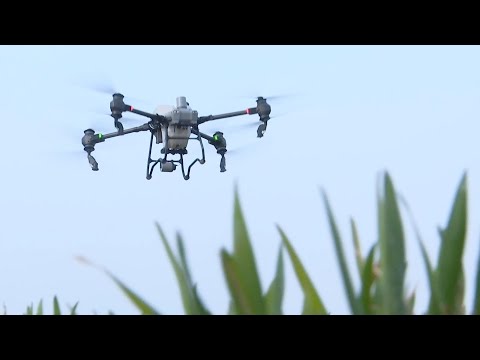
Μεγάλα ιπτάμενα drones μπορούν επίσης να χρησιμοποιηθούν για γεωργικές εργασίες, από τη μεταφορά βαρέων φορτίων όπως σακούλες λιπάσματος και σοδειά (ιδιαίτερα σε ορεινές περιοχές) μέχρι ακόμη και την τεχνητή επικονίαση καλαμποκιού.
Μπορείτε να διαβάσετε περισσότερες λεπτομέρειες για αυτήν την τεχνολογία, τις εφαρμογές της και τις κορυφαίες εταιρείες στον τομέα αυτό στο “Investors Should Take Note: Robotics Is Taking Over Farming”.
Δεδομένα
Farming is becoming increasingly a data-driven business. Instead of relying on the experience and instinct of individual farmers, data can now drive the decision-making on irrigation, chemical uses, etc.
A key element here is multi-spectral imaging or the synthetic image of crops in multiple light wavelengths. It helps identify what segment of a field needs water, is attacked by a disease, and can anticipate future crop yields.

Πηγή: Nebraska CornBoard
These images are most of the time generated from above, either through a long-range drone or satellite. They can be complemented by in-field sensors measuring nutrients in the soil or its moisture content.
Λογισμικό / Τεχνητή Νοημοσύνη
Farms are also increasingly using software to manage their day-to-day operations. This includes data like multi-spectral images but also day-to-day operations handled by ERP software, like payroll, schedule, machine maintenance, billing, etc.

Πηγή: AgriERP
The more data on the farm are available and centralized, the more AI analysis can help. For example, the combination of weather forecasts, crop data, and machinery available can help optimize the schedule for harvest season.
It could do many other things, for example, detecting leaks in irrigation systems, optimizing fertilizer and pesticide use, monitoring livestock location and health, automating the sorting of the harvest, etc.
Γενετική Μηχανική
While farming practices have stayed unchanged for a long time, humans have always worked hard at developing new crop varieties that were superior in one way or another: more productive, more resistant, more nutritious, etc.
Traditionally, this could only be done at a very slow pace, and using only naturally occurring mutations. Even most of the recent methods to develop new varieties relied mostly on selected random (induced) mutations.
Modern biotechnology has changed our approach. While controversial, GMO crops are likely to be a central tool of future medicine, especially as we move away from the first generation designed around the usage of chemical pesticides and herbicides.
Instead, newer generations of GMO crops will be able to:
- Resist the effect of climate instability by using less water, resisting intense heat, drought, etc.
- Handle higher levels of salinity, allowing cultivation in slightly saline water, a particular concern for rice cultivation and heavily irrigated fields.
- Resist pests and diseases with modified genes instead of just producing toxins like 1stgeneration GMOs.
Lastly, in “Engineered Plant Microbiomes – Protecting Crops with Bacteria”, we also discussed how GMOs could be engineered to nurture a better and richer bacteria ecosystem in the soil, which in turn would help make the crops more resistant and more productive.
Νέα Κατοίκιση De Novo
Most of the plants we consume were initially wild plants that got domesticated. This was done in just a handful of locations, which strongly indicates that probably quite a few other plants could be domesticated.

So a new option is emerging, called “de novo domestication.” The idea is that instead of taking high-yield modern crops and trying to make them as resistant as wild weeds, why not take already resistant wild weeds and make them as productive as modern crops?

We discussed in detail this idea in “Advancing Agriculture with AI and Genetic Engineering – The Future of Cultivation“, including how it could be combined with multi-spectral imaging so that farming robots could zap all the weeds without the modified “tag”.
Νέοι Τύποι Τροφίμων
Another option to improve farming is to create new types of food products. For example, we covered in “Using CRISPR-Cas9 to Gene Hack Edible Mycelium Into Meat Substitutes” how fungi can be genetically modified to look and taste like meat while being even healthier.
Over time, adding more nutrients, like in the Golden Rice project, or improving taste could be a great way to boost farming productivity.
Νέα Μέθοδος Γεωργίας
While technology-focused approaches, like robotic, data/AI-driven, or GMOs are going to be part of the future of farming, this is not all. The more we understand the complexity of our ecosystems, and the interactions between all its components, the more we realize how to make better farms as well.
This is at the center of a silent revolution in agriculture, covered by many labels like permaculture, regenerative agriculture, biodynamic farming, etc.
Permaculture & Αναγεννητική Γεωργία
Initially, more of a counter-movement rejecting modern farming methods, permaculture has evolved into a respected scientific field and demonstrated its ability to create more ecologically friendly farms that are also profitable and productive.
The idea is to integrate together the effect of healthy soils on plant survival, the synergies between different plant species, predators of crop pests, the carbon content of soils, etc.

Πηγή: Good Earth Design
Many labels similar to the better-known “organic farming” labels are now popping up for regenerative agriculture.
This method makes for a more complex farm design, integrating into one system trees, bushes, hedges, and ponds on top of rows of crops. The method is very productive, but in most cases, it can be tricky to integrate with the giant tractors of modern industrial agriculture.
Fortunately, it is a lot easier to deploy by leveraging the trends of electrification, robotics, and drones. And as it is more complex, a data-driven approach tends to perform well with regenerative agriculture as well.
Αγροδασοκομία, Καρβονική Γεωργία και Βιοκαρβόνιο
The carbon emissions of agriculture are often a concern. And the more we understand the cycle of carbon, the more it is clear that soils are a key part, and that keeping carbon locked in soils rich in organic matter can be one of the most efficient methods for carbon capture.
Modern agriculture, with deep plowing and naked soils, tends to deplete the soils of their carbon content. This not only releases CO2 but also reduces the soil’s ability to retain water and nutrients, leading to an increased need for costly irrigation and fertilizers.
So “carbon farming” is a new trend, where farmers are working the land in a way that leads to carbon being captured instead of released.
The first method is αγροδασοκομία, where crops or farm animals are grown in tandem with a row of trees. This way, the tree provides shadow, moisture, fallen leaves, and carbon capture while the crops are still cultivated. After several decades, the trees can provide an additional income in the form of timber.

Η δεύτερη είναι καρβονική γεωργία. Γενικά, κάθε γεωργική πρακτική που προσθέτει οργανική ύλη στο έδαφος συμβάλλει στη σύλληψη άνθρακα. Πολλές χώρες και οικονομικές ομάδες, συμπεριλαμβανομένης της ΕΕ, παρέχουν τώρα κίνητρα για την καρβονική γεωργία ώστε να ενισχύσουν τη δέσμευση και αποθήκευση άνθρακα σε δάση και εδάφη, καθώς και να μειώσουν τις εκπομπές αερίων του θερμοκηπίου από τα εδάφη.

Πηγή: Stop Waste
Τέλος, μια νέα τεχνολογία εξερευνάται τώρα από επιστήμονες, ερασιτέχνες και αγρότες: βιοκαρβόνιο. Αυτό συμβαίνει όταν οργανική ύλη όπως υπολείμματα καλλιεργειών ή ξύλο καίγονται μέσω πυρόλυσης. Αντί να καίγεται πλήρως σε τέφρα, αυτό αφήνει ένα πολύ πορώδες υπολειπόμενο κάρβουνο.
Αυτή η μορφή στερεού άνθρακα είναι πολύ σταθερή και μπορεί να παραμείνει αμετάβλητη για χιλιάδες χρόνια. Παρέχει επίσης καταφύγιο για ωφέλιμα βακτήρια και μύκητες. Το βιοκαρβόνιο αρχίζει να χρησιμοποιείται σε μεγάλη κλίμακα, για παράδειγμα από γήπεδα γκολφ για να μειώσουν τις ανάγκες άρδευσης κατά 30%.

Πηγή: Driving The Green
Ανανεώσιμες Ενέργειες
Farms are progressively adopting renewable energy, especially solar and wind. In 2022, a total of 153,101 US farms and ranches used renewable energy-producing systems, compared to 57,299 in 2012, a 167% increase over 10 years.
These solar installations can also be integrated with crops instead of covering prime farmland, a technique called agrivoltaics, which we explained in “Agrivoltaics To Merge “Real” Farms With Solar Farms.”
Farmers are also starting to incorporate methane digesters to recycle farming waste into biogas, especially in ranches producing massive amounts of animal waste.
Another new energy source is geothermy, which we covered in more detail in “Geothermal And Passive Greenhouses – Reducing Farming Carbon Emissions”.
Μη-Ανθρακικά Λιπάσματα
Among the main fertilizers, phosphorus and potassium (the P and K in NPK fertilizers) are natural elements that are mined. So ultimately, for these fertilizers to be carbon neutral, it will require that the mining operations are themselves electrified and use green energy to produce the required power.
Nitrogen fertilizer is another story, as it is currently produced mostly from natural gas or other fossil fuels. Or to be exact, fossil fuels are powering the chemical reactions that turn atmospheric N2 into ammonia.
Luckily, a whole supply chain to produce green ammonia is developing. This could include decentralizing ammonia production from modular systems, like the offering of FuelPositive Corporation and AmmPower Corp. we presented in “The Other Hydrogen Fuel – Top 5 Green Ammonia Stocks”.
It might even one day be an important part of the equation to replace fossil fuels as a fuel source as well, as we investigated in “Decarbonizing Global Shipping Lanes Through Green Ammonia“
and maybe power farming equipment as well.
Alternatively, nitrogen could be added to soil directly by specially engineered microbes.
Γεωργία χωρίς Έδαφος
Farming is quickly evolving, and not only by caring better for soils or incorporating new technology. Some methods are now looking to remove entirely the need for fields and soil to produce food.
This can be done in urban farms, a new trend looking to bring food production closer to consumption centers, which we explored in “Scaling Urban Agriculture to Bring Many Benefits”.
Κατακόρυφη Γεωργία
One way to do farming in cities is vertical farming, where artificial light and indoor greenhouses look to replace traditional farming entirely.
This is a promising idea, which, however, might need to be optimized to be competitive with traditional farming.
You can learn more about it in “A Deep Dive into Vertical Farming and its Global Impact”, as well as “5 Best Vertical Farming Companies” & “Top 10 Indoor Agriculture Companies”.
Most indoor and vertical farming methods rely on hydroponics, where the nutrients needed by the plants are not provided by soil but by flowing water. We explained how it works in “Hydroponics – Everything You Need to Know”.
Even more advanced methods remove even the water, limiting the cultivation to a mist of aerosol, a method called aeroponics.
Another step further is to combine the raising of fish with the cultivation of crops, using the fish dropping as fertilizer and the plants as water purification systems, a concept called aquaponics.
Τέλος, ορισμένες νέες μορφές τροφίμων μπορούν να καλλιεργηθούν, όπως η μικροάλγη, η οποία είναι πλούσια σε πρωτεΐνες και αντιοξειδωτικά και μπορεί στη συνέχεια να χρησιμοποιηθεί για την παρασκευή διατροφικών συμπληρωμάτων ή να ενσωματωθεί σε ποτά.
Γεωργία για Ανανεώσιμα Υλικά & Ενέργεια
Βιοκαύσιμα
Farming could also become not just about food but about replacing many non-renewable materials with naturally grown alternatives.
For now, this has been done through the first generations of biofuels. In the future, farming algae for biofuel might be a new farming business model.
Βιοϋλικά
Many materials are today either made from non-renewable sources or are toxic in one way or another. New biotechnology might make possible more natural and healthier alternatives.
This is even more true for bioplastic, with many companies leading the charge in making our addiction to plastic a much smaller issue.
Another material with large promises is wood. While Timber and forestry is already a massive industry worth $1.16T in 2024, improved genetics could boost wood production and carbon capture.

Πηγή: Modern Agriculture
Wood might be a much more potent material than expected. Researchers are discovering alkaline conditions, high temperatures, and biopolymers can turn wood into “augmented wood which can have the strength of steel and a rigidity 23 times greater than concrete”.
Επένδυση στη Γεωργία
There are many possible ways to invest in food and biomaterial production. And this is a major sector, with $9.09T in revenues globally.
This is also a very fragmented sector, with most of the farming activity done by relatively small companies, family businesses, etc. Overall, farming is rarely vertically integrated, with different companies supplying the input at different stages of the value chain: equipment, seeds, chemicals, labor, processing, reselling & marketing, etc.
You can invest in food-related companies through many brokers, and you can find here, on securities.io, our recommendations for the best brokers in the USA, Canada, Australia, the UK, as well as many other countries.
If you are not interested in investing in one particular company, you can also look into biotech ETFs like the Global X AgTech & Food Innovation ETF (KROP), the iShares MSCI Agriculture Producers ETF (VEGI), or the VanEck Agribusiness ETF (MOO), which will provide more diversified exposure to capitalize on the vital food production industry.
Εταιρεία Παραγωγής Τροφίμων & Καινοτομίας στη Γεωργία
CTVA Διάγραμμα τιμής
Η Corteva είναι παγκόσμιος ηγέτης στην τεχνολογία γεωργίας, ιδιαίτερα στα χημικά και τους σπόρους. Είναι επίσης πολύ ενεργή σε νέες τεχνολογίες γεωργίας όπως η ρομποτική.
Με καθαρά έσοδα 17,2 δισεκατομμυρίων δολαρίων το 2023, πάνω από 22.500 υπαλλήλους και πάνω από 10.000.000 πελάτες, η εταιρεία βρίσκεται ανάμεσα στις μεγαλύτερες του τομέα της, μαζί με τους αμερικανικούς ανταγωνιστές Bayer και Syngenta.
Συνολικά, και ίσως αντανακλώντας μια βαθύτερη τάση μειωμένης κατανάλωσης και αυξημένου ανταγωνισμού, οι πωλήσεις χημικών (φυτοφαρμάκων, ζιζανιοκτόνων κ.λπ.) έχουν μειωθεί το 2024, ενώ οι πωλήσεις σπόρων αυξήθηκαν.

Πηγή: Corteva
Σε πιο λεπτομερή ανάλυση, η κύρια δραστηριότητα της Corteva στον τομέα των σπόρων είναι το καλαμπόκι και η σόγια, αποτελώντας το μεγαλύτερο μέρος των εσόδων της εταιρείας σε αυτό το τμήμα. Το πιο αξιοσημείωτο, Corteva’s “Enlist E3” soybean, με αντοχή σε 3 ζιζανιοκτόνα (2,4-D χολίνη, γλυφοσάτη και γλουφοσινάτη), έχει αυξηθεί από κάτω του 5 % το 2019 σε πάνω από 65 % της αμερικανικής αγοράς.

Πηγή: Corteva
Στην προστασία καλλιεργειών/χημικά, πάνω από το ήμισυ των πωλήσεων ήταν για ζιζανιοκτόνα, ενώ το υπόλοιπο αποτελείται κυρίως από εντομοκτόνα και μυκητοκτόνα.

Πηγή: Corteva
Η Corteva έχει χτίσει την τρέχουσα επιχείρησή της γύρω από τη παραδοσιακή βιομηχανική γεωργία, η οποία εξακολουθεί να είναι πολύ κερδοφόρα δραστηριότητα που υποστηρίζει τον τρέχοντα προϋπολογισμό Έρευνας & Ανάπτυξης.
Ωστόσο, κοιτάμε επίσης με προοπτική το μέλλον της γεωργίας, το οποίο συζητήσαμε σε αυτό το άρθρο. Συγκεκριμένα, η Corteva εργάζεται πάνω σε:
- Γενετική επεξεργασία of existing crops, including using CRISPR technology.
- An innovation hub for ag-tech startups, Corteva Catalyst. “Μια πλατφόρμα μηχανικής μάθησης βοηθά στις προσπάθειες χαρτογράφησης του τομέα και εντοπισμού τεχνολογιών σχετικών με τις ερευνητικές προτεραιότητες της Corteva.”
- Βιοδιεγέρτες, βιοέλεγχος και άλλα προϊόντα φυσικής προέλευσης όπως οι φερομόνες εντόμων with proven and predictable performance.
- Βακτήρια στερεοποιούν άζωτο (BlueN™ or Utrisha™ N) to create extra chemical-free fertilizer.
- Δημητριακά βιο-ενισχυμένα με βιταμίνη Α for improving nutrition in poor countries.
- Περπατώντα ρομπότ for row crops.
- Πειράματα με την εφαρμογή της τεχνητής νοημοσύνης στα αγροκτήματα, from fruit picking to identifying the best plants for trait selection for seed production.
- Πλήρες σύνολο λογισμικών λύσεων, from land imagery data to farm management software and carbon credit monitoring and selling.
Η Corteva επίσης ερευνά ενεργά τη μελλοντική αυξανόμενη ζήτηση για πράσινα βιοκαύσιμα και εξειδικευμένες πρωτεΐνες, καθένα με αγορά αξίας 10–30 δισεκατομμυρίων δολαρίων μέχρι το 2035.

Πηγή: Corteva
Συνολικά, ενώ η Corteva είναι γίγαντας των «παλιών» βιομηχανικών γεωργικών μεθόδων, είναι επίσης σαφώς ενήμερη για τις αλλαγές στον τομέα και τοποθετείται ώστε να γίνει μια εξίσου μεγάλη και επιτυχημένη εταιρεία προσαρμοσμένη στις γρήγορα μεταβαλλόμενες γεωργικές πρακτικές.



