
Commodities
Rio Tinto (RIO): Pagmimina ng Mga Metal ng Hinaharap

 Idagdag ang Securities.io sa mga gusto mong mapagkunan sa Google
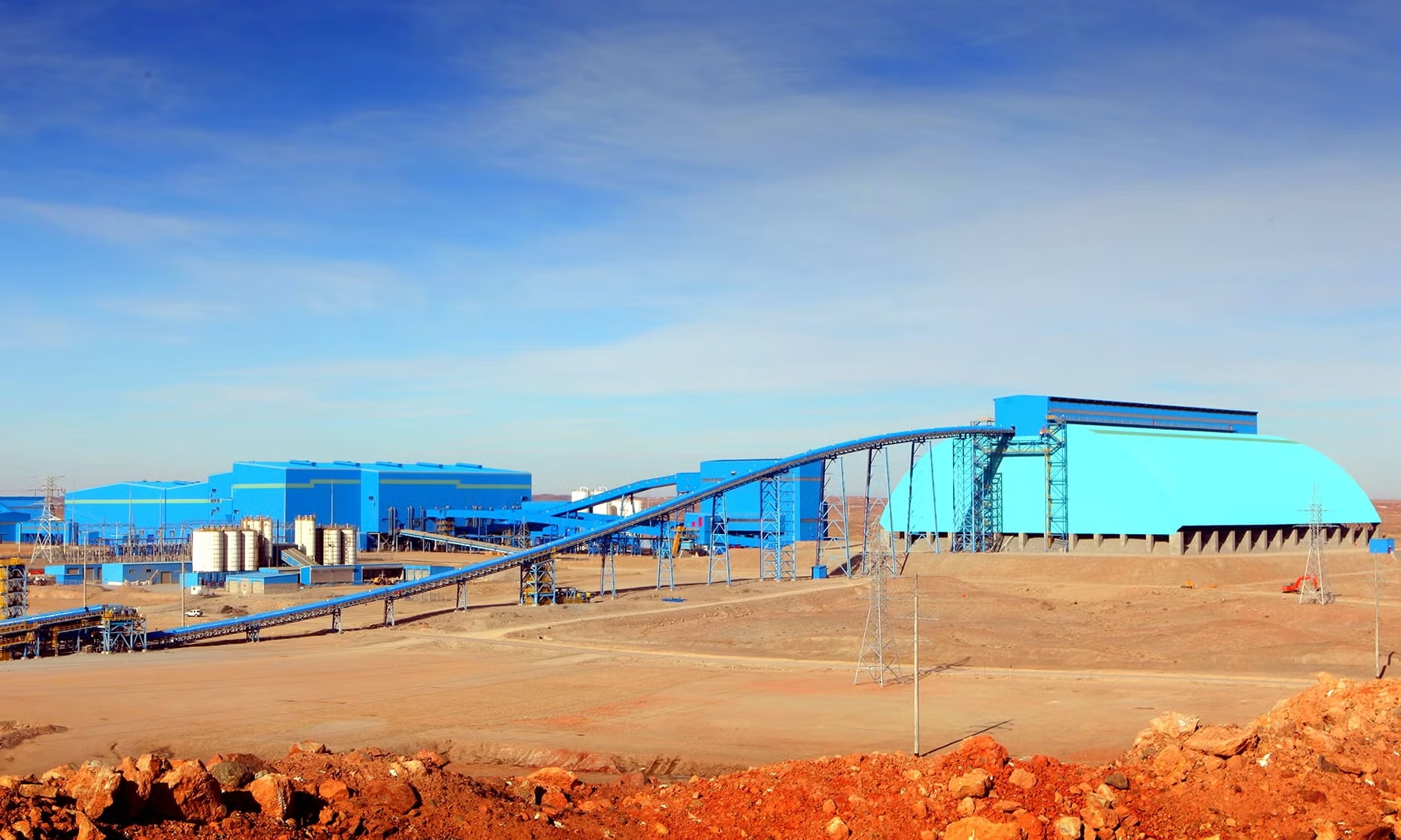
Paghahanda sa Pagmimina para sa Transisyon ng Enerhiya
Kadalasang tinitingnan ang pagmimina bilang marumi at mababang teknolohiyang industriya ng mas malawak na publiko at bilang hindi magandang pamumuhunan kumpara sa mas makabago na mga industriya.
At ito ay tiyak na totoo para sa maraming bahagi ng industriya, kung saan mas pinahahalagahan ang pagkuha ng mga mapagkukunan sa pinakamurang paraan hangga’t maaari.
Ngunit kasabay nito, ang modernong mundo ay itinayo sa mga metal na inihahakot ng mga minero: lithium, tanso, aluminyo, titanium, at mga rare earth. Lahat ng mga materyales na ito ang pundasyon ng mga AI data center, EV, solar panel, baterya, sasakyang pangkalawakan, at iba pa.
RIO Tsart ng Presyo
Kaya, bagaman hindi ito ang pinaka-kinang na bahagi ng transisyon ng enerhiya at inobasyon, ito ay mahalagang sangkap nito. At ang ilang kumpanya ay lumalampas pa sa simpleng pagkuha.
Ang mga pinakamalaking minero ay mga puwersa rin sa R&D, gamit ang kanilang napakalaking sukat upang bawasan ang konsumo ng enerhiya at tubig, polusyon, at pangkalahatang pagbutihin kung paano ginagawa ang mga kritikal na metal na ito. Sila rin ay umuunlad, lumilihis mula sa karbon at mga base metal patungo sa mga metal na mas estratehikong mahalaga sa hinaharap, tulad ng lithium at tanso.
Sa pagitan ng nangungunang 5 minero sa mundo, walang mas naglalarawan ng transisyong ito patungo sa mas napapanatiling industriya ng pagmimina kaysa sa Rio Tinto (RIO ).
Buod
- Ang Rio Tinto ay patuloy na pinapagana ng bakal na bakal, ngunit ang kinabukasan nito ay lalong nakaugnay sa tanso, lithium, aluminyo, at iba pang kritikal na metal.
- Ang kumpanya ay lumalawak lampas sa bakal na Pilbara kasama ang Simandou sa Guinea, Oyu Tolgoi sa Mongolia, mga bagong proyektong tanso sa Americas, at ang pagkuha ng Arcadium Lithium .
- Ang mga proyektong paglago tulad ng Rincon at Arcadium ay nagbibigay sa Rio ng leverage sa mga baterya, EV, at pagbuo ng grid sa buong transisyon ng enerhiya.
- Ang Rio ay nagpapakilala ng mga bagong teknolohiya kabilang ang Nuton bioleaching para sa tanso, direct lithium extraction (DLE) at ELYSIS low-carbon aluminium smelting.
- Ang pamunuan ay naglalayong ibalik ang 40–60% ng pangunahing kita sa mga shareholders at nakapaghatid ng halos 60% na payout sa loob ng siyam na taon, bagaman ang dibidendo ay mananatiling paikot-ikot kasabay ng presyo ng mga kalakal.
Pangkalahatang-ideya ng Negosyo ng Rio Tinto: Pangunahing Metal at Estratehiya
Ang Rio Tinto ay ang ikalawang pinakamalaking kumpanya ng pagmimina sa mundo. Ang pinakamalaking bahagi ng negosyo ng kumpanya ay nasa bakal na bakal, na may makabuluhang historikal na ari-arian sa Australia, at isang bagong mega mina sa Africa.
Ngunit ito rin ay napakalaking prodyuser ng tanso at aluminyo, na may matibay na plano ng pagpapalawak para sa produksyon ng tanso.
Sa huli, mabilis itong lumalawak sa merkado ng lithium salamat sa ilang proyekto at isang malaking pagkuha noong 2024 ng Arcadium Lithium.
Samantala, ang kumpanya ay nangunguna rin sa produksyon ng titanium, boron, at aluminyo, kung saan ang huling metal ay nagbibigay ng pagkakataon na lumawak sa rare earth (tingnan sa ibaba).

Pinagmulan: Rio Tinto
Ito ay naglalagay sa Rio Tinto bilang pangunahing prodyuser sa ilan sa pinakamalalaking merkado ng kalakal sa mundo. Higit pa rito, karamihan ng mga minahan nito ay napakalaki o naglalaman ng mayamang ore, na nagreresulta sa mahusay na operasyon ng pagmimina at mga gastos sa produksyon na isa sa pinakamababa sa buong mundo.

Pinagmulan: Rio Tinto
Dahil sa pokus nito sa mga minahan sa Australia, Americas, at Africa, ang Rio Tinto ay isa sa pinakamahalagang estratehikong tagapagbigay ng mga metal na ito sa Kanluran, na may higit sa 81% ng produksyon nito sa mga bansang OECD. Ito ay maaaring maging kritikal dahil ang nasyonalismo at pang-aabuso sa karapatan sa pag-aari ay maaaring maging malaking panganib para sa mga mamumuhunan sa mga kumpanya ng pagmimina sa mas mapanganib na hurisdiksyon.

Pinagmulan: Rio Tinto
Iron Ore: Pilbara at Simandou bilang Sentro ng Rio Tinto
Pilbara – Australia
Habang ang ibang mga metal ay nagdadala ng karagdagang kita o maaaring bumuo ng kinabukasan ng kumpanya, ang produksyon ng bakal na bakal ay ang historikal na pinagmulan ng kumpanya at nananatiling sentro ng aktibidad ng Rio Tinto.
Ang produksyon ng bakal ay magiging hindi sapat sa mga darating na taon, na may malaking puwang sa suplay na mabubuo sa huling bahagi ng 2020s, dahil nauubos na ang mga mapagkukunan ng maliliit na prodyuser.

Pinagmulan: Rio Tinto
At ang mga pamumuhunan sa mga bagong mapagkukunan ay historikal na mababa sa panahon ng 2016-2023. Dahil ang mga bagong mina ay tumatagal ng taon o higit pa sa isang dekada upang magmula sa proyekto hanggang sa ganap na produksyon, halos tiyak na magiging mahigpit ang suplay ng bakal sa darating na dekada.

Pinagmulan: Rio Tinto
Malaking bahagi ng iron ore ng Rio Tinto at ng buong mundo ay nagmumula sa pulang lupa ng Kanlurang Australia, lalo na sa rehiyon ng Pilbara, kung saan nagpapatakbo ang Rio Tinto kasama ng iba pang higante sa pagmimina ng bakal tulad ng BHP (BHP ) at Fortescue (FMG.AX).
Ang operasyon ng Rio Tinto sa rehiyon ay sumasaklaw sa kapasidad na 345 – 360 Mtpa (milyong tonelada bawat taon) na may 13 mining hub at 2,000 km (1,240 milya) ng riles upang ilipat ang ore sa mga nakalaang pantalan.

Pinagmulan: Rio Tinto
Simandou – Guinea
Ang kumpanya ay nagsikap nang husto upang idagdag ang deposito ng Simandou sa Africa sa Guinea, na may halaga na 60 Mtpa kapag ganap na nadebelop.

Pinagmulan: Rio Tinto
Isa itong napakalaking proyekto sa isang bansang hanggang ngayon ay kulang sa wastong imprastraktura upang maihatid ang ore sa dagat at sa mga pandaigdigang merkado. Sa pagtatayo ng 600 kilometrong riles na nagbigay-daan sa lohistika, nagsimula noong Nobyembre 2025 ang operasyon ng minahang magkasamang pag-aari ng pamahalaan ng Guinea, isang konsorsiyong Tsino at Rio Tinto.
“Ngayon ay binubuksan namin ang isang pambihirang bagong mapagkukunan ng mataas na uri ng iron ore na hinihingi ng mga customer para sa paggawa ng low-carbon steel, at pinatitibay ang aming pandaigdigang portfolio ng mga minahan ng iron ore sa Pilbara at Canada.”
Kumpleto na ang riles at mga pantalan nang 61%, ang minahan nang 60%, at 3.3 bilyong dolyar na ang nagastos sa proyekto.
“Ang pagsisimula ng operasyon ng proyektong Simandou ay isang mahalagang tagumpay na ginabayan ng pagkakasundong naabot ng mga pinuno ng dalawang bansa. Sinasalamin nito ang magkasanib na pagsisikap at praktikal na kooperasyon ng China at Guinea, at tumutulong sa industriyalisasyon at modernisasyon ng Guinea.”
Paglago sa Tanso, Lithium at mga Kritikal na Metal
Mag-swipe upang makakita pa →
| Proyekto | Metal | Rehiyon | Papel sa Estratehiya | Tinatayang Laki / Panahon |
|---|---|---|---|---|
| Sistema ng Iron Ore sa Pilbara | Iron ore | Kanlurang Australia | Pangunahing negosyong lumilikha ng salapi para pondohan ang paglago at mga dibidendo. | Landas tungo sa kapasidad na humigit-kumulang 345–360 Mtpa sa katamtamang panahon. |
| Simandou | Mataas na uri ng iron ore | Guinea, Kanlurang Africa | Inilalayo sa Australia ang bahagi ng iron ore at nagbibigay ng premium na ore para sa low-carbon steel. | Nagsimula ang operasyon noong Nobyembre 2025; hanggang humigit-kumulang 120 Mtpa ang pinagsamang kapasidad sa pag-export. |
| Oyu Tolgoi | Tanso, ginto | Mongolia | Pangunahing asset ng tanso na sumusuporta sa pagkakalantad ng Rio sa elektripikasyon. | Pangunahing salik sa gabay ng grupo na 860–875 kt ng tanso para sa 2025. |
| Rincon | Lithium (brine) | Argentina, Lithium Triangle | Bumubuo ng malakihan at pangmatagalang posisyon sa lithium para sa mga baterya ng EV. | Proyektong nagkakahalaga ng US$2.5 bilyon; hanggang humigit-kumulang 60,000 tonelada ng Li₂CO₃ bawat taon, 40 taong buhay ng minahan, at unang produksyon na inaasahan sa 2028. |
| Arcadium Lithium | Lithium (iba’t ibang uri) | Mga pandaigdigang asset | Ginagawang nangungunang producer ng lithium ang Rio sa tulong ng mahusay na teknolohiyang DLE. | Nakuha noong unang bahagi ng 2025; ikatlong pinakamalaking producer ng lithium na may pinakamalaking base ng mapagkukunan. |
| Nuton | Tanso (mula sa mababang uri ng ore) | Mga pandaigdigang aplikasyon | Platapormang teknolohiya upang mapakinabangan ang hindi nagagamit na mapagkukunan at basura ng tanso. | Proseso ng bioleaching na may hanggang humigit-kumulang 85% recovery; unang aktuwal na produksyon ng tanso noong 2025. |
Ang Pandaigdigang Pangangailangan sa mga Metal
Ilang estruktural na trend ang nagpapakita ng pangangailangang dagdagan ang produksiyon ng metal sa mundong karamihan sa pinakamahuhusay na ore body ay ginagamit na o nauubos na.
Ang unang trend ay ang paglago ng populasyon, kung saan maraming pinakamalalaking bansa sa Mundo ay nasa yugto ng pag-unlad na nangangailangan ng maraming metal para sa imprastruktura, mga pangunahing consumer goods, atbp., tulad ng China, India, Indonesia, at mga bansa sa Timog-Silangang Asya.
Ang isa pang trend ay ang elektripikasyon, na nangangailangan ng mas maraming baterya, electric motor, transformer, linya ng kuryente, atbp.

Pinagmulan: Rio Tinto
Samantala, hindi kailanman naging mas mabagal at mas mahal ang pag-develop ng mga bagong mina, na naglilimita sa pag-develop ng malalaking deposito ng rekurso sa iilang kumpanya tulad ng Rio Tinto.

Pinagmulan: Rio Tinto
Dahil dito, nagpatibay ang Rio Tinto ng bagong estratehiya upang palakihin ang produksiyon nito nang 3% CAGR sa buong 2024–2033. Tinalakay na natin ang Simandou bilang paraan upang palaguin ang negosyong bakal at pag-ibahin ang mga pinagkukunan sa labas ng Australia. Ngunit ang pinakamalaking pagbabago para sa Rio Tinto ay nasa tanso at lithium.
Tanso para sa Elektripikasyon: Oyu Tolgoi at Iba Pang Proyekto
Bilang pangunahing metal para sa elektripikasyon na kailangan nang maramihan sa bawat EV, baterya, transformer at kable ng kuryente, lumilipat ang tanso mula sa pagiging industriyal na kalakal tungo sa mahalagang estratehikong mapagkukunan. Gayunman, karamihan sa pinakamalalaking deposito ng copper ore ay nadebelop na at nauubos na.
Ang minahan ng Oyu Tolgoi sa Mongolia ay pangunahing tagapagpaandar ng paglago ng tanso ng Rio Tinto habang lumalawak ang underground operation. Inaasahan ng Rio Tinto na aabot sa 860–875 kt ang kabuuang produksiyon nito ng mined copper sa 2025, at malaking bahagi ng pagtaas ang magmumula sa Oyu Tolgoi matapos ang maraming taon ng pamumuhunan sa ore body at imprastraktura.

Pinagmulan: Rio Tinto
Ang tanso mula sa Mongolia ay idinaragdag sa umiiral na produksiyon sa Chile at Estados Unidos. Sa pangmatagalan, makakasama rito ang Nuevo Cobre sa Chile, na pinauunlad katuwang ang Codelco, La Granja sa Peru, Winu sa Australia, at Resolution sa Estados Unidos.

Pinagmulan: Rio Tinto
Nuton
Isa pang malaking proyekto ng Rio Tinto sa tanso ang Nuton, isang teknolohiyang negosyo para sa napapanatiling produksiyon ng tanso. Sa loob ng 30 taon ay bumuo ito ng advanced na paraan ng bioleaching upang makakuha ng mas maraming tanso mula sa ore kaysa sa mga naunang teknolohiya.
Maaaring baguhin nito nang malaki ang pandaigdigang suplay ng tanso sa pamamagitan ng paggawang kapaki-pakinabang sa mga ore na mahirap gamitin. Gumagamit ito ng bakterya at electromining upang makamit ang recovery rate na hanggang 85%.
“May potensiyal ang teknolohiya ng Nuton na baguhin ang industriya sa pamamagitan ng paggawang kapaki-pakinabang sa mga sulphide ore na dati ay mahirap i-leach. Nagagawa namin ito sa pamamagitan ng nangungunang recovery rate ng tanso na hanggang 85%, na lampas sa kasalukuyang pamantayan ng industriya.”
Makatutulong din ito upang makakuha ng mas maraming tanso mula sa basurang pagmimina na dati ay hindi lubusang nagagamit.
Unang nakagawa ng tanso ang Nuton sa aktuwal na kondisyon ng operasyon noong unang bahagi ng 2025.
Panoorin: Ang Teknolohiya ng Nuton ng Rio Tinto sa Aktuwal na Operasyon (Video)
Lithium: Arcadium, Rincon at ang Pagtutulak ng Rio Tinto sa mga Metal para sa Baterya
Arcadium
Baguhan man sa sektor, gumawa ng malaking hakbang ang Rio Tinto sa industriya ng lithium nang makumpleto nito ang pagkuha sa Arcadium Lithium noong unang bahagi ng 2025.
Ang Arcadium Lithium ay nabuo mula sa pagsasanib ng malalaking minero ng lithium na Livent at Allkem.

Pinagmulan: Arcadium
Ito ang ikatlong pinakamalaking minero ng lithium sa mundo at may pinakamalaking base ng mapagkukunan, kaya pinakamainam din ang posisyon nito upang palakihin ang produksiyon.
“Sa pagsasama ng laki, lakas sa pananalapi, at karanasan ng Rio Tinto sa operasyon at pagpapaunlad ng proyekto sa mga Tier 1 asset at kakayahang teknikal at komersiyal ng Arcadium, lumilikha kami ng pandaigdigang negosyong lithium na kaagapay ng aming nangungunang operasyon sa iron ore, aluminyo at tanso.”
Mahalagang tandaan na isinagawa ang pagkuha malapit sa dulo ng matinding pagbagsak ng merkado ng lithium. Sa kabila ng mababang presyo noong panahong iyon, nanatili sa 40% ang EBITDA margin ng Arcadium sa unang kalahati ng 2024 dahil sa mataas na uri ng mapagkukunan at pinakamahusay na teknolohiya ng direct lithium extraction (DLE).
Mula pa noong 1996 ay gumagamit na ang Arcadium ng DLE kasabay ng mga evaporation pond, at kamakailan ay gumawa ito ng malaking progreso upang maging komersiyal na kapaki-pakinabang ang teknolohiya bilang hiwalay na paraan ng pagkuha.
Bumuo rin ang Arcadium ng LIOVIX, isang napi-print na lithium foil na maaaring magpahusay sa pagganap ng baterya, magpababa ng gastos sa pagmamanupaktura at magbawas ng paggamit ng lithium.

Pinagmulan: Arcadium
Isa pang malaking proyektong lithium ang Rincon sa Lithium Triangle ng Argentina. Sa pamumuhunang US$2.5 bilyon na inihayag noong Disyembre 2024, magiging malaking producer ito na may kapasidad na hanggang 60,000 tonelada ng battery-grade lithium carbonate bawat taon.
Inaasahang tatagal nang 40 taon ang minahan ng Rincon. Nakatakdang magsimula ang produksiyon sa 2028, kasunod ang tatlong taong unti-unting pagtaas hanggang sa buong kapasidad.
Ang isa pang proyekto, ang Jadar sa Serbia, ay dapat sana’y magdagdag pa sa produksiyon ng lithium ng Rio Tinto para sa merkado ng EU. Ngunit pansamantalang pinahinto ng mga protesta at kawalang-katatagan sa politika ang proyekto.
Aluminyo
Malaking producer din ng aluminyo ang Rio Tinto, na may kumpletong presensya sa supply chain mula bauxite ore hanggang alumina at aluminyo.
Itinatag ng kumpanya ang mga operasyon nito sa aluminyo sa mga rehiyong may mura at low-carbon na enerhiya, lalo na ang hydropower sa Canada at hydropower at geothermal energy sa Iceland, pati na rin sa Estados Unidos.
Maaaring makinabang ang sektor sa mga taripa ng Estados Unidos dahil nagiging mas kapaki-pakinabang ang lokal na produksiyon at gumalaw ang mga presyo sa rehiyon upang isama ang mga bagong taripa.
Isa pang oportunidad sa segment ng aluminyo ang madalas na kasaganaan ng rare earth element sa alumina. Isa sa mga dahilan kung bakit naging dalubhasa ang China sa pagdadalisay at produksiyon ng rare earth ay ang pag-aatas nito sa mga refinery ng aluminyo na dalisayin din ang mga elementong ito.
Pinag-aaralan ng Rio Tinto ang pagsali sa parehong gawain, na maaaring magbigay ng lokal at friendshored na produksiyon ng rare earth sa labas ng impluwensiya ng China. Maaari rin itong gumawa ng gallium mula sa produksiyon ng aluminyo.
Gayunman, malamang na kailangan ng mas malinaw na insentibo sa merkado o mga bagong patakaran upang maisakatuparan ito.
“Ang susunod na hakbang ay mas malalim na pag-aralan ang mga kritikal na mineral, at hindi kailangang ituring ang mga ito bilang magkakahiwalay na minahan. Ang kawalan ng matatag na spot market para sa maraming kritikal na mineral ang dahilan kung bakit karaniwang hindi nakikita sa larangang ito ang limang pinakamalaking minero.”
Jakob Stausholm – punong ehekutibo ng Rio Tinto
Iba Pang Proyekto at Metal
- Diavik sa Canada, na gumagawa ng diamante.
- Dampier Salt sa Australia, na gumagawa ng asin-dagat.
- Burra sa Australia, isang proyektong may potensiyal na gumawa ng scandium na ginagamit sa mga haluang aluminyo upang mapahusay ang flexibility at paglaban sa init at corrosion.
- Produksiyon ng boron sa California, na tumutustos sa 30% ng pandaigdigang pangangailangan.
- Rio Tinto Iron and Titanium (RTIT) sa Quebec, Canada, na gumagawa ng bakal, scandium at 19% ng pandaigdigang pangangailangan sa titanium, kasama ang Richards Bay Minerals sa South Africa at QIT Madagascar Minerals (QMM) sa Madagascar.
Inobasyon at Pagpapanatili
Bukod sa bagong teknolohiya ng Nuton sa pagkuha ng tanso at direct lithium extraction ng Arcadium, malaki ang ipinupuhunan ng Rio Tinto upang bawasan ang carbon footprint nito at mabilis na gamitin ang mga bagong teknolohiya.
Halimbawa, nagsimula itong gumamit kasama ng BHP ng mga unang Caterpillar battery-electric haul truck sa Pilbara bilang kapalit ng mga diesel truck. (CAT )
“Tutulungan kami ng mga pagsubok na ito na maunawaan kung paano magkakaugnay ang lahat ng bahagi: mga teknolohiya ng baterya, imprastraktura sa paglikha at pag-charge ng kuryente, pamamahala ng enerhiya, at mga supply chain na kailangan upang maipatupad ito sa malawakang antas.”
Tim Day – pangulo ng BHP Western Australia Iron Ore Asset
Nagsusulong ang kumpanya ng mga sustainability label para sa aluminyo, copper cathode at metal powder.
Pinauunlad nito ang teknolohiyang ELYSIS upang gumawa ng low-carbon na aluminyo, na nagbigay-daan sa malawakang carbon-free electrolysis sa unang pagkakataon noong Agosto 2025.
Ang cadmium telluride (CdTe), na ginagamit sa thin-film solar panel tulad ng sa First Solar (FSLR ), ay ginagawa rin mula sa minahan ng tanso ng Rio Tinto Kennecott.
“Mahigit 90% ng tellurium ang ginagawa bilang by-product ng pagtunaw at pagdadalisay ng tanso, at ang Kennecott ay isa sa dalawang pangunahing copper smelter na natitira sa Estados Unidos.”
Namuhunan din ang Rio Tinto sa pagpapanatili, kabilang ang hydrogen-based na pagdadalisay ng alumina kasama ang Australian Renewable Energy Agency at Sumitomo Corporation, paggamit ng marine biofuel para sa mga barko nito, carbon capture kasama ang Carbfix ng Iceland at iba pang katuwang, at paggawa ng biocarbon kasama ang Aymium.
Sa huli, may venture capital (VC) arm ang Rio Tinto na namumuhunan sa mga startup sa pagmimina, pagdadalisay, metal alloy at pagpapanatili.
Mahahalagang Punto para sa mga Mamumuhunan
- Pangunahing makina ng salapi: Ang iron ore sa Pilbara at ngayon ay Simandou ay nagbibigay ng mababang-gastos at mataas-margin na pagkakalantad sa iron ore na sumusuporta sa kakayahan ng Rio Tinto na magbayad ng dibidendo.
- Pakinabang sa transisyon ng enerhiya: Inilalagay ng paglago sa tanso at lithium (Oyu Tolgoi, Rincon at Arcadium) ang kumpanya bilang pangunahing supplier sa mga EV, grid at baterya.
- Oportunidad sa low-carbon na metal: Ang aluminyo mula sa hydropower, teknolohiyang ELYSIS, at mga by-product tulad ng tellurium at potensiyal na rare earth ay maaaring magbigay ng dagdag na halaga kapag lumitaw ang green premium.
- Kaakit-akit na balik sa kapital: Layunin ng Rio Tinto na ibalik sa mga shareholder ang 40–60% ng pangunahing kita at nakapaghatid ito ng humigit-kumulang 60% payout sa loob ng siyam na taon, bagaman nananatiling paikot ang mga dibidendo.
- Mga panganib na dapat bantayan: Dahil sa siklo ng presyo ng kalakal, pagpapatupad ng proyekto (Simandou, Rincon at Resolution), usaping ESG at panganib sa hurisdiksiyon, nananatiling cyclical stock ang RIO at hindi kapalit ng bond.
Konklusyon: Ang Rio Tinto (RIO) ba ay Stock ng Metal ng Hinaharap?
Ang Rio Tinto ay isang kumpanya na ang mga produkto ay lubos na mahalaga sa modernong industriyal na ekonomiya, mula sa saganang bakal para sa produksyon ng bakal hanggang sa low-carbon na aluminyo, titanium, tanso, lithium, at iba pa.
May matibay ding kasaysayan ang kumpanya sa pagpapanatili ng patakarang ibalik sa mga shareholder ang 40–60% ng kita, kabilang ang siyam na taong rekord na humigit-kumulang 60% ang payout.
Pinagsama sa patuloy na tumataas na pangangailangan ng mundo para sa metal, ang transisyon ng enerhiya, paglago ng populasyon, at ang patuloy na pagtaas ng produksyon ng Rio Tinto sa susunod na dekada, ginagawa nitong magandang pagpipilian ang stock para sa mga mamumuhunan na naghahanap ng matibay na dibidendo na may kaunting paglago rin.
Relatibong ligtas din itong stock ng pagmimina pagdating sa panganib sa hurisdiksiyon, bagaman dapat tandaan ng mga mamumuhunan na hindi kailanman ganap na nawawala ang ganitong panganib sa industriya.
Sa huli, ito ay isang puwersa ng inobasyon sa industriya ng pagmimina, mula sa mas epektibong teknolohiya para sa pagkuha ng tanso at lithium hanggang sa low-carbon na produksyon ng bakal at aluminyo, elektripikasyon ng kagamitan sa pagmimina, at hilaw na materyal ng thin-film solar.
Kaya, sa panahon ng kawalang-tatag at implasyon, o marahil kahit stagflation, ang pagkakaroon ng exposure sa mga estratehikong kalakal habang nakikinabang din sa trend ng elektripikasyon at berdeng transisyon ay maaaring tamang hakbang, habang kumokolekta ng dibidendo sa pagitan.
Pinakabagong Balita at Pag-unlad sa Stock ng Rio Tinto (RIO)



