

Augmented and Virtual Reality
Best AR & VR Headset Gifts for an Immersive Christmas

Securities.io maintains rigorous editorial standards and may receive compensation from reviewed links. We are not a registered investment adviser and this is not investment advice. Please view our affiliate disclosure.

December is here, which means it’s officially gift-shopping season. This festive period, surprise your loved ones with immersive technology, i.e., AR and VR devices, to offer them a unique way to experience joy, strengthen connections, and create unforgettable memories together.
Augmented Reality (AR) and Virtual Reality (VR) are two innovative technological experiences that change the way the digital world interacts with the physical world. While AR overlays digital information onto the real world, VR immerses users in computer-generated environments.
Together, they make core components of Extended Reality (XR), blending the physical and digital worlds and enabling Mixed Reality (MR), where digital and physical elements interact in real-time.
Advances in technology like precise motion and eye-tracking, foveated rendering, 8K+ resolutions, haptic feedback, AI, spatial computing, and 5G networks have revolutionized the AR/VR industry in recent years.
As a result, today, affordable AR/VR gadgets offer us gateways to completely new realities, offering immersive ways to explore, play, learn, and connect. So, here are the top picks for you to give your family and friends the gift of the latest creative tech and make this Christmas cooler than ever.
TL;DR
- AR and VR headsets have gone mainstream, with Meta, Sony, Apple, HTC, and Rokid offering options for every budget and use case.
- Meta Quest 3 and Quest 3S are the best all-round standalone gifts, especially for first-time VR users and casual gamers.
- PlayStation VR2 shines for PS5 owners, while Apple Vision Pro targets high-end spatial computing and productivity.
- Rokid Max AR glasses and HTC Vive XR Elite serve more niche users who want portable big-screen viewing or flexible XR for work and play.
1. Meta (META -3.99%) Quest 3

A standalone VR headset, Meta Quest 3 is developed by Reality Labs, a division of Meta Platforms (formerly Facebook), led by Mark Zuckerberg. It is known for its high-resolution displays, strong performance, and mixed-reality passthrough that blends virtual objects into your reality. Passthrough is the ability of a VR headset to display live video to the user on the headset’s screen, making them feel like they are interacting with their actual surroundings while keeping the headset on.

The Quest 3 headset comes with a large library of games, fitness programs, and other apps, including Facebook, Instagram, and WhatsApp, which allow you to take full advantage of the product.
It features dual-LCD panels with a resolution of 2064 × 2208 per eye. This device also uses 6-DOF (Degrees of Freedom) tracking to track both rotational and translational movements of the user.
[Image of 6 degrees of freedom vs 3 degrees of freedom diagram]
There is no need for any external hardware to use this headset. With built-in audio, microphone, and controllers, Meta Quest 3 is ready to use right out of the box.
Meta Quest 3 was launched with an introductory price of $649 for a storage size of 512 GB. But has since been reduced to $499.99.
If someone is new to the world of VR and mixed reality, then Meta Quest 3, with its great balance of price, portability, and performance, makes for the perfect gift. This user-friendly headset is also perfect for casual gamers and those who don’t have a console.
Now, if you are looking for an even cheaper option, then you should take a look at Meta’s Quest 3S, which will only cost you $299.99.
A more affordable, beginner-friendly version of Quest 3, Meta Quest 3S still delivers strong VR performance and mixed-reality features, and makes for a great entry point if you want immersive VR without spending too much.
This one was announced just over a year ago, with the “S” in this product’s name standing for “start,” as in getting started with VR. The device comes with a mode that simulates a large movie theater inside the headset. It can also be used in airplane mode. Quest 3S users can utilize it to multitask, with the headset allowing them to do all the things one can do with a general-purpose computer.
Both Quest 3 and Quest 3S are powered by the Snapdragon XR2 Gen 2 processor and an 8GB RAM configuration to produce better graphics and make sure all the productivity tools run smoothly. For connectivity, both USB Type-C tethering and wireless operation are supported.
As for drawbacks, Meta’s VR headsets only have a battery life of 2-3 hours, and the comfort level is still not top-notch.
Investing in Meta: Reality Labs and VR Ecosystem
Meta’s grip on the VR market makes it the most dominant player in the immersive tech space, with its Quest lineup cornering 70% of the consumer VR space.
They achieved it by avoiding quick profits through premium pricing. Instead, they’re keeping things affordable at $499.99 and $299.99 to get headsets into as many hands as possible.
By doing so, their user base becomes even more valuable, as a significant portion of them will spend on in-app sales, subscriptions, and whatever comes next in their software ecosystem.
Revenue-wise, Meta’s Reality Labs hit a record $1.08 billion in Q4 2024, bringing the full-year total to about $2.1 billion. However, there’s no denying that Reality Labs is bleeding money right now, as this division lost $4.97 billion in Q4 2024 alone and racked up $17.7 billion in losses for the full year. In fact, since late 2020, Meta has poured roughly $60 billion into its Reality Labs division, yet generated only $9 billion in revenue.
But Meta is playing the long game here, as they control the whole stack, hardware and software, which gives them the same kind of advantage Apple has with iPhones.
Meta Platforms, Inc. (META -3.99%)
What makes Meta different from other VR companies is that they’re not starting from scratch. The company is a behemoth, posting a whopping $48.4 billion in Q4 2024 revenue, up 21% year over year, and net income of $20.84 billion.
2. Sony (SONY -0.6%) PlayStation VR2

If someone in your family is a gamer and already owns a PlayStation 5, then the Sony PlayStation VR2 becomes a solid option.
Originally priced at $549, which was more expensive than the PS5 itself, the PS VR2 has since come down significantly. Earlier this year, Sony reduced the price to $399.99.
Sony Interactive Entertainment released the PS VR2 in February 2023 after six years of development. It was designed alongside the PS5 with “PC connection in mind.”
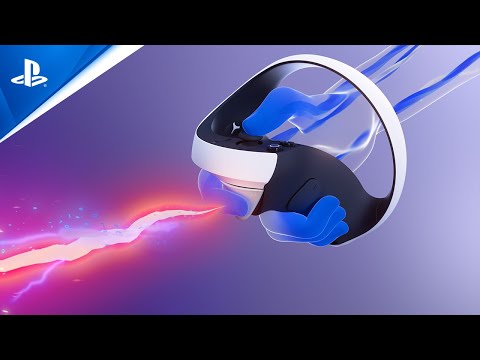
Some of the games supported on PlayStation VR2 include Horizon Call of the Mountain, Gran Turismo 7, The Walking Dead: Saints & Sinners – Chapter 2: Retribution, Demeo, Cosmonious High, Cities VR, Creed: Rise to Glory – Championship Edition, The Dark Pictures: Switchback VR, and After the Fall, among others.
Sony’s headset features a high-fidelity OLED display with per-eye resolution of around 2000×2040 for 4K HDR visuals, which is four times that of its previous version. It also has an about 110° FOV (field of view), which refers to the virtual world visible through an extended reality headset. A wider FOV means a larger field of view, which increases immersion in VR.
With its comfortable fit, eye-tracking to simulate heightened emotional responses, and responsive headset vibrations that add a tactile element to gameplay, the headset provides the wearer with an enhanced sense of realism. For audio immersion, Sony has utilized Tempest 3D AudioTech, while haptic feedback creates realistic vibrations/pulses.
Haptic feedback, along with finger-touch detection and adaptive triggers, is delivered by the PS VR2 Sense controller. Recently, Apple announced support for PS VR2 Sense Controllers with visionOS 26, and they are now available to purchase from Apple’s online store.
Furthermore, PS VR2 makes it easy to customize the play area and enjoy non-VR content in Cinematic Mode. Users can also see what’s happening in the real world with the See-through View function.
To get started, one simply needs to plug a USB cable into their PS5 console. Going wireless is not an option; one has to be tethered.
A big drawback of PS VR2 is that it doesn’t work with old PS VR games. And while it supports popular PS games, the game library needs to be expanded and have more exclusives to make it really worth the price.
Overall, PS VR2 has optimized the VR gaming experience for console players, but it is not standalone; one needs a PS5. It also has limited mixed-reality or productivity use.
Investing in Sony: Diversified Gaming and VR Exposure
What makes Sony appealing as an investment is diversification. The company posted a record net profit of 1.14 trillion yen ($7.7 billion) for fiscal 2024, up nearly 18% from the previous year. Annual revenue came in at 12.96 trillion yen ($88.1 billion), with the gaming division alone generating 4.67 trillion yen ($31.7 billion), representing the company’s largest revenue stream.
If we go beyond gaming, Sony pulls in substantial revenue from music, films, electronics, and image sensors. The PlayStation division delivered 414.8 billion yen ($2.82 billion) in operating profit, up 43% year over year, driven primarily by software sales and network services rather than hardware.
Sony Group Corporation (SONY -0.6%)
So, for investors looking for VR exposure without Meta’s concentrated risk, Sony offers a safer bet with lower upside but also less downside if the market develops slowly.
3. Apple Vision Pro

Apple Vision Pro is an ultra-premium headset aimed at spatial computing and mixed reality. So, if someone is really serious about display quality, seamless blending of AR and VR, and staying on the cutting edge of technology, then this high-end option is for them.
It is currently the most expensive standalone VR headset on the market, costing a hefty $3,499. At such a cost, Apple has tried to make it a comfier fit with a soft, breathable, adjustable head strap. A light seal magnetically attaches to its aluminum alloy frame and flexes to conform to your face for a precise fit, while speakers are positioned close to your ears to deliver rich spatial audio.

The headset features a custom 4K micro‑OLED display system and supports high-performance eye and hand‑tracking to deliver unparalleled fidelity for professional use cases. It also supports 360°, 180°, and wide FOV video playback.
As with Apple gadgets, the Vision Pro headset runs its proprietary visionOS, which recently received software and hardware upgrades.
This includes Personas, which were in beta when the Vision Pro first made its debut. The advanced version now features finer detail in areas like skin, hair, lashes, and more, making it all more natural. On the processor front, the VR headset is now powered by the M2 chip and R1 chip for sharper details, faster loading and switching of apps, more responsive web browsing, and overall a better spatial experience.
Its other capabilities include the ability to FaceTime, zoom into view, automatically scrolling through Safari web pages by using eyes, and unlocking the iPhone by simply glancing at it. And with expanded support for languages, Apple Intelligence makes the Vision Pro experience smarter.
Apple Vision Pro, while an amazing tech, has its drawbacks besides being extremely expensive. For one, the headset can be heavy despite the company’s focus on making it comfortable. Not only does it exclusively work within Apple’s ecosystem, but it also doesn’t work seamlessly with all Apple devices, and has a limited content library.
Still, with its extremely fast M2 processor and top-tier visual fidelity, Apple Vision Pro can be a great addition for creative work, media, and spatial apps, if you don’t mind spending $3.5K on a headset.
Investing in Apple: Premium AR/VR with Limited Revenue Risk
In the AR/VR space, Apple’s approach is the exact opposite of what Meta & Sony have gone for. By pricing Vision Pro at $3,499, Apple has positioned it as a luxury AR/VR device rather than a gaming headset. So, it’s clear they are not pursuing mass adoption; instead, their focus is on professionals and early adopters who are willing to pay premium prices for superior hardware and better ecosystem integration.
Apple Inc. (AAPL -1.62%)
The company posted $391 billion in revenue for fiscal 2024, with net income of $93.7 billion. So, Vision Pro likely accounts for less than 1% of total revenue. That means, even if it flops completely, Apple won’t feel it. The real play, however, is positioning: Apple wants to have a foot in the game when AR/VR devices start gaining traction worldwide, by which time it will have the software foundation and developer relationships in place.
4. Rokid Max AR Glasses

AR glasses from Rokid look like your regular glasses, which means they are lightweight, just 75g heavy, and easy to carry, but come with additional advanced capabilities. They are micro-OLED virtual display glasses that project a large virtual screen for media viewing, streaming, or screen mirroring.
Rokid AR offers up to 600 nits of brightness for vibrant visuals and a ~50° field of view. Interestingly, they even come with built-in myopia correction, so friends and family with different prescriptions can share it and enjoy a clear AR experience.
These AR glasses are also compatible with most consoles, including the Switch, PS4 Slim/PS4 Pro, Steam Deck, and Xbox Series X/S.
While convenient and flexible, Rokid Max does not offer a fully immersive VR experience. They have limited tracking or interactive VR capabilities and are not meant for hardcore VR gaming. But they make for a good “virtual screen” alternative.
5. HTC Vive XR Elite VR

If you are looking for a powerful way to experience virtual reality, then you’d enjoy the HTC Vive series, which is a brand of VR, AR, and MR headsets, accessories, and devices developed by HTC Corporation that allows users to interact with virtual environments for gaming, education, design, and other applications.
Products offered under this brand include the VIVE Focus series, which offers standalone and PC VR experiences without requiring any base stations or external sensors, and the VIVE Pro Series, which delivers extreme visual fidelity and precise room-scale tracking for avid gamers or dedicated professionals.
It also offers a sleek, hands-free pair of AI glasses called VIVE Eagle that are equipped with high-quality open-ear audio, sharp photo and video, and magnetic fast-charging, while immersive AR glasses VIVE Flow can be paired with a phone or the VR controller to enjoy games, videos, social events, and more in virtual reality.
Then there’s the all-in-one XR headset that transforms into a pair of portable immersive glasses. This base-station-free PC VR is designed for users to enjoy intense, action-packed gaming via wireless PC VR streaming.
VIVE XR Elite features an ergonomic design for stability and customized comfort, with four key accessories: the smooth VIVE Face Gasket 2.0, VIVE MR Gasket for enhanced peripheral vision and ventilation, VIVE Deluxe Strap for mobility, and VIVE Temple Clips to secure the glasses-battery cradle connection.
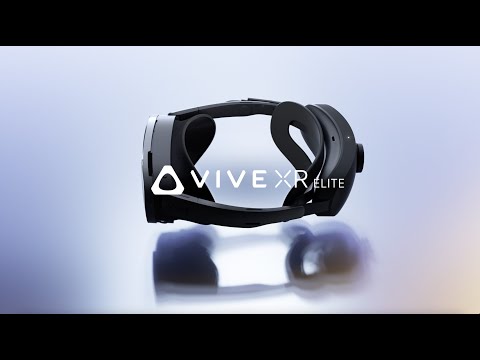
The headset offers a competitive display, with a combined resolution of 3840 x 1920, a 110° field of view, and a 90 Hz refresh rate for sharp visuals and smooth motion. One can either use it standalone, just the headset, or connect it to a PC via cable or Wi-Fi 6E for more demanding content.
It is powered by the Snapdragon XR2 chipset, a family of powerful chips designed by Qualcomm for XR devices, known for high-performance processing, AI capabilities, and high-fidelity mixed reality experiences.
The headset also supports vibrant, high-resolution, full-color passthrough plus depth sensing and inside-out tracking, letting you overlay virtual content on real-world space or go full VR.
Its stepless IPD (inter-pupillary distance) adjustment lets the user adjust their viewing experience, while the diopters on each lens can be adjusted to optimize focus. So, if you wear glasses, you won’t need prescription inserts. AI-driven hand tracking, meanwhile, enables intuitive interactions, allowing one to navigate with natural hand movements.
The headset has a replaceable battery, which lasts up to 2 hours and is detachable for enhanced portability.
As for pricing, the VIVE XR Elite launched at $1,099, though recent retail pricing shows it at around $860.
Swipe to scroll →
| Device | Type | Best For | Platform / Ecosystem | Key Features | Approx. Price (USD) |
|---|---|---|---|---|---|
| Meta Quest 3 / Quest 3S | Standalone VR / Mixed Reality | Beginners, casual gamers, fitness, mixed-reality apps | Meta Horizon OS, Android-based ecosystem | Snapdragon XR2 Gen 2, large app library, full-color passthrough, 6-DoF tracking | Quest 3 from ~$499.99; Quest 3S from ~$299.99 |
| Sony PlayStation VR2 | Tethered VR | Console gamers who already own a PS5 | PlayStation 5 ecosystem | 4K HDR OLED, eye-tracking, strong exclusive game lineup | ~$399.99 (headset, PS5 required) |
| Apple Vision Pro | Standalone spatial computing / Mixed Reality | Apple power-users, creative pros, early adopters | Apple visionOS ecosystem | 4K micro-OLED per eye, M2 chip, advanced eye/hand tracking, deep Apple integration | $3,499+ (accessories extra) |
| Rokid Max AR Glasses | AR display glasses | Travelers, media watchers, big-screen on the go | Works with phones, PCs, consoles via USB-C / adapters | 75g lightweight design, 600-nit micro-OLED, 50° FOV, built-in myopia correction | Typically in the $300–$450 range (varies by retailer) |
| HTC Vive XR Elite | Standalone / PC-tethered XR | Power users, PC VR gamers, enterprise/light productivity | Vive ecosystem, SteamVR (PC) | 4K resolution, 110° FOV, 90 Hz, detachable battery, full-color passthrough | Launched at ~$1,099; often discounted under ~$900 |
Final Thoughts
For years, AR and VR remained futuristic technologies, full of promise but always out of reach. But it finally changed thanks to breakthroughs across hardware, software, and connectivity. In particular, advances in displays, tracking and sensing, haptics, optics, computer vision, AI, and power management have enabled real-time, immersive experiences.
So, as AR and VR continue to evolve, from affordable mixed-reality headsets to lightweight AR glasses and premium spatial-computing systems, there’s truly something for everyone this holiday season.
Investor Takeaways
- Meta dominates consumer VR headset shipments but Reality Labs remains deeply unprofitable, making it a high-beta, long-duration bet on mass adoption.
- Sony offers steadier exposure to VR through its broader gaming ecosystem, where software and network services drive the bulk of profits.
- Apple’s Vision Pro is a tiny revenue contributor today, but positions the company for a premium slice of future spatial computing demand.
- AR/VR remains an emerging category; portfolios should treat these names as part of a diversified “disruptive tech” sleeve rather than single-theme bets.
Whether you’re gifting an entry-level device for someone curious about virtual worlds, a powerful, gaming-focused headset, or cutting-edge glasses that seamlessly blend digital life into the real world, these innovations offer unforgettable ways to not just play but also create, connect, and explore.
Click here for a list of top maverick companies redefining the AR/VR space.



