

Investing 101
Stagflation Explained and How to Protect Your Portfolio

Securities.io maintains rigorous editorial standards and may receive compensation from reviewed links. We are not a registered investment adviser and this is not investment advice. Please view our affiliate disclosure.

Micro vs. Macro Investing During Stagflation
In most cases, investors are better off adopting one of two strategies: either rely on passive investing and indexes to grab the general growth in markets, leaving stock picking to professionals; or learn more about investing, and pick either a sector or an individual stock they think has greater potential than the overall market.
Both strategies tend to ignore macroeconomics, the background trend of the overall economy and monetary system.
Passive investors simply accept macroeconomic conditions as they are and their effect on the overall markets. In the case of stock picking, the proper understanding and forecast of technology improvement, industry trends, or individual company situations is overall more important than macroeconomics.
Still, in some cases, macroeconomic conditions are so impactful on the market that investors need to be wary of their consequences for their portfolio. One such case is stagflation, which might one day be remembered as the defining macroeconomic condition of the 2020s.
Summary
- Stagflation combines high inflation with weak economic growth and is rare but highly disruptive.
- The 1970s showed that equities and bonds often underperform while gold, commodities, and defensive sectors outperform.
- Modern risks—debt, geopolitical shocks, deglobalization—mirror some 1970s dynamics.
- Investors can wait, rotate gradually, or fully hedge against stagflation depending on risk tolerance.
What Is Stagflation?
The 1970s Precedent
The term stagflation was first coined in 1965 and is the amalgamation of two words: inflation and stagnation.
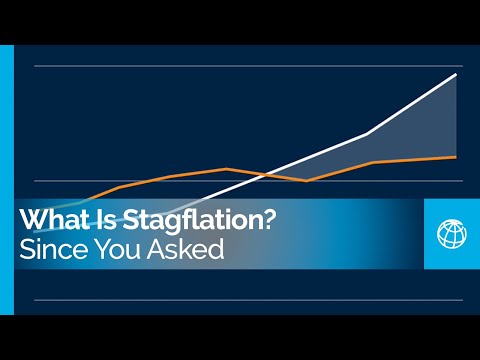
Until that period, it was always assumed that inflation was mostly the result of an overheating economy in boom periods. Thus, inflation and economic stagnation were seen as opposites.
But inflation can also be caused by, for example, shortages or excessive money printing. When this happens in a period of economic stagnation, the result is stagflation.
The issue with stagflation for investors is that it causes many economic sectors to struggle. Inflation increases the cost of doing business, from material inputs to growing demand for higher salaries to keep up with the cost of living. But at the same time, the economic stagnation limits companies’ pricing power, leading to contracting margins or outright negative earnings.
In the 1970s, the trigger for stagflation was the oil crisis, caused by the OPEC embargo, and resulting in skyrocketing oil prices.

Source: Euromoney
At the time, the economy was even more dependent on oil than it is today, so it caused an immediate and brutal economic shock. As oil prices were affecting almost every other price through costs of transportation, manufacturing, and energy, this also caused inflation to rise.
In addition, the period was marked by monetary turmoil, with the suspension of the convertibility of the dollar into gold in 1971.

The strong money printing and large budget deficits contributed further to the high level of inflation, culminating in two spikes of double-digit inflation in the 1970s and early 1980s.

Source: Finance News Network
The Link To Interest Rates
Because the US government was running large deficits in connection with the Vietnam War until 1975, it needed more money to go into US bonds. This was in part achieved by a method called “financial repression”.
By keeping maximum rates on loans, forcing financial institutions to buy US bonds, and imposing capital control, the government forced savings into government debt and made savers earn less than inflation.
So in that context, the higher inflation was not really a problem for the government, as it helped balance the budget and reduce the federal debt.
By keeping the Federal Reserve interest rate too low, inflation was let loose, leading to stagflation.
It was only with the so-called “Volcker Shock“, when the Federal Reserve raised rates to 20% in June 1981, that inflation would be durably put under control.
Why Stagflation Matters for Investors
1970s’ Lessons
| Asset Class | Historical Performance in Stagflation | Why It Performs This Way |
|---|---|---|
| Gold | Very Strong | Serves as an inflation hedge and store of value. |
| Energy & Commodities | Strong | Prices rise as input costs and scarcity increase. |
| Utilities & Consumer Staples | Moderate–Strong | Demand remains stable even during downturns. |
| Real Estate | Moderate | Rents adjust upward; property is inflation-sensitive. |
| Tech Stocks | Weak | High valuations struggle with rising rates and low growth. |
| Bonds | Weak | Inflation erodes real yields; fixed payouts lose value. |
While a rare macroeconomic phenomenon, stagflation is important to investors if it has consequences similar to those that happened in the 1970s.
The first effect was a radical difference in performance between asset classes. In stagflation, the bulk of financial assets like US equities and US treasuries performed poorly, bringing negative or zero returns.
Instead, sectors like gold, commodities, and real estate outperformed, with gold notably managing a 22% year-to-year performance.

Source: SBC Gold
If equities as a whole took a beating, a more detailed view shows a more complex picture. Some sectors, like utilities, handled stagflation very well, together with defensive investing categories like staple consumer goods. Healthcare, real estate, and energy also did well.
Meanwhile, tech, discretionary spending, and industrial stocks suffered the most.

Source: Business Insider
New Stagflation Risks
It is no secret that large segments of the economy have been struggling in the 2020s. High levels of debt are a characteristic of the 2020s, whether it be government debt, personal debt, or corporate debt.
Since the shock of the pandemic and the associated stimulus, inflation has made a comeback. And inflation has not gone back to the previous lower levels, despite low oil prices and a cooling economy.

Source: Statista
And like in the 1970s, government deficits and money printing are at elevated levels, with the deficit almost reaching 2 trillion, leading to inflation expectations staying high.

Source: Fiscal Data
Warning Signs of Potential Stagflation
Economic Signs
Discussion about stagflation risks has been going on for a few years and will likely keep happening throughout the 2020s.
For many economists and investors, this is a difficult problem, and if we have entered a durable period of stagflation will only be evident in the hindsight. But investors need to make the right decisions now if that is the case.
The persistent inflation is a first warning sign. But economic weakness is the other component of stagflation.
The consequences of new tariffs, high levels of government and consumer debt, and a persistent cost-of-living crisis are all contributing to a softening of economic activity. This is true for the USA, but also the UK, EU nations, Japan, etc.
Geopolitical Risks That Fuel Stagflation
Global geopolitical tensions rising is another potential issue. As the conflict in Ukraine escalates, a reduction in Russian oil exports could cause energy prices to rise, adding further fuel to inflation, similar to the two oil shocks of the 1970s.
The high risk of war with Iran and Venezuela, two other countries with major oil resources, and in the case of Iran, near the other Middle East oil producers, adds to this risk.
Lastly, the US-China rivalry is causing a trend toward reversing globalization, with each economic bloc looking for more strategic safety at the cost of less efficiency.
Globalization has been generally considered a phenomenon creating deflation (decreasing prices). So it makes sense that the reversion of globalization will likely contribute to durably higher inflation trends.
Monetary Risks
At its core, stagflation is the combination of economic weakness with inflation. Historically, inflation has often been correlated to a change in the monetary system, as said by the Nobel Prize winner Milton Friedman:
Excess money printing often leads to a currency devaluation. As the US dollar is the center of the world’s monetary system, it has not directly weakened much.
And when measuring in non-fiat currency, be it Bitcoin or gold, the dollar (and all the other fiat currencies) indeed seem to be devaluing quickly.

Source: Google Finance

Source: Kitco
In the 1970s, there was no Bitcoin, so no direct comparison can be made for cryptocurrency potential. But gold moved from $35/ounce at the start of the decade, to $850/ounce in 1980.
Contrary to almost every other decade before or after, in the 1970s, gold achieved a staggering 1,365% return in 10 years, compared to just 76% for the S&P500.

Source: A Wealth Of Common Sense
Investors should, however, remember that gold performed very poorly in each of the 4 decades that followed, so while gold does well in stagflation, it does not in almost every other macroeconomic regime.
How Interest Rates Behave in Stagflation
As a rule, low interest rates can stimulate economic activity and may contribute to higher inflation when the economy has sufficient demand and borrowing capacity. However, during periods of economic weakness, supply shocks, or high indebtedness, low rates may fail to generate growth while still allowing inflationary pressures—such as energy or supply-chain shocks—to persist.
At the same time, this policy tool is relatively inefficient when the economic weakness is due to external factors (like a global oil shock) or when the economy is overly indebted.
In the 1970s, persistently too low interest rates from the Federal Reserve contributed to financial repression and fueled inflation.
Similarly, despite inflation staying stubbornly higher, the Federal Reserve is more likely to cut rates than to raise them, due to weak economic growth (stagnation).
Building A Stagflation Portfolio
The dilemma for investors regarding stagflation is that what works during such a period is almost opposite to what works in any other period.
So, for example, it is virtually impossible to be both an exposed tech stock and a stagflation stock without expecting half of the portfolio to underperform. Not picking a side on the debate about stagflation risks is almost a guarantee of lackluster performances.
This might be okay if the goal is to limit risks as much as possible, but for most investors, higher returns are the main target.
Possible Strategies
Wait And See
In the 2010s and early 2020s, betting on tech stocks has been the best possible choice for investors.
Even if stagflation is really setting up, it would be detrimental to an investor’s returns to have rotated too early into defensive sectors or gold.
This trend could easily keep going for a few more years. And it is also possible that economic growth returns, or inflation declines, and stagflation is avoided altogether.
So some investors will want to keep an eye on the question, but maybe not act yet, and not move away from what has so far been a winning investing strategy.
Slow Rotation
As tech stocks and other higher volatility sectors are reaching new highs, some investors will see it as a sign to cash in some of their profit.
Considering the mounting stagflation risks, this is the occasion to rotate positions that are losing steam into assets benefiting from it.
If inflation and economic weakness persist or get worse, further moves into a stagflation-focused portfolio can be made until a full rotation has been done in a few years.
In this strategy, a transition period of a mix growth + stagflation portfolio is the price to pay to limit the risks of getting the timing wrong.
All-In
Predicting macroeconomic conditions accurately is generally extremely difficult, which is why most investment advice recommends preferring passive investing, or cautious stock picking in the style of Warren Buffett.
Still, accurately predicting a major change in macroeconomic regime can be extremely profitable. To do this well, predicting the direction properly is not enough; timing needs to be excellent as well.
So while it is likely not recommended for most investors, some will want to take a chance and go all-in on a stagflation forecast. For example, they are making their portfolio heavy on gold, commodity stocks, and real estate.
For this idea to work, it will need at least a repeat of the 1970s result. Then, the more than doubling of gold price between 2019 and 2025 might look like just the beginning of a 10x rise in a mere decade.
Still, this is by far the strategy with the most risks, and investors need to be aware of this fact.
Investor Takeaways
- If stagflation emerges, tech and growth stocks may face major headwinds.
- Gold, commodities, utilities, energy, and certain real estate assets historically perform best.
- Portfolio timing matters—rotating too early or too late both carry risks.
- Maintaining flexibility and monitoring macro data is essential during the 2020s volatility.
Conclusion
Stagflation is a very unique set of macroeconomic conditions that happens rarely. However, it also has major implications for investors, so it is a risk that cannot be ignored.
This is especially true when the underlying trends from economics, international relations, and monetary policies are trending toward similar trends to the 1970s, a historical period strongly impacted by stagflation.
This includes low rate, persistent inflation, energy shock risks, weak economic growth, and rising gold price and other “hard assets” (silver, crypto, real estate, commodities).
Still, uncertainty remains, and even then, timing the switch perfectly to a stagflation-dominated environment is far from easy.
So investors will have to stay on edge and calculate how to adapt their portfolio dynamically as more data on the macroeconomic conditions arrive.



