

Aerospace
Holiday Aerospace Gifts for Space Lovers & Engineers

Securities.io maintains rigorous editorial standards and may receive compensation from reviewed links. We are not a registered investment adviser and this is not investment advice. Please view our affiliate disclosure.

Surprise the dreamers, engineers, and star-lovers of your family with gifts that offer education, excitement, and inspiration in equal measure this holiday season.
Aerospace has long captured the human imagination, shaping how we explore our planet and beyond. What began more than a century ago with simple flying machines has since evolved into one of the world’s most advanced and influential industries.
Summary
This holiday guide highlights five aerospace-themed gifts that blend fun with STEM learning: drones, telescopes, rocket-launch kits, space LEGO sets, and structured online courses.
Each option helps space lovers and future engineers explore real-world aerospace concepts—from flight dynamics and rocketry to orbital mechanics and astronomy.
The guide closes with an investing angle, using General Dynamics (GD) as an example of how long-term exposure to the aerospace sector can complement hands-on learning.
Today, the sector encompasses commercial aviation, defense systems, and space exploration.
It is involved in the research, design, development, manufacturing, and maintenance of flight vehicles, including crewed and uncrewed spacecraft, airships, airplanes and military aircraft, uncrewed aerial vehicles, rockets and missile systems, and space launch vehicles.
The US has the world’s biggest aerospace industrial complex, with American companies making up more than half of the global aerospace industry. While the US government is the major buyer of their military systems, American companies are also the main suppliers of aerospace hardware to the rest of the world.
One of the most powerful industries in the US, the aerospace sector supplies not only military aircraft and missiles but also space, commercial airliners, and general aviation. Due to a great emphasis on research and development (R&D), a quarter of the sector’s workforce is made up of engineers, scientists, and technicians.
The potential of aerospace is vast, and according to Deloitte’s 2026 Aerospace and Defense Industry Outlook, the industry is entering a new era of growth, driven by digital sustainment, artificial intelligence (AI), and rising demand across commercial and defense segments.
The multinational professional services network that provides audit, consulting, financial advisory, risk management, and tax services noted in its report that increasing fleet utilization and steady gains in passenger and cargo demand point to continued growth in the commercial aerospace sector.
With commercial operators facing persistent production backlogs, aging fleets, and readiness challenges, the focus is shifting from expansion to maximizing the reliability and availability of assets that are already in service.
On the defense side, a growing emphasis is on enhancing mission readiness while priorities are shifting to autonomous unmanned systems, drones, advanced weapons platforms, and accelerating the fielding of AI-enabled systems.
Digital transformation, according to Deloitte, is no longer aspirational but essential. It stated:
“Growth is expected to continue, but it will likely be powered by the industry’s ability to sustain and optimize existing assets while fielding next-generation capabilities. Companies that prioritize digital infrastructure, invest in talent, and operationalize advanced systems can be well-positioned to seize the opportunities and meet the challenges ahead.”
With that, now let’s take a look at exciting aerospace-related products that you can gift your friends and family members to elevate this Christmas.
Swipe to scroll →
| Gift Type | Approx. Price (USD) | Best For | Key Skills / Concepts |
|---|---|---|---|
| Drone | $300–$800+ | Teen and adult hobbyists, photography fans | Flight dynamics, navigation, basic aerodynamics, aerial imaging |
| Telescope | $200–$800+ | Space lovers, families who enjoy stargazing | Astronomy basics, optics, observing planets, stars, and galaxies |
| Rocket launcher kit | $10–$200 | Kids and adults who enjoy hands-on projects | Rocket design, thrust, gravity, safety and launch procedures |
| Space LEGO set | $75–$260+ | Builders of all ages, model collectors | Spatial reasoning, engineering thinking, space history |
| Aerospace course / certificate | $1,000+ (graduate level) | Students and professionals serious about aerospace careers | Astrophysics, aerospace engineering fundamentals, career credentials |
1. Drone Gifts for Budding Pilots and Space Fans

Drones are all the rage nowadays. They are being used to capture stunning aerial views, survey and secure remote sites, deliver food and emergency supplies, track wildlife, and make targeted attacks.
While currently utilized across sectors, drones aren’t new. They have been in existence for many decades.
The first pilotless aircraft were developed during World War I, while the term “drone” itself was popularized in 1935 when the British released the ‘DH.82B Queen Bee,’ and the debut of MQ-1 Predator by the US in 1994 marked a major step toward modern armed drones.
Drones are small pilotless aircraft. These “flying robots” are designed to be controlled remotely by human operators or operate autonomously using pre-programmed software-controlled flight plans, which work in conjunction with a GPS and onboard sensors.
The drone operator utilizes remote controls to launch, navigate, and land the drone while remaining on the ground.
These aircraft usually have rotors and propellers, which are spun using motors, or wings, which depend on the aircraft’s forward movement for lift. Their frame is typically made of a lightweight material to reduce weight and increase maneuverability. For power sources, they either use fuel or a battery.
Drones usually have a camera onboard to stream all that it’s seeing to the controller that’s in the pilot’s hand, as well as to take photos and videos. Depending on the intended use of the drone, it can have various cameras, live video feed, follow mode, altitude hold, and AI to follow objects, among other capabilities.
These aircraft come in various sizes, ranging from small, recreational models to large military or commercial aircraft.
Gifting a drone can offer the receiver a new perspective through aerial photography and videography, which can be an exciting and creative experience. It actually makes for a great gift for hobbyists, who can not only have fun with these “flying robots” but can also learn about flight dynamics and navigation. Not to mention, the gift is pretty versatile and can be used for travel, exploring, and documenting.
What’s more is that it is pretty budget-friendly, giving you the flexibility to make the choice based on how much you want to spend and the recipient’s age, interest, and experience.
For instance, DJI’s Mini 3 Drone, featuring 4K HDR video, vertical shooting, and 38kph wind resistance, with the DJI RC Remote, will cost you $359. For long-distance control and extended flight time, you’ll have to pay about $140 more. And if you are looking for even more advanced options with better sensors, stability, and obstacle avoidance, then that usually comes with a price tag of $800.
2. Telescopes for Stargazing and Amateur Astronomy

If you have a space lover in your family, then a telescope is the perfect gift to open up the universe for them. The ability to observe the celestial wonders gives hands-on exposure to not just astronomy but also physics and optics.
What may have started as a small spark of curiosity in astronomy can become a lifelong interest in space science with your gift.
A telescope is an optical instrument that magnifies distant objects. It uses the emissions, absorption, or reflection of electromagnetic radiation to observe distant objects. One of the most important investigative tools in astronomy, the telescope is used for stargazing, observing planets, stars, galaxies, the Moon, and much more.
Galileo Galilei revolutionized astronomy when he made extensive use of it to make systematic astronomical observations in the early 1600s.
He made his own telescopes with higher magnifications. The size of a telescope’s mirror or lens is key to making better discoveries, as it determines just how well it can collect light. And the larger the size, the more light it collects, and the better its ability to detect fainter objects. The James Webb Space Telescope (JWST), the largest and most powerful telescope ever launched in space in 2021, boasts a 6.5-meter diameter, and it observes in infrared.
With the gift of a telescope, you can encourage the recipient’s curiosity and boost their understanding of space science. And they don’t even have to go anywhere; they can do it all right from their backyard.
The only caveat is that you need darkness and clear skies, which means that if you live in a city with heavy light pollution, it may not be very rewarding. But the gift also presents the perfect opportunity to create shared experiences. You can join your kid for a night of sky watching or plan star-gazing trips for your entire family.
You don’t have to go big right off, either; you can start with a beginner telescope, and depending on the interest of the recipient, you can get a more advanced one in the future.
For instance, Celestron offers a wide range of telescope options for you to choose from.

The Celestron NexStar 127SLT Computerized Telescope is useful for both beginners and intermediate astronomy fans, and it costs about $600. If you are looking for a more portable option, for about the same price, you can get the Celestron NexStar 90SLT Computerized Telescope.
3. Rocket Launcher Kits to Learn Real Rocket Science
You can make this Christmas even more electrifying with the gift of a rocket launcher kit.
We are not talking about a Bazooka or RPG, which are used by the military to launch explosive warheads, but the ones used to fire rockets into space.
A space launcher is a giant, powerful rocket system that is designed to carry a payload like a satellite, spacecraft, crew capsules, or cargo through the atmosphere and into space. Once the rocket reaches its destination, the appropriate distance from the Earth, it releases the payload.
Designing these systems is very challenging, but scientists and engineers have made massive advances, with recent best ones achieving a reliability rate above 95%.
But why do we even need them? Well, Space rockets need launchers because of the Earth’s strong gravity, which requires immense thrust and extreme speeds to escape into orbit. The rocket-powered launch vehicles carry tons of fuel called propellant to give this required boost. Propellant, which is the fuel and the oxidizer required to burn the fuel, actually makes up most of the weight of the launch vehicle.
Launch vehicles have been used to send payloads into space since the 1950s, with the current US launch vehicles including the Atlas, Delta, Falcon, and Antares.
This Christmas, gift your friend or family member their own rocket launcher.
There are companies that sell rocket launcher kits to create a rocket, load it on a launcher, and with the press of a button, see it get launched into the air. These kits provide a visual demonstration of how rockets travel to space and come with not just all the equipment but also easy-to-follow instructions and explanations of key concepts to provide an equal dose of fun and educational experience.
By combining play and science, these kits help build planning and mechanical skills while offering the thrill of launch.
You can either get small air-powered rockets or more realistic model-rocket kits that use motors, making them perfect for not just kids but also older hobbyists. Now, entry-level model rocket kits are inexpensive, costing anywhere between $10 and $50.
If you go for more advanced versions that require expert skills to construct and finish model rockets, it can cost you $100 to $200.
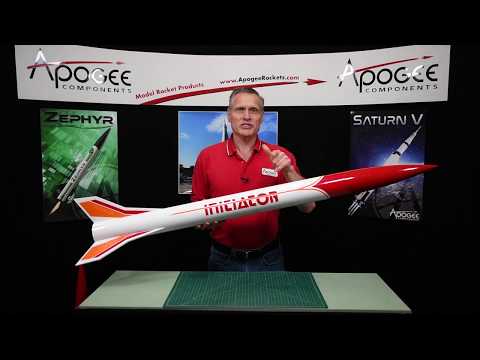
For instance, the AeroTech Initiator High‑Power Model Rocket Kit is a serious big rocket for hobbyists, which comes with motors for more altitude and a heavier build. For a cheaper version, you can use the LOC Precision Onyx Flying Model Rocket Kit, which is known for its sturdier airframes and mid-power kits.
4. Space LEGO Sets for Future Engineers
Could there be a better gift than a LEGO set, which continues to be very popular among not just kids but also adults? Whether one wants to simply have fun or challenge themselves with more detailed and intricate designs, LEGO is the answer.
The appeal of LEGO sets spans diverse interests, from art to architecture and engineering.
For kids, LEGO bricks are the way to ignite and expand their imagination, while for adults, they offer the ability to have fun, relax, and build more complex sets. Building with LEGO helps people of all age groups develop spatial awareness, logical thinking, problem-solving, and attention to detail.
LEGO caters to a vast array of diverse and specific hobbies, so there’s something for everyone.
When it comes to aerospace, LEGO has a lot of options for you. Some noteworthy ones include LEGO Technic Planet Earth and Moon in Orbit, an educational set showing orbital mechanics of Earth and Moon, and it can be a nice gift for someone interested in astronomy for a price of about $75.

Then there is LEGO Icons NASA Artemis Space Launch System, which can cost you about $260. This detailed, realistic multistage rocket model comes with boosters, an Orion capsule, and a launch tower. For a cheaper but display-worthy option, you can go with LEGO Icons Shuttle Carrier Aircraft, though it’s still more than $200, combining a Boeing 747 and the historic NASA Space Shuttle Enterprise. For less than $200, you can consider the adult-oriented LEGO NASA Space Shuttle Discovery that builds the real-world Space Shuttle Discovery plus the Hubble Space Telescope.
There are many other realistic space history models that you can choose from, offering a mix of mechanical builds and sci-fi-style spaceship sets. The range of price points is also broad, ranging from affordable beginner sets to premium collector-grade builds.
By merging engineering, space history, and creative building, a space-themed LEGO set offers the perfect gift for someone interested in spacecraft and space exploration.
5. Aerospace Courses and Certifications as a Gift
Why not make this Christmas truly meaningful? Help your family member take their passion for aerospace to the next level by gifting them a paid course. A gift like this can empower them to build real career opportunities and secure their future.
While there is a lot of content available online for anyone to access for absolutely no cost, self-learning can be harder to get started. There is also limited mentor support and no real-world project exposure.
A paid course, meanwhile, can provide a structured learning program that’s easier to follow and helps build a solid foundation. One also gets the guidance of experienced instructors who can clarify doubts, provide immediate feedback, and ensure the learner is on the right track. Furthermore, they can get hands-on project experience, certifications, career support, and a motivational environment.
Cost is one of the main factors that usually keep a learner from taking this route, and by gifting a quality paid course, you can completely eliminate this obstruction to higher learning, better opportunities, and greater satisfaction from both job and life.
To a beginner, you can gift an introductory course that teaches the basics of astrophysics, aerospace engineering, space science, or related domains.
But how much does it cost? Well, it can easily cost about $1,000 or more.
Colorado State University, for instance, offers a 9-credit graduate-level certificate in aerospace engineering that costs $964 per credit. However, this one is for those who want to make a switch from a science or engineering background to aerospace.
With your help, the recipient can turn their curiosity into knowledge. It may even ignite an interest in pursuing science, engineering, or astronomy further. You can either give it as a standalone gift or pair it with other options to make it even more meaningful.
Investing in Aerospace Stocks Like General Dynamics (GD)
The aerospace sector is a fast-growing one, led by companies like Boeing (BA +1.62%), Airbus, Lockheed Martin (LMT +2.3%), Northrop Grumman (NOC +1.33%), and SpaceX. Governments also play a key role in funding and regulating the multi-billion-dollar sector.
When it comes to investing in this space, which is driven by technological advancements, air travel demand, and defense spending, General Dynamics (GD +2.01%) represents a strong opportunity.
With a market cap of $92.3 billion, the company’s shares are currently trading at $341.70, up 29.68% YTD. Late in October, the stock went on to hit an all-time high (ATH) of 360.50. General Dynamics has an EPS (TTM) of 15.42 and a P/E (TTM) of 22.15. It pays a dividend yield of 1.76%.
General Dynamics Corporation (GD +2.01%)
The global aerospace and defense company offers a wide range of products and services in business aviation, land combat vehicles, ship construction and repair, weapons systems and munitions, and technology products and services, with its segments including Aerospace, Marine Systems, Combat Systems, and Technologies.
For the most recent quarter, General Dynamics reported a revenue of $12.9 billion, a 10.6% YoY increase. Its operating earnings were $1.3 billion, or $3.88 per diluted share (EPS), while its operating margin was 10.3%. The company had $2.1 billion in cash from operating activities and ended the quarter with $8 billion in total debt and $2.5 billion in cash and equivalents.
With all four segments recording “very strong order activity,” General Dynamics booked $19.3 billion in new orders for the quarter and reported a total backlog of $109.9 billion, underscoring the strength and visibility of its aerospace and defense pipeline.
“The Aerospace segment in particular performed impressively,” management added, pointing to revenue growing by 30.3% and margins expanding by 100 basis points from the same quarter a year ago, “with order activity for business jets remaining very strong.” The aerospace segment of the Gulfstream jet maker has been making a continued recovery from supply chain challenges. At the same time, its certification timelines were reduced, enabling it to increase its deliveries.
The company has also been winning a lot of government contracts. Last month, General Dynamics NASSCO, which specializes in Navy and commercial ships, won a $1.7 billion contract for the construction of T-AO 215 and T-AO 216.
In the month before that, the company’s Europe unit secured a contract for about $3.5 billion to deliver next-generation reconnaissance vehicles for the German Army Reconnaissance Corps. The scout vehicle system features assertiveness, superior mobility, and state-of-the-art, networked reconnaissance sensor technology.
The same month, the company also secured a $1.25 billion task order to support the US Army in Europe and Africa, which came only a week after announcing a $1.5 billion US defense contract.
Click here for a list of the top ten aerospace and defence stocks.
Investor Takeaways
- The aerospace and defense industry is entering a new growth phase powered by digital sustainment, AI, and strong demand in both commercial and defense markets.
- The U.S. still accounts for roughly half of global aerospace revenues, underscoring the sector’s strategic and economic importance.
- General Dynamics (GD) recently reported Q3 2025 revenue of $12.9 billion, EPS of $3.88, and strong order intake, highlighting robust demand across its aerospace and defense segments.
- For long-term investors, a diversified approach—individual names like GD plus aerospace ETFs—can complement the “inspiration” angle of giving space- and engineering-themed gifts.
Conclusion
Aerospace is a gateway to curiosity, creativity, and discovery. So, by choosing gifts inspired by flight and space exploration, you’re giving your family an experience. Whether it’s the thrill of flying a drone or launching a model rocket, the engineering fun of LEGO builds, the wonder of stargazing, or the real-world skills gained from a course, these gifts bring the excitement of aerospace within reach.
So, this Christmas, inspire someone to explore the vast possibilities of science and technology because the sky is no longer the limit; it’s actually the beginning!



