
Computing
Har kvantecomputing et første virkeligt brugstilfælde?

 Føj Securities.io til dine foretrukne kilder på Google

Quantum, AI & Photonics: En ny computerrevolution
Computing and information technologies are undergoing several technological revolutions at once: the rise of AI, the emergence of quantum computing, and the turn to photonics to overcome the limitations of classic silicon computing.
So far, each of these new sectors has mostly worked in isolated silos: AI training and computing is performed on classical silicon chips, quantum computing is looking to improve its technology until it can find a practical use, and photonics technology is still experimenting on designs and applications.
Maybe unsurprisingly, it could be that it is by merging these fields together that new possibilities emerge. It seems that quantum computing might just have found a practical use case, and would not even need further improvement before being useful.
Researchers at the Vienna Center for Quantum Science and Technology (VCQ) (Austria), the Politecnico di Milano (Italy), Consiglio Nazionale delle Ricerche (IFN-CNR) (Italy), and the company Quantinuum (UK) have found that existing quantum computers could outperform classical computer in AI training, using a photonic processor.
They published their results in Nature Photonics1, under the title “Eksperimentel kvanteforstærket kernel-baseret maskinlæring på en fotonisk processor”.
Hvorfor AI-træning og kvantecomputing møder begrænsninger
AI-trænings stigende omkostninger og energikrav
Recently, AI technology has made tremendous progress. This was however achieved only through the use of mind-boggling amounts of computing power, consuming tens of billions of dollars in chips and electricity.
Der kan bestemt opnås visse effektivitetsforbedringer, som DeepSeek AI har demonstreret ved at blive trænet med meget lave omkostninger til både beregning og kapital og samtidig overgå sine vestlige konkurrenter med en størrelsesorden. I sidste ende er der dog grænser for, hvor meget softwareforbedringer alene kan reducere AI-træningens behov for beregningskraft og energi.
Kvantecomputings skalerbarheds- og støjudfordringer
Meanwhile, Quantum computing is a promising technology, but until now suffering from a fatal flaw. The extremely fragile state of matter needing to be maintained for quantum computing to work means it is both expensive and not very scalable.
It also means that the results obtained are “noisy”, with regular errors, delays, and unreliable results.
Here too, innovations could mean that either et netværk af mindre kvantecomputere or en ny hardware‑designarkitektur, der bruger en ny tilstand af materie kaldet topoconductors, som muliggør skalerbarhed, could solve the problem.
Until it is confirmed, this has nevertheless put into question the relevance of quantum computing, still a technology in search of a practical use case that makes sense economically.
Kvanteforstærkede kernel‑metoder for AI
Hvordan kvante‑kernel tilføjer dimensionel kraft til maskinlæring
Kernel methods are widely used tools in machine learning, and use a mathematical method of adding dimensions to a dataset for better identification of hidden patterns.

Source: MDPI
This, of course, involves quite complex mathematics, which will be mostly understandable only for a limited set of specialists already working in this field. You can see a visual representation of how it works in this video:
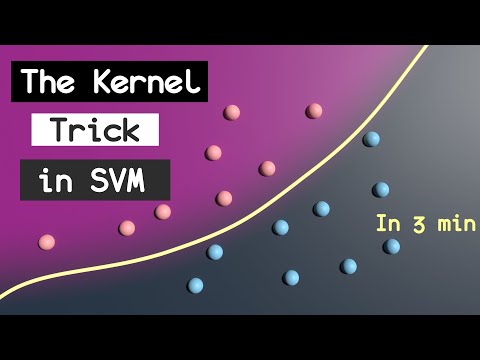
And such complex calculations could be a perfect fit for the unique capacities of quantum computers.
Fotoniske processorer møder kvante‑kernel for AI
An integrated photonic processor, created via femtosecond laser writing on a borosilicate glass substrate, was used for this experiment to encode the data into a state that can be treated by a quantum computer.

Source: Nature Photonics
This way, kernels displaying quantum interference were used for the calculation and compared to classical methods.

Source: Nature Photonics
Eksperimentelle resultater: Kvante vs. Klassiske kernel
The scientists tested four different dataset sizes, ranging from 40 to 100 data points, where the quantum kernel (in blue) was compared to the classical kernel (in orange).

Source: Nature Photonics
In both experiments, the quantum kernel performed better than the classical computing one.
“Vi fandt ud af, at for specifikke opgaver begår vores algoritme færre fejl end dens klassiske pendant.”
Philip Walther – Professor ved University of Vienna.
Næste skridt mod kvante‑AI‑træning i den virkelige verden
Fra demo til produktion: Kvante‑AI‑træning
This experiment demonstrated that quantum computers, which exist today, can outperform classical computers in tasks commonly used in neural network training.
This is a big deal because until now, it was assumed that only a more reliable quantum computer could ever be used for this kind of application. Now that this has been experimentally proven to not be true, the next step will be to do even a limited run of performing real-life AI training with that technology.
For this, new algorithms inspired by quantum architectures could be designed, reaching better performances.
“Dette indebærer, at eksisterende kvantecomputere kan vise gode resultater uden nødvendigvis at skulle gå ud over den nuværende state‑of‑the‑art‑teknologi”
Zhenghao Yin – PhD‑studerende ved University of Vienna.
Hvordan kvante‑fotonik reducerer AI’s energiforbrug
Photonics platforms can perform the same or a superior computing output with a much lower energy consumption. As energy is increasingly becoming the bottleneck of the AI industry, more than computing capacity or innovations, this could make the use of quantum‑photonic computer discovery especially important.
“Dette kan vise sig at være afgørende i fremtiden, da maskin‑læringsalgoritmer bliver uholdbare på grund af de alt for høje energikrav”.
Iris Agresti – PhD‑studerende ved University of Vienna.
Fanget‑ion vs. supraledende kvanteteknologi: Hvad kommer næste?
It could have important consequences for the direction of the quantum computing industry.
So far, the field has been split between trapped-ion technology, with high reliability, but low quantum computing capacity (qubit) per device, versus more complex designs relying on superconductivity, so far very noisy, but which are also more likely to ultimately be scalable to a large qubit volume.
The research was produced in a very close partnership with Quantinuum, with 4 out of 12 of the scientists in the article working at this company. As a trapped-ion technology specialist, it makes sense for Quantinuum to look for a situation where the low qubit count of its computers can already perform a relevant business case.
If this turns out to be true, it could make the company a key provider of computing capacity to the AI industry, maybe mimicking at least a fraction of Nvidia’s (NVDA ) achievements.
Investering i kvantecomputing
Honeywell / Quantinuum
HON Prisdiagram
Quantinuum is the result of the merger of Honeywell Quantum Solutions and Cambridge Quantum.
Honeywell remains the company’s majority shareholder (likely 52% ownership) after a fundraising round valuing it at $5B. Founder Ilyas Khan is reported to own approximately 20% of the company. Other shareholders include JSR Corporation, Mitsui, Amgen (AMGN ), IBM, and JP Morgan.
A potential IPO of Quantinuum in the future, potentially as a part of a larger corporate restructuring, is estimated to be worth as much as $20B and might occur between 2026 to 2027.
Quantum computing is not the central part of Honeywell’s business, more centered around products in aerospace, automation, and specialty chemicals & materials.
Each of these domains might, however, benefit from quantum computing, especially computational chemistry and quantum cybersecurity, potentially giving Honeywell an advantage against its competitors.
The company’s main model for now is the H2, a trapped-ion 56 qubits chip, with 99.895% two-qubit gate fidelity.
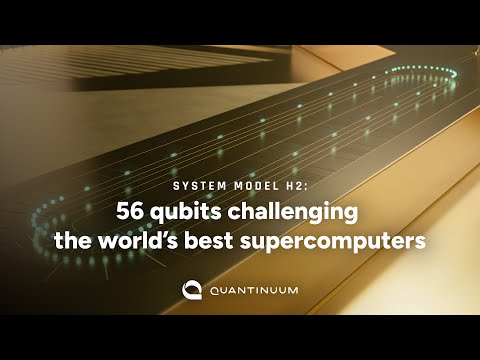
The company has pursued high-quality computing with very little error more than adding as many as possible qubits, creating a so-called “fault-tolerant quantum computing”.
This approach is labeled by the company “Better qubits, better results”, with a similar amount of qubits achieving 100-1,000 fold more reliable results.

Source: Quantinuum
This notably could make a difference in urgently needed quantum-resistant cryptography, with defense company Thales (HO.PA -0.96%) already collaborating with Quantinuum as well as the international banks HSBC and JP Morgan.
Quantinuum also offers its proprietary quantum computational chemistry InQuanto, usable for pharmaceuticals, material sciences, chemicals, energy, and aerospace applications.
Som mange andre kvantecomputervirksomheder tilbyder Quantinuum Helios som “hardware som en tjeneste”, så brugerne kan få gavn af kvantecomputing uden selv at skulle håndtere kompleksiteten ved at drive systemet.
Quantinuum signed in november 2024 a partnership with German Infineon, Europe’s largest semiconductor manufacturer. Infineon will bring its integrated photonics and control electronics technology to help create the next generation of trapped-ion quantum computers.
As integrated photonics are moving closer to practical use cases, it becomes now clear how important this partnership might be for the future of Quantinuum. At this point, it seems that the next step for the company will be to release the world’s first AI-focused photonics-quantum chip.
In the coming months, Quantinuum will share results from ongoing collaborations, showcasing the groundbreaking potential of quantum-driven advancements in Generative AI.
The innovative Gen QAI capability will enhance and accelerate the use of Metallic Organic Frameworks for drug delivery, paving the way for more efficient and personalized treatment options, with details to be unveiled at the launch of Helios.
Quantinuum Announces Generative Quantum AI Breakthrough with Massive Commercial Potential
The announcement in this publication is part of a string of news related to the quick progress of the AI-quantum computing connection made at Quantinuum.
More ongoing use cases could strongly boost the future value of the company, and therefore, Honeywell’s stack in it and the potential profit investors could make from it.
Seneste Honeywell / Quantinuum (HON) aktienyheder og udviklinger
Studie refereret
1. Yin, Z., Agresti, I., de Felice, G. et al. Eksperimentel kvanteforstærket kernel‑baseret maskinlæring på en fotonisk processor. Nature Photonics. (2025). https://doi.org/10.1038/s41566-025-01682-5



