Computing
How Chiral Spintronics Could Transform Computing

Securities.io maintains rigorous editorial standards and may receive compensation from reviewed links. We are not a registered investment adviser and this is not investment advice. Please view our affiliate disclosure.

How Spintronics Could Revolutionize Computing
Progressively, the world of hardware computing is starting to look beyond silicon chips, or even classical forms of binary computing altogether.
This is because the usual chips and memory in our computers and data centers are getting increasingly difficult to build, with the latest generation having transistors barely a few nanometers in size.
Another factor is that energy consumption is becoming an issue as the demand for computing power, particularly for AI systems, continues to grow.
There are many proposed solutions, with quantum computing and photonics being the most prominent options to either reduce the demand for computing or make it faster and less energy-intensive.
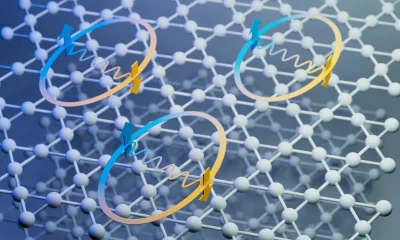
Another is spintronics, which utilizes the spin of electrons, a quantum characteristic, instead of the electric current (the flow of electrons).
Advantages and Potential Applications of Spintronics
Electronic components, such as transistors, are traditionally built from silicon and rely on semiconductors. The 0 and 1 signals in binary indicate the passing or blocking of an electric current.
An alternative way to perform computation is through spintronic devices, which run on the spin of electrons (a fundamental quantum characteristic) rather than the electric current (the flow of electrons).

Source: Insight IAS
Data can be encoded in both the spin angular momentum, which can be imagined as a built-in “up” or “down” orientation of the electron, and orbital angular momentum, which describes how electrons move around atomic nuclei.
Because this contains more information than just 0 & 1, spin can contain more data per atom than traditional electronics.
Spintronics has a few other advantages over classical electronic systems, notably:
- Faster data, as spin can be changed much more quickly.
- Less energy consumption, as spin can be changed with less power than it takes to maintain a flux of electrons to create a current.
- Simple metals can be used instead of complex semiconductor materials.
- Spin is less volatile than the semiconductor status, making the data storage more stable.
Swipe to scroll →
| Feature | Traditional Electronics | Spintronics |
|---|---|---|
| Information Carrier | Electric current (0 or 1) | Electron spin (up/down) |
| Energy Efficiency | High power demand | Lower power use |
| Speed | Limited by the current flow | Faster spin switching |
| Materials | Complex semiconductors | Simple metals/oxides |
| Data Stability | Volatile storage | Stable, non-volatile |
Spintronics has been commercialized in hard drive read heads since the 1990s, significantly boosting storage density over the past decades.
“Spin is a quantum mechanical property of electrons, which is like a tiny magnet carried by the electrons, pointing up or down.
We can leverage the spin of electrons to transfer and process information in so-called spintronics devices.”
Talieh Ghiasi – Postdoc Researcher at Delft University of Technology
Much recent progress has been made in spintronics, for example, that spin loss can be converted back into magnetisation, making spintronics electronics even more energy-efficient, or that spintronics & graphene could power next-gen quantum circuits.
And scientists are still discovering new methods to improve spintronics devices, like researchers at Seoul National University (South Korea). Korea University, Korea Institute of Science and Technology, and Feinberg School of Medicine (USA). They created magnetic nanohelices that can control electron spin, which could create an entire new field of so-called “chiral spintronics” devices.
They published their results in the prestigious scientific magazine Science1, under the title “Spin-selective transport through chiral ferromagnetic nanohelices”.
Chiral Spintronics
What Is Chirality in Spintronics?
In nature, symmetry is a fundamental feature of many things, including the components of DNA and light itself. It is possible that two molecules almost identical to each other differ not in their composition or shape, but in their orientation, a concept called “chirality”.
Chirality can be explained in its simplest form as the way in which our left hand differs from our right hand, despite both hands being identical in their shape, structure, and function.

Chirality plays a fundamental role in biology, with natural selection having selected exclusively “right-handed” DNA molecules, sugar, and amino acids (the base component of proteins).
It is, however, rare in inorganic materials, which tend to either be disorganized or crystals without chirality.
How Metals Gain Chirality for Spintronics
The scientists managed to create both left- and right-handed chiral magnetic nanohelices by electrochemically controlling the metal crystallization process. An alloy of cobalt-iron was chosen for its ferromagnetic properties.
A key innovation in this process is using trace amounts of chiral organic molecules, such as cinchonine or cinchonidine, which guided the formation of the helices.
“In metals and inorganic materials, controlling chirality during synthesis is extremely difficult, especially at the nanoscale.
The fact that we could program the direction of inorganic helices simply by adding chiral molecules is a breakthrough in materials chemistry.”
To demonstrate the chirality of these nanohelices, they measured electromagnetic fields (EMF) generated by the helices under rotating magnetic fields.
This creates an easy way to test if the material was produced properly, as the left- and right-handed helices produced opposite EMF signals, allowing for quantitative verification of chirality, not requiring the magnetic material to strongly interact with light, the usual way to check for chirality.
More importantly, they discovered that these chiral magnetic metals can also guide the spin accordingly: they preferentially allow one direction of spin to pass, while the opposite spin cannot.
“Chirality is well-understood in organic molecules, where the handedness of a structure often determines its biological or chemical function,”
Potential Applications of Chiral Spintronics
Through the material’s inherent magnetization (spin alignment), long-distance spin transport at room temperature became possible.
This effect proved constant, regardless of the angle between the chiral axis and the spin injection direction. As it was not observed in non-magnetic nanohelices of the same scale, it seems to be directly linked to the chiral magnetic helices.
This would make the first-ever discovered asymmetric spin transport in a relatively macro-scaled material.
The team also demonstrated a solid-state device that showed chirality-dependent conduction signals, paving the way for practical spintronic applications.
“These nanohelices achieve spin polarization exceeding ~80% — just by their geometry and magnetism,”
This is a rare combination of structural chirality and intrinsic ferromagnetism, enabling spin filtering at room temperature without complex magnetic circuitry or cryogenics, and provides a new way to engineer electron behavior using structural design.”
Another advantage of this new technology is that the manufacturing process is relatively simple and cheap, using no rare materials or complex technologies.
“We believe this system could become a platform for chiral spintronics and the architecture of chiral magnetic nanostructures.
This work represents a powerful convergence of geometry, magnetism, and spin transport, built from scalable, inorganic materials.”
Much more work still needs to be done to fully explore the potential of this new idea and materials. For example, the number of strands (double, multiple helices) can be modified at will, and might yield different characteristics yet to be discovered.
The ability to control the handedness (left/right) and even the number of strands (double, multiple helices) using this versatile electrochemical method is expected to contribute significantly to new application areas.
Between the ease of production and the possibility of long-distance spin transfer, this could be very useful for the production of fully spin-based computers and networks, with economic advantages from lower energy consumption and stable data storage.
Investing in Spintronic Innovators
1. Everspin Technologies
Everspin Technologies, Inc. (MRAM +3.71%)
Everspin is a branch of Freescale (now known as NXP, stock ticker NXPI) dedicated to developing MRAM memory systems, the most common form of spintronics that is commercially viable today. It got spun out and went public in 2016.
Everspin is considered the leader of MRAM technology (Magnetoresistive Random-Access Memory), inheriting Freescale’s experience of being the first to commercialize an MRAM chip in 2006.
Because MRAM is a memory that persists even in the absence of a current, it is increasingly used in sensitive use cases where critical data is too important to risk loss.
Driven by pervasive applications such as data analytics, cloud computing, both terrestrial and extraterrestrial, artificial intelligence (AI), and Edge AI, including Industrial IoT, the market for persistent memory is projected to grow at a CAGR of 27.5% between 2020 and 2030

Source: Everspin
The company estimates the market will reach a $7.4B size by 2027. The company has had no debt and positive free cash flow since 2021.
Everspin MRAM products are currently occupying a small but growing niche, serving markets where reliability is crucial, like aerospace, satellites, data recorders, patient monitoring devices, etc.

Source: Everspin
The growth of chipsets, AI, and synaptic systems might also be a long-term boost for the company.
2. NVE Corporation
NVE Corporation (NVEC +0.69%)
Another leader of spintronics, NVE has been working on this technology since its first patent in MRAM technology in 1995. It produces spintronic sensors and isolators, mostly used in measurement and sensor systems for cars, gears, medical devices, power supplies, and other industrial devices.

Source: NVE
This puts NVE in a somewhat different category than Everspin, with NVE more of an industrial company with a strong position in a niche market (magnetometer using spintronics), while Everspin is more of a memory/computing company working with and in competition with the likes of Intel, Qualcomm, Toshiba, and Samsung, who are also developing their own MRAM product.
It can make the stock more (or less) attractive depending on investors’ profiles, with NVE’s stock more likely to appeal to more conservative investors seeking a dividend yield and safety.
Studies Referenced
1. Yoo Sang Jeon, et al. Spin-selective transport through chiral ferromagnetic nanohelices. Science. 4 Sep 2025. Vol 389, Issue 6764. pp. 1031-1036. DOI: 10.1126/science.adx5963