
Additive Manufacturing
Ang Laser Powder Bed Fusion ay Naging Mas Kaakit-akit Sa Pinakabagong Pagsulong na Ito

 Idagdag ang Securities.io sa mga gusto mong mapagkunan sa Google

Aling Teknolohiya ang Maghahari sa 3D Printing?
As 3D printing, also called additive manufacturing, is increasingly becoming a key component of advanced manufacturing, it is important to further optimize the process. This is because 3D printing parts and components are usually used in very demanding applications, like automotive engines, rockets, military equipment, etc. So in these circumstances, any failure of one component can trigger a catastrophic domino effect.
Itong bagay ay magiging mahalaga upang payagan ang industriya na lumipat mula sa kasalukuyang konsolidasyon upang maging pangunahing proseso ng pagmamanupaktura kumpara sa mga lumang pamamaraan ng pagkatunaw ng metal sa mga hulma at pag‑machining.
Isang partikular na teknik sa 3D printing ang ginagamit para sa precision manufacturing: laser powder bed fusion.
Ang mga mananaliksik sa University of Wisconsin-Madison at Argonne National Laboratory ay kamakailan lamang nagsuri ng proseso gamit ang advanced X-ray imaging at naniniwala na maaari nilang mabawasan nang malaki ang mga depekto na nangyayari sa pagmamanupaktura. Inilathala nila ang kanilang mga natuklasan sa International Journal of Machine Tools and Manufacture, sa pamagat na “Pagbubunyag ng mga mekanismo ng pag‑alis ng depekto sa proseso sa laser powder bed fusion sa pamamagitan ng hugis na mga sinag gamit ang high‑speed X‑ray imaging1”.
Laser Powder Bed Fusion
The way powder bed 3D printing works is that a layer of powder containing the material used for the additive manufacturing is deposited in a container. A laser then melts/fuses the powder in the zone that will form the 3D-printed item.
A new layer of powder is then deposited on top, and the parts that need to be melted and added to the item are again targeted by the laser. Done over enough time, and very complex shapes can be produced, as well as relatively large items.

Pinagmulan: ResearchGate
Maaari mong makita ang laser powder bed fusion sa aksyon sa video na ito, pati na rin ang ilang halimbawa ng mga maaaring gawin gamit ang teknik na ito.
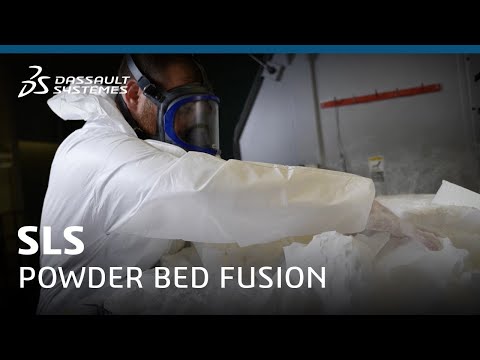
Ang laser powder bed fusion ay maaaring gamitin upang gumawa ng mga item mula sa plastik, ngunit mas mahalaga, mga metal din, kabilang ang titanium, bakal, cobalt‑chromium, aluminyo, atbp.
Ang bentahe ng pamamaraang ito ay nakalikha ito ng napakapriskong geometry, na may toleransyang +/- 0.2mm, katulad ng metal injection moulding. Kaunti rin ang nasasayang na materyales, dahil ang hindi nagamit na pulbos ay maaaring kolektahin muli at gamitin ulit.
Ang mas malalaking bahagi ay maaaring i‑print nang mabilis sa pamamagitan ng sabay‑sabay na paggamit ng maraming laser, karaniwang sa mas advanced na disenyo ng 3D printer.
Dapat tandaan na ang laser powder bed fusion ay isang pangkalahatang termino na sumasaklaw sa ilang iba’t ibang sub‑teknika:
- Selective Laser Melting (SLM) at Direct Metal Laser Sintering (DMLS), parehong trademarked na proseso na gumagamit ng laser system upang ganap na tunawin ang metal powder.
- Electron Beam Melting (EBM), katulad ng SLM ngunit gumagamit ng electron beam sa isang inert na atmospera o vacuum chamber.
- Selective Laser Sintering (SLS), na gumagamit ng powdered polymer materials kung saan ang laser ay nag‑sinter lamang ng mga particle nang magkasama at hindi ganap na tunawin ang materyal.
Pag‑iwas sa mga Pagkabigo sa 3D Printing
In theory, additive manufacturing of metal parts is equivalent to the traditional casted parts. In practice, issues can occur, such as pores, or “voids,” rough surfaces, and large spatters.
Such structural issues can lead to the parts breaking, something not acceptable in critical applications.
“Dahil naunawaan namin ang mga batayang mekanismo, mas mabilis naming natukoy ang tamang kondisyon ng proseso upang makagawa ng mataas na kalidad na mga bahagi gamit ang ring‑shaped beam.”
Lianyi Chen – Associate professor of mechanical engineering at UW‑Madison
Laser Beam na Hugis Singsing
The first change the researchers made to their 3D printing design was to replace the usual laser beam with a ring-shaped laser beam, provided by isang kumpanyang laser na tinatawag na nLight, creating semiconductor lasers.

Ang ibang hugis na ito ay lumilikha ng mas mahusay na sirkulasyon ng natunaw na metal sa melt pool sa kabuuan at mas maliliit na alon sa ibabaw ng bagong likhang item. Ang mga splatter ay mas maliit din at hindi gaanong lumalayo.

Pagkakatugma ng Modelo at mga Obserbasyon
The researchers confirmed these observations by using the Argonne National Laboratory’s high-energy synchrotron X-ray facility. They used it to create high-speed snapshots of the 3D printing process, allowing the researchers to check if their mathematical model simulated reality properly.

Mas Mabilis na 3D Printing
The researchers also managed to get the ring-shaped beam to drill deeper into the powder without creating more instability. This resulted in thicker layers without weakening the finished product.
As the production ultimately requires fewer layers, this speeds up manufacturing and increases the overall productivity of the machine.
Halimbawa ng Powder Bed Fusion
This type of work is far from just an academic demonstration. It could improve the powder bed fusion machinery already used in the industry. A good example would be in aeronautics, with the fuel nozzle on General Electric’s (GE.TO ) GE9X engine, which is used on Boeing 777 aircraft.
The GE9X is the largest turbo‑fan engine produced, and the additively manufactured nozzle is five times more durable than previous versions.
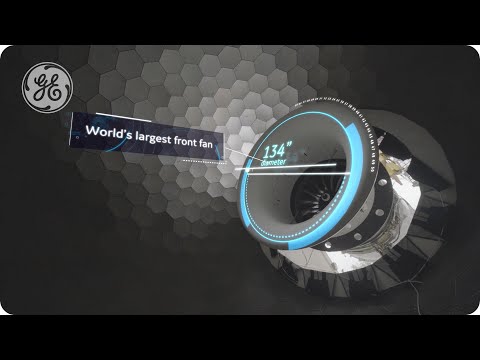
Dapat tandaan na ang mga ganitong pag‑unlad ay napakabago pa, na ang disenyo ng GE9X ay inaprubahan lamang ng FAA noong 2020.
Kahit ang mas mataas na kalidad na proseso ng powder bed fusion, pati na rin ang mas mabilis na isa, ay maaaring mapabuti pa ang disenyo habang kasabay na binabawasan ang mga gastos nito.
Ang Hinaharap ng 3D Printing?
Patungo sa Dominasyon ng Advanced Manufacturing
We have previously discussed how 3D Printing is consolidating into the future of manufacturing.
This is true in advanced manufacturing like biomedical implants or aeronautics. As the quality of additive manufactured parts keeps improving, this will probably become the dominant method of manufacturing in such demanding industries.
This is likely to apply as well to robotics, in‑orbit manufacturing, or even holographic 3D printing directly inside our bodies.
Patungo sa Higit pang mga Aplikasyon
Another change will occur when 3D printing gets cheaper.
This will be due in part to simply more utilization, as more 3D printers being produced will create economies of scale and decrease the costs of the machine and their feedstock.
Another factor will be improvements of the technology. It can optimize the utilization of feedstock (reducing operating costs) or produce parts quicker (reducing capex costs).
This could include thicker layers with ring‑shaped lasers like in this study. Or maybe using 2 lasers at once. And even 3D‑printed electronics to add to the 3D‑printed materials and parts.
Pamumuhunan sa 3D Printing
3D printing is now reaching technological maturity, as well as market consolidation. This gives investors a little more visibility than in the past and confirms that this technology is far from a fad but is here to stay.
You can invest in 3D‑printing‑related companies through many brokers, and you can find on this website our recommendations for the best brokers in the USA, Canada, Australia, the UK, as well as many other countries.
If you are not interested in picking specific 3D printing companies, you can also look into ETFs like ARK Invest 3D Printing ETF (PRNT) to capitalize on the growth of the additive manufacturing sector as a whole.
Or consult our articles “Top 10 Additive Manufacturing And 3D Printing Stock to Watch“, and “Top 10 Nanotechnology Stocks“.
Kumpanya ng Ring‑Shape Laser
LASR Tsart ng Presyo
Sa ngayon, ang mga nagwagi sa teknolohiya ng 3D‑printing ay karamihan ay mga tagagawa ng 3D printer at mga end user. Ang mga gumagawa ng indibidwal na bahagi ng mga 3D printer ay mas mahirap na mamuhunan, dahil karamihan ay umaasa sa medyo commodified na mga komponent tulad ng standardized lasers.
Hindi ito ang kaso sa inobasyon na tinalakay dito, kung saan ang ring‑shaped lasers ay isang bagong pag‑unlad na maaaring nakahanap na ng isang killer application.
The researchers used a laser produced by nLight, more precisely the continuous‑wave (CW) AFX1000 fiber laser.
The versatile palette of beam settings enables the processing of all metals without compromise. In cutting, these fiber lasers provide CO2‑like edge quality for thick metal and the speed advantages of fiber lasers for thin metal—all with the reliability and low cost of ownership of fiber lasers.
This laser is able to modify the shape of the ring in order to do more or less fine 3D printing and complex geometries.

Pinagmulan: Trokut Solutions
The company had seen its revenues grow steadily from 2016-2021, to then suffer from a decline largely driven by shrinking sales in China. This was likely in connection to the growing trade tensions between China and the West, and competition from Chinese domestic laser producers.
With currently 95% of customers out of China, this is not likely to keep impacting the company moving forward.

Pinagmulan: nLight
The mixed results are a reflection of this shift, with industrial sales declining steeply in 2024, while the microfabrication and aerospace segments boomed.

Pinagmulan: Trokut Solutions
The recent decline in sales has caused cash flow from operations to drop back into negative territory in 2024. However, if the growth trend of aerospace and microfabrication/3D printing persists, carried by the general growth of these sectors and nLight’s unique technological advantage, nLight should get back into profitability.
Sanggunian ng Pag-aaral:
1. Yuan, J., Guo, Q., Clark, S. J., Escano, L. I., Nabaa, A., Qu, M., Huang, J., Li, Q., Román, A. J., Osswald, T. A., Fezzaa, K., & Chen, L. (2025). Pagbubunyag ng mga mekanismo ng pag‑alis ng depekto sa proseso sa laser powder bed fusion sa pamamagitan ng hugis na mga sinag gamit ang high‑speed X‑ray imaging. International Journal of Machine Tools and Manufacture, 204, 104232. https://doi.org/10.1016/j.ijmachtools.2024.104232



