
Aerospace
KAGRA: Japan’s Cryogenic Gravitational-Wave Detector

Securities.io maintains rigorous editorial standards and may receive compensation from reviewed links. We are not a registered investment adviser and this is not investment advice. Please view our affiliate disclosure.

How KAGRA Detects Gravitational Waves
The history of astronomy is closely tied to the progress of telescopes, which have progressively revealed more of the Universe to us. It began with the primitive telescope of Galileo and other pioneers, and continues to this day.
As time passes, more and more ways of detecting stellar activity have been deployed beyond the visible light spectrum.
We have covered several such new telescope megaprojects, for example:
- DKIST, the world’s most powerful solar telescope.
- The James Webb Space Telescope, located millions of miles away from Earth.
- The Vera C. Rubin Observatory, a survey telescope looking at the entire sky all at once.
- SKAO (Square Kilometre Array Observatory), studying the sky in the radio wave spectrum.
- DUNE (Deep Underground Neutrino Experiment), detecting elusive neutrinos.
Another new type of astronomy is emerging, one that studies the sky in an entirely novel fashion: instead of light and various wavelengths of electromagnetic waves, it measures gravitational waves.
Only theoretical until relatively recently, now gravitational waves are a proven phenomenon. We previously covered one such “gravity telescope” with the Laser Interferometer Gravitational-Wave Observatory (LIGO).
Another one is the Japanese project Kamioka Gravitational Wave Detector (KAGRA). Taking a different approach from LIGO’s large-scale, multi-site strategy, KAGRA instead focuses on ultra-high precision measurements using cryogenic mirrors to reduce interference.
From Einstein’s Theory to Gravitational Waves
Gravity had long been believed to be “just” one of the Universe’s fundamental forces, like electromagnetism or the force driving nuclear forces at the atomic level.
But at the turn of the 20th century, Einstein’s theory of relativity described gravity as the curvature of space-time.

His theory not only correctly described how gravity works for very large objects like stars, but also predicted many space phenomena yet to be discovered at the time, like neutron stars and black holes.
Another prediction was the existence of gravitational waves, causing space to stretch and squeeze like ripples propagating on the surface of a lake.
Instead, a gravitational wave occurs when the fabric of space-time itself waves or vibrates.
So, gravitational waves are essentially making a specific segment of the universe stretch or contract, making a given distance longer or shorter when they pass by.
Some astronomical events would be likely massive enough to generate gravitational waves strong enough to be measured, like, for example, the collision of two black holes into each other.

However, no matter how powerful such a phenomenon is in absolute terms, the massive distance between Earth and its source, and the difficulty of trying to measure space-time itself, mean that an ultra-sensitive instrument needs to be designed to detect these events.
By the time the gravitational waves reach Earth, millions or billions of light-years away, they are thousands of billions of times smaller.
So you need highly precise measurements, as the amount of space-time wobbling the gravitational waves generated is going to be 10,000x smaller than the nucleus of an atom!
How Interferometers Detect Gravitational Waves
The first indirect evidence of gravitational waves was obtained through the study of a binary pulsar’s orbit. The orbital decay energy loss matched the predicted energy that would be lost to the generation of gravitational waves, winning the scientists in charge of this discovery the 1993 Nobel Prize in Physics.

Source: Nobel Prize
Direct measurement required a different type of proof, using an interferometer. The basic idea of an interferometer is to use the interaction between beams of light. If two light waves have the same wavelength, they’ll overlap and create a pattern of dark and bright spots.
But if something changes the distance traveled by these wavelengths, like a gravitational wave, the disturbance can be measured.
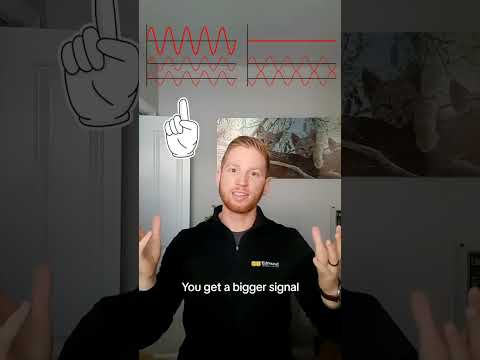
As the expansion and contraction of space-time from gravitational waves also expand and contract one of the arms of the interferometer more than the other, this creates a detectable and measurable effect of gravitational waves.
Inside KAGRA: Design and Location
Interferometer Layout (3-km Arms)
Like other interferometers, the base concept of KAGRA is to use a tube several kilometers long, where a laser is fired. That laser beam is then split into two along perpendicular paths.

Source: Nobel Prize
Both beams are then reflected back after hitting a mirror. Normally, each laser beam should cancel each other out, resulting in no light detected.
But if one arm is contracted or extended more than the other by a gravitational wave, the interference between the laser beams stops, and a light signal is detected.
In 2015, the U.S. National Science Foundation Laser Interferometer Gravitational-Wave Observatory (NSF LIGO) confirmed the detection of the waves created by the collision of black holes 1.3 billion light-years from Earth.
This groundbreaking work earned physicists Rainer Weiss, Barry Barish, and Kip Thorne the 2017 Nobel Prize in physics.
What Makes KAGRA Unique (Underground & Cryogenic)
While LIGO was the first to detect gravitational waves, KAGRA might be the next step in this field of science.
The reason is that KAGRA is built underground, and thanks to an upgrade from its initial setups, when it was still called the Large Scale Cryogenic Gravitational Wave Telescope (LCGT), KAGRA is using test-mass mirrors that are cooled to cryogenic temperatures.
The cold temperature allows for much more precise measurement and will be a key feature of future interferometry projects, like the Einstein Telescope (launch planned for 2035) or the Cosmic Explorer (launch planned for the 2040s).
KAGRA Technical Specifications
KAGRA is designed to observe gravitational waves from neutron-star binaries out to ~150 Mpc (~489 million light-years), depending on detector sensitivity during a given observing run.
The main body of KAGRA is made of a pair of 3 km-long (1.8 miles) arm tunnels meeting at a 90° angle in the horizontal plane. It is the scaled-up version of the 100-meter-long prototype called Prototype Cryogenic Detector (CLIO).
The installation is located 200 m (656 feet) underground, a design that significantly reduces the noise from seismic waves on the Earth’s surface. Building underground, therefore, solves most of the low-frequency interference impacting surface interferometer designs, like with LIGO.
Despite the region being prone to earthquakes, this specific site is rather shielded, thanks to unique geological features.
“Earthquake waves are weakened when they propagate across the Tateyama mountain range, standing northeast of the KAGRA site.
This is because the low-density ground is distributed at an altitude of approximately 5 km acts as a cushion.”
KAGRA is part of the Kamioka Observatory, located in the Kamioka mine, a laboratory that specializes in the detection of neutrinos, dark matter, and gravitational waves.
The Kamioka Observatory is notable for including Super-Kamiokande, a neutrino detector that made history by detecting the first evidence of neutrino oscillation in 1998.

Source: MDPI
KAGRA was completed on 4 October 2019, after 9 years of construction. Its systems were further upgraded in 2021-2022, after the first observations started in February 2020 were interrupted by the COVID pandemic.
The KAGRA collaboration is composed of more than 360 individuals from more than 90 institutions. KAGRA itself is operated by the University of Tokyo’s Institute for Cosmic Ray Research (ICRR) with contributions from the National Astronomical Observatory of Japan (NAOJ) and the High Energy Accelerator Research Organization (KEK).
Swipe to scroll →
| Detector | Arm length | Site | Temperature | Mirror material | Key differentiator |
|---|---|---|---|---|---|
| KAGRA (Japan) | 3 km | Underground (~200 m) | ~20 K (cryogenic) | Sapphire (~23 kg) | Cryogenic mirrors & reduced seismic noise |
| LIGO (USA) | 4 km (Hanford/Livingston) | Surface | Room temp | Fused silica (~40 kg) | First direct detections; high optical power |
| Virgo (Italy) | 3 km | Surface | Room temp | Fused silica | Advanced seismic isolation (superattenuators) |
| Einstein Telescope (EU, planned) | 10 km (triangular) | Underground | 123 K / 10–20 K (dual) | Silicon (planned) | Third-gen sensitivity; dual-band design |
| Cosmic Explorer (US, planned) | ~40 km (concept) | Surface/greenfield | 123 K (concept) | Silicon (concept) | Orders-of-magnitude reach gain |
Vacuum Conditions
The requirement for the laser beams to go without any interference extends to the ambient air, with a strong vacuum and no dust.
The facility follows ISO class 6 cleanroom standards, with ISO 1 cleanroom standards for the laser room and the booths for the cryostats. The walls of the underground facility are coated with anti-dust paint.
An ultra-high vacuum of the order 0.0000007 Pa is achieved through electrochemical buffing.
Meanwhile, the ceilings are covered with plastic sheets to protect the facility from underground water drops.
Laser System & Low-Latency Data
A very powerful and stable laser is needed to work over the 3-kilometer distance and react strongly enough to the gravitational wave.
KAGRA utilizes a 400 mW Nd:YAG NPRO laser, amplified by a commercial fiber amplifier, which yields an output power of 40 W. The laser light within the Fabry-Pérot cavities of the interferometer can reach powers up to a value of 400 kW.
Data are first sent over a 7-km fiber to a nearby analysis building in ~1 second, then to ICRR (Kashiwa) in ~3–10 seconds. Calibrated low-latency data are then shared with the LVK network: typically reaching LIGO sites in ~7–8 seconds and Virgo in ~12–15 seconds.
Cryogenic Mirrors
The mirrors used are made of sapphire, with a diameter and thickness of 22 and 15 cm (9 and 6 inches), and a mass of 23 kg (50 pounds). The high-reflective surface of the mirror is coated with 22-40 layers of silica (SiO₂) and tantala (Ta₂O₅).

Source: Caltech
The sapphire mirrors are suspended by 35cm-long (14 inches) four sapphire fibers attached with a gallium foil.
This setup allows for the sapphire suspension fiber to transfer 1W of heat from the mirror, which determines the limit of the laser power input before heating interferes with the measurement.

Source: Caltech
The cryogenic system to cool the mirror uses 99.9999% purity aluminum heat links, each made of a strand of 49 wires, each of 0.15 mm in diameter (6 thousandths of an inch). The mirrors themselves are kept at 20 K (-253 °C / -424 °F).
A series of vibration-absorbing systems keeps the mirror from moving due to the cooling system working.

Source: PTEP
Another vibration-absorbing device protects the mirrors and the laser from seismic vibrations, using an inverted pendulum for horizontal isolation and a geometrical anti-spring filter.

Source: PTEP
Unique Challenges
The location and design of KAGRA make it potentially the most powerful gravitational wave detector in the world. It is, however, not without its own set of challenges.
For example, there is an underground spring in the area, which is drained by a pipe at a volume of 1,200 tons of spring water per hour. This creates noise that needs to be neutralized to not interfere with measurements.
Even in a strong vacuum, some molecules of water persist in the air. They tend to form ice at the surface of the mirror due to the ultra-cold conditions. So keeping the cryogenic duct-shields even colder, and regular defrosting are required.
The sapphire mirrors were also not manufactured perfectly, with polarization of the laser light displaying some errors and reducing the efficiency of the entire facility. Further research is ongoing to manage to create a perfectly homogeneous sapphire crystal in terms of birefringence.
The cryo-cooler is also prone to failure, with a lifetime of the rotary valve of only 3000 h, creating a mean time between failures of only 15 days. This was acceptable for early tests, but making longer observations in the future will require this problem to be fixed as well.
KAGRA’s Potential
Due to the upgrade during the pandemic and technical issues still needing fixing, KAGRA has not reached its full potential yet.
It has, however, started to collaborate with LIGO and VIRGO, leading to the detection of more than 200 gravitational waves already.
The latest signal, which occurred on March 19, 2025, is over 99% likely to originate from the merger of two black holes.
“The scientific community is intensely engaged in the in-depth analysis of this vast amount of new data that the detectors have provided us over the past year and a half.
We will gather new information about black holes, neutron stars, and the evolution of our Universe.”
These preliminary results already demonstrate that the mergers of two black holes are far more frequent than events involving neutron stars, which are much rarer.
This could, however, maybe be linked to the sensitivity of the detector used, and an upgraded KAGRA might detect more or less powerful interactions between neutron stars.
More accurate measurements will also help detect more distant stellar events or better understand the details of what happens when two black holes collide and merge into each other.
Conclusion
KAGRA is the latest, and likely not the last, of interferometers giving us our first insight into gravitational waves. Not only will these data prove useful for astronomers, but they should open new possibilities for physicists to understand gravity, still the least understood of the four fundamental forces.
A project like this might at first glance appear purely academic. This is rarely the case, even if the direct applications are hard to imagine initially. For example, Einstein’s theory of relativity is today routinely used to calibrate GPS satellites, an everyday application that was difficult to foresee in 1919.
Similarly, KAGRA is pushing scientists to invent ever more precise mirrors, stabilization and cooling systems, and lasers, demanding world-class levels of engineering. These innovations are likely to bear fruit in technologies well beyond astronomy, including advanced computing and space systems.
Investing in Advanced Optics
Corning Incorporated
(GLW )
As telescopes push what is possible in terms of precision manufacturing of advanced glass, this also opens many industrial possibilities in sectors as varied as automotive, semiconductors, AI, defense, biotech, healthcare, etc. The advanced optic market is a $310B market, expected to grow by 9.2% CAGR until 2032.
Corning is a glass and optics company that has existed for 170 years. Over its history, it produced the first glass bulbs for Thomas Edison’s electric light, the first low-loss optical fiber, the cellular substrates that enable catalytic converters, and the first damage-resistant cover glass for mobile devices.

Source: Corning
Today, the company is focused on core technologies related to manufacturing glass and ceramics, as well as optical physics technologies, which share common manufacturing processes and end markets.

Source: Corning
This interconnection of technologies allows the company to share common manufacturing, research, and engineering capabilities between its different product lines. With 52,000+ employees, 77+ manufacturing sites worldwide, and 10+ R&D facilities, the company is a large player in its niche.

Source: Corning
The company is benefiting from the boom in AI and data center building (optical fibers), as well as the overall consumption of specialty glass in screens and biotechnology.
Corning should not be impacted much by tariffs, as 90% of US revenues come from products with a US origin. Very little of the sales made in China originated from US facilities, with 80% of Chinese sales made in China.
Tariffs could even help, as Corning is entering the solar panel market, with the strategic control of Hemlock Solar, to produce US-made panels, as Asian solar panels (not just Chinese) are being submitted to quadruple-digit tariffs. 80% of the capacity has already been secured by customers’ commitments.
Solar makes a lot of sense for the company, with silicon handling a core manufacturing expertise of the company, having produced polysilicon for 60 years, including ultra-pure silicon (99.9999999999% pure) and now launching production of silicon wafer, a product imported at 100% in the USA.

Source: Corning
The company is also looking at other advanced technologies where its expertise in glass and ceramics could provide a solid edge, including bendable glass, AR, carbon capture, etc.

Source: Corning
Overall, Corning is a highly technical company with localized manufacturing that should not be affected by deglobalization. It also embraces new markets that match its core competencies, notably solar and optical communication / AI infrastructure. This makes it both a relatively conservative company, only digging deeper into its niche, but also a potential growth stock in high-tech markets.
Latest Corning Incorporated (GLW) Stock News and Developments



