
Megaprojects
LIGO: Detecting Gravitational Waves with Precision Optics

 Add Securities.io to your preferred sources on Google
Securities.io may receive compensation when you use links to products we review. This does not influence our editorial evaluations. We are not a registered investment adviser; this is not investment advice. Read our affiliate disclosure.

Seeing Gravity: How LIGO Detects Gravitational Waves
The history of astronomy is tied to the progress of telescopes, progressively revealing more of the Universe to us. It started with the primitive telescope of Galileo and other pioneers, and continues today.
We have covered several such new telescope megaprojects, for example:
- DKIST, the world’s most powerful solar telescope.
- The James Webb Space Telescope, located millions of miles away from Earth.
- The Vera C. Rubin Observatory, a survey telescope looking at the entire sky all at once.
- SKAO (Square Kilometer Array Observatory), studying the sky in the radio wave spectrum.
- DUNE (Deep Underground Neutrino Experiment), detecting elusive neutrinos.
A new type of astronomy is emerging, one that studies it in an entirely novel fashion: instead of light and wavelength of electromagnetic waves, it measures gravitational waves.
Only theoretical until relatively recently, now gravitational waves are a proven phenomenon. One project is looking at ways to measure them: the Laser Interferometer Gravitational-Wave Observatory (LIGO).
Measuring Gravity with Gravitational Wave Astronomy
Gravity had long been believed to be “just” one of the Universe’s fundamental forces, like electromagnetism or the force driving nuclear forces at the atomic level.
But at the turn of the 20th century, Einstein’s theory of relativity described gravity as the curvature of space-time.

His theory not only correctly described how gravity works for very large objects like stars, but also predicted many space phenomena yet to be discovered at the time, like neutron stars and black holes.
Another prediction was gravity waves, causing space to stretch and squeeze like ripples propagating on the surface of a lake.
Some event would be likely massive enough to generate gravitational waves strong enough to be measured, like, for example, the collision of two black holes into each other.

However, no matter how powerful such a phenomenon is in absolute terms, the massive distance between Earth and its source, and the difficulty of trying to measure space time itself, mean that an ultra-sensitive instrument needs to be designed to detect these events.
By the time the gravitational waves reach Earth, millions or billions of light years away, they are thousands of billions of times smaller.
This is why an instrument as impressive as LIGO would be conceptualized.
For the gravitational waves from LIGO’s first detection, the amount of space-time wobbling they generated was 10,000 times smaller than the nucleus of an atom!
How Interferometers Detect Gravitational Waves
The first indirect proof of gravitational waves was obtained by the study of the orbit of a binary pulsar. The orbital decay energy loss matched the predicted energy that would be lost to the generation of gravitational waves, winning the scientists in charge of this discovery the 1993 Nobel Prize in Physics.

Source: Nobel Prize
Direct measurement required a different type of proof, using an interferometer. The basic idea of an interferometer is to use the interaction between beams of light. If two light waves have the same wavelength, they’ll overlap and create a pattern of dark and bright spots.
But if something changes these wavelengths, the disturbance can be measured.
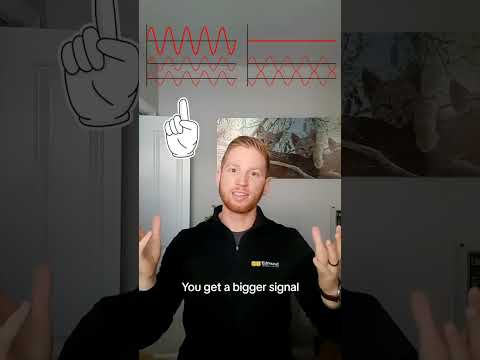
As the expansion and contraction of space-time from gravitational waves also expand and contract one of the arms of the interferometer more than the other, this creates a detectable and measurable effect of gravitational waves.
LIGO – A Nobel Winning Achievement
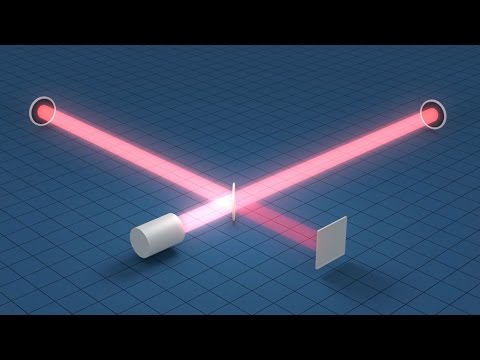
At its simplest, LIGO is made of 2 long arms, with light sent down them, each measuring 4 km, or 2 ½ miles. The scale of the arm helps detect even the most minute variation, as the longer the arms, the smaller the measurements it can make.
A laser beam is sent down one arm of the interferometer, which is split into two. Both beams are then reflected back after hitting a mirror.
Normally, each laser beam should cancel each other out.
But if one arm is contracted or extended more than the other by a gravitational wave, the interference between the laser beams stops, and a light signal is detected.

Source: Nobel Prize
In 2015, the U.S. National Science Foundation Laser Interferometer Gravitational-Wave Observatory (NSF LIGO) confirmed the detection of the waves created by the collision of black holes 1.3 billion light-years from Earth.
This groundbreaking work earned physicists Rainer Weiss, Barry Barish, and Kip Thorne the 2017 Nobel Prize in physics.
Building LIGO
In principle, LIGO is a relatively simple concept, which is easy to understand as soon as we have managed to wrap our brains around the concept of gravitational waves and with a minimum of understanding of light and lasers.
Building a system precise enough to be able to detect variation of length 1/10,000th of an atom is another story.
Two similar facilities were built, one in the northwest USA and one in Louisiana, separated by about 3,000 km (1860 miles).

Source: Nobel Prize
The double facility works as confirmation, as their large distance means that a gravity wave will have a seven-second “lag” between the two, while generating the same signal.
So, while just one detection might always be considered as a possible error or local perturbation, the very same thing happening on both sides of the USA at exactly the predicted time interval is almost impossible.
The double facilities also provide an invaluable advantage: the possibility to triangulate the signal. This allows us to narrow down the region of the sky from where the signal could come from, which is later on identified by “regular” astronomers who will find what stellar object might be responsible.
LIGO’s Quest for Unprecedented Measurement Precision
The first technical hurdle is that the laser light’s wavelength and intensity must be as stable as possible. Without it, random fluctuations could be misinterpreted as the signal of a gravitational wave.
Then the beam must hit the suspended mirrors precisely. These mirrors must never move at all.
They should hardly shake at all, not even when leaves fall from nearby trees, a child runs by, or a lorry passes on a distant road. At the same time, these hanging mirrors must be free to swing with the passage of gravitational waves.
Minute variations not due to gravity also need to be compensated for, for example:
- The thermal motion of atoms on the surface of the mirrors
- Quantum effects in the laser.
- Seismic shakes.
- Any air impurity would interfere, requiring the whole experiment to be conducted in massive vacuum tubes.
In theory, longer than 4km arms would provide even more precise measurements, but in practice, there is a practical limit to how large an interferometer can be built.
As a result, it quickly appeared that, besides the preliminary works, this project required much more budget and technical expertise than a small research team could provide.
So in 1994, scientist Barry Barish from CalTech transformed the small research group of about 40 people into a large-scale international collaboration with more than a thousand participants, with an initial $395M in funding.
It would require a $200M overall to achieve the 2015 breakthrough, when LIGO received 10x more powerful lasers, mirrors weighing 40 kilos, highly advanced noise filtering, and one of the world’s largest vacuum systems.
Seismic Stabilization
As Earth is never perfectly stable, neither are the mirrors of LIGO without seismic stabilizers.
A first system of passive vibration reduction was installed on the mirrors: a complex pendulum system absorbing vibrations and blocking them from being transferred to the next part.
Combined, this structure is so effective at reducing vibrations that any present at the top of the suspension is made 100-million times smaller by the time they reach the test mass itself.

Source: LIGO
Even this was not enough, so it is completed by an active stabilization system as well. Seismometers around each observatory sense a range of ground motions, then send these signals to a computer that combines them and determines counter motions.

Source: LIGO
The importance of a lack of vibration was an important criterion when picking a site to build the interferometers. Not only did they need a lot of free space, but also no human activity generating a lot of vibrations, the equivalent of light pollution for gravitational wave detections.
Optics
Weighing 40kg each, and hanging at the bottom of the suspensions, LIGO’s optics are made of ultra-pure materials laid down in nanometer-thick layers. They are coated with materials that reflect all but one of every 5 million photons that hit them!
Lasers
The core of the experiment, the lasers, need to have a very stable wavelength to keep the interference pattern consistent, and only see it disrupted by gravitational waves.
Commercial lasers would not have been that precise. So LIGO’s laser was specially engineered to be one of the most stable, pristine lasers of its kind ever invented.
Vacuum
To reduce any interference from air or floating particles, the tests are run in ultra-high vacuum conditions.
It also removes the risk of dust accumulating on the mirrors, which would be incinerated by the laser and destroy the $2M mirrors.
The atmospheric pressure inside LIGO’s arms is one-trillionth that of sea level, which means there are about only 10 million molecules per cubic centimeter.
LIGO Achievements
After the initial discovery of black holes colliding in 2015, the observatory measured many other high-energy events in the Universe:
- Another black hole merger in 2016, each of around 30 solar masses, was located as far as 1.3 billion light years, or almost 1/10thof the distance of the entire observable universe.
- A third and then a fourth black hole merger in 2017.
After that, LIGO was closed for improvement until 2019, before being interrupted by the pandemic. Scientists used the occasion to undergo further improvement and add to the network VIRGO, the European sister facility outside Pisa in Italy.
Future Of LIGO
Previous improvements have led LIGO to make no less than 79 detections of gravitational waves in recent years, creating an extensive catalog of events involving neutron stars and black holes for other astronomers to identify precisely and understand better.
A future important upgrade will be the replacement of the current 40k mirror by 100kg mirrors, together with much larger suspension systems.
The extra sensitivity should help find further information about gravity in the Universe.
Another field of research is “burst gravitational waves”. These short-duration waves from unknown or unanticipated sources are only theoretical and hard to detect, so the analysts running LIGO need to be open-minded about what is or is not a valid signal.
“We may also detect gravitational waves from systems we never knew about before. To search for these kinds of gravitational waves, we cannot assume that they will have well-defined properties like the ones LIGO scientists have previously modeled.
This means we cannot restrict our analyses to searching only for the signatures of gravitational waves that scientists have predicted.”
Other Gravitational Wave Detectors
The next generation of interferometers is also under discussion, notably Cosmic Explorer, an interferometer with 40-km-long arms, or the Einstein Telescope, a triangular detector with 10 km-long arms buried deep underground.
Another project that could be seen in the future is an enormous space-based gravitational wave detector: LISA, Laser Interferometer Space Antenna. It is already being designed and tested by a European Space Agency-led venture which will operate three spacecraft in a triangular formation, with the distance between each satellite being 2.5 million kilometers.
Swipe to scroll →
| Detector | Location | Arm Length | Type | Status |
|---|---|---|---|---|
| LIGO | USA | 4 km | Ground-based interferometer | Operational |
| VIRGO | Italy | 3 km | Ground-based interferometer | Operational |
| KAGRA | Japan | 3 km | Underground interferometer | Operational |
| Cosmic Explorer | USA | 40 km | Ground-based interferometer | Planned |
| LISA | Space | 2.5 million km (between spacecraft) | Space-based interferometer | In development |
Conclusion
LIGO is a very impressive project, as it went from being a first-of-its-kind experiment to immediately validate the existence of gravitational waves.
A project like LIGO might at first glance appear purely academic. This is rarely the case, although the direct applications might seem hard to imagine at first.
For example, Einstein’s theory of relativity is today routinely used to calibrate GPS satellites’ positions, an application that was hard to imagine as a daily commercial need in 1919.
Similarly, LIGO is pushing scientists to invent ever more precise mirrors, stabilization systems, and lasers, with world-class levels of engineering.
These innovations are likely to bear fruit in any technology using these devices, including advanced computing or space technologies.
Investing in Advanced Optics
Corning Incorporated
GLW Price Chart
As telescopes push what is possible in terms of precision manufacturing of advanced glass, this also opens many industrial possibilities in sectors as varied as automotive, semiconductors, AI, defense, biotech, healthcare, etc. The advanced optic market is a $310B market, expected to grow by 9.2% CAGR until 2032.
Corning is a glass and optics company that has existed for 170 years. Over its history, it produced the first glass bulbs for Thomas Edison’s electric light, the first low-loss optical fiber, the cellular substrates that enable catalytic converters, and the first damage-resistant cover glass for mobile devices.

Source: Corning
Today, the company is focused on the core technologies of manufacturing glass and ceramics, and optical physics technologies, which share common manufacturing processes and end markets.

Source: Corning
This interconnection of technologies allows the company to share common manufacturing, research, and engineering capabilities between its different product lines. With 52,000+ employees, 77+ manufacturing sites worldwide, and 10+ R&D facilities, the company is a large player in its niche.

Source: Corning
The company is benefiting from the boom in AI and data center building (optical fibers), as well as the overall consumption of specialty glass in screens and biotechnology.
Corning should not be impacted much by tariffs, as 90% of US revenues come from products with a US origin. Very little of the sales made in China originated from US facilities, with 80% of Chinese sales made in China.
Tariffs could even help, as Corning is entering the solar panel market, with the strategic control of Hemlock Solar, to produce US-made panels, as Asian solar panels (not just Chinese) are being submitted to quadruple-digits tariffs. 80% of the capacity has already been secured by customers’ commitments.
Solar makes a lot of sense for the company, with silicon handling a core manufacturing expertise of the company, having produced polysilicon for 60 years, including ultra-pure silicon (99.9999999999% pure) and now launching production of silicon wafer, a product imported at 100% in the USA.

Source: Corning
The company is also looking at other advanced technologies where its expertise in glass and ceramics could provide a solid edge, including bendable glass, AR, carbon capture, etc.

Source: Corning
Overall, Corning is a deeply technical company, with localized manufacturing that should not suffer from deglobalization. It also embraces new markets that match its core competencies, notably solar and optical communication / AI infrastructure. This makes it both a relatively conservative company only digging deeper into its niche, but also a potential growth stock in high-tech markets.
Latest Corning Inc. (GLW) Stock News and Developments



