

Aerospace
Virgin Galactic (SPCE): Betting on Suborbital Tourism

Securities.io maintains rigorous editorial standards and may receive compensation from reviewed links. We are not a registered investment adviser and this is not investment advice. Please view our affiliate disclosure.

Space Is Back In Fashion
Until recently, travelling to space used to be the sole prerogative of powerful nation-states like the USA, USSR (and then Russia), or China. Some commercial activity existed, but was confined to the Earth’s orbit and was still dependent on rockets built by these nation-states.
So while some of the components and design of the rockets might have been built by private aerospace and defense corporations like Lockheed Martin (LMT -2.5%) or Boeing (BA -3.92%), the control over orbital launch was still firmly in state control.
The arrival of Elon Musk’s SpaceX revolutionized access to space. Not only can a purely private company reach space, but it has also created reusable rockets, cutting by 10x the cost of reaching orbit.
This was just a start, as SpaceX’s achievements were then followed by companies like Rocket Lab (RKLB +0.6%) or Relativity Space, running just a few years behind Elon Musk.
Today, we are still determining the short-term implications of this achievement, which has sparked a new space race between the USA and China. Meanwhile, SpaceX is developing an Internet satellite constellation so vast that it should be comprised of more satellites than all others ever launched combined.
What it also did was reignite the dream of space colonization and civilian travel to space. What had been dismissed as science fiction writers’ dreams now again seems within reach.
For civilian infrastructure to develop in space, a compelling economic case must be made to demonstrate the venture’s profitability.
In “The Future Space-Based Economy“, we discussed what economic activities could turn into the backbone of civilian space activities. It is now clear that the first one is likely more satellite services, from multi-spectral images to space-based Internet access.
Another major activity, space tourism, will likely take off way before orbital & Moon factories, Martian colonization, asteroid mining, or endless energy supply from orbital solar arrays.
In the very long run, space tourism might take the form of lunar and Martian hotels, climbing on Mount Olympus, and other offworld adventures. But in a more reasonable timeline, the possibility of traveling to Earth’s orbit and briefly experiencing weightlessness is likely the first money-making activity for space tourism.
One company has been razor-focused on making it happen as soon as possible, and it could argue it has already managed to accomplish this vision. However, it still needs to scale it to become profitable, making it both a high-risk and high-reward bet on space tourism for potential investors: Virgin Galactic.
Virgin Galactic Holdings, Inc. (SPCE -3.29%)
The Foundations of Virgin Galactic
Virgin Galactic is the brainchild of another charismatic billionaire, Richard Branson, the founder of the Virgin group, with activities as diverse as music, books, games, gambling, media, tourism, airlines, telecom, etc.
At the common core of all these activities is the understanding that humans are not just looking for material comfort, but also unique, interesting, and/or exciting experiences.
So it is maybe not so surprising that the Virgin Group also invested in the more premium and innovative experience possible to date: travelling to space.
This ambition matches the company motto:
“Turning the impossible into the inevitable”.
Virgin Galactic was founded in 2004. Initially, it owned 70% of The Spaceship Company (TSC), a subsidiary that owned the technology created by Scaled Composites (now a part of Northrop Grumman (NOC -1.57%)) for Virgin Galactic. Virgin Galactic acquired 100% ownership of TSC in 2012.
Virgin Galactic used an initial $100M investment from the Virgin Group, followed by a $380M investment by the sovereign wealth fund of Abu Dhabi, Mubadala Investment Company, in 2010 and 2011, as well as the New Mexico government investing $200M in the Spaceport America facility.
The company raised a further $450M from its IPO through a SPAC merger listing in 2019.
During this time, the company developed its technology base to create the first space tourism offer that could ultimately be scaled up.
Contrary to companies like SpaceX or Blue Origin, focused on ultra-heavy rockets for space colonization, which may also be used for space tourism, Virgin Galactic’s designs are focused from inception on providing a premium, luxury space tourism experience.
Tourism-First Spaceships
Different Requirements
As the focus is on the experience more than the engineering feat, the development of Virgin Galactic has followed a very different technical path from other private space companies.
The idea is not to send as much mass into orbit, but to provide the best moment for the passengers, an activity more matching the experience of the Virgin Group with cruise ships, air travel, etc.
For example, the spaceship will need many windows to provide a direct view of Earth’s orbit that the company’s consumers will be looking for.

Source: Virgin Galactic
Travel also needs to be not only safe, but relatively comfortable, including for tourists who are not in the perfect health conditions expected of regular astronauts. This means no brutal high-G acceleration, spacious enough cabin, luxurious environment, possibility to eat and drink gourmet food in zero G, etc.
So while some space tourism flights have been done by the largest rocket maker, like Katy Perry with Blue Origin in April 2025, or an all-amateur 4-person space crew with SpaceX in 2021, these activities are mostly a PR side, not for these companies in their goal of ever larger orbital and deep space launches.
Distinguishing Virgin Galactic From Virgin Orbit
Virgin Galactic was not the only space venture founded by Richard Branson. He also launched Virgin Orbit, a spin-off from Virgin Galactic, launched in 2017 to market the LauncherOne rocket.
With only 500kg of payload to Low Earth Orbit (LEO), the steepening competition from SpaceX, Rocket Lab, Relativity Space, and other companies reaching the tens or maybe soon hundreds of tons of payload to LEO made the project increasingly obsolete.
A second failure in 2023 and failure to raise more funds caused Virgin Orbit to file for bankruptcy in April 2023. Rocket Lab acquired the company’s Long Beach facility, manufacturing, and tooling assets
Virgin Galactic’s Fleet
Instead of a massive launcher, the core concept of Virgin Galactic space flight experience is to use a multiple vehicles concept, with a carrier/mother ship bringing to high altitude the actual orbital spaceplane.
This also meant accepting the technical limitation of safe and tried space flight, and not reaching a stable orbit, but instead looking for a transient sub-orbital flight bound to go back down to Earth.

Source: Virgin Galactic
In this, it differs from other space tourism scenarios, which tend to imagine an ISS-like space station allowing for multi-day or weeks-long space travel.
Virgin Galactic developed a series of prototypes, like the VMS Eve and VMS Unity, before switching to the development of its Delta Class ships.
Swipe to scroll →
| Metric | VSS Unity (retired) | Delta Class (planned) | Source |
|---|---|---|---|
| Seats | 4 passengers | 6 passengers | Company materials |
| Flight cadence | ~monthly | ~2x per week (target) | IR/press |
| Top speed / Apogee | Mach 2.88 / ~52.9 mi | Similar profile (suborbital) | Press/tech specs |
| Status | Final flight June 8, 2024 | Customer service targeted fall 2026 | Company updates |
| Unit economics | Near breakeven per flight | Payback < 6 months (est.) | Investor deck 2023 |
VMS Eve
An important component of the design is the VMS Eve, a 4-engine carrier aircraft, bringing the space plane to high altitude. This allows the spaceplane to start its flight without consuming fuel that will be used for reaching the microgravity altitudes.

Source: Virgin Galactic
VMS Eve has been flying since 2008, and has seen 3 test flights after 2014, reaching an altitude of 41,500 ft (12,650 meters).
VSS Unity
Dropped at high altitude from the center of the carrier plane, VSS Unity is the spaceplane proper, using a hybrid propulsion system to reach 3x the speed of sound in around 60 seconds.
The system is called a hybrid because it mixes together a solid fuel with a liquid oxidizer. This provides both the reliability of solid propulsion, with the flexibility of liquid propulsion, as well as the ability to be shut down and restarted during flight. It was chosen for its better match to the safety standard expected from a civilian tourism project, even if potentially less powerful than fully liquid rockets.

Source: Air And Space
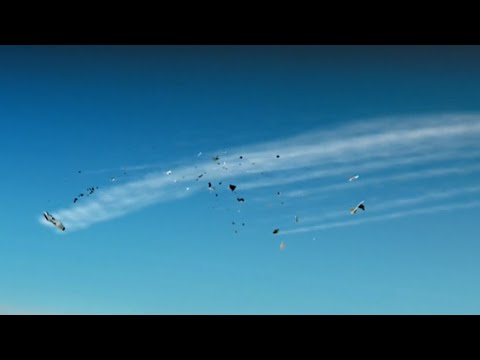
VSS Unity first went into space proper in 2018, 50 miles (80.5 km) above sea level. This was the second iteration of this design, with the first one, VSS Enterprise, destroyed in a spectacular crash in 2014.
The first commercial flight of Unity (not with Virgin Galactic employees) was Galactic 01 on June 2023, reaching Mach 2.88 and a 52.9 miles high apogee point.

Source: Virgin Galactic
This was followed by Galactic 02, with the first private astronauts, up to Galactic 07, the last flight of VSS Unity in June 2024.

Spaceport America
Premium Facility
The world’s first-ever purpose-built spaceport, Virgin Galactic’s base of operation is not so much a launch site as an ultra-luxury airport with a comfortable lounge and a design from the renowned architectural firm Foster + Partners.

Source: Virgin Galactic
The facility also provides the check-in of tourists with the company’s Chief Medical Officer, luxury accommodations in New Mexico 5 days before launch, cabin mockup for training, pre-flight rehearsals, etc.
The offer also includes the idea for tourists to bring with them up to 3 guests, “so they can share in the love, wonder, and awe of your spaceflight“, while other friends or family members can enjoy curated activities like a visit to White Sand National Park and top-tier amenities.
Premium Experience
Together with the space flight, the company organizes a “Wings ceremony for the family, friends, and fellow astronauts” and gives unique keepsakes.

Source: Virgin Galactic
This comes with exclusive access to Virgin Galactic’s manufacturing and operational facilities, as well as its nonprofit program Galactic Unite.
It will also organize unique future astronaut events: “money-can’t-buy events, experiences, activities and membership perks.”

Execution Risks, Cash Runway & Timeline
Not Good Enough Yet
Considering Richard Branson’s lack of technological background, the technical success of Virgin Galactic is remarkable.
It can also be considered a branding and marketing success, with tickets sold in the $250,000-450,000 range, with a long waiting list. The first customers seem to be ecstatic with their experience:
“This has been the best day of my life, the most sensational day of my life. And you can’t get any better than that. It exceeded my wildest dreams.”
However, even such a lofty price and high demand are not enough if the individual flights are too expensive to be cash flow positive.
This is why, since 2024, the company has been interrupting commercial flights and re-concentrating its focus on finalizing the Delta Class spaceplane design.
Delta is designed to be able to carry 6 passengers instead of the previous 4, and aims for twice-a-week flight frequency, much larger than the once-a-month frequency of the previous spaceplane generation.
Delta Class Unit Economics (6 seats, 2x weekly)
If these come true, it would make the Delta able to carry 12x more passengers per month than the previous generation, making the revenue/month/ship as much larger.

Source: Virgin Galactic
This would completely change the profitability of the company’s spaceplane. The previous generation was barely breaking even, while the Delta would have a payback time of less than 6 months.
It also means that in the medium term, the Delta class spaceplane could start to be produced in series, likely decreasing the production and operating costs further.
This would help to ultimately reduce the ticket price and increase much further the pool of potential clients, with likely several orders of magnitude more people interested in a $100,000 price range, or merely the price of a luxury car.
Accumulating Delays
The Delta flight test was expected in mid-2025, before being rescheduled for the fall of 2026.
“The company ran into a problem with the production of the first carbon composite skins for the vehicle’s fuselage.
The material had different densities based on the compressive forces it was designed to handle, which caused problems when the composites were placed in an autoclave.”
Michael Colglazier – Chief executive of Virgin Galactic
This delay might put the company in a tight spot. Share prices have been declining after the initial hype, restricting the potential of raising funds through selling shares. Especially as Branson decided to no longer put more money into Galactic since the end of 2023.
Still, the company managed in 2025 to raise $56 million as part of the at-the-market equity offering program.
So overall, the company needs to turn a positive cash flow as soon as possible.
In Q2 2025, the company registered only $400,000 in revenues due to the pausing of commercial flights. It decreased operating expenses to $70M, down from $106M, reflecting a shift from R&D spending to design Delta to capital expenditure to actually build it instead.
With $508M in cash and equivalents in Q2 2025, the breathing space for Virgin Galactic to turn a profit is getting really tight to wait until the end of 2026.
Investing With Risks In Mind
The decreasing cash pile and not yet flight-tested Delta both represent significant risks for the company’s shareholders. If the company runs out of money before finishing building Delta, or if the Delta test flight fails, which is always a risk in something as complex as space flight and for untested designs, it could get into real trouble.
At the same time, it also enjoys the position of having a long list of eager customers waiting to give the company their money, impressive previous customers’ testimonies, and a clear path to profitability.
So this is far from a risk-free bet. However, some would say that the drastic decline in share price and market capitalization since IPO is already accounting for a lot of this risk, and maybe more than that.
It is also possible that even in the case of further delays, if the technical and manufacturing progress are sufficient, the main shareholders will want to preserve their investment and give the tens of millions needed to reach the finish line of Delta’s first commercial flight.
So, for potential investors, a few strategies can be adopted:
- Buying now, hoping all goes to plan and Delta flies without needing extra funding.
- Wait, and hope the stock price gets even lower, reducing the risk and cost of further dilution of existing shareholders.
- Buy after it becomes clear the company is on track to profitability, even if that likely means giving up the chance to buy at the low point of the stock prices.
Conclusion
Virgin Galactic is a unique space company in that it forged its own path instead of competing headfirst with SpaceX and Elon Musk, a difficult strategy many in the car industry learned the hard way with Tesla and the EV market.
By concentrating on a premium and less technically demanding tourism experience, only going suborbital, Virgin Galactic might be positioned in the right spot to be the first company to harvest the untapped demand of space tourism.
Still, the economics of the company’s operation only make sense with a larger and more mature design, the Delta spaceplane.
As production runs into successive delays, this could spell doom for the company, and the steep decline in its stock price reflects this danger. This presents a golden opportunity for daring investors to acquire shares at a discount, just before the company rebounds and turns cash flow positive upon restarting commercial flights.
In any case, as it is so close to succeeding, Virgin Galactic is likely going to make it into the history books by becoming the first space tourism company in one form or another, even if that would mean being rescued at the last minute by its existing shareholders, or another company, or a billionaire.
Latest Virgin Galactic (SPCE) Stock News and Developments



