
Enerji
Fotoların ‘Fotomoleküler Etki’ ile Tuz Giderme Süreçlerini İyileştirebileceğine Dair Yeni Anlayış

 Securities.io sitesini Google'daki tercih ettiğiniz kaynaklara ekleyin

Until recently, there were a few agreed-upon variables that could result in/affect the evaporation of water – the process by which water transitions from a liquid to a gas. However, new araştırma coming out of the Massachusetts Institute of Technology (MIT) is set to upend this, pointing to a new understanding of how simple photons (light) can play an outsized role in the process. With that in mind, researchers have found that photons can evaporate water both alongside and in the absence of heat.
Önceden Var Olan Değişkenler
Before diving into why this discovery matters, take a moment to refresh on the previous list of variables that play a role in evaporation.
- Isı: Buharlaşmanın temel nedeni ısıdır. Su molekülleri sürekli hareket halindedir ve ısı enerjisi kazandıkça hareketleri artar. Enerji, molekülleri sıvı içinde tutan moleküller arası kuvvetleri aşacak kadar yeterli olduğunda, havaya buhar olarak kaçabilirler.
- Yüzey Alanı: Buharlaşma hızı suyun yüzey alanına da bağlıdır. Daha büyük bir yüzey alanı, daha fazla molekülün havayla temas etmesini sağlar ve bu da buharlaşmayı artırır.
- Nem: Havadaki mevcut su buharı miktarı buharlaşmayı etkiler. Hava zaten su buharı ile doymuşsa, buharlaşma daha yavaş olur. Bunun nedeni, nem ne kadar yüksekse, havanın daha fazla su molekülü alabilme kapasitesinin azalması nedeniyle buharlaşma hızının düşmesidir.
- Hava Hareketi: Rüzgar veya hava akışı, su buharı oluştuğunda onu uzaklaştırarak suyun üzerindeki nemi azaltır ve daha fazla suyun buharlaşmasına izin verir.
- Basınç: Atmosferik basınç da buharlaşmayı etkiler. Atmosferik basınç düşük olduğunda, su daha düşük bir sıcaklıkta kaynar ve daha hızlı buharlaşır. Yüksek atmosferik basınç ise buharlaşmayı engelleyebilir.
- Suyun Sıcaklığı: Dış ısı kaynaklarının yanı sıra, suyun kendi sıcaklığı da bir faktördür. Daha sıcak su, ortalama olarak daha fazla enerjiye sahip moleküller sayesinde daha hızlı buharlaşır.
Essentially, water evaporates when its molecules have enough energy to break free from the liquid phase and become water vapor. This process is influenced by temperature, humidity, pressure, wind, and the physical characteristics of the water body itself. Now, we can put exposure to photons on the list.
Temelde, su molekülleri sıvı fazdan kurtulup su buharı haline gelmek için yeterli enerjiye sahip olduklarında buharlaşır. Bu süreç sıcaklık, nem, basınç, rüzgar ve su kütlesinin fiziksel özelliklerinden etkilenir. Artık foton maruziyetini de bu listeye ekleyebiliriz.
Karıştırılmaması Gerekenler
It is also important to understand the distinction between evaporation and the following processes.
Buharlaşma: Evaporasyonu içeren ancak aynı zamanda kaynamayı da kapsayan genel bir terimdir; kaynama noktasında sıvının tüm hacmi boyunca buhara dönüşmesidir.
Yoğuşma: Bir gazın soğutulmasıyla gerçekleşen ve sıvı faza geçişini sağlayan, buharlaşmanın ters sürecidir.
Buharlaşma ise, bir sıvının kaynama noktasının altında, sadece yüzeyinde gerçekleşen bir buharlaşma türüdür.
Nasıl Başarıldı?
So how did MIT Researchers discover that photons can be added to the list of variables associated with evaporations? The team’s findings were achieved through a series of experiments and simulations focused on the evaporation behavior of water when contained within a hydrogel. This work was first undertaken as the team looked to understand and reaffirm past experiments that yielded results in which water evaporation rates surpassed the expected thermal limit – the maximum amount of evaporation possible when a given amount of heat is applied.
To recreate these results, the researchers utilized a ‘solar simulator’. Here, saturated hydrogels were subjected to various wavelengths of light in the absence of heat. Interestingly, results showed that despite no influence by heat, a measurable loss in mass occurred over time, with the most pronounced differences being found when green light was used. With the response being independent of thermal effects, it affirmed that light, not heat, was the cause of evaporation.
In the end, the researchers discovered that, against conventional expectations, a combination of water and hydrogel enabled the energy from photons to be harnessed to drive evaporation beyond known thermal limits. The process is now being called the ‘photomolecular effect’.
Neden Önemli?
This discovery of the photomolecular effect could revolutionize several industries and environmental sciences. They may extend to include renewable energy storage and recovery systems, where controlled evaporation rates are critical. For instance, this could lead to the development of new materials or surfaces designed to maximize water evaporation for energy storage in dry climates.
In agriculture, this principle might be used to develop more efficient irrigation systems that minimize water loss by restricting exposure to certain wavelengths, thereby conserving water while sustaining plant growth.
In the field of meteorology, understanding the photomolecular effect could improve weather prediction models by providing a more accurate representation of water cycle dynamics.
Additionally, the pharmaceutical and food industries, which often rely on precise drying processes, could see improvements in the efficiency and control of moisture removal from products.
Lastly, in urban planning and the development of sustainable architecture, this discovery might inspire innovative cooling systems that use solar energy more efficiently, reducing reliance on traditional air conditioning and contributing to energy-saving building designs.
Fotondan İlk Yararlananlar
While there is a large variety of industries that may see process efficiencies improved through this new understanding of evaporation, the researchers behind its discovery believe that the most obvious example would be those involved with the solar desalination of salt water.
Desalination is simply the process by which salt and minerals are removed from water, making it suitable for both consumption and irrigation. With the rise of renewables, this process is increasingly powered through solar energy. The following are each companies involved with solar desalination, which could soon benefit from the findings discussed above.
Consolidated Water (CWCO ) (NASDAQ: CWCO): Cayman Adaları’nda bulunan Consolidated Water, 1973’teki kuruluşundan bu yana büyüyerek deniz suyu tuzdan arındırma tesislerinde uzmanlaşmış çok uluslu bir şirket haline gelmiştir.
https://youtu.be/RPhuseNYN7M
At time of writing, Consolidated Water boasted the following metrics.
Piyasa Değeri:$465,675,764
İleri P/E 1 Yıl: 20.06
Hisse Başına Kazanç (EPS): N/A
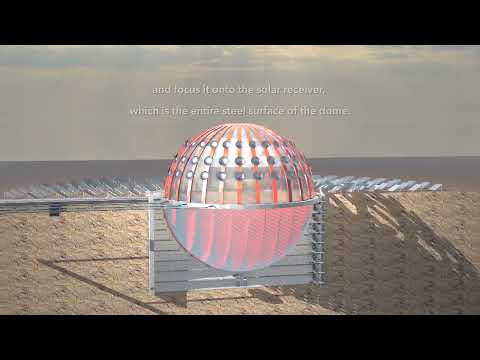
Solar Water Plc: Bu Birleşik Krallık merkezli şirket, özellikle yüksek güneş ışınımı ve sınırlı tatlı su kaynaklarına sahip bölgeleri hedefleyen, deniz suyunu tuzdan arındırmak için bir güneş kubbesi teknolojisi geliştirdi.
Abengoa: Orta Doğu ve Kuzey Afrika gibi bölgelerde büyük ölçekli güneş enerjili tuzdan arındırma tesislerinin geliştirilmesinde yer alan bir İspanyol çok uluslu şirkettir.
Operasyonlarının kapsamına rağmen, Abengoa yıllardır iflasın eşiğinde. Operasyonel verimliliği büyük ölçüde artırma potansiyeline sahip yeni süreçler, hayatta kalmanın anahtarı olabilir.
These companies are active in various parts of the world, addressing the freshwater needs of arid regions and areas with limited access to clean water – a need that will only continue to grow in time.
Son Düşünceler
While such a discovery may seem mundane at first glance, it is anything but. Not only does it show how limited our understanding is of kavramlar ve süreçler that have long been thought to be mastered, but it also holds the potential for widespread applications.
Innovative and forward-thinking companies are reliant on scientific advancements such as this to build out and offer solutions leveraging new capabilities and efficiencies. Now, companies like Consolidated Water, Veolia, and Solar Water PLC need to adapt and run with it.



