
Kalawakan
Sayaw Kasama ang mga Bituin – Natuklasan ng mga Space Telescope na CHEOPS at TESS ang Pinag-isa na Pag-ikot ng mga Planeta

 Idagdag ang Securities.io sa mga gusto mong mapagkunan sa Google

Over the past few years, interest in astronomy has been skyrocketing – and with good reason. Between efforts made by companies like SpaceX (SPCX ) to bring humans to Mars or the stunning discoveries made by the James Webb Space Telescope (JWST), there has been no shortage of stunning achievements to revel in. To wit, astronomers have just announced the discovery of a sextuplet of planets engaged in a synchronized orbiting pattern and ‘precise waltz’. This discovery, which was originally touted as an ‘unsolvable riddle’, was made possible by a joint effort involving teams at the University of Bern and the University of Geneva.
Ang Sistema ng HD110067
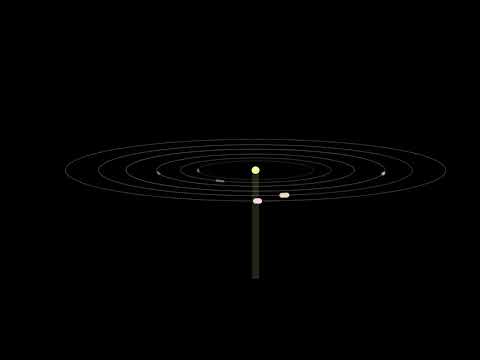
The sextuplets of planets exist in a system dubbed ‘HD110067’. What makes them so interesting is a rare harmonic resonance, where the planets follow a synchronized orbital pattern. This intriguing arrangement was initially a puzzle, as only the orbits of the inner two planets were clear from initial TESS data. However, precise observations from CHEOPS clarified the orbits of the remaining planets, revealing a unique chain of resonances in successive pairs (3:2, 3:2, 3:2, 4:3, 4:3).
A resonance chain is expressed as a ratio based on rotations around a star given a fixed amount of time. The antecedent/numerator refers to the number of rotations completed by the inner planet, while the consequent refers to those completed by the outer planet in the pair. What is significant about this finding is the extent of synchronization.
“Amongst the over 5000 exoplanets discovered orbiting other stars than our Sun, resonances are not rare, nor are systems with several planets.
What is extremely rare though, is to find systems where the resonances span such a long chain of six planets” – Dr. Hugh Osborn, CHEOPS fellow at the University of Bern
Essentially, the ratios found (3:2, 3:2, 3:2, 4:3, 4:3) indicate that each of the following will occur in the exact same amount of time.
- 3 pag-ikot ng unang planeta = 2 pag-ikot ng ikalawang planeta
- 3 pag-ikot ng ikalawang planeta = 2 pag-ikot ng ikatlong planeta
- 3 pag-ikot ng ikatlong planeta = 2 pag-ikot ng ikaapat na planeta
- 4 pag-ikot ng ikaapat na planeta = 3 pag-ikot ng ikalimang planeta
- 4 pag-ikot ng ikalimang planeta = 3 pag-ikot ng ikaanim na planeta
As a result, this discovery has now marked HD110067 as a key system for future studies, as the bright nature of the star should facilitate detailed investigations into the planets’ atmospheres and compositions, potentially uncovering whether they are gas- or water-rich. Astronomers have noted that these findings hold significant promise for future explorations, particularly with instruments like the James Webb Space Telescope, in understanding the nature of exoplanetary systems.
Paggamit ng Transit Method sa mga Telescope
The aforementioned discovery was made possible primarily through the use of what is called the “transit method” – a widely used technique for discovering exoplanets, which are planets outside our solar system. This method involves monitoring the brightness of stars over time to detect periodic dimming, which indicates a planet might be passing in front of the star, blocking a small fraction of its light.

*Larawan para sa layuning pang-illustrasyon lamang*
Here’s a more detailed explanation:
Obserbasyon ng Liwanag ng Bituin: Sa transit method, nagmamasid ang mga astronomo sa liwanag na inilalabas ng isang bituin sa mahabang panahon. Gamit ang mga space telescope tulad ng Kepler, TESS, o mga ground-based telescope, patuloy nilang minomonitor ang liwanag ng libu-libong bituin.
Mga Kaganapan ng Transit: Kapag ang isang planeta ay umiikot sa isang bituin, may pagkakataon na ito ay dumadaan nang direkta sa pagitan ng bituin at ng tagamasid. Ang pangyayaring ito ay kilala bilang “transit.” Kapag nangyari ito, ang planeta ay humaharang ng maliit na bahagi ng liwanag ng bituin, na nagdudulot ng maliit ngunit kapansin-pansing pagbaba sa liwanag nito.
Regular na mga Pattern ng Pagdidilim: Kung ang liwanag ng isang bituin ay nagdidilim sa regular na mga agwat, ito ay nagpapahiwatig na may planeta na umiikot sa bituin at paulit-ulit na nagta-transit dito. Ang dami ng liwanag na hinaharang ng planeta ay maaaring magsabi sa mga astronomo tungkol sa laki ng planeta. Ang mas malalaking planeta ay humaharang ng mas maraming liwanag, na nagdudulot ng mas malaking pagbaba sa liwanag.
Panahon ng Orbit at Distansya: Ang dalas ng transit (kung gaano kadalas nagdidilim ang liwanag) ay nagbibigay ng impormasyon tungkol sa orbital period ng planeta, na kung gaano katagal ito upang makumpleto ang isang orbit sa paligid ng bituin nito. Ito ay tumutulong sa pagtantiya ng distansya ng planeta mula sa bituin nito.
Espesipikong Oriyentasyon: Ang transit method ay gumagana lamang kung ang orbit ng planeta ay edge-on, ayon sa ating pananaw. Kung ang orbit ay nakatagilid na ang planeta ay hindi kailanman dumadaan sa harap ng bituin mula sa ating perspektibo, hindi ito matutuklasan ng transit method.
Kalakasan sa Pag-aaral ng Laki at Atmospera: Ang transit method ay partikular na epektibo para matukoy ang laki ng planeta. Dagdag pa, kapag pinagsama sa spectroscopy, maaari itong magbigay ng impormasyon tungkol sa komposisyon ng atmospera ng planeta.
Mga Follow-up na Obserbasyon: Pagkatapos matuklasan ang isang potensyal na exoplanet sa pamamagitan ng transit method, karaniwang isinasagawa ang karagdagang obserbasyon at pagsusuri upang kumpirmahin ang pag-iral nito at pag-aralan ang mga katangian nito nang mas detalyado.
To date, the transit method has been highly successful in the exoplanet hunt, contributing to the discovery of thousands of exoplanets since the early 2000s. It’s particularly effective for finding planets that are close to their stars, such as those in the habitable zone where conditions might be right for liquid water — a key ingredient for life as we know it.
Mga Space Telescope
While it may be the James Webb Space Telescope that has captivated the public’s attention since its launch, it is by no means the only such device in use by astronomers today. In fact, the discovery of these synchronized plants was made by the following.
CHEOPS (Paglalarawan ng Exoplanet Satellite):
Launched in 2019, CHEOPS is operated by the European Space Agency (ESA), with contributions from several European countries. It was designed to observe known exoplanets orbiting bright stars. Its primary goal is to measure the sizes of these planets with high precision. By determining the planet sizes and combining this information with existing data on the planets’ masses, scientists can calculate their densities and hence infer their compositions.

*Larawan para sa layuning pang-illustrasyon lamang*
More specifically, CHEOPS focuses on exoplanets ranging from Earth-sized to Neptune-sized. It aims to provide more detailed information about these worlds, many of which were discovered by other missions like the Kepler telescope. This is done through the use of the previously described ‘transit method’, where it measures the dip in starlight as a planet passes in front of its host star.
TESS (Transiting Exoplanet Survey Satellite):
Launched in 2018, TESS is operated by the United States-based National Aeronautics and Space Administration – better known as NASA. While CHEOPS is meant to observe known exoplanets, TESS is tasked with a main objective to discover them by monitoring the brightest stars in the sky. It’s particularly focused on finding Earth-sized and super-Earth-sized planets.
To achieve its goal, TESS surveys the entire sky, dividing it into numerous sectors, with each being observed for about a month. This comprehensive survey approach has allowed TESS to discover thousands of new exoplanets. Like CHEOPS, TESS also uses the transit method to detect exoplanets. Its all-sky survey approach helps identify planets around a wide variety of star types, including those that are nearest and brightest and, therefore, easier for follow-up studies.
Both telescopes are significant contributors to the field of exoplanet research. While CHEOPS is more focused on studying known exoplanets in greater detail, TESS is designed to find new exoplanets and add to the rapidly growing catalog of these distant worlds. Their findings not only help us understand the properties of exoplanets but also contribute to the broader quest of searching for potentially habitable worlds beyond our solar system.
Mga Manlalaro sa Industriya
Humans are explorers by nature. Over time, we have continually sought out, and adapted to living in all but the most extreme environments around the world. Looking forward, if humans are to continue satiating an innate desire to expand our horizons, it will be advancements in science and the Aerospace sector. With that in mind, the following are a few of the many companies working towards such a future.
*Mga numerong ibinigay sa ibaba ay tama noong panahon ng pagsulat at maaaring magbago. Ang anumang potensyal na mamumuhunan ay dapat mag-verify ng mga sukatan*
Pampublikong-Naipagbili
1. Northrop Grumman Corporation
NOC Tsart ng Presyo
NOC Tsart ng Presyo
| Kabuuang Pamilihan | P/E Ratio | Kita Kada Bahagi (EPS) |
| 71,421,409,432 | 15.55 | $30.48 |
Northrop Grumman Corporation (NOC ), a leading global security company, plays a pivotal role in advancing space travel and exploration. Renowned for its innovation in aerospace technology, Northrop Grumman has been instrumental in several high-profile space missions. A key highlight of its space endeavors includes its significant contribution to the James Webb Space Telescope, showcasing an expertise in developing complex space systems.
The company’s involvement in space extends to manufacturing satellites, contributing to the International Space Station, and developing launch vehicles. With a strong focus on next-generation technologies and a robust portfolio in defense and aerospace, Northrop Grumman continues to be a key player in shaping the future of space travel, positioning it as an attractive prospect for investors looking toward the expanding frontiers of aerospace and defense.
2. Lockheed Martin Corporation
LMT Tsart ng Presyo
LMT Tsart ng Presyo
| Kabuuang Pamilihan | P/E Ratio | Kita Kada Bahagi (EPS) |
| 110,459,750,386 | 16.3 | $27.37 |
Lockheed Martin Corporation (LMT ) stands as a titan in the aerospace and defense sector, significantly contributing to the realm of space exploration. As a major contractor for NASA, Lockheed Martin’s expertise spans across designing and building advanced spacecraft and satellites. Notably, it has been integral in projects like the Orion Multi-Purpose Crew Vehicle, aimed at enabling human exploration of deep space. The corporation’s involvement in satellite technology, space probes, and participation in Mars exploration missions, including the Mars Rovers, underscores its pivotal role in advancing our understanding of space.
Lockheed Martin’s continued investment in space technology, including initiatives in missile defense and space exploration, positions it as a compelling choice for investors who are interested in the growing space industry. This forward-looking approach aligns with the global push towards new frontiers in space, making Lockheed Martin a key player in both national defense and the future of space exploration.
3. Boeing Company
BA Tsart ng Presyo
BA Tsart ng Presyo
| Kabuuang Pamilihan | Forward P/E 1 Taon | Kita Kada Bahagi (EPS) |
| 137,855,699,746 | -38.10 | $-4.70 |
Boeing has a long history in aerospace and is a key contributor to numerous space missions and initiatives. The company has been involved in projects ranging from satellite manufacturing to the development of spacecraft. Notably, Boeing is a major partner in the International Space Station (ISS) program and has been developing the CST-100 Starliner spacecraft, designed to transport crew to the ISS and other potential destinations in low Earth orbit.
Boeing’s involvement in space exploration is a significant part of its extensive portfolio in aerospace and defense, making it a prominent player in the industry.
Pribadong-Naipagbili
SpaceX
SpaceX, led by visionary entrepreneur Elon Musk, stands at the forefront of the private space exploration industry. Although not publicly traded, SpaceX has garnered significant attention from investors and the space community alike for its groundbreaking achievements.
The company has revolutionized space travel with its reusable rocket technology, significantly reducing the cost of access to space. Its Falcon rockets and Dragon spacecraft have become central to both cargo and crew missions to the International Space Station. Additionally, SpaceX’s ambitious Starlink project aims to provide global internet coverage via a constellation of satellites, showcasing its innovative approach to space-based services. The company is also leading the charge towards Mars colonization with its development of the Starship spacecraft.
SpaceX’s continued advancements and disruptive approach in the space sector make it a company of great interest for potential future investors and a key player in shaping the future of space exploration and travel.
Blue Origin
Pangwakas na Kaisipan
While discoveries like the one discussed here may seem far removed from everyday life, each and every one like it increases our understanding of the Universe. This understanding is then applied to endeavors already underway by companies such as those highlighted – whether it be a mission to Mars or mining astroids for precious metals.



