

Spotlights
Broadcom (AVGO): Building The Infrastructure Of The Digital World

Securities.io maintains rigorous editorial standards and may receive compensation from reviewed links. We are not a registered investment adviser and this is not investment advice. Please view our affiliate disclosure.

Broadcom’s Role in AI Infrastructure and Connectivity
Since the dawn of the Internet, the importance of connectivity has only been increasing year after year. At first, it was the need to connect business and research computers with each other.
Then the penetration of the Internet in ordinary households and the associated growth in online videogames, e-commerce, and video streaming created a growing demand for larger servers and stronger connections.
It would again be dwarfed by the arrival of smartphones, and the need for as quick as possible connectivity on the fly, with 3G, 4G, and then 5G mobile networks. In parallel, most of the industry moved to the cloud, meaning that even the most basic office tasks, or data storage, are generally handled through the Internet, instead of being performed and stored on-site.
This pattern is now repeating itself with the rise of AI, both for consumers and enterprises. Larger data centers than ever are required by AI development and applications, to the point where entire nuclear plants are being reopened to secure enough power to feed them.
As AIs are at their core many computing units interacting with each other, these data centers are equally requiring ultra-efficient and quick connectivity solutions. This is the task of ultra-specialized companies, able to always stay at the edge of IT technology and constantly adapt to new demands and requirements by the leaders of the tech industry.
In this sector, few companies have been as instrumental in keeping connectivity responsive enough to answer ever-growing demands as Broadcom.
Broadcom Inc. (AVGO -2.92%)
Broadcom Overview
| Segment | Revenue (2024) | % of Total |
|---|---|---|
| Semiconductors | $35.5B | 65% |
| Infrastructure Software | $19.1B | 35% |
Broadcom is a global leader in connectivity hardware and IT infrastructure software, including 5G technology.
The company’s activities are split between infrastructure software (cybersecurity, cloud, etc.) and connectivity hardware (wireless, servers, consumer broadband, AI networks, etc.).

Source: Broadcom
The company is the result of the merger between Broadcom and Avago in 2016.
Broadcom began in 1991, focusing on semiconductor solutions for networking and communications.
Avago Technologies Broadcom began in 1961 as the semiconductor division of Hewlett-Packard, later spun off as Agilent Technologies in 1999. It was initially focused on optoelectronics and wireless communication components. After being acquired by private equity firms, it went public in 2009.
The company notably created the first fiber optic transmitters and gallium-arsenide-phosphide (GaAsP) LEDs, and shipped 400 million optical mouse sensors.

A large part of the company’s growth since the merger has been driven by a series of acquisitions in the past 10 years, with the largest M&A steps being the acquisition of VMware for $61b in 2023 and Symantec in 2019 for $10.7B, making the company a large actor in cloud and cybersecurity as well.

Source: Broadcom
Today, Broadcom is a company generating $54.6B in revenues (in 2024), with a broad portfolio of patents (20,000+) supported by continuous R&D investments of $9.3B in 2024.
Broadcom Products
Many of Broadcom’s products can be rather hard to understand for non-telecom engineers, especially the hardware part.
The most familiar equipment to the greater public will be the “internet boxes” like modems, routers, as well as connectivity solutions for TVs and other smart devices (including cable and satellite).

Source: Broadcom
Broadcom is also instrumental in building and maintaining mobile networks, having been a pioneer in developing the technology supporting 3G, 4G, and now 5G networks.

Source: Broadcom
For data centers, the company provides a wide array of Ethernet, optical fiber connections, and other tools to route the traffic of data from one part of the data center to another, or to other data centers and end users.
This includes both on-premise and cloud data centers, as well as all the variations around AI solutions and AI data centers (more on the AI market and its opportunities for Broadcom below).

Source: Broadcom
The same tools and equipment are also used in factories, utility companies, and in cars to provide connectivity to IoT devices, smart management tools, as well as many LED-based screens and displays.

Source: Broadcom
On the software side, Broadcom is mostly active in two segments: cybersecurity and enterprise software. The cybersecurity segment is covered by both Symantec solutions and VMware tools.

Source: Broadcom

Source: Broadcom
How VMware Strengthens Broadcom’s Software Strategy
As the largest acquisition of Broadcom ever, much larger than the $37B acquisition of Broadcom itself by Avago to form the modern Broadcom, this company deserves a deeper look.

VMware is a company specializing in “virtualization”, or the creation of virtual versions of computer resources like servers, storage, networks, and operating systems.
Virtualization allows multiple virtual environments to run on a single physical machine, enhancing resource utilization and flexibility.
Essentially, it abstracts the underlying hardware, enabling software to access and manage resources as if they were dedicated to a single task, even though they are shared.
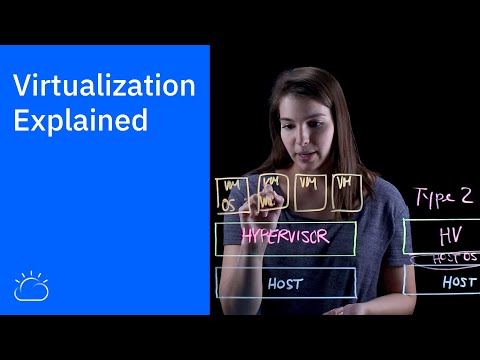
Virtualization provides its users with many advantages:
- Security: the additional firewalls help secure cloud computing and compartmentalize the different activities running on the same hardware.
- Flexibility: By creating virtual hardware, this organizational principle can help redistribute memory storage or compute power between projects and segments of a company.
- Economics: Virtualization often reduces energy consumption, as well as maintenance expenses. As a result, cost-saving is one of the primary reasons to adopt it.
- Resilience: The same activity conducted on one piece of physical hardware can be more easily duplicated on another, reducing the risks of failure from hardware malfunction.
As the dominant player in virtualization, the acquisition of VMware has strongly consolidated the presence of Broadcom in the cloud segment, where it was previously mostly active as a hardware manufacturer for the servers supporting cloud computing and services.
Broadcom Financials
The company’s revenues have grown steadily, almost doubling in the 2021-2024 period.

Source: Broadcom
Free cash flow growth has been a little less impressive, with “only” half more from 2021 to 2024.

Source: Broadcom
This was however not a result of margin contracting, as gross margins have stayed in the 75% range. So it reflects more the company’s commitment to investments in both capex and R&D.
The company has been quickly growing its dividends since 2016, at the neck-breaking pace of 32% CAGR, increasing the regular quarterly dividends every year.
However, due to the very high valuation of the company compared to earnings, it still puts the dividend in a low yield, making it more of a growth stock than a stock attractive to dividend-focused investors.

Source: Broadcom
Broadcom’s AI Growth Strategy and Semiconductor Innovations
Data Center Connectivity & AI
For almost all tech companies, their position regarding the AI boom will be the determining factor in the company’s fortune in the coming ten years.
As a key player in connectivity, both hardware and software, an activity required even more by AI than “just” cloud computing, Broadcom is already poised to benefit from the boom in construction of AI data centers.

Source: Broadcom
In 2024, AI had become 35% of the company’s semiconductor revenues, reflecting that currently the tech giants are all building out massive AI capacity, generating equally massive revenue growth for the associated manufacturers, from Broadcom to Nvidia (NVDA -3.28%) (follow the link for a report on Nvidia).

Source: Broadcom
Ultimately, “the network IS the computer”, a message used by Broadcom in its investor communication regarding the AI market, is a rather accurate description. For example, Meta is using around 1/3rd of the time used for training its AI on the networking.

Source: Broadcom
XPUs For AI Training
This is not to say that connectivity is the only product from which Broadcom will benefit from the AI boom.
AI computing systems are slowly moving toward custom-made designs that are more tuned to the very special computing and networking requirements of AI calculations. This is becoming increasingly important as power supply might become a larger limitation to AI development than chip supply.
AI networks are also unique in several ways:
- They require a very high bandwidth.
- Data transfer occurs in bulk instead of continuous streams and is mostly intermittent.
- Missing “straggler” data impacts the time the training takes.
- AI training is of long duration, generally several hours or even days, putting a strain on the components that need perfect cooling, connectivity, and functioning during the entirety of the training session.
One solution is the development of so-called XPU, which merges together CPU (processor), GPU (graphics card / parallel processors), and memory into the same electronic device.
The main reason is that as the computing intensity and the size of the data centers increase, the efficiency of the system starts to plateau as you add more components. This is because no matter how efficient the networking, if data needs to constantly flow between the processor, GPU, and memory, the process becomes less efficient with more intense calculation and data transfer.

Source: Broadcom
So instead of assembling general-purpose components into an AI data center, like a GPU designed initially for video games, bringing together in one chip all the components reduces the transfer time and the need for bandwidth.
Another increasing limitation to the design of new chips is that a 2D plan can only fit so many components. So the next step is to go for a 3D design instead.
3.5D XDSiP
Broadcom has solid experience in designing ASIC (Application-Specific Integrated Circuit), chips designed to fit a specific purpose (in that case, AI computing) instead of general calculation like a CPU. This is a segment where the company can claim to have been in the #1 spot for the past 10 years.
Broadcom XPU is putting in one chip the calculation cores, memory, and other components, all in a very dense 3D architecture.

Source: Broadcom
These XPU systems, doing the core calculation of the AI, can then be networked with other Broadcom components, and each module can be connected to each other to form entire AI data centers.

Source: Broadcom

Source: Broadcom
The same process is ongoing for all the data center components, with, for example, photonic inter-connectors now co-packaged into one device.

Source: Broadcom
Ethernet Technology
Another advantage of Broadcom in this field is its expertise in Ethernet technology. Notably, the company has since 2010 reduced Ethernet’s energy consumption by 90% and increased its bandwidth capacity 80x.
Currently, high-performance computing uses a lot InfiniBand, a high-performance computer networking communications standard.
However, today’s Ethernet by Broadcom provides a much superior performance than InfiniBand in almost all metrics. For example, it reduces failure rate by 30x, consumes 33% lower power, costs less, and has higher bandwidth.

Source: Broadcom
As a result, Ethernet is now recognized as the de facto AI network solution, already used by Meta, Google, Oracle, Tencent, Amazon, Alibaba, etc.
Conclusion
Because the first AI data centers have been built up in a race to grab as much computing power as possible, as quickly as possible, investors have paid the most attention to Nvidia’s GPUs, making it the world’s most valuable company.
However, as the AI industry starts to mature, a turn to ASIC design, purposely made for the requirements of AI calculations, is starting to catch up to generalist GPUs. So while new designs of GPUs specifically made for AI are going to be strong competitors, XPUs also have a card to play.
More precisely, as AI models become ever larger, the flow of data and the required connectivity will become as much an issue as the computing power itself. Reducing electricity consumption will also become an important focus in the industry.
This puts Broadcom in an excellent position to benefit from the AI boom.
On one hand, even if XPU turns out not to be the computing standard of the industry, advanced Ethernet and other connectivity solutions by Broadcom will be needed in larger amounts than ever before. VMware’s virtualization and cybersecurity solutions will also be in greater demand.
On the other hand, if XPUs become more popular for building newer and more efficient AI data centers, Broadcom could become the market’s newest darling in the AI-driven boom in tech companies’ capitalization.
Latest Broadcom (AVGO) Stock News and Developments
Better Semiconductor Stock: Broadcom vs. Marvell Technology
fool.com
•
March 21, 2026
Foguth Wealth Management LLC. Purchases Shares of 2,266 Broadcom Inc. $AVGO
defenseworld.net
•
March 21, 2026
Broadcom Inc. $AVGO Shares Sold by Finivi Inc.
defenseworld.net
•
March 21, 2026
GAMMA Investing LLC Has $44.36 Million Position in Broadcom Inc. $AVGO
defenseworld.net
•
March 21, 2026
ASML vs. Broadcom: Which AI Stock Is a Better Buy?
fool.com
•
March 20, 2026
The Two Forces Reshaping Your Portfolio - February Dividend Income Report
seekingalpha.com
•
March 20, 2026



