

Computing
Scaling-Up Quantum Computers With Single-Atom Qubits

Securities.io maintains rigorous editorial standards and may receive compensation from reviewed links. We are not a registered investment adviser and this is not investment advice. Please view our affiliate disclosure.

Single-Atom Qubits: A New Era for Quantum Computing
Quantum computers are extraordinarily complex machines, exploiting minute variations in the behaviors of individual atoms for computation. As such, they both make use of and reveal new insights into the very nature of the universe at the atomic and individual particle scale.
Such insights will likely be required to build at-scale quantum computers, as the more complex the system, the harder it is to build large enough for practical uses.
Researchers at the University of Sydney, Australia, have recently managed to encode multiple quantum calculation data into a single atom, potentially revolutionizing the physical size of quantum computing qubits (the quantum equivalent of “normal” computers’ bits).
They published their results in the prestigious scientific journal Nature Physics1, under the title “Universal quantum gate set for Gottesman–Kitaev–Preskill logical qubits”.
Making Qubit Reliable
Currently, qubits are produced either through a method called “trapped ion”, or by using ultra-cold superconducting materials.

Source: Forbes
Both methods have their limitations:
- The trapped ions contain only a handful of qubits, but are more reliable and produce fewer errors.
- The superconducting materials have more qubits and are expected to be easier to scale up, but are more error-prone.
In both cases, error rate affects the physical-to-logical qubits ratio, or the amount of physical qubits required to create a functional qubit from a computing point of view.
As the number of useful (or logical) qubits grows, the number of physical qubits required grows even further. As this scales up, the sheer number of qubits needed to create a useful quantum machine becomes an engineering nightmare.
So, making quantum computers more error-resistant is maybe the most important task of researchers in the field at the moment, as it would lift the main hindrance to the building of useful large-scale quantum computers.
Swipe to scroll →
| Qubit Type | Scalability | Error Rate | Temperature |
|---|---|---|---|
| Trapped Ion | Low (few qubits) | Low | Room temperature |
| Superconducting | High | High | Near absolute zero |
| Single-Atom (Sydney) | Potentially high | Correctable with GKP | Room temperature |
Shrinking Down Qubits
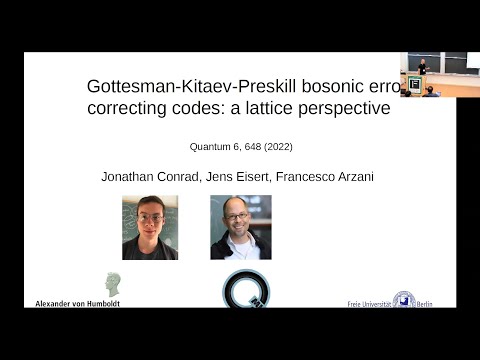
The Australian researchers used a trapped ion (with a charged atom of ytterbium) quantum computing system, and a form of encoding data called the Gottesman-Kitaev-Preskill (GKP) code.
GKP is a type of code expected to help correct errors in quantum computers. But creating one in practice had been so far difficult.
The key is to create a “logic gate”, an information switch that allows computers – quantum and classical – to be programmable.
Using a quantum control software developed by Q-CTRL, a spin-off start-up company from the Quantum Control Laboratory, the researchers encoded the data into a single atom, in 3D.
In essence, two sets of data are stored as the vibration of a single atom, one set as the vibration from “left to right”, and one as the vibration from “up and down”.
“Effectively, we store two error-correctable logical qubits in a single trapped ion and demonstrate entanglement between them.
Vassili Matsos – PhD student in the School of Physics and Sydney Nano
Building A Single-Atom Logic Gate
To perform that feat of quantum physics, they used a complex array of lasers at room temperature to hold the single atom in the trap, allowing its natural vibrations to be controlled and utilized to produce the complex GKP codes.

Source: Nature Physics
The “room temperature” part is very important, as it makes it inherently easier and cheaper to perform than the superconductive quantum computers requiring temperature close to absolute zero and liquid helium.
“Our experiments have shown the first realization of a universal logical gate set for GKP qubits.
We did this by precisely controlling the natural vibrations, or harmonic oscillations, of a trapped ion in such a way that we can manipulate individual GKP qubits or entangle them as a pair.”
Toward Scalable Quantum Computers
It is the combination of room temperature controls, a single-atom logic gate, and error reduction code that makes this discovery so important.
Together, this opens the way to a new type of trapped-ion quantum computer that could be a lot simpler to build and a lot easier to scale up.
“Our experiments achieved a key milestone, demonstrating that these high-quality quantum controls provide a key tool to manipulate more than just one logical qubit.
By demonstrating universal quantum gates using these qubits, we have a foundation to work towards large-scale quantum information processing in a highly hardware-efficient fashion.”
In parallel, several new discoveries have recently been made showing the potential of interfacing together quantum computers. So if each is getting more powerful, and quantum networks are getting closer to a reality, this could help create an explosion in usable qubit capacity.
Quantum Computers Unlocking New Physics
Scaled-up quantum computers are likely going to revolutionize cryptography and scientific research, thanks to their massive capacity in solving complex problems too difficult to compute with binary computers.
But it could also indirectly open an entirely new way for physicists to study the quantum realm.
This is what appears from analyses done on Google’s quantum computers by researchers at the Princeton University, Cornell University, Purdue University, University of Nottingham (UK), Technical University of Munich (Germany), and Google Research, according to a new publication in Nature2, titled “Visualizing dynamics of charges and strings in (2 + 1)D lattice gauge theories”.
Measuring Gauge Theory
The Google quantum computer allows researchers to experiment with and test so-called “Lattice Gauge Theory” (LGT), a type of quantum field theory postulating the existence of gauge fields (fields that mediate forces, like the electromagnetic field) and gauge bosons (the elementary particles that carry these forces).

Source: Nature
The team showed how particles and the invisible “strings” connecting them behave, fluctuate, and even break.

Source: Nature
The researchers confirmed in that study that these “strings” could be measured and observed in quantum computers.
“Harnessing the power of the quantum processor, we studied the dynamics of a specific type of gauge theory and observed how particles and the invisible ‘strings’ that connect them evolve over time.”
By creating very controlled situations in which to observe quantum effects, without requiring the very high energy levels of particle accelerators, it becomes clear that quantum computers might become key tools of fundamental physics research.
“Our work shows how quantum computers can help us explore the fundamental rules that govern our universe.
By simulating these interactions in the laboratory, we can test theories in new ways.”
Michael Knap, Professor of Collective Quantum Dynamics at the TUM School of Natural Sciences
The Future of Scalable Quantum Computers
Quantum Computer potential is yet to be fully understood, as they are regularly being reinvented from their fundamental principles, not unlike how the first computers moved from punch cards to vacuum tubes and then silicon transistors. Except that the pace of change is much quicker.
It implies that very soon, we might see major progress in the manufacturing of larger, more powerful quantum computers, which might also be networked together for even greater capacities.
This could open the way not only to much higher computing capacities, but an entirely new understanding of matters and quantum physics, with, for example, an entirely new state of matter like the recently demonstrated “topological state” by Microsoft quantum computing teams (Majorana-1 chip).
Investing in Quantum Computing
Honeywell / Quantinuum
Honeywell International Inc. (HON -3.29%)
While Google’s quantum computer might reveal new insight about quantum physics theory, the discovery of a potential 1-atom qubit using trapped ion technology seems to make this method much closer to commercial viability than superconducting quantum computers.
Quantinuum is the result of the merger of Honeywell Quantum Solutions and Cambridge Quantum.
Honeywell remains the company’s majority shareholder (likely 52% ownership) after a fundraising round valuing it at $5B. Founder Ilyas Khan is reported to own approximately 20% of the company. Other shareholders include JSR Corporation, Mitsui, Amgen, IBM, and JP Morgan.
A potential IPO of Quantinuum in the future, potentially as a part of a larger corporate restructuring, is estimated to be worth as much as $20B and might occur between 2026 and 2027.
Quantum computing is not the central part of Honeywell’s business, more centered around products in aerospace, automation, and specialty chemicals & materials.
Each of these domains might, however, benefit from quantum computing, especially computational chemistry and quantum cybersecurity, potentially giving Honeywell an advantage against its competitors.
The company’s main model for now is the H2, a trapped-ion 56-qubit chip, with 99.895% two-qubit gate fidelity.
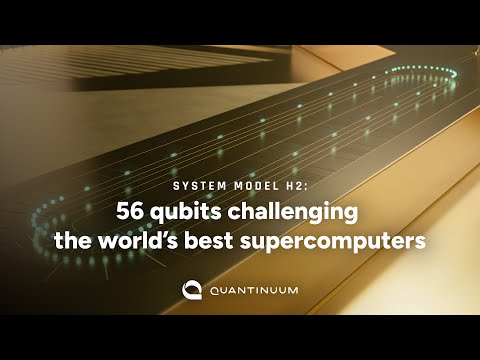
The company has pursued high-quality computing with very little error, more than adding as many as possible qubits, creating a so-called “fault-tolerant quantum computing”.
This approach is labeled by the company “Better qubits, better results”, with a similar amount of qubits achieving 100-1,000 fold more reliable results.

Source: Quantinuum
This could make a notable difference in urgently needed quantum-resistant cryptography, with defense company Thales (HO.PA -0.96%) already collaborating with Quantinuum as well as the international banks HSBC and JP Morgan.
Quantinuum also offers its proprietary quantum computational chemistry InQuanto, usable for pharmaceuticals, material sciences, chemicals, energy, and aerospace applications.
Like many other quantum computing companies, Quantinuum offers Helios, a “hardware-as-a-service”, allowing users to benefit from quantum computing without having to deal with the complexity of operating the system themselves.
Quantinuum signed in November 2024 a partnership with German Infineon, Europe’s largest semiconductor manufacturer. Infineon will bring its integrated photonics and control electronics technology to help create the next generation of trapped-ion quantum computers.
As integrated photonics are moving closer to practical use cases, it is now clear how important this partnership might be for the future of Quantinuum. At this point, it seems that the next step for the company will be to release the world’s first AI-focused photonics-quantum chip.
In the coming months, Quantinuum will share results from ongoing collaborations, showcasing the groundbreaking potential of quantum-driven advancements in Generative AI.
The innovative Gen QAI capability will enhance and accelerate the use of Metallic Organic Frameworks for drug delivery, paving the way for more efficient and personalized treatment options, with details to be unveiled at the launch of Helios.
Quantinuum Announces Generative Quantum AI Breakthrough with Massive Commercial Potential
More ongoing use cases could strongly boost the future value of the company, and therefore, Honeywell’s stack in it, and the potential profit investors could make from it.
(You can read more about the rest of Honeywell’s industrial activities in automation, aerospace, and advanced materials in the report dedicated to the company).
Latest Honeywell (HON) Stock News and Developments
Honeywell International Inc. (HON) Falls More Steeply Than Broader Market: What Investors Need to Know
zacks.com
•
March 20, 2026
Why Did Honeywell Stock Just Drop?
fool.com
•
March 20, 2026
Confluence Investment Management LLC Makes New Investment in Honeywell International Inc. $HON
defenseworld.net
•
March 20, 2026
Honeywell International Inc. $HON Shares Acquired by Coastline Trust Co
defenseworld.net
•
March 20, 2026
My Top 2 Megacap Stocks to Buy After GE Aerospace's Latest Pullback
fool.com
•
March 19, 2026
CIBC Bancorp USA Inc. Invests $25.22 Million in Honeywell International Inc. $HON
defenseworld.net
•
March 19, 2026
Studies Referenced
1. Matsos, V.G., Valahu, C.H., Millican, M.J. et al. Universal quantum gate set for Gottesman–Kitaev–Preskill logical qubits. Nature. Physics. (2025). https://doi.org/10.1038/s41567-025-03002-8
2. Cochran, T.A., Jobst, B., Rosenberg, E. et al. Visualizing dynamics of charges and strings in (2 + 1)D lattice gauge theories. Nature 642, 315–320 (2025). https://doi.org/10.1038/s41586-025-08999-9



